

Biscuits and Gravy stands as the quintessential American comfort food, a harmonious marriage of tender, flaky biscuits and a decadent, creamy sausage gravy. This comprehensive guide will walk you through creating this heartwarming dish with ease, ensuring a satisfying meal that evokes warmth and nostalgia.

Biscuits and Gravy: An American Culinary Tradition
In the vast landscape of American cuisine, few dishes evoke such deep feelings of comfort and home as Biscuits and Gravy. This beloved meal transcends mere breakfast fare, often gracing brunch tables, lunch specials, and even hearty dinner plates across the nation. While particularly celebrated in the Midwest and Southern United States, its appeal is truly universal. At its core, this iconic dish features light, airy, and tender biscuits generously smothered in a thick, rich, and intensely flavorful sausage gravy, typically crafted from savory pork sausage, a flour-based roux, and wholesome milk.
For many, Biscuits and Gravy isn’t just a meal; it’s a cherished memory. Growing up, my dad’s signature dinner often revolved around this very dish. While certainly not the leanest option, there’s an undeniable pull towards its comforting embrace, especially as the colder months set in. When the temperatures drop, there’s nothing quite like a plate of warm, stick-to-your-ribs comfort food to provide warmth and solace.
The history of biscuits and gravy is rooted in necessity and resourcefulness. Originating in the Southern Appalachians during the late 18th century, it became a staple for working-class families due to its inexpensive ingredients and high calorie content, providing sustained energy for long days of labor. Early versions likely featured simpler ingredients, but the fundamental combination of baked dough and a meat-thickened sauce quickly cemented its place in American culinary heritage. Today, it remains a testament to simple ingredients coming together to create something truly extraordinary.
Unpacking the Heart of the Dish: What is Sausage Gravy?
Sausage gravy, in the context of this dish, is far more than a mere condiment or a thin sauce. It is, unequivocally, half the meal, a foundational component that contributes significantly to the dish’s hearty and satisfying character. Unlike lighter gravies made with stocks or broths, this rendition is notably thicker and incredibly creamy, designed to cling lovingly to every crevice of a biscuit. Each spoonful is packed with savory meat, ensuring that the gravy isn’t just an enhancement but the undeniable star of the show. Its richness comes from using generous amounts of milk, and sometimes even a touch of cream, creating a velvety texture and depth of flavor that is truly unparalleled.
The magic of sausage gravy lies in its simplicity and the transformation of a few basic ingredients. Starting with browned pork sausage, the rendered fat forms the base of a roux, which is then thickened with flour before being slowly incorporated with milk. This process builds layers of flavor and creates a luxurious, smooth consistency that is essential for a truly authentic Biscuits and Gravy experience. It’s the kind of gravy that you want to be able to scoop up with a spoon and find plenty of meat in every bite.
Crafting Your Own Biscuits and Gravy: A Simple Guide
Making Biscuits and Gravy might seem daunting, but it’s surprisingly straightforward. The key is to manage your time so both components are ready to be enjoyed warm and fresh. Here’s how to achieve this delightful comfort food:
Step 1: Prepare Your Biscuits
Your journey to perfect Biscuits and Gravy begins with the biscuits themselves. You have several options: you can opt for the convenience of store-bought biscuits, which significantly cut down on prep time, or you can embrace the rewarding process of baking them from scratch. For an truly exceptional experience, we highly recommend trying our favorite homemade biscuit recipe. It yields incredibly delicious, buttery, and flaky biscuits with minimal effort, making homemade accessible even for novice bakers. If you choose to go the homemade route, aim for uniform 2-3/4-inch rounds for consistent baking.
For those seeking an even quicker homemade option, our drop biscuits recipe offers a fantastic alternative, foregoing the need for rolling and cutting while still delivering a wonderful texture.
Ideally, you’ll want your biscuits to finish baking just as your gravy is ready, ensuring maximum warmth and freshness. If you’re using pre-made or leftover biscuits, a quick warm-up in the oven will bring them back to life.
Step 2: Whip Together the Savory Sausage Gravy
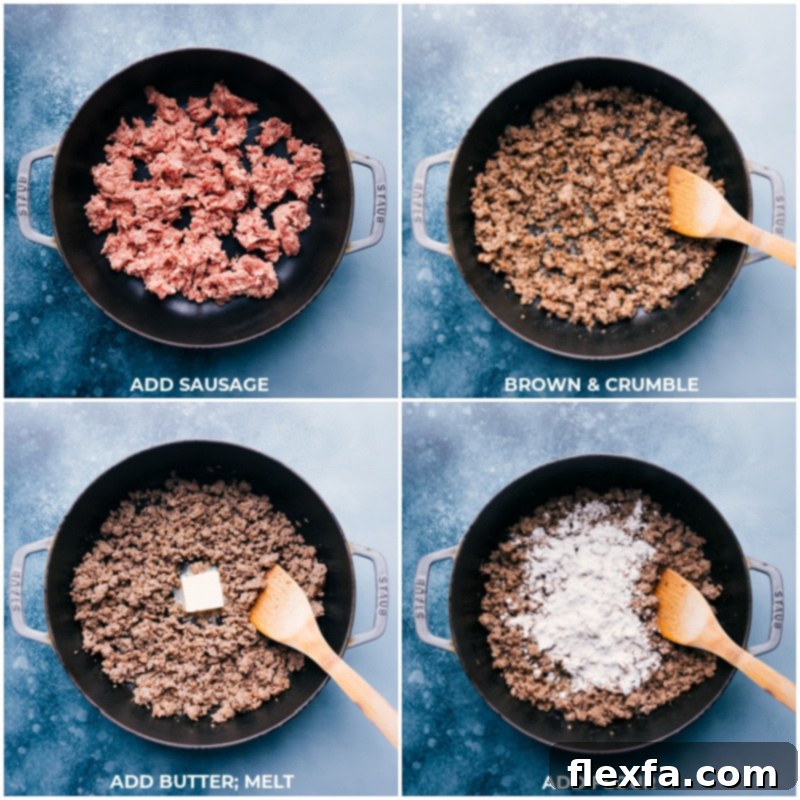
While your biscuits are baking, or just before, it’s time to create the star of the show: the rich sausage gravy. This process starts with browning your chosen breakfast sausage to perfection. Once the sausage is cooked through and crumbled, and its flavorful drippings have rendered, you’ll create a classic roux directly in the same pan by adding butter and then flour. This step is crucial for thickening the gravy and building a deep, savory base.
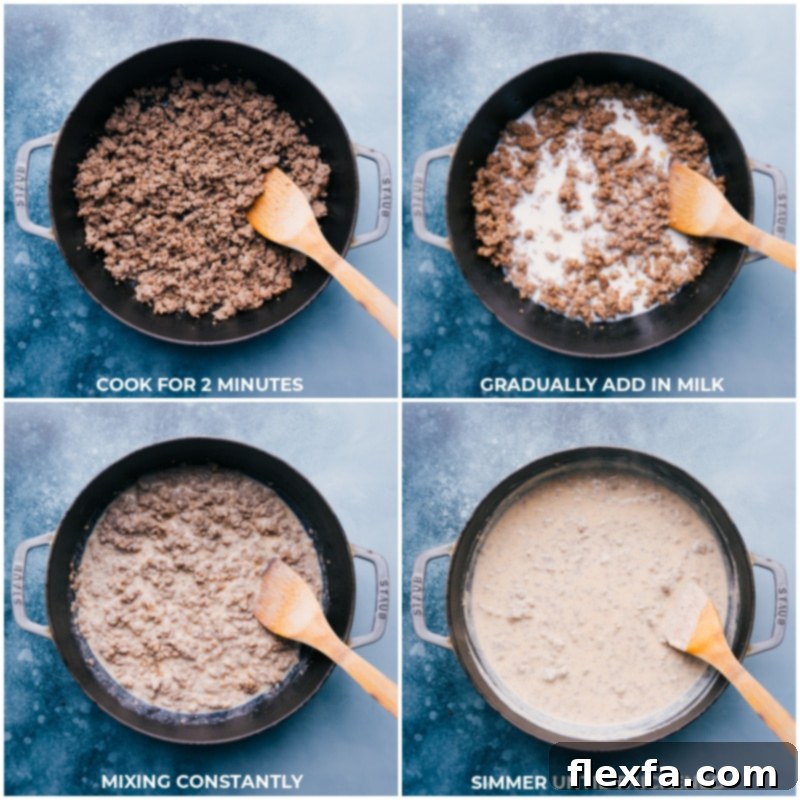
After the roux has cooked for a couple of minutes to eliminate any raw flour taste, you’ll gradually introduce milk, stirring constantly to ensure a smooth, lump-free consistency. Allow the mixture to simmer gently, continuing to stir, until it thickens into that desirable rich and creamy texture. Finally, season the gravy to taste, adjusting for salt, pepper, and any additional spices that complement your palate.
Serving Your Biscuits and Gravy
The optimal way to serve this dish is crucial for the ultimate experience. Tradition dictates that you split each warm biscuit in half horizontally. This isn’t just for aesthetics; it creates a porous surface that allows the luscious sausage gravy to seep into every layer, ensuring a moist, flavorful bite every time. Spoon a generous amount of hot gravy over the split biscuits. Serving gravy over whole, un-split biscuits can lead to a less satisfying experience, as the gravy won’t properly meld with the biscuit, resulting in a drier overall dish. Garnish with fresh herbs like parsley or thyme if desired for a touch of freshness.
Creative Serving Idea: Biscuits and Gravy Casserole
Elevate your Biscuits and Gravy into a delightful casserole that’s perfect for feeding a crowd or for a comforting brunch. Simply layer half of your split biscuits (warmed, if desired) on the bottom of a 9×13-inch casserole dish. Generously top this biscuit base with your freshly prepared sausage gravy, spreading it evenly. For an extra layer of decadence and flavor, sprinkle a liberal amount of grated sharp Cheddar cheese over the gravy. Bake the casserole in a preheated oven at 350 degrees F (175°C) for approximately 10 minutes, or until the cheese is beautifully melted and bubbly. This casserole format makes for an incredibly easy and impressive presentation!

Unlock the Best Flavor: Essential Recipe Tips
While the basic steps are simple, a few expert tips can elevate your Biscuits and Gravy from good to truly unforgettable:
- Embrace Whole Milk for Unrivaled Creaminess: This is arguably the most crucial secret ingredient for a truly decadent gravy. Whole milk provides the essential fat content necessary for achieving that incredibly rich, velvety, and thick texture that defines perfect sausage gravy. While 1% or 2% milk can be used, be aware that the final result will be noticeably less creamy and robust. We strongly advise against using skim milk or most milk alternatives, as they lack the richness required. For a lactose-free option, Lactaid® whole milk works wonderfully.
- Select a High-Quality Pork Breakfast Sausage: The flavor of your gravy is intrinsically linked to the quality and type of sausage you choose. A good quality pork breakfast sausage will infuse the gravy with incredible depth. Many home cooks swear by brands like Jimmy Dean® (not sponsored) for their consistent flavor and texture. If you enjoy a kick, opt for a hot sausage; otherwise, a regular mild variety will provide classic flavor. The fat rendered from the sausage is vital for creating the roux, so avoid excessively lean varieties if possible.
- Adjust Gravy Consistency as Needed: Gravy can sometimes thicken more than desired, especially as it cools. Don’t fret! If your gravy becomes too thick, simply whisk in an extra splash or two of warm milk until it reaches your preferred, pourable consistency. Conversely, if it’s too thin, let it simmer gently for a few more minutes, stirring frequently, to allow it to reduce and thicken naturally.
- Season Generously and Taste Frequently: Seasoning is key to bringing out the vibrant flavors of your gravy. Before serving, always taste the gravy and adjust the salt, pepper, and garlic powder to your liking. Don’t be afraid to add a pinch more of what it needs to make the flavors truly pop. Some also enjoy a tiny pinch of cayenne pepper for a subtle warmth.
- Ensure Your Biscuits Are Warm: A cold biscuit dramatically detracts from the experience. If your biscuits aren’t freshly baked and warm, simply halve them and place them split-side up on a baking sheet. Pop them into a preheated oven at 275°F (135°C) for 5-10 minutes, or until they are lightly toasted and thoroughly warmed through. This small step makes a significant difference.
- Don’t Drain All the Sausage Fat: When browning your sausage, resist the urge to drain off all the rendered fat. A good amount of this flavorful fat is essential for creating the roux, which forms the foundation of your creamy gravy. If you find you have excessive fat, you can carefully spoon out some, but ensure enough remains to combine with the butter and flour.
Biscuits and Gravy: Your Questions Answered
Can I prepare sausage gravy in advance?
Absolutely! Sausage gravy is an excellent make-ahead component. Prepare the gravy as directed, allow it to cool completely, and then transfer it to an airtight container. It will keep well in the refrigerator for up to 2-3 days. When you’re ready to serve, gently reheat the gravy in a saucepan over low heat, stirring frequently. You will almost certainly need to add a splash or two of milk (or even a little water) during reheating to thin it back to your desired creamy consistency, as it will thicken considerably when cold.
How can I make Biscuits and Gravy if I don’t eat pork sausage?
If pork sausage isn’t to your liking, or you’re looking for an alternative, you can certainly adapt the recipe. Ground turkey or lean ground beef can be used as substitutes, though the flavor profile will naturally change. Be mindful that leaner meats will render less fat, so you might need to add an extra tablespoon or two of butter or cooking oil when creating your roux. You may also need to adjust seasonings more aggressively to compensate for the different flavor of the meat. Vegetarian options also exist, often using vegetarian sausage crumbles or a mushroom-based gravy.
Can you quickly summarize the gravy-making process?
Certainly! Here’s a concise overview of how to achieve that perfect, creamy sausage gravy:
- Brown your ground pork sausage in a large, heavy-bottomed pan, breaking it into small pieces.
- Add unsalted butter to the pan with the sausage and its drippings, allowing it to melt.
- Sprinkle in the flour to create a roux, cooking it for a couple of minutes to remove any raw flour taste.
- Gradually whisk in the whole milk, ensuring constant stirring to prevent lumps and incorporate all the pan drippings.
- Continue to simmer and stir until the gravy thickens to a rich, creamy consistency.
- Finally, season to taste with garlic powder, seasoned salt, and pepper, then serve immediately over warm biscuits.
What’s the best way to store leftovers?
For optimal freshness, store cooked biscuits and gravy separately. Biscuits can be kept in an airtight container at room temperature for up to 2 days, in the refrigerator for up to a week, or frozen for up to 3 months. Gravy should be stored in an airtight container in the refrigerator for 3-4 days, or frozen for up to 3 months. To reheat, warm biscuits in the oven until lightly toasted, and gently reheat gravy on the stovetop over low heat, adding a splash of milk to restore its creamy texture.
Can I make this recipe gluten-free?
Yes, you can! To make the sausage gravy gluten-free, simply substitute the all-purpose flour with a gluten-free all-purpose flour blend (one that contains xanthan gum works best) when making the roux. For the biscuits, you would need to use a dedicated gluten-free biscuit recipe or a store-bought gluten-free biscuit option. The process for making the gravy remains largely the same with this simple flour swap.

Explore More Comforting Breakfast & Brunch Ideas
If you’ve fallen in love with the comforting embrace of Biscuits and Gravy, you’ll surely appreciate these other delightful breakfast and brunch recipes that bring warmth and satisfaction to any table. Expand your culinary repertoire with these cherished classics:
- Ham and Cheese Quiche: A savory, rich quiche featuring tender ham, melty Swiss cheese, and a flaky crust, perfect for a special breakfast or light lunch.
- One-Pan Breakfast Potatoes and Bacon: Simplify your morning routine with this incredibly easy recipe that cooks crispy bacon and flavorful potatoes all on a single sheet pan.
- Classic Quiche Lorraine: Indulge in the timeless elegance of Quiche Lorraine, a French-inspired dish brimming with savory bacon, Gruyère cheese, and a creamy egg custard.
- Fluffy Buttermilk Chocolate Chip Pancakes: Start your day with a stack of light, airy buttermilk pancakes studded with decadent chocolate chips, a universally loved treat.

Print Recipe
Rating: 5 out of 5 stars (based on 1 vote)
Classic Biscuits and Gravy
Video Overview
Equipment
-
Large Heavy-Bottomed Pan 4-quart size recommended
Ingredients
- 1 pound ground pork sausage mild or hot, based on preference
- 1/2 teaspoon seasoned salt
- 2 tablespoons unsalted butter
- 1/3 cup all-purpose flour
- 3 cups whole milk (see Note 1 for alternatives)
- 1/4 teaspoon garlic powder
- 1/4 teaspoon dried thyme optional, for added depth
- 1 teaspoon black pepper freshly ground preferred
- Biscuits (see Note 2 for recommendations)
Instructions
-
1. Brown the Sausage: Heat a large, heavy-bottomed pan (4-quart recommended) over medium-high heat. Add the ground pork sausage, breaking it into small pieces with your hands as you add it to the skillet. Sprinkle with seasoned salt. Cook the sausage, continuing to break it up with a wooden spoon, until it is fully browned and no longer pink. Do not drain the rendered fat – this is essential for the gravy’s flavor and texture.
-
2. Create the Roux: Reduce the heat to medium-low. Add the unsalted butter to the pan with the browned sausage and its drippings. Once the butter is completely melted and integrated, evenly sprinkle the flour over the sausage mixture. Stir continuously for 2 minutes, ensuring the flour cooks evenly and coats the sausage, and scraping the bottom of the pan to prevent sticking and build flavor (this cooks off the raw flour taste).
-
3. Thicken the Gravy: Begin to slowly pour in 1 cup of whole milk while vigorously stirring constantly with a whisk or wooden spoon. Scrape the bottom of the pan to release any flavorful browned bits. Once this initial milk has thickened, gradually add the remaining 2 cups of milk, continuing to stir constantly. Cook the gravy, stirring frequently and scraping the bottom, until it thickens beautifully to a rich, creamy consistency that coats the back of a spoon. This process can take a good 10–15 minutes, depending on your stovetop’s heat and the initial temperature of your milk.
-
4. Season and Serve: Stir in the garlic powder, dried thyme (if using), and black pepper. Taste the gravy and adjust any seasonings as needed – this is your chance to make it perfect for your palate. Serve the hot gravy immediately, spooned generously over warm, split biscuits. Garnish with fresh thyme or parsley, if desired, for a touch of color and extra aroma. Enjoy your ultimate comfort food!
Recipe Notes
Note 2: Biscuits are Key. If you plan to make homemade biscuits, start them first so they are baking while you prepare the gravy. This timing ensures both components are ready and warm simultaneously. Always split your warm biscuits by hand before spooning the gravy over them; this allows the gravy to absorb beautifully. If using leftover or room-temperature biscuits, preheat your oven to 275°F (135°C), halve the biscuits, place them split-side up on a sheet pan, and bake for 5–10 minutes until warmed and lightly toasted.
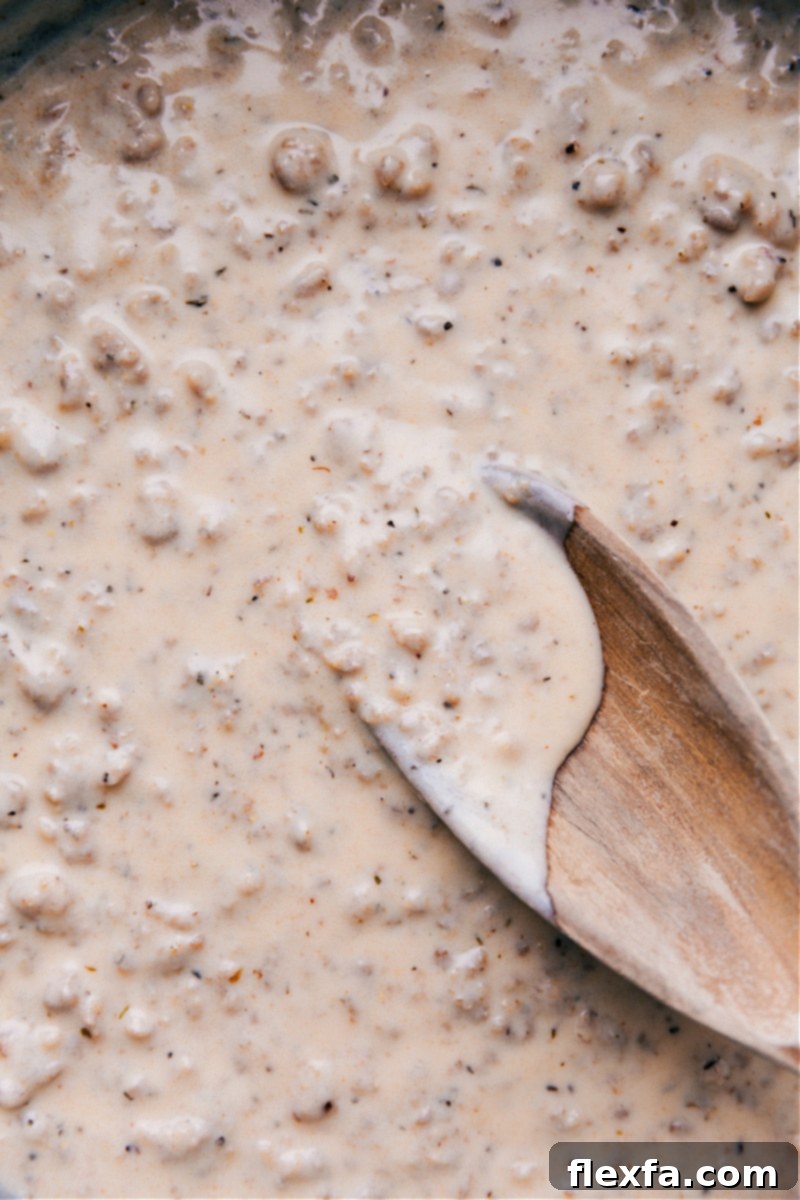
Note 3: Gravy Consistency Check. A perfectly thickened gravy should be able to coat the back of a wooden spoon. To test, lift the spoon and draw a line across its back with your fingertip. If the line holds a clear track, your gravy is ready. If it’s too thin, continue to simmer and stir for a few more minutes. Conversely, if the gravy becomes too thick as it cooks or cools, simply whisk in an additional 1/2 cup of warm milk, or more if needed, until your desired consistency is achieved.
Nutrition Information: Please note that the nutrition information provided is an approximation for the sausage gravy component only and does not include the biscuits, as their nutritional values can vary significantly depending on whether they are homemade or store-bought.
Storage Best Practices: For storage, keep prepared biscuits in an airtight container at room temperature for up to 2 days, in the fridge for up to 1 week, or frozen for up to 3 months. Store cooled sausage gravy in an airtight container in the refrigerator for 3–4 days, or freeze for up to 3 months. To reheat, warm biscuits in the oven until refreshed, and gently reheat gravy on the stove over low heat, adding a splash of milk to regain its perfect consistency.
Nutrition Information (Gravy Only)
Calories: 411kcal |
Carbohydrates: 17.5g |
Protein: 18g |
Fat: 29.5g |
Cholesterol: 75.9mg |
Sodium: 626.4mg |
Fiber: 0.3g |
Sugar: 4.9g
Nutrition information is automatically calculated and should be used as an approximation. It does not include biscuit nutrition.
Loved this recipe? Share your thoughts below!