
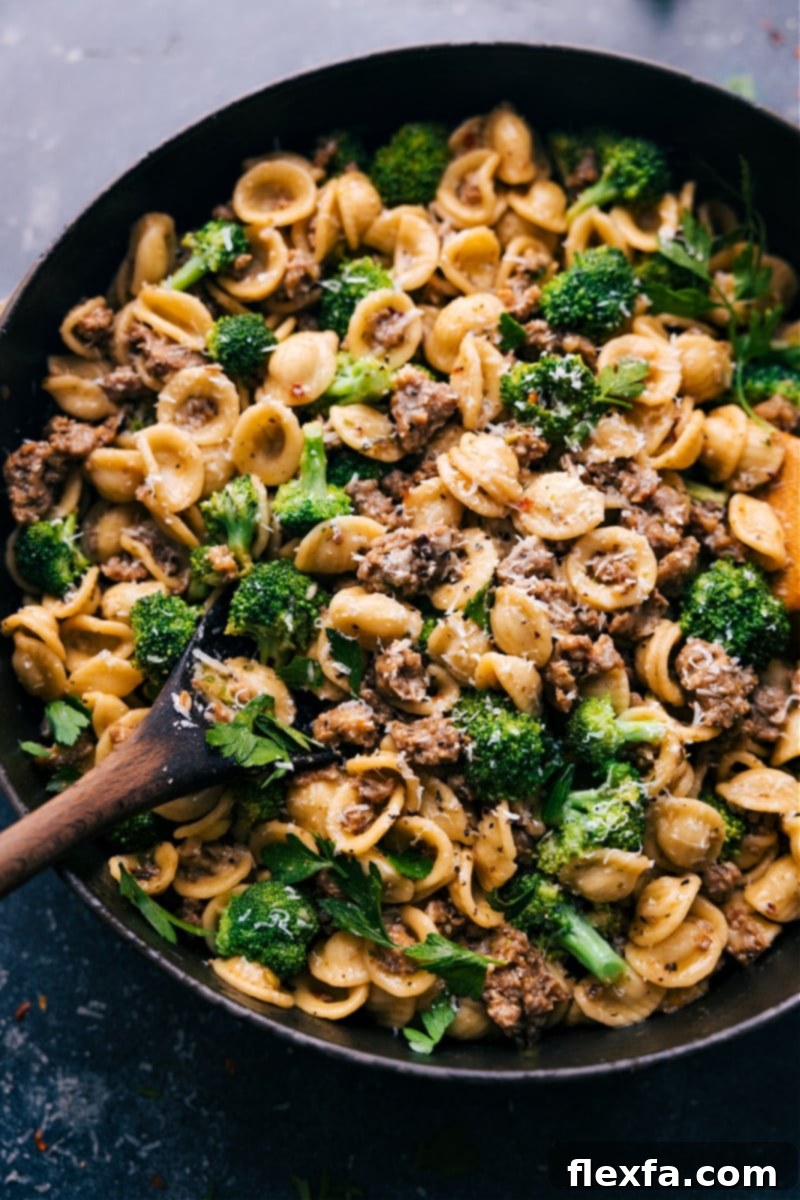
This Broccoli Sausage Pasta recipe offers a delicious blend of savory flavors and satisfying textures, all while remaining surprisingly light. Crafted with a vibrant sauce of rich chicken broth, robust olive oil, and abundant fresh broccoli, this dish achieves a delightful creaminess without any heavy cream. It’s the perfect harmony of comfort and health, making it an ideal choice for any weeknight meal.
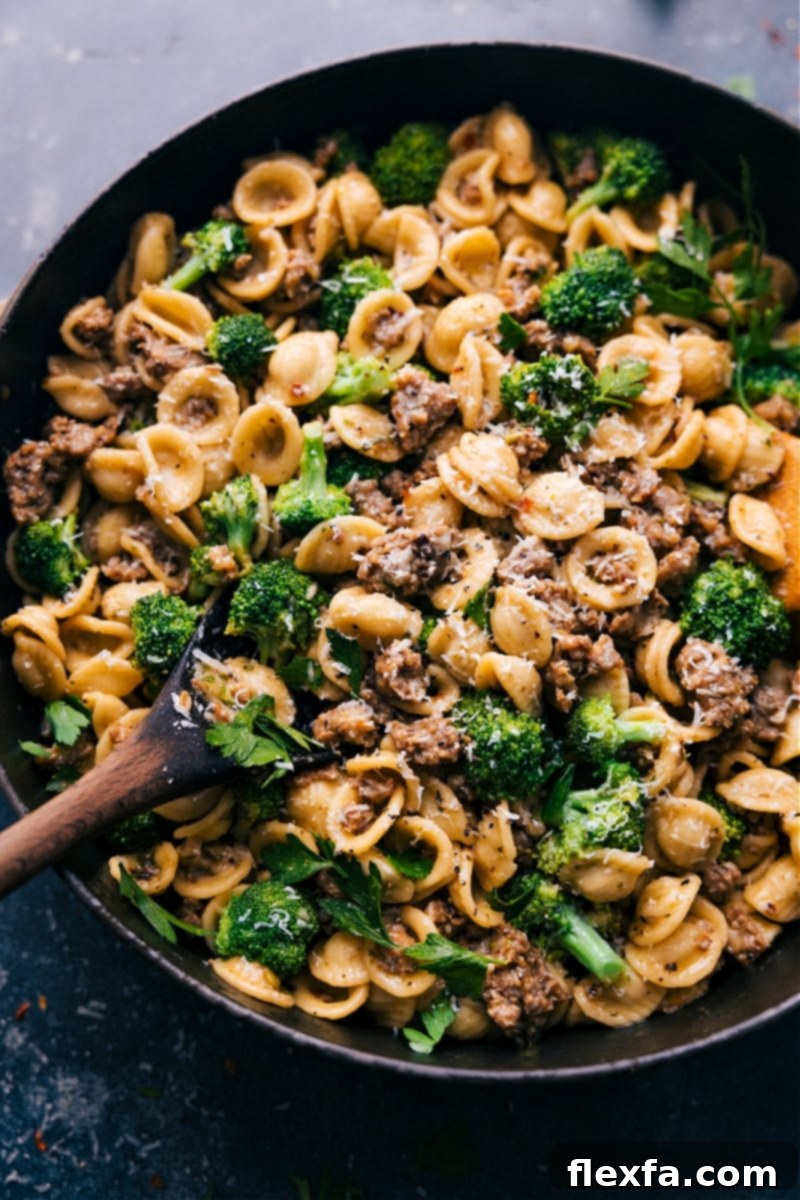
Broccoli Sausage Pasta: A Flavorful & Light Weeknight Delight
Sausage and pasta are undeniably a match made in culinary heaven, a pairing that promises warmth and satisfaction. While often enjoyed in rich, decadent cream sauces—think beloved comfort meals like Sausage Rigatoni, Creamy Sausage Pasta, or even a Summer Pasta that still leans indulgent—this recipe takes a refreshingly lighter approach without sacrificing an ounce of flavor.
Our Broccoli Sausage Pasta is specifically designed for those evenings when you crave deeply comforting food but desire something less heavy. This dish cleverly bypasses cream and milk, creating its exquisitely saucy base from the caramelized, browned bits of Italian sausage—a powerhouse of savory depth. This is then beautifully combined with savory chicken broth, a generous amount of fragrant olive oil, and just a hint of butter to round out the flavors. The result is a sauce that feels incredibly light and fresh, especially when brightened with a squeeze of lemon juice, transforming it into the perfect complement for orecchiette pasta. Its unique “little ear” shape, with one rough side, masterfully clings to every drop of this flavorful sauce, ensuring a delightful bite every time.
Quick Tip: Perfecting Your Pasta Choice
While orecchiette shines in this recipe, its versatile shape also makes it excellent for other dishes. For another reader-favorite orecchiette creation, be sure to try our Autumn Crunch Pasta Salad!
Essential Ingredients for Your Broccoli Sausage Pasta
This satisfying pasta dish proves that you don’t need a lengthy ingredient list to create extraordinary flavor. With a focus on quality and freshness, each component plays a crucial role. Here’s a detailed look at the key ingredients that make this Broccoli Sausage Pasta truly special:
- Italian Sausage: The Flavor Foundation
- Quality Matters: The better the quality of your Italian sausage, the more flavorful and robust your final dish will be. Look for sausages that show a good marbling of fat rather than those with a uniformly lean appearance. This fat renders down, contributing significantly to the sauce’s depth.
- Mild or Spicy: Whether you prefer a subtle warmth or a fiery kick, both mild and spicy Italian sausages work wonderfully in this recipe. Choose based on your personal preference or cater to your guests by offering red pepper flakes on the side for customizable heat.
- Important Note: Always remember to remove the casings from the sausage before cooking. This allows the meat to crumble and brown beautifully, creating those essential flavor-building bits.
- Avoid Breakfast Sausage: Be sure to use genuine Italian sausage, not breakfast sausages. The unique spice blend in Italian sausage (often including fennel, paprika, and garlic) is distinct and crucial for this recipe’s authentic taste.
- Parmesan Cheese: For Authentic Richness
- Freshly Grated is Best: For the most luxurious melt and to accurately control the dish’s saltiness, it is highly recommended to use a block of Parmesan cheese and grate it yourself using the small holes of a cheese grater.
- Texture and Flavor: Pre-grated Parmesan from a bag can sometimes contain anti-caking agents that affect melting, while canned Parmesan tends to be overly salty and doesn’t blend into the sauce as smoothly. Freshly grated Parmesan offers superior texture and a more nuanced, nutty flavor.
- Broccoli: Crisp-Tender Green Goodness
- Fresh is Key: For this dish, fresh broccoli florets are paramount. Frozen broccoli, while convenient for some applications (like creamy broccoli soup), tends to become mushy and lacks the desirable crisp-tender texture that elevates this pasta. Ensure your florets are uniformly sized for even cooking.
- Orecchiette Pasta: The Perfect Vessel
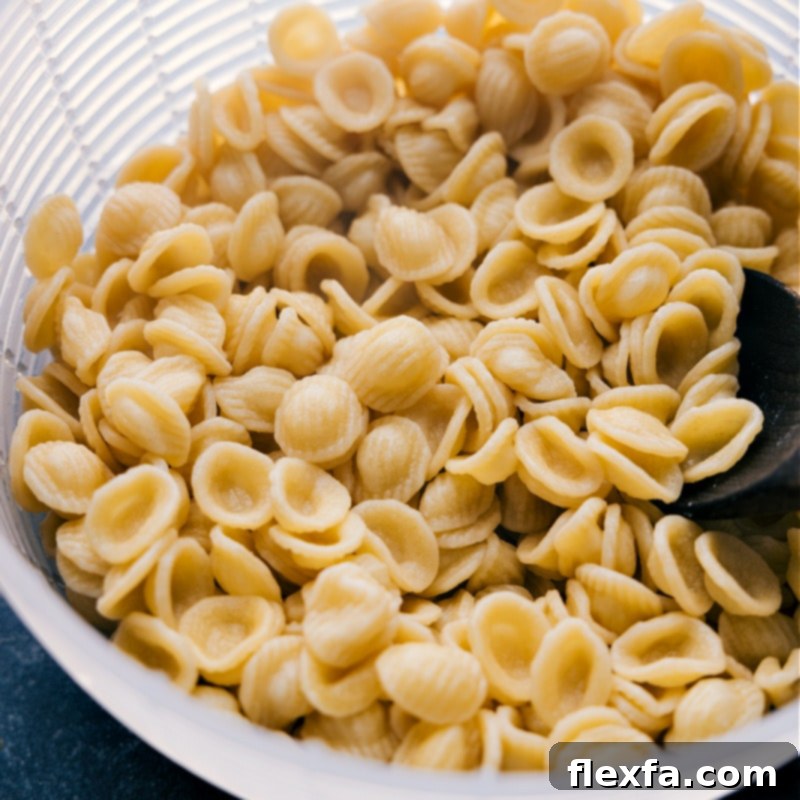
- “Little Ears”: Orecchiette, meaning “little ears,” is a pasta shape renowned for its ability to cup and hold sauces perfectly. Its rough, concave surface is ideal for clinging to the flavorful broth-based sauce in this recipe, ensuring every mouthful is packed with taste.
- Alternatives: If orecchiette isn’t available, don’t worry! Other pasta shapes with ridges or a similar ability to “catch” sauce, such as medium shells, fusilli, farfalle, or penne, make excellent substitutes.
- Aromatic Foundation: Garlic & Seasonings
- Freshly minced garlic, Italian seasoning, dried parsley flakes, and a touch of red pepper flakes create a fragrant and balanced aromatic base that complements the sausage without overpowering it. Adjust red pepper flakes to your preferred level of spice.
- The Light Sauce Base: Chicken Broth & Olive Oil
- Instead of heavy cream, chicken broth forms the liquid base of this light yet flavorful sauce, enriched by extra virgin olive oil and a touch of unsalted butter. This combination delivers a silky, savory coating that perfectly emulsifies with the pasta water.
Creative Variations: Customize Your Broccoli Sausage Pasta
One of the beauties of this Broccoli Sausage Pasta recipe is its adaptability. Feel free to experiment with different ingredients to suit your taste or what you have on hand. Here are some fantastic ways to make this dish uniquely yours:
- Orecchiette with Broccoli Rabe: An Italian Twist
For a more sophisticated and distinctly Italian flavor profile, consider swapping regular broccoli for tender broccoli rabe. While often confused, these two vegetables are not actually related (broccoli belongs to the cabbage family, whereas broccoli rabe is linked to turnips). Broccoli rabe features longer, thinner stalks and a slightly more bitter, peppery taste that is highly prized in Italian cuisine. It’s typically sautéed with olive oil to mellow its bitterness, and it would add an incredible layer of flavor to this pasta.
- Orecchiette with Sausage and Spinach: Boost Your Greens
If you’re looking to effortlessly incorporate more greens into your diet, baby spinach is an excellent addition. Simply stir in about 3 cups of coarsely chopped baby spinach when you add the cooked pasta to the sauce. The residual heat from the pasta and sauce will quickly wilt the spinach down, blending seamlessly into the dish and adding a subtle earthy note and extra nutrients.
- Vegetarian Orecchiette Pasta: A Meatless Alternative
To transform this into a vegetarian-friendly meal, you’ll need to make a few adjustments, as the Italian sausage is a significant contributor of both flavor and saltiness. In this case, we recommend starting with a different base recipe, such as a dedicated Broccoli Pasta recipe, and simply swapping the pasta type to orecchiette. Crucially, you’ll also want to replace the chicken broth with a flavorful vegetable broth to maintain the vegetarian integrity and ensure a delicious, savory base.
- Add a Splash of White Wine:
For an extra layer of complexity and aroma, deglaze the pan with a splash of dry white wine (like Pinot Grigio or Sauvignon Blanc) after browning the sausage and before adding the chicken broth. Allow it to simmer and reduce for a minute or two to cook off the alcohol and concentrate the flavors.
- Sun-Dried Tomatoes or Roasted Red Peppers:
Introduce a touch of sweetness and tang by stirring in 1/2 cup of chopped sun-dried tomatoes (packed in oil, drained) or roasted red peppers along with the broccoli. These additions complement the sausage and brighten the overall flavor profile.
Frequently Asked Questions (FAQs) About Broccoli Sausage Pasta
Orecchiette is a distinctive pasta shape originating from Apulia, a region in Southern Italy. Its name charmingly translates to ‘little ears,’ which perfectly describes its unique concave, disk-like appearance. One side of the pasta is characteristically rough, making it exceptionally good at catching and holding onto various sauces, from robust meat sauces to lighter vegetable-based preparations like ours.
If orecchiette is unavailable, look for other pasta shapes that have a similar size, ridges, or a rough surface to effectively capture and hold the sauce. Excellent substitutes include medium shells (conchiglie), fusilli (corkscrews), farfalle (bow-ties), or penne. These shapes will provide a satisfying texture and ensure the sauce coats every piece.
While this Broccoli Sausage Pasta is truly at its best when enjoyed immediately after preparation, you can certainly prepare some components ahead. Cook the sausage mixture and store it separately. Cook the pasta and broccoli just before serving, then combine everything for the freshest taste and texture. Reheated pasta dishes often require an extra splash of chicken broth or reserved pasta water to re-moisten the sauce.
This dish isn’t ideal for traditional meal prepping where you eat it several days later from the fridge, as pasta can absorb the sauce and become less appealing in texture. However, it’s excellent for serving fresh or as leftovers the next day. For best results, undercook the pasta by a minute or two if planning for next-day consumption.
Pro Tip: Don’t Forget to Reserve Pasta Water!
Do you ever struggle to remember saving some starchy pasta water before draining the pasta? It’s a common oversight, but this invaluable liquid is key to achieving a perfectly emulsified and silky smooth sauce. Here’s a simple, foolproof trick: Before you even start cooking your pasta, place your colander in the sink with a heat-safe mug or measuring cup positioned in its center. When it comes time to drain the pasta, you’ll immediately see the mug and be reminded to scoop out that essential pasta water first! This starchy water helps to bind the sauce ingredients together, creating a harmonious and cohesive coating for your orecchiette.
Explore More Light & Healthy Pasta Options:
If you loved the light yet satisfying nature of this Broccoli Sausage Pasta, you’ll be thrilled to discover more of our favorite healthy and flavorful pasta dishes. These recipes prove that pasta can be a nutritious and delicious part of a balanced diet, perfect for any night of the week.
Pasta And Pizza
Corn Pasta (Secretly Healthy!)
Pasta And Pizza
Vegetable Pasta Recipe
Dinner
Lightened Chicken Broccoli Alfredo Recipe
Dinner
Healthy Pasta Bake
Pin
Broccoli Sausage Pasta Recipe
Please note: This recipe has been updated from a previous one-pot version using “pronto” noodles, which are no longer available. The current recipe uses regular pasta, offering the same fantastic flavor with standard cooking methods. For those interested, the original recipe can be referenced here.
Video Overview
Equipment Needed
-
Large pan or Skillet
-
Large pot
Ingredients
- 1 (16-ounce) box orecchiette pasta see Note 1 below for substitutes
- 5 tablespoons olive oil divided
- 19 ounces Italian sausage sweet or spicy, casings removed (see Note 2)
- Salt and freshly ground black pepper
- 2 teaspoons minced garlic
- 2 teaspoons Italian seasoning
- 2 teaspoons dried parsley flakes
- 1/4 teaspoon red pepper flakes adjust to taste for more heat
- 1 cup chicken broth
- 4 cups fresh broccoli florets cut into bite-sized pieces
- 3 tablespoons unsalted butter
- 1/2 cup freshly grated Parmesan cheese plus more for topping (see Note 3)
- 1 lemon optional, for serving
- Fresh flat-leaf parsley optional, for garnish
Instructions Guide
-
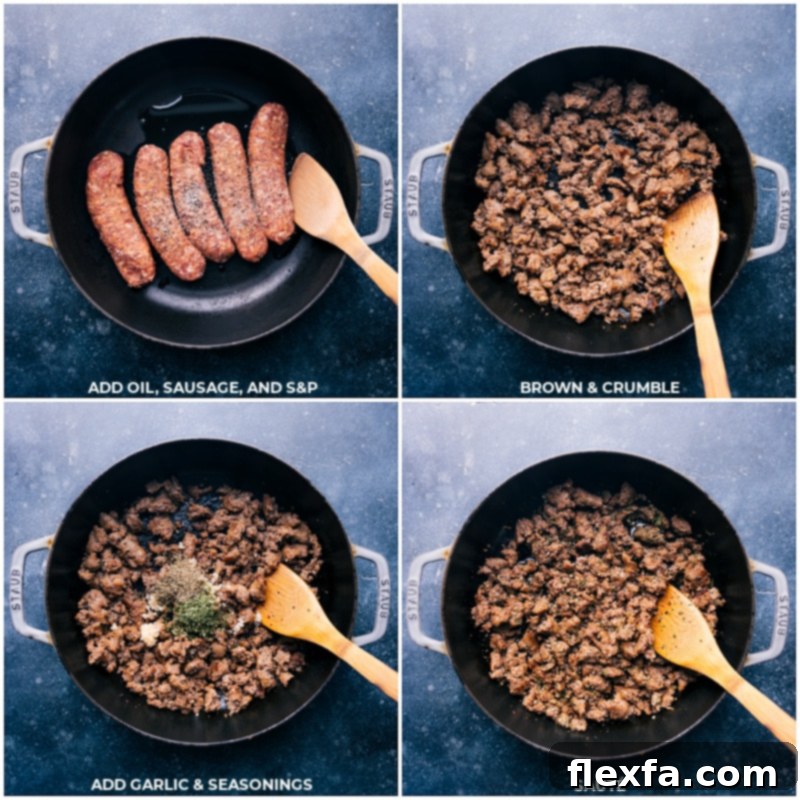
In a large, deep pan or skillet, heat 1 tablespoon of olive oil over medium-high heat. Add the Italian sausage (with casings removed, then crumbled) along with 1/2 teaspoon each of salt and freshly ground black pepper. Cook, breaking up the sausage with a spoon, until it is thoroughly browned and cooked through, typically 5–7 minutes. Drain any excess fat if necessary, leaving just enough to coat the pan. Reduce the heat to medium, then stir in the minced garlic, Italian seasoning, dried parsley, and red pepper flakes. Cook for another 30–60 seconds, or until the aromatics become fragrant, being careful not to burn the garlic.
-
While the sausage cooks, bring a large pot of generously salted water (about 2 teaspoons of salt per gallon) to a rolling boil. Add the orecchiette pasta and cook according to the package directions, aiming for the minimum recommended cooking time to ensure it remains al dente. Before draining, make sure to reserve at least 1 cup of the starchy pasta water – this is crucial for the sauce! Once cooked, drain the pasta thoroughly and set aside; do not rinse.
-
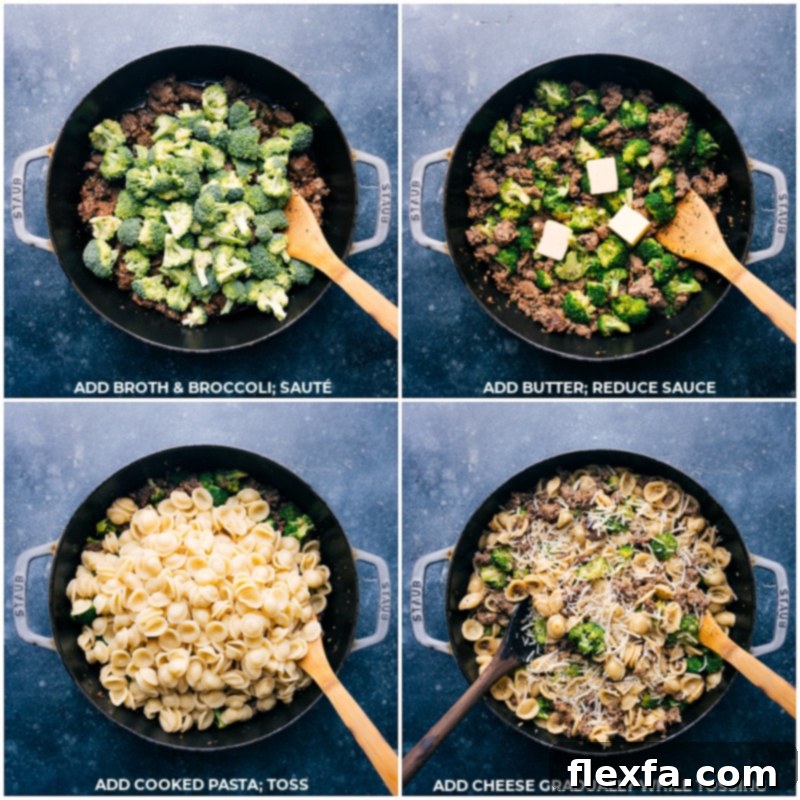
Return to the pan with the cooked sausage. Add the remaining 4 tablespoons of olive oil, the chicken broth, and the fresh broccoli florets. Increase the heat to medium-high and cook, stirring frequently, until the broccoli is crisp-tender, which usually takes about 3–5 minutes. The broccoli should still have a slight bite. Add the unsalted butter and stir continuously until it has fully melted and integrated into the sauce. Allow the sauce to simmer gently for a few minutes, giving it time to slightly reduce and thicken, concentrating its flavors.
-
Add the drained, cooked pasta directly to the sausage and broccoli mixture in the pan. Toss everything together vigorously to ensure the pasta is well coated with the flavorful sauce. Gradually add the freshly grated Parmesan cheese, about 2 tablespoons at a time, continuously tossing the pasta. Adding the cheese slowly helps prevent clumping and allows it to melt smoothly into the sauce, creating a beautiful emulsification (see Note 4). If the sauce appears too thick or needs loosening, gradually stir in a little of the reserved pasta water until it reaches your desired consistency. Optionally, squeeze fresh lemon juice over the entire dish for a burst of brightness. Taste and adjust seasonings (salt, pepper, red pepper flakes) as needed.
-
Divide the Broccoli Sausage Pasta among serving bowls. For an extra touch of freshness and flavor, garnish with a sprinkle of fresh flat-leaf parsley and an additional dusting of Parmesan cheese, if desired. Serve immediately and enjoy this delightful, light, and satisfying meal!
Recipe Notes & Tips
Note 2: Italian Sausage Tips: The quality of your Italian sausage significantly impacts the dish’s flavor. Always remove the casings before cooking to allow the sausage to crumble and brown effectively. You can opt for either mild or spicy sausage; both are delicious. If some diners prefer more heat, offer red pepper flakes on the side for individual customization.
Note 3: Parmesan Cheese Excellence: For the best flavor and melt, use a block of Parmesan and grate it fresh using the small holes of a grater. Alternatively, finely shredded Parmesan cheese can be used, but avoid canned Parmesan as it tends to be too salty and does not emulsify into the sauce as nicely.
Note 4: The Art of Emulsification: Emulsifying is the process of combining ingredients that normally don’t mix easily (like oil and water) into a stable, smooth mixture. In this recipe, tossing the pasta with the sauce and gradually adding cheese helps to create this emulsification. If your sauce seems separated or too thick, slowly add some of the reserved starchy pasta water while continuously tossing. The starch in the water acts as a binder, helping the sauce to cling beautifully to every piece of pasta, resulting in a velvety, even coating.
Storage & Reheating: As with most pasta dishes, this recipe is best enjoyed immediately after preparation for optimal texture and flavor. If you have leftovers, store them in an airtight container in the refrigerator for up to 2-3 days. When reheating, you will likely need to add a splash more chicken broth or reserved pasta water to re-thin the sauce, as the pasta tends to absorb liquids. This dish does not freeze and thaw particularly well, as the pasta and broccoli can become mushy.
Nutrition Information (Approximate)
Nutrition information is automatically calculated and is an approximation. It should only be used as a guide.
Love this recipe? Share your thoughts below!