
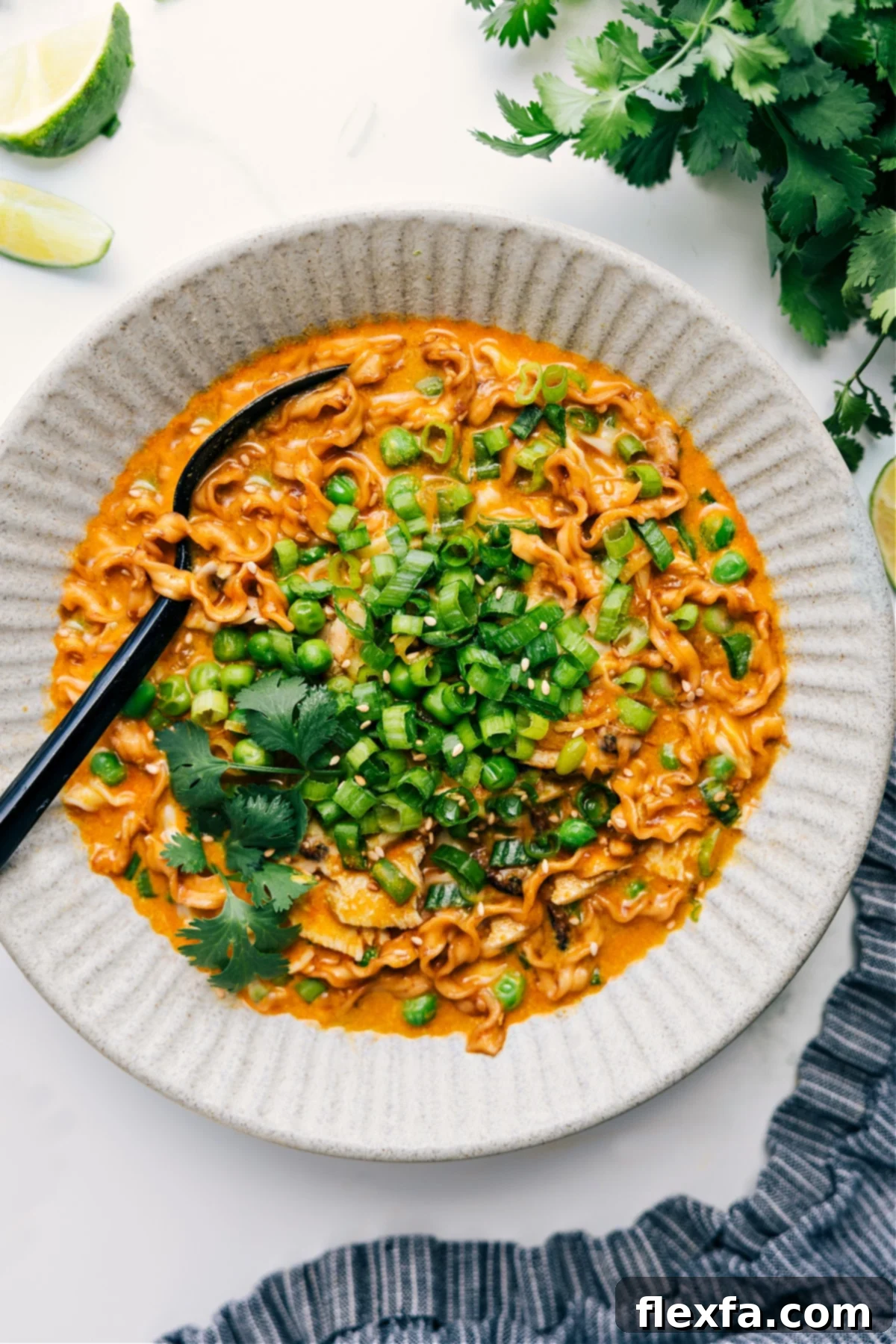
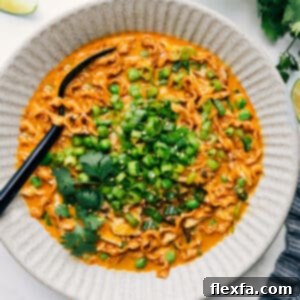
Curry Noodle Soup is a revelation for busy weeknights: a quick, family-friendly dinner featuring tender, succulent chicken, chewy ramen noodles, and bright green peas, all swimming in a rich, deeply flavorful coconut-curry broth. Best of all, this delightful meal can be on your table in just 30 minutes!
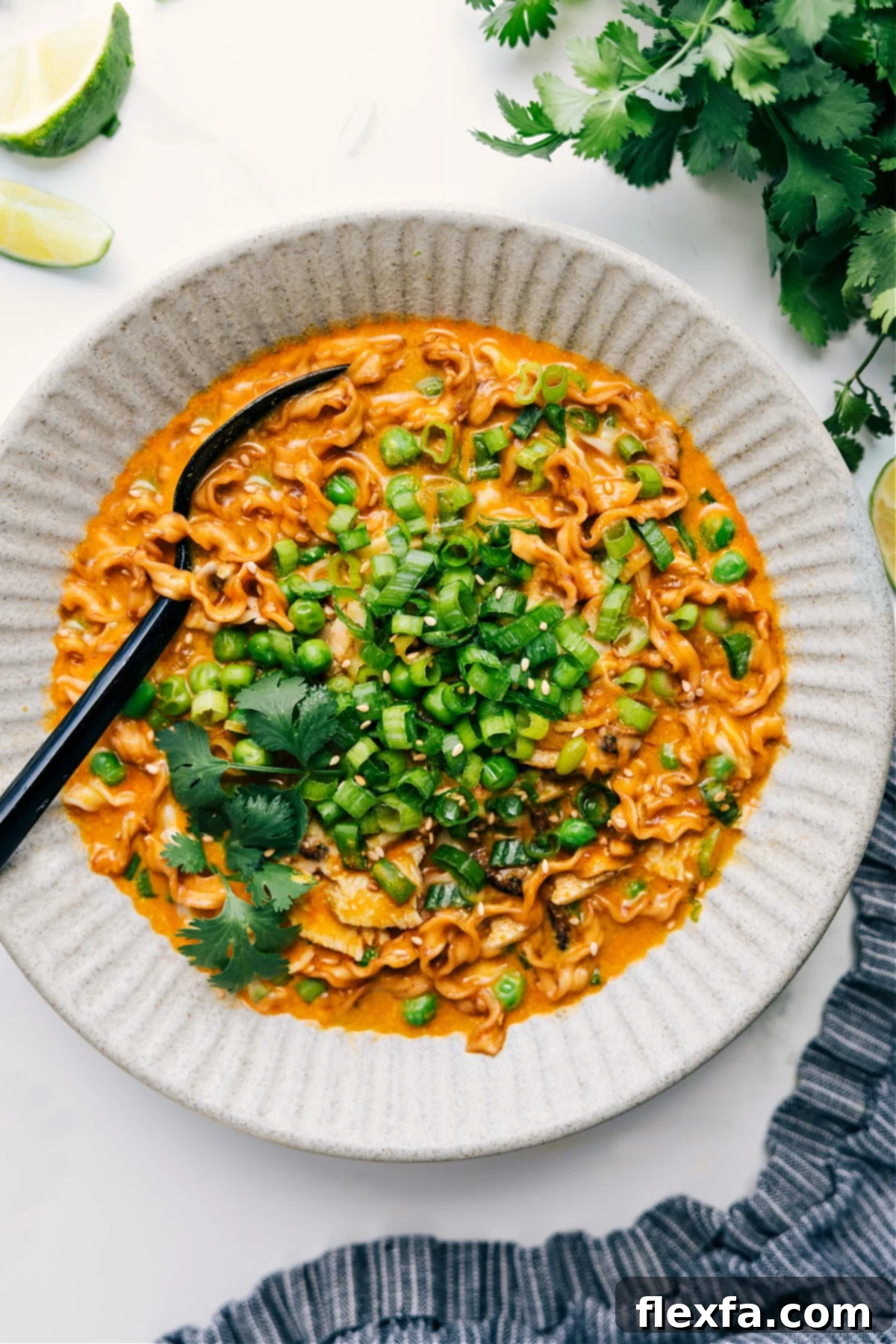
Experience the Irresistible Comfort of Red Curry Noodle Soup
Having perfected my beloved Green Curry Noodle Soup, I was inspired to create an equally delicious red curry counterpart. This red curry version quickly became a staple, especially when I had leftover red curry paste from preparing a creamy coconut chicken curry. It’s designed to be the ultimate comfort food, delivering a powerful punch of authentic flavor without the fuss.
One bite of this aromatic soup transports you. It’s incredibly simple to prepare, yet the depth of flavor is truly remarkable. In fact, after my sister tried it, she declared it “restaurant quality”—a sentiment I wholeheartedly echo. This isn’t just a meal; it’s a warm embrace in a bowl, perfect for chasing away the chill of a cool evening or simply indulging in a moment of culinary bliss.
Key Ingredients for Your Homemade Curry Noodle Soup
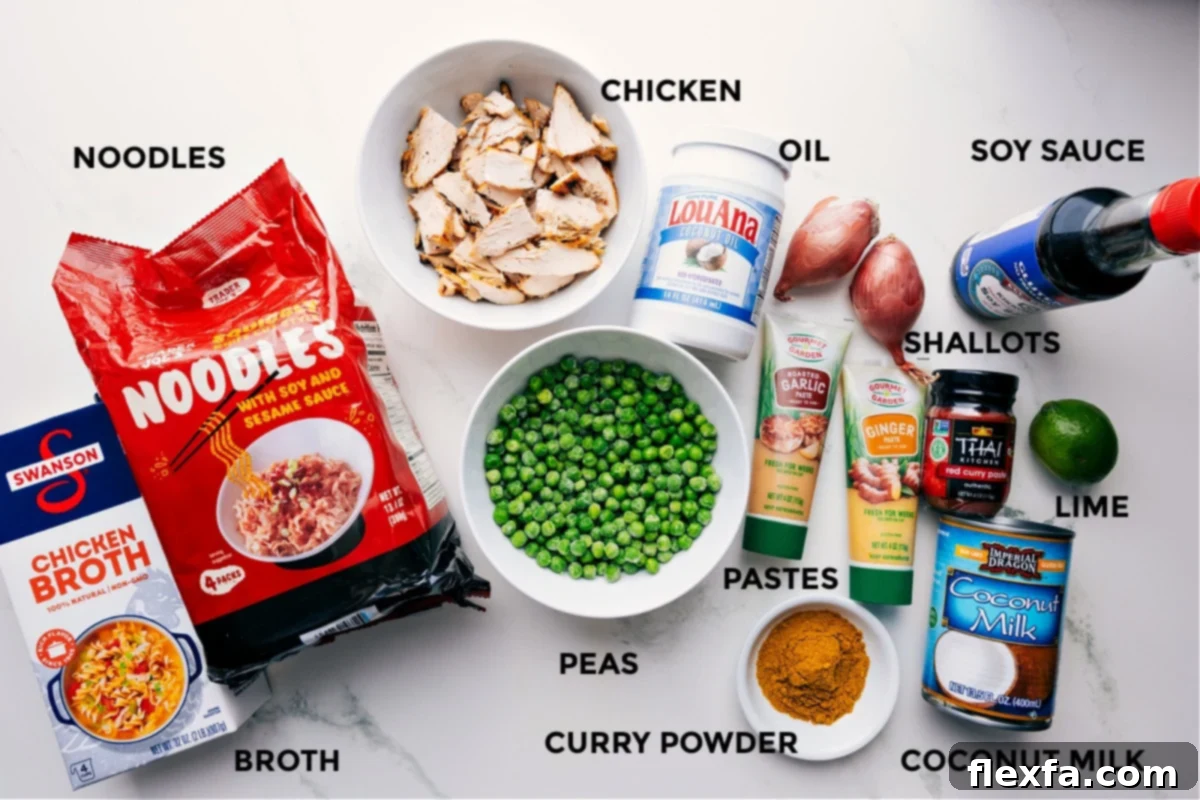
Crafting this quick and flavorful curry noodle soup requires a few staple ingredients, each playing a vital role in building its signature taste and texture. Here’s a closer look at what you’ll need:
- Chicken: The beauty of this recipe lies in its efficiency. You can use any pre-cooked chicken you have on hand – leftover rotisserie chicken, grilled chicken, or even boiled chicken breasts. There’s no need to reheat it beforehand; the hot, simmering broth will warm it perfectly as you assemble your bowls. This makes it an ideal choice for transforming last night’s leftovers into an exciting new meal.
- Noodles: Instant ramen noodles are our secret weapon for speed, providing that beloved chewy texture. Simply discard the seasoning packets, as we’ll be building our own rich broth. If ramen isn’t available or you prefer an alternative, options like chow mein, lo mein noodles, or even thin spaghetti work wonderfully to absorb the delicious curry broth. Aim for about 5–6 ounces of cooked noodles for optimal soup-to-noodle ratio.
- Coconut Milk: This is the heart of our creamy broth. Always opt for canned full-fat coconut milk, typically found in the international foods aisle of your grocery store. Full-fat coconut milk provides the luscious creaminess and rich body essential for a truly satisfying curry, also balancing the spice. Brands like Imperial Kitchen® are excellent choices for achieving that perfect consistency and flavor.
- Red Curry Paste: The backbone of this soup’s vibrant flavor. Red curry paste is a blend of red chilies, lemongrass, galangal, kaffir lime zest, and spices. The intensity can vary significantly between brands. Thai Kitchen® offers a milder paste, making it an excellent choice if you’re cooking for children or prefer a less spicy profile. For those who enjoy a bolder, spicier kick, Maesri® is a fantastic option known for its authentic and potent flavor. Adjust the amount to your spice preference.
- Garlic and Ginger: These aromatic powerhouses form the foundational flavor of many Asian dishes. To keep this recipe truly quick, using pre-minced garlic and ginger paste (found in the produce or refrigerated section) is a brilliant shortcut that doesn’t compromise on taste. If you have fresh, feel free to mince it yourself for an even brighter aroma.
- Chicken Stock & Yellow Curry Powder: These contribute to the savory depth and golden hue of the broth, complementing the red curry paste.
- Soy Sauce & Lime: Essential for balancing the flavors. Soy sauce adds umami and saltiness, while fresh lime juice provides a crucial bright, acidic finish that cuts through the richness of the coconut milk.
- Peas: Frozen peas add a pop of vibrant color and a touch of sweetness, making the soup more appealing and adding a gentle texture contrast.
Quick Tip: Noodle Portions
Regardless of the type of noodles you choose, whether instant ramen or thin spaghetti, aim to use approximately 5–6 ounces (about two standard instant ramen packets). This quantity ensures a perfect balance with the rich broth and tender chicken, preventing the soup from becoming too dense or too watery.
Mastering Your Curry Noodle Soup: Essential Tips for Success
While this recipe is incredibly straightforward, a few expert tips can elevate your Red Curry Noodle Soup from great to truly exceptional. Follow these suggestions to achieve the best possible flavor and texture:
- The Importance of Salt: After the soup comes to a gentle simmer, it’s crucial to taste and season with salt. Salt doesn’t just make the soup salty; it awakens and amplifies all the other flavors, making them more pronounced and harmonious. Start with a quarter teaspoon and adjust to your liking.
- Achieving Authentic Thai Flavor: For that unmistakable classic Thai essence, a dash of fish sauce is highly recommended. Its pungent, savory notes add incredible depth. However, if fish sauce isn’t to your taste or you prefer a vegetarian option, quality soy sauce makes an excellent substitute, providing a similar umami kick.
- Vegetable Swaps and Additions: Not a fan of peas? No problem! Frozen edamame (shelled, of course) makes a fantastic alternative, offering a slightly nuttier flavor and firmer texture. You can also experiment with other quick-cooking vegetables like thinly sliced carrots, bell peppers, or spinach, adding them during the last few minutes of simmering.
- Building the Flavor Base: Don’t rush the initial sautéing of shallots, ginger, garlic, and curry paste. Stirring constantly for 2-4 minutes until very fragrant is key. This step toasts the spices and aromatics, developing the foundational layers of flavor that will make your broth truly shine.
- Full-Fat Coconut Milk is Essential: As mentioned in the ingredients, always use full-fat coconut milk. It provides the necessary richness and creaminess that perfectly balances the spice of the curry paste. Lite coconut milk won’t achieve the same luxurious texture or mellow the flavors as effectively.
Smart Storage for Leftovers
Curry Noodle Soup, like many stews, can become even more flavorful the next day. However, for the best texture and to prevent the noodles from becoming mushy, proper storage is key. If you anticipate having leftovers, store the noodles and chicken separately from the broth. Combine them just before reheating.
To reheat: Gently warm the broth in a saucepan. Once hot, pour it over the noodles and chicken that you’ve portioned into bowls. This method ensures that your noodles retain their desirable chewiness, and everything heats through evenly, offering a delicious experience just like the first time.
More Comforting Curry Recipes to Explore
If you’ve fallen in love with the vibrant flavors of this Curry Noodle Soup, you’re in for a treat! The world of curry is vast and wonderfully diverse. Here are a few more comforting curry recipes from my kitchen that I highly recommend you try next:
- Mango Chicken Curry: A delightful blend of savory chicken with the sweet, tropical notes of fresh mango.
- Curry Lentil Soup: A hearty, wholesome, and vegetarian-friendly soup packed with nutritious lentils and an abundance of vibrant veggies.
- Coconut Curry Chicken: A reader favorite, this creamy and aromatic dish is a staple for good reason.
- Curry Chicken Salad: A unique and flavorful twist on classic chicken salad, perfect served on rolls or in lettuce wraps.
- Panang Curry: A rich and slightly sweeter curry, often featuring tender proteins and sweet potatoes for a comforting meal.
Print Recipe
Red Curry Chicken Noodle Soup
Chelsea Lords
This Red Curry Noodle Soup is a weeknight win—ready in just 30 minutes! It features a rich coconut-curry broth, tender chicken, flavorful ramen noodles, and bright peas, making it an incredibly satisfying and easy meal.
20 minutes
10 minutes
30 minutes
4 large bowls
Video Tutorial
Equipment
-
2 Large pot
Ingredients
- 1 tablespoon melted coconut oil
- 1/2 cup thinly sliced shallots (or use green onions)
- 1 tablespoon minced ginger (see Note 1)
- 1 tablespoon garlic paste
- 2 tablespoons red curry paste (see Note 2)
- 1 tablespoon yellow curry powder
- 1 (32-ounce) carton chicken stock (4 cups)
- 1 (13.5-ounce) can full-fat coconut milk (see Note 3)
- 2 tablespoons soy sauce
- 1 lime
- 1-1/2 cups frozen peas
- 2 (3-ounce) packets instant ramen noodles (discard seasoning packets)
- 2 cups cooked chicken, diced (rotisserie or leftover grilled chicken works best)
- Serving suggestions (see Note 4)
Instructions
-
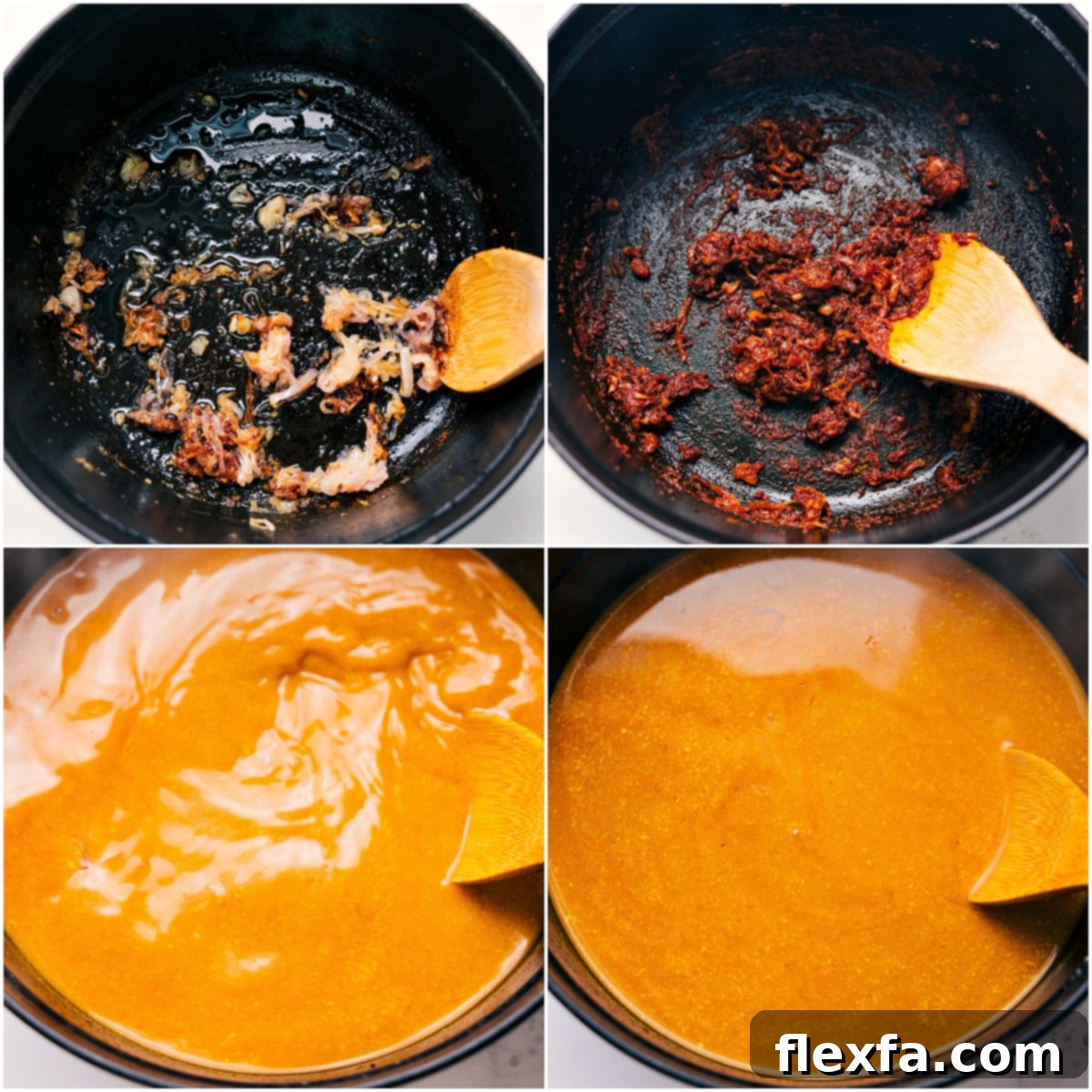
Prepare Aromatics: In a large soup pot, add coconut oil and heat over medium flame. Thinly slice the shallots and add them to the pot along with the minced ginger and garlic paste. Sauté the aromatics, stirring frequently, until they turn golden and fragrant, which should take about 3–5 minutes. Simultaneously, bring a large separate pot of water to a rolling boil for the noodles.
-
Build the Broth Base: Once the shallots are golden, stir in the red curry paste and yellow curry powder. Continue to stir constantly for 2–4 minutes, allowing the spices to toast and release their full aroma—do not rush this step, as it forms the essential flavor foundation for your soup. Increase the heat to medium-high. While continuously stirring and scraping the bottom of the pot to prevent sticking, gradually whisk in 1 cup of chicken stock until smoothly incorporated. Then, add the remaining chicken stock and the full-fat coconut milk. Stir well until the broth is smooth and uniform.
-
Simmer and Season: Bring the broth to a gentle simmer. Once simmering, reduce the heat to maintain a gentle, steady bubble and cook uncovered for 5 minutes. Stir in the frozen peas, soy sauce, and 2 tablespoons of fresh lime juice. Taste the soup and season with salt and freshly ground black pepper (I typically add about 1/4 teaspoon of each). This is your opportunity to adjust the flavors to your preference—refer to Note 5 for guidance on fine-tuning the taste.
-
Cook Noodles and Chicken: By now, the water for your noodles should be boiling. Discard the seasoning packets from the instant ramen. Add the ramen noodles to the boiling water and cook according to the package directions, typically 2-3 minutes, until tender. Drain the noodles thoroughly but do not rinse them. Immediately after draining, use tongs to divide the cooked noodles equally among 4 individual soup bowls. Dice your pre-cooked chicken and distribute it evenly among the bowls, approximately 1/2 cup per bowl.
-
Serve and Garnish: When you are ready to serve, ladle the hot, flavorful broth and peas directly over the noodles and chicken in each bowl. For an extra touch of freshness and flavor, garnish the bowls with fresh cilantro, thinly sliced green onions, additional lime wedges for squeezing, and a drizzle of Sriracha if you enjoy a little extra heat. Serve and enjoy your delicious homemade Red Curry Noodle Soup immediately.
Recipe Notes
Note 1: Quick Aromatics: To maintain the swift 30-minute prep time, refrigerated minced garlic and ginger paste are highly recommended. They offer convenience without sacrificing the robust flavor of fresh aromatics.
Note 2: Choosing Your Red Curry Paste: Red curry paste is the foundational flavor of this soup. It can typically be found in the international section of most grocery stores, Asian specialty markets, or online. I’ve successfully tested both Maesri® and Thai Kitchen® brands. Keep in mind that the intensity and flavor profiles will vary between brands. Thai Kitchen® is generally milder, ideal for a family-friendly meal, while Maesri® delivers a spicier and more authentic kick. If you’re unsure, start with less paste, as you can always add more to taste later.
Note 3: The Role of Full-Fat Coconut Milk: Using full-fat coconut milk is crucial for the success of this recipe. It beautifully offsets the spice of the curry paste, creating a rich, creamy, and well-balanced broth. Lite coconut milk will not provide the same luxurious texture or effectively temper the heat.
Note 4: Enhanced Serving Suggestions: Elevate your soup with these optional garnishes: 2–3 teaspoons of light brown sugar (if a touch more sweetness is desired to balance the flavors), fresh cilantro, extra lime wedges for a burst of acidity, thinly sliced green onions for a fresh crunch, and a drizzle of Sriracha for an additional layer of heat.
Note 5: Adjusting Flavors to Perfection: After the initial simmer, take a moment to taste and fine-tune the soup. This is where you can truly personalize it! Add extra fresh lime juice for brightness, more soy sauce for umami, a bit more curry paste for heat, or additional salt to enhance all the existing flavors. You might even find that a few teaspoons of sugar help to balance the savory and spicy notes. The final amounts will depend heavily on the specific brand of curry paste and coconut milk used, as well as your personal taste preferences. Remember, salt is essential for making all the other flavors pop!
Storage: Leftovers for Later: If you plan to enjoy this soup as leftovers, it’s vital to store the cooked noodles and chicken separately from the broth. Noodles can absorb too much liquid and become mushy if left submerged in the broth. Simply combine the warm broth with the noodles and chicken just before eating to preserve the best texture and flavor.
Nutrition Facts (Per Serving)
Serving:
1serving
|
Calories:
493kcal
|
Carbohydrates:
53.7g
|
Protein:
24.4g
|
Fat:
20.7g
|
Cholesterol:
34.2mg
|
Sodium:
1308.5mg
|
Fiber:
5.4g
|
Sugar:
9g
Nutrition information is automatically calculated, so should only be used as an approximation.
Enjoyed this recipe? Share your thoughts in the comments below!