

This Creamy Potato Leek Soup Recipe is a heartwarming classic, blending tender, buttery golden potatoes with the delicate sweetness of fresh leeks into a luxurious, thick, and utterly delicious bowl. It’s the kind of comforting meal that makes any day feel cozier.


Family Favorite Delight
Potato Leek Soup: A Velvety Delight Perfect for Bread Dunking!
The first time I introduced this creamy potato leek soup to my family, I admit I was a little nervous. Leeks aren’t always the most familiar vegetable, especially for picky eaters! However, the irresistible combination of buttery, melt-in-your-mouth potatoes blended with gently sautéed leeks created a magical flavor that won everyone over instantly. What seemed like an adventurous dish quickly became a beloved family favorite.
Now, as soon as the crisp autumn air arrives and the weather cools, this homemade potato leek soup becomes a staple in our kitchen. It’s incredibly satisfying and surprisingly simple to prepare, making it an ideal choice for a comforting weeknight dinner. There’s nothing quite like serving up a steaming bowl of this silky, rich soup, especially when paired with a big slice of crusty no-knead bread, perfect for soaking up every last drop. This soup consistently delivers a feeling of warmth and home with minimal fuss, proving that even simple ingredients can create extraordinary comfort food.
This recipe emphasizes ease without compromising on flavor, ensuring a hearty and healthy meal that delights both adults and children. Its vegetarian nature, with easy dairy-free modifications, also makes it versatile for various dietary preferences.
Key Ingredients for the Perfect Potato Leek Soup
Creating a truly exceptional creamy potato leek soup starts with understanding the role of each ingredient. Here’s a closer look at what you’ll need and how to make the best choices for a flavorful and smooth soup.
| Ingredient | Swaps / Tips for Optimal Flavor and Texture |
|---|---|
| Golden potatoes | Yukon Gold potatoes are highly recommended for their naturally creamy texture and thin skin, which often doesn’t require peeling. For an even smoother consistency, or if using Russet potatoes, peel them first. Avoid waxy varieties like red potatoes, as they can result in a gritty texture. |
| Leeks | These are the star! Choose leeks with firm, green tops and white bottoms. Their mild, sweet onion-like flavor is essential. While yellow onions can be used in a pinch, the soup’s flavor will be stronger and lack the signature delicate profile of leeks. Always clean leeks thoroughly to remove trapped dirt. |
| Butter | Unsalted butter adds a rich, nutty depth that perfectly complements the leeks and potatoes. For a dairy-free or vegan potato leek soup, substitute with olive oil or a high-quality vegan butter. |
| Chicken broth | A good quality chicken broth forms the flavorful base of the soup. To make this a vegetarian potato leek soup, simply swap it for a rich vegetable broth. Ensure your broth is low-sodium so you can control the seasoning. |
| Heavy cream | This is what gives the soup its luxurious, creamy texture and decadent richness. For a dairy-free potato leek soup, or a slightly lighter version, use full-fat coconut milk. Be aware that coconut milk will impart a subtle sweetness, altering the flavor profile slightly. You can also reduce or omit for an even lighter soup. |
| Garlic | Minced fresh garlic adds an aromatic foundation. Shallots can be a great alternative for a milder, more refined garlic flavor. In a pinch, garlic powder can be used, but fresh is always best. |
| Fresh thyme | Fresh thyme sprigs infuse the soup with an earthy, herbaceous aroma. If fresh is unavailable, use dried thyme (about 1/4 to 1/3 the amount of fresh). A bay leaf can also be added during simmering for an extra layer of complexity. Parsley can be used as a fresh garnish. |
| White Wine Vinegar (Optional) | A small splash of white wine vinegar at the end is a secret weapon that brightens the flavors and balances the richness of the cream and potatoes. Don’t skip it if you want that extra pop! |
| Salt and Pepper | Essential for seasoning! Always taste and adjust as you go. Freshly cracked black pepper is always preferred. |

How To Make This Creamy Potato Leek Soup Recipe
Making a silky, rich potato leek soup might seem gourmet, but it’s surprisingly straightforward. Follow these detailed steps to achieve a perfectly creamy and flavorful result every time:
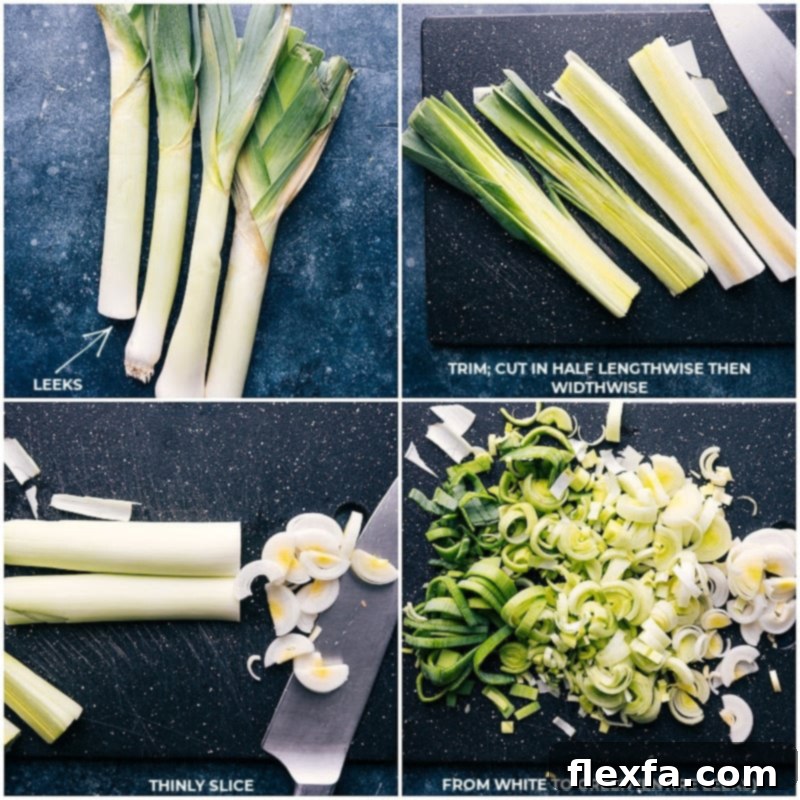
- Thoroughly Prep Your Leeks: Leeks are known for trapping dirt between their layers. Begin by trimming off the tough green tops and the root end. Cut the leeks in half lengthwise, then slice them thinly into half-moon shapes. Place the sliced leeks in a colander and rinse them very thoroughly under cold running water, separating the layers with your fingers to dislodge any hidden grit. Once clean, dry them completely, ideally using a salad spinner, to prevent excess water from diluting your soup’s flavor.
- Sauté Leeks to Sweet Perfection: In a large, heavy-bottomed soup pot or Dutch oven, melt the butter with a drizzle of olive oil over medium heat. Add the cleaned and dried leeks, minced garlic, salt, and pepper. Sauté slowly, stirring frequently, for about 10-12 minutes, until the leeks are incredibly soft, wilted, and slightly golden. The key here is patience; cooking them slowly coaxes out their natural sweetness without browning them too much, which can lead to a bitter flavor. Reduce heat if they start to brown too quickly.
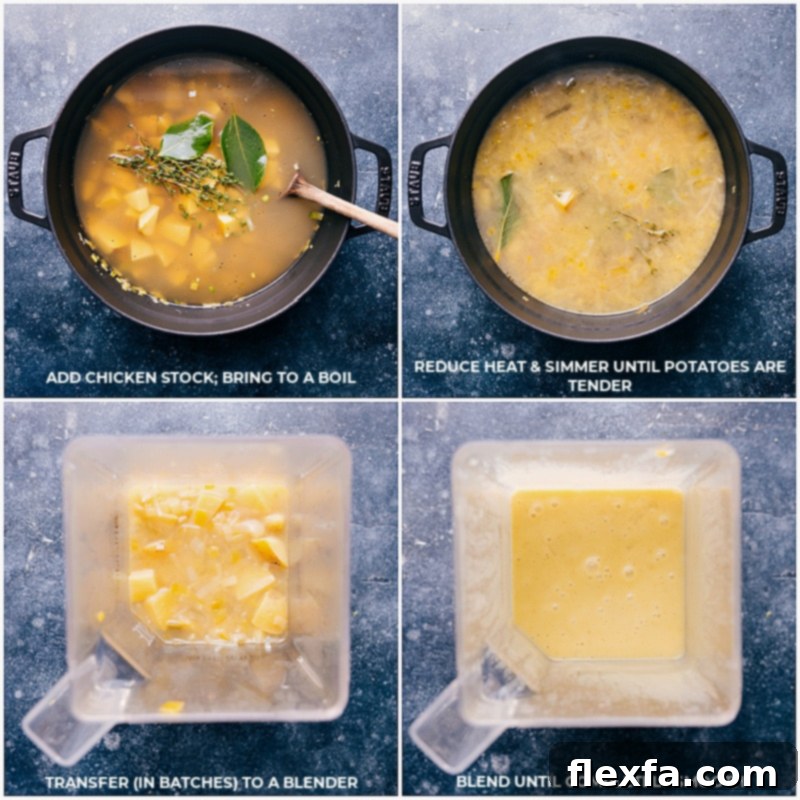
- Prepare Potatoes and Simmer the Soup Base: While the leeks are sautéing, chop your golden potatoes into 1/2-inch pieces. No need to peel them if using Yukon Gold, as their thin skin blends beautifully into the soup. Add the chopped potatoes, white wine vinegar (if using), chicken or vegetable stock, fresh bay leaves, and fresh thyme sprigs to the pot with the softened leeks. Bring the mixture to a gentle boil uncovered. Once boiling, reduce the heat to low, cover the pot, and let it simmer for 15-18 minutes, or until the potatoes are fork-tender. This ensures they will blend smoothly. Turn off the heat and let the soup cool slightly for about 10 minutes before blending. Remember to carefully remove and discard the thyme sprigs and bay leaves.
- Achieve the Perfect Creamy Texture: For a truly silky soup, you’ll need to blend it. You have two main options:
- Immersion Blender: This is the easiest method. Simply place the immersion blender directly into the pot and blend until the soup is completely smooth. You can control the consistency by how long you blend.
- Regular Blender: If using a standard blender, work in batches. Only fill the blender halfway with soup at a time. Secure the lid tightly, but remove the center cap (if it has one) and cover the opening with a folded kitchen towel to allow steam to escape. Start blending on low speed and gradually increase to high until smooth. Blending hot liquids in a full, sealed blender can be dangerous due to steam pressure. Blend each batch for at least 1-2 minutes for the creamiest result, then return all blended soup to the pot.
- Finish with Richness and Brightness: Return the blended soup to low heat. Stir in the heavy cream and let it warm through gently; do not boil the soup once the cream has been added, as this can cause it to curdle or separate. Taste the soup and adjust seasonings as needed, adding more salt, pepper, or a pinch of garlic powder to taste. If the soup is too thin, simmer it uncovered for a few extra minutes until it reaches your desired thickness. If it’s too thick, simply add a splash more stock or cream. Ladle the hot soup into bowls and garnish with fresh chives, a swirl of extra cream, or crunchy croutons. Serve immediately with warm, crusty bread for dipping.
Quick Blending Tip: Safety First!
Blending Hot Soup: When using a conventional blender, always allow the soup to cool slightly before blending. Fill the blender pitcher no more than halfway, and blend in 2–3 batches. It’s crucial to vent the lid by removing the center cap and covering it with a folded kitchen towel; this allows steam to escape safely and prevents the lid from blowing off due to pressure. For an easier and less messy (though sometimes slightly less smooth) option, an immersion blender is highly recommended.
Storage and Freezing Tips for Potato Leek Soup
- Refrigeration: Store leftover Potato Leek Soup in an airtight container in the fridge for up to 5 days.
- Reheating: Gently reheat on the stove over low to medium heat, stirring frequently. Avoid bringing it to a rolling boil, as this can affect the cream’s texture. If the soup has thickened too much, add a splash of extra chicken or vegetable stock, or a little more cream, to reach your desired consistency.
- Freezing: For best results when freezing, do so before adding the heavy cream. Dairy can sometimes separate and become grainy when thawed and reheated after freezing. Once thawed, you can warm the soup on the stove and then stir in the heavy cream. Freeze in individual portions for easy meal prep.
What Goes Well With This Delicious Soup?
This creamy potato leek soup is a meal in itself, but it truly shines when paired with certain complementary dishes. Here are some fantastic ideas to elevate your dining experience:
Appetizers
Life-Changing No-Knead Dinner Rolls
Salads
Classic Caesar Salad
Side Dishes
Easy Roasted Vegetables
Sandwiches
The Best Grilled Cheese Sandwich Recipe

Pin
The Ultimate Creamy Potato Leek Soup Recipe
Video Tutorial
Equipment
-
Large Pot
-
Immersion Blender or conventional blender
Ingredients
- 2 tablespoons olive oil
- 2 tablespoons unsalted butter
- 2 to 3 leeks thinly sliced, yielding about 4.5 cups
- 1 tablespoon minced garlic
- 1 teaspoon salt
- 3/4 teaspoon black pepper
- 2 pounds baby gold potatoes unpeeled and chopped to 1/2-inch pieces, approximately 7 cups
- 1 tablespoon white wine vinegar (optional, but highly recommended for brightness)
- 7 cups chicken stock or vegetable stock if preparing a vegetarian potato leek soup
- 2 fresh bay leaves or 3 dried bay leaves
- 6 sprigs fresh thyme or 3/4 teaspoon dried thyme
- 1 cup heavy cream
- Serving suggestions see note 1 for garnish ideas
Instructions
-
Prepare the Leeks: Begin by trimming the very ends of the leeks and removing any tough outer leaves. Cut each leek in half lengthwise, then slice each half into thin pieces. This should yield approximately 4.5 cups of sliced leeks. Transfer the sliced leeks to a colander and rinse them thoroughly under cold running water, separating the layers with your hands to ensure all dirt and grit are removed. Leeks are notoriously dirty, so this step is crucial! Once clean, dry them completely using a clean kitchen towel or a salad spinner.
-
Sauté Leeks and Aromatics: Set a large, heavy-bottomed soup pot or Dutch oven over medium heat. Drizzle in the olive oil and add the unsalted butter. Once the butter is mostly melted and shimmering, add the prepared leeks, minced garlic, 1 teaspoon of salt, and 3/4 teaspoon of pepper (adjust to your preference). Cook, stirring regularly, until the leeks are soft, beautifully wilted, and slightly golden, which typically takes about 10–12 minutes. Be careful not to let them brown too quickly; reduce the heat if necessary to prevent burning. While the leeks are cooking, prep your potatoes according to Note 2.
-
Simmer the Soup: Add the chopped potatoes, 1 tablespoon of white wine vinegar (if using, for a touch of brightness), 7 cups of chicken stock (or vegetable stock for a vegetarian option), fresh bay leaves, and fresh thyme sprigs to the pot. Increase the heat to bring the mixture to a boil (leave it uncovered during this stage). Once it reaches a boil, cover the pot with a lid and reduce the heat to low. Let it simmer gently for 15–18 minutes, or until the potatoes are easily pierced with a fork. This ensures they will blend into a smooth, creamy texture. Turn off the heat and allow the soup to cool slightly for about 10 minutes. Carefully remove and discard the thyme sprigs and bay leaves before proceeding.
-
Blend to Creaminess: Now it’s time to achieve that signature creamy texture. You can either use an immersion blender directly in the pot, blending until very smooth. Alternatively, if using a high-powered regular blender, transfer the soup in batches. Crucially, do not fill the blender above halfway to prevent it from exploding due to steam expansion (refer to Note 3 for detailed safety tips). Blend each batch for at least 2 minutes until it is exceptionally smooth and velvety, then return all the blended soup to the original pot.
-
Finish and Serve: Place the pot back over low heat. Pour in the 1 cup of heavy cream and stir gently until it is warmed through. Avoid boiling the soup once the cream has been added. Taste and adjust the seasonings, adding more salt and/or pepper if needed. Troubleshooting: If your soup is too thin, simmer it uncovered for a bit longer until it thickens to your liking. If it’s too thick, simply add a splash more stock or cream to achieve the desired consistency. Ladle the warm, comforting soup into bowls, optionally drizzle a little extra cream on top, and garnish with finely chopped fresh chives. For a truly hearty meal, serve with crunchy croutons or generous slices of warm, crusty bread for dipping!
Recipe Notes
Note 2: If you’re using golden potatoes (like Yukon Golds), there’s generally no need to peel them. The skin on this variety is so delicate and thin that it blends seamlessly into the soup, adding a bit of extra fiber and nutrients without impacting the smooth texture. However, if you opt for a different type of potato with a thicker or waxier skin, such as Russet potatoes, you will want to peel them first to ensure the smoothest possible soup.
Note 3: When blending hot liquids, particularly soups, it’s important to remember that heat causes expansion, creating pressure within a sealed blender. If your blender is too hot or too full, this pressure can cause the lid to blow off or the soup to spill over, leading to burns. To safely blend:
- Always allow the soup to cool for about 10 minutes before blending.
- Only fill the blender pitcher halfway at most. (You’ll likely need to blend in 2–3 batches.)
- If your blender has a specific “hot/soup” setting, use it.
- If not, remove the small cap from the center of the blender lid and cover the opening with a folded kitchen towel. Hold the towel firmly in place with your hand. This allows steam to escape while preventing splatters.
- Start blending on the lowest speed and gradually increase it. Watch carefully the entire time it’s blending.
- An immersion blender is a safer and often more convenient alternative for hot soups.
Storage: To store your creamy potato leek soup, transfer it to an airtight container and keep it in the refrigerator for up to 5 days. If you plan on freezing this delicious soup, it is highly recommended to do so before adding the heavy cream. When dairy is frozen and then thawed, it can sometimes separate or become grainy, altering the texture of the soup. Once thawed, you can reheat the soup and stir in the cream just before serving for the best results.
Nutrition Information
Nutrition information is automatically calculated and is an estimate based on the ingredients and methods used. It should only be used as an approximation and can vary based on specific brands and ingredient choices.
Potato Leek Soup Recipe FAQs
Have questions about making the perfect creamy potato leek soup? Here are answers to some common queries to help you on your culinary journey.
Yes, absolutely! While many traditional recipes suggest peeling potatoes first, if you’re using Yukon Gold potatoes, their skin is remarkably thin and tender. It softens beautifully during cooking and blends seamlessly into the soup, contributing to its creamy texture and adding extra nutrients without being noticeable. If you choose other varieties with thicker skins, like Russets, you might prefer to peel them for a perfectly smooth consistency.
Bitterness in potato leek soup can be caused by a few factors. One common culprit is overcooking the leeks or allowing them to brown too much during the sautéing stage. Leeks, like onions, can develop a bitter taste if scorched. Another reason could be using old or dried out herbs, or cooking fresh herbs for too long or at too high a heat. Always aim for gently softened, translucent leeks and ensure your herbs are fresh for the best flavor.
No, it is not recommended to soak the potatoes for this particular soup. Soaking potatoes, a common practice for fries or roasted potatoes, is done to remove excess starch. However, for creamy potato leek soup, we actually rely on the natural starch from the potatoes to help thicken the soup to that desired rich and velvety consistency. Washing away too much starch would result in a thinner soup.
A gritty texture in potato soup can be quite unappetizing. This often occurs if you use floury potato varieties (like Russets) without peeling them, as their thicker skins might not blend as smoothly as delicate Yukon Golds. Overcooking the potatoes can also sometimes lead to a mealy, gritty texture. Additionally, adding the cream too early and then cooking the soup at too high a heat or boiling it after the cream has been incorporated can cause the dairy to separate and give a grainy mouthfeel. Using Yukon Gold potatoes and blending thoroughly are key steps to avoid grittiness.
Creative Variations for Your Potato Leek Soup
This classic potato leek soup recipe is wonderfully versatile! Feel free to experiment with these variations to customize it to your taste:
- Vegan or Dairy-Free: To make this soup entirely vegan or dairy-free, simply replace the butter with olive oil or vegan butter, and substitute the chicken broth with vegetable broth. For the creamy finish, swap the heavy cream with full-fat coconut milk. Be aware that coconut milk will impart a subtle sweetness and coconut flavor, creating a delicious new dimension to the soup.
- Bacon Lover’s Delight: For a smoky, savory twist, start by crisping 4-6 slices of bacon in your soup pot over medium heat. Remove the cooked bacon, crumble it, and set it aside for garnish. Leave about 1-2 tablespoons of the flavorful bacon grease in the pot and use it to sauté the leeks. The bacon grease will infuse the entire soup with an incredible depth of flavor.
- For a Heartier, Chunkier Texture: If you prefer a soup with a bit more bite and substance, you don’t have to blend it completely smooth. Only blend half or two-thirds of the soup mixture, leaving some of the potato and leek pieces intact. This creates a delightful contrast between creamy and chunky textures.
- Herb and Spice Boost: Feel free to experiment with other herbs! A touch of fresh rosemary or chives can add another layer of flavor. For a slight kick, a pinch of white pepper or even a tiny dash of cayenne pepper can be stirred in at the end.
- Add Vegetables: While traditionally simple, you can add other quick-cooking vegetables like spinach or finely chopped carrots during the last 5-10 minutes of simmering for extra nutrients and color.
This creamy potato leek soup is more than just a recipe; it’s an invitation to enjoy simple, wholesome ingredients transformed into a luxurious and deeply satisfying meal. Whether you’re making it for a weeknight dinner or a special gathering, it promises warmth, comfort, and deliciousness in every spoonful. Happy cooking!