
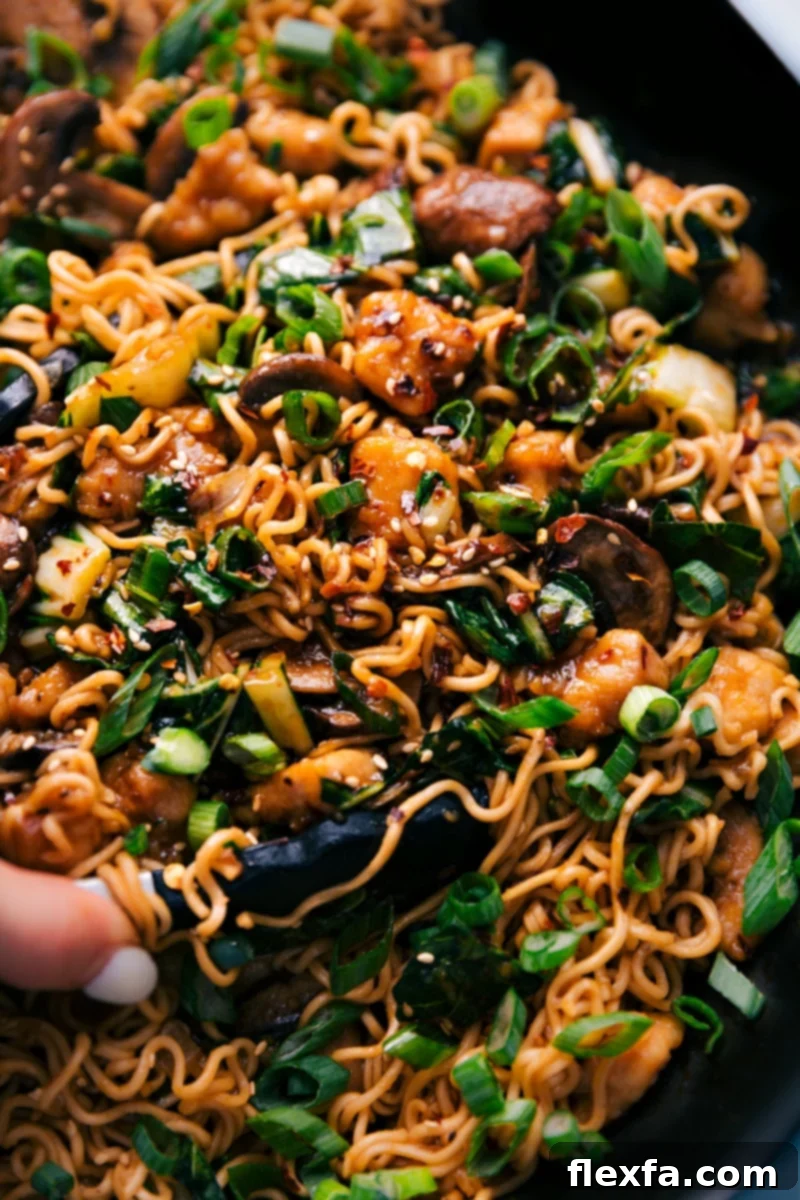
General Tso Ramen is a delightful fusion dish that perfectly marries the iconic sweet and spicy flavors of General Tso’s Chicken with the comforting appeal of ramen noodles. This recipe features succulent chicken, tender sautéed mushrooms, crisp bok choy, and springy ramen noodles, all coated in a rich, fragrant stir-fry sauce. It’s an explosion of flavors and textures, making it an ideal choice for a quick, satisfying, and incredibly delicious weeknight meal.
If you love the convenience and versatility of instant ramen, be sure to explore other favorites like Ground Beef Ramen, Egg Roll Noodles, or Chicken Ramen Noodles for more culinary inspiration.
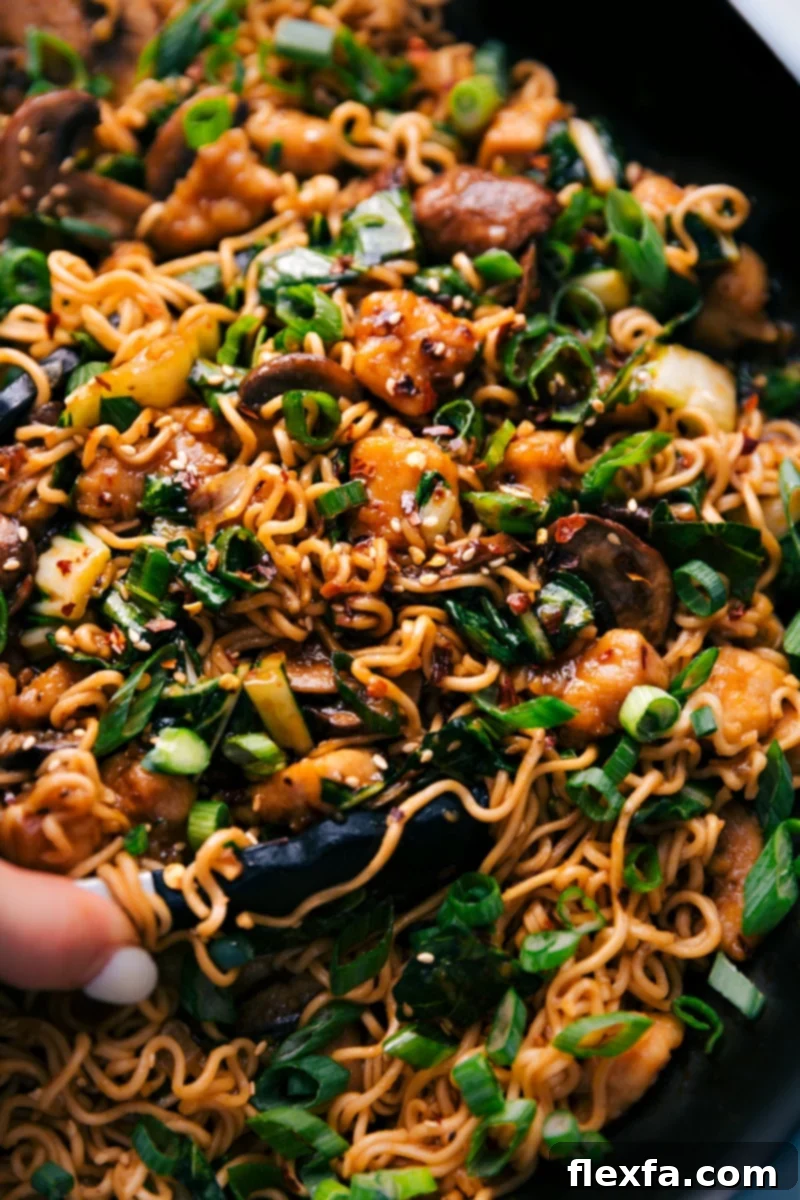
General Tso Ramen: A Flavorful Weeknight Feast
Inspired by the beloved General Tso Chickpeas – a fantastic meatless stir-fry favorite in my household – this General Tso Ramen takes those irresistible sweet and spicy notes and transforms them into an ultimate comfort food experience. It’s a dish that captures the essence of classic Chinese-American takeout but delivers it fresh and fast in your own kitchen.
This recipe brings together instant ramen noodles, tender pan-seared chicken, an array of vibrant sautéed vegetables, and a truly exceptional sweet and spicy stir-fry sauce. The best part? With a few smart shortcuts, this entire meal can be on your table in under 30 minutes, making it a perfect solution for busy evenings when you crave something incredibly flavorful without a lengthy cooking process. It’s not just quick; it’s a guaranteed crowd-pleaser that satisfies both adults and picky eaters alike.
Customizing the Heat: Your Guide to Spice Levels
General Tso’s dishes are known for their distinctive spicy kick, and this ramen is no exception. However, the beauty of homemade cooking is that you have complete control over the heat level to suit your family’s preference. Our primary source of spice in this recipe comes from chili garlic sauce, a wonderfully aromatic condiment that delivers both heat and a savory depth.
- For a Mild Kick: If you’re cautious about spice or prefer a very subtle warmth, start with just 1 teaspoon of chili garlic sauce. This amount provides a gentle heat that is beautifully balanced by the sweetness in the sauce, ensuring a family-friendly flavor profile.
- For Medium Heat: For those who enjoy a noticeable but not overwhelming spice, aim for 2 teaspoons of chili garlic sauce. This strikes a perfect balance, allowing the piquant notes to shine without dominating the other flavors.
- For a Hot and Fiery General Tso: If you’re a true spice enthusiast, go for 3 teaspoons of chili garlic sauce. This will deliver a robust heat that truly lives up to the General Tso name, igniting your palate with every bite.
No Chili Garlic Sauce? No Problem! If you don’t have chili garlic sauce on hand, red pepper flakes are an excellent substitute. Begin with about ½ teaspoon and add more to taste. Remember, you can always increase the spice, but it’s much harder to reduce it. It’s always a good idea to start with less and adjust as you go. Keep in mind that chili garlic sauce also contributes a savory element, so if you use only red pepper flakes, you might want to slightly increase another umami-rich ingredient like soy sauce or hoisin.
An important tip for balancing flavor: the sugar in General Tso sauce is crucial for mellowing the heat. If you significantly reduce the amount of chili sauce, you might also want to slightly cut back on the brown sugar to maintain a harmonious sweet-to-spicy ratio.
Streamlining Your Cooking: Essential Shortcut Prep Ideas
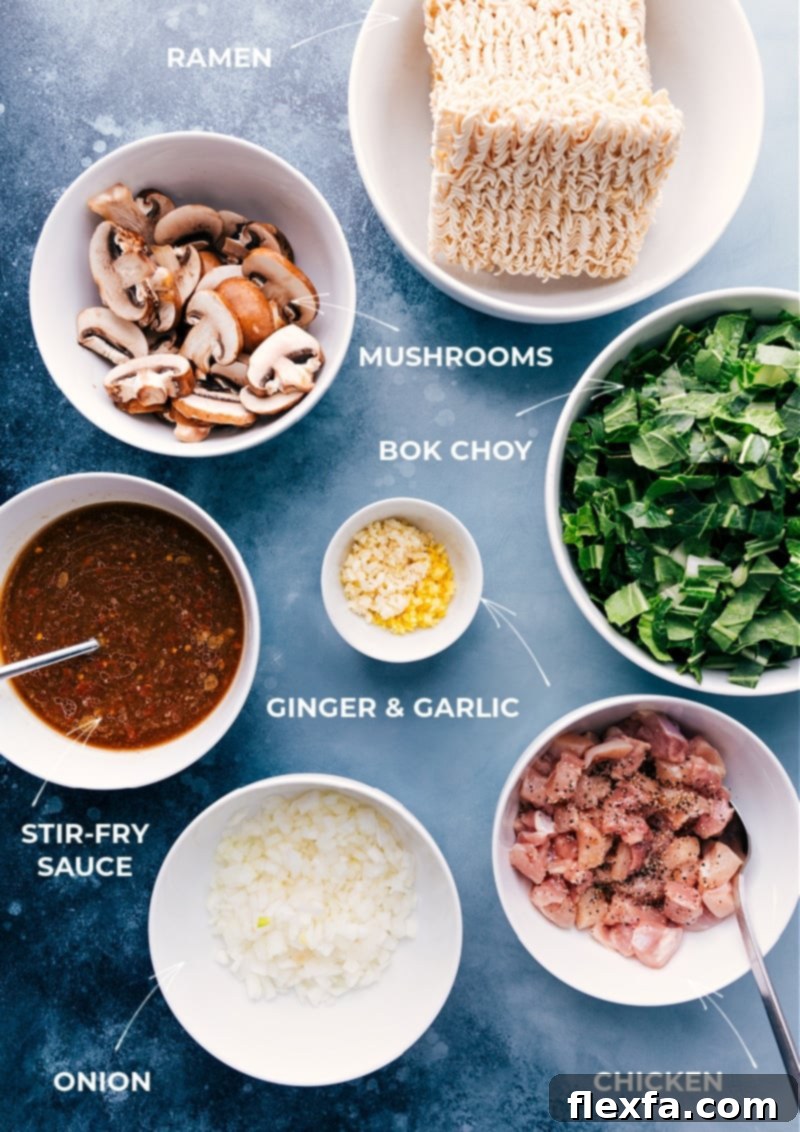
The goal with this General Tso Ramen recipe is to make it as quick and effortless as possible without sacrificing flavor. Stir-fries cook rapidly, so having all your ingredients prepped and ready before you start cooking is key (this is known as “mise en place”). Here are some fantastic shortcut ideas to shave even more time off your preparation:
- Yellow Onion: Chopping onions can be time-consuming. To minimize cutting, opt for pre-diced onions from the produce section or a bag of frozen diced onions. If using frozen, simply cook them in your wok until any excess water has evaporated before proceeding with the recipe. Alternatively, a food processor can quickly dice a whole onion in seconds.
- Garlic: Skip mincing fresh garlic by using jarred, minced garlic. While fresh garlic offers a more potent flavor, the jarred version is a fantastic time-saver for busy weeknights.
- Ginger: Fresh ginger adds an incredible aromatic punch. For speed, use ginger paste, which comes in a convenient tube. If you don’t have fresh ginger or ginger paste, ½ teaspoon of ground ginger can be substituted, though the flavor profile will be slightly different.
- Sliced Mushrooms: Many grocery stores offer pre-sliced mushrooms, eliminating the need for you to slice them yourself. This simple swap can save precious minutes.
- Bok Choy: While fresh bok choy is wonderful, if you’re in a pinch, you can replace it with equal amounts of a pre-chopped coleslaw mix (primarily green cabbage). This offers similar crunch and integrates well into the stir-fry.
- Make the Sauce Ahead of Time: This isn’t a cooking shortcut, but it’s a massive time-saver for meal prep. Whisk all the sauce ingredients together in a small bowl, store it in an airtight container in the refrigerator, and it will be ready to go when dinner time rolls around. This allows you to focus solely on cooking the chicken and vegetables on the day of.
Pro Tip: Handling Aromatics
While jarred garlic and ginger pastes are excellent for speeding up prep, be mindful when cooking them. Minced or jarred aromatics can burn more easily at the high temperatures typically used for stir-frying. If you’re using these shortcuts, consider slightly lowering your heat and being extra vigilant with stirring to prevent burning, which can introduce a bitter taste to your dish. Freshly minced garlic and ginger tend to be more forgiving in a hot wok.
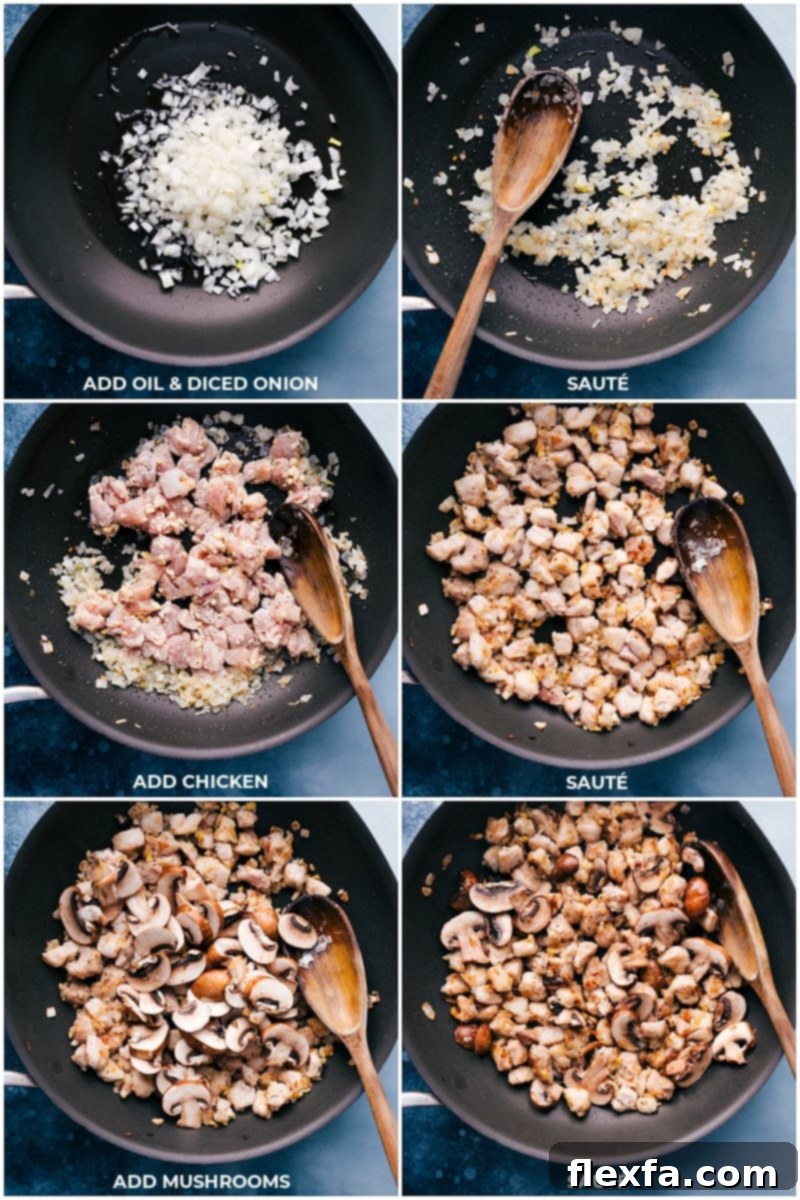
Crafting the Signature Flavor: A Deep Dive into the General Tso Sauce
The sauce is undeniably the star of this General Tso Ramen, infusing every ingredient with its irresistible sweet, spicy, and savory character. Despite a good number of ingredients, it comes together in mere minutes by simply whisking everything in a small bowl. Here’s a closer look at the key components that make this sauce truly outstanding:
- Soy Sauce: This is the foundation of umami and saltiness in Asian cuisine. For the best flavor and depth, use regular (not lite/low-sodium) soy sauce, as it provides a richer, more authentic taste.
- Chicken Broth/Stock: Added for liquid volume and an extra layer of savory flavor. Opt for low-sodium chicken broth or stock to better control the overall saltiness of the dish, especially since soy sauce also contributes significant sodium.
- Cornstarch: Essential for thickening the sauce, giving it that characteristic glossy, clingy texture. Cornstarch creates a silky mouthfeel and helps the sauce adhere perfectly to the noodles, chicken, and vegetables. If you need a substitute, tapioca starch or arrowroot powder can often be used, though they may require slight adjustments in quantity for desired thickness.
- Toasted Sesame Oil: A non-negotiable ingredient for authentic Asian flavor. Toasted sesame oil is deeply aromatic and nutty, providing a finishing touch that elevates the entire dish. Look for it in the Asian section of your grocery store for the best quality, such as Oi Toasted Sesame Oil.
- Rice Vinegar: This bright and tangy vinegar balances the richness of the sauce, adding a crucial acidic counterpoint that prevents it from tasting heavy or overly sweet. Rice wine vinegar works just as well.
- Chili-Garlic Sauce (or Chili Paste): As discussed, this provides the signature heat. Use a small amount for a gentle kick or more for a fiery experience. Popular brands like Huy Fong Chili Garlic Sauce are widely available and highly recommended.
- Light Brown Sugar: Crucial for balancing the spicy and savory elements with a delightful sweetness. The brown sugar also contributes a subtle molasses flavor. Adjust the amount based on your preference for sweetness and the spiciness level you’ve chosen.
- Hoisin Sauce: Often described as Asian BBQ sauce, hoisin provides a thick, sweet, and savory depth with hints of garlic and spices. It’s a key ingredient for the complex, rich flavor profile of General Tso’s.
- Ground White Pepper: A common spice in Chinese cuisine, white pepper offers a milder, earthier heat compared to black pepper. While black pepper can be used in a pinch, white pepper delivers a more authentic flavor.
- Salt: A small amount of salt enhances all the other flavors. Remember that soy sauce is already salty, so it’s best to add a conservative amount initially and adjust to taste at the end of cooking.
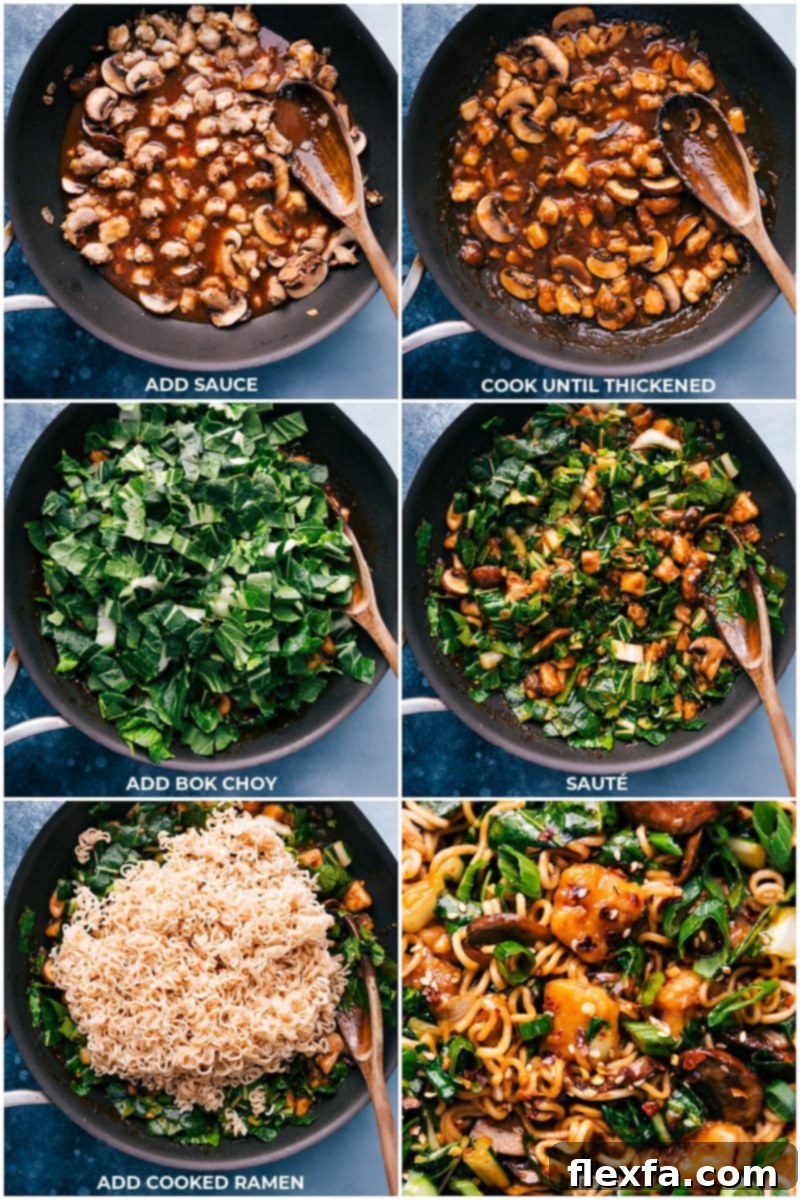
The Perfect Finish: Elevating Your General Tso Ramen with Garnishes
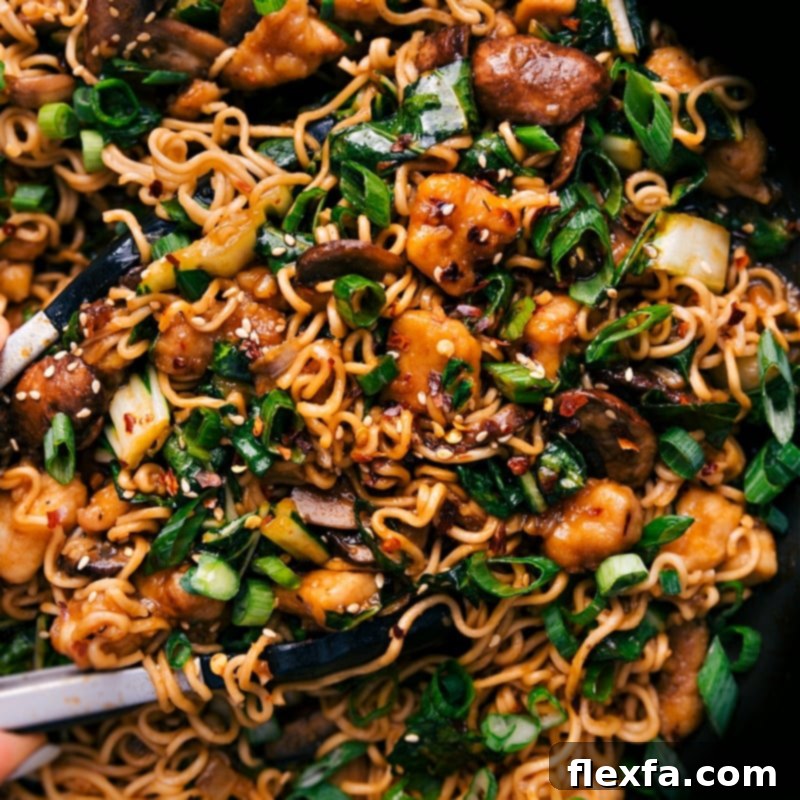
While this General Tso Ramen is incredibly flavorful straight from the skillet, a few thoughtful garnishes can truly elevate the dish, adding layers of freshness, texture, and visual appeal. You can add as many or as few as you like, but green onions are definitely our “must-have” for their bright, crisp qualities.
- Toasted Sesame Oil: A drizzle of high-quality toasted sesame oil right before serving acts as a finishing oil, enhancing the nutty aroma and adding another dimension of flavor. Even though there’s sesame oil in the sauce, a fresh drizzle on individual bowls brings out its full fragrance.
- Red Pepper Flakes: For those who crave extra heat, a sprinkle of red pepper flakes on individual plates allows everyone to customize their spice level further. It adds a visual pop and an immediate burst of warmth.
- Green Onions (Scallions): Finely sliced green onions are indispensable. They provide a vibrant color contrast, a refreshing crisp texture, and a mild, oniony bite that cuts through the richness of the sauce, adding brightness to every spoonful.
- Toasted Sesame Seeds: These tiny seeds add a subtle sweetness, a pleasant nutty flavor, and a delicate crunch. They also make the dish look more polished and appetizing.
Expert Tips for General Tso Ramen Success
Achieving restaurant-quality General Tso Ramen at home is easier than you think, especially with these expert tips:
- Let’s Chat Bok Choy: This recipe calls for a generous amount of bok choy, but don’t be alarmed by the volume; it cooks down significantly and integrates beautifully into the ramen. If you’re new to bok choy, it’s a type of Chinese cabbage with crisp white stalks and tender green leaves, offering a mild, slightly sweet flavor. You can learn more about it here. If bok choy isn’t available or preferred, regular green cabbage or napa cabbage can be used as substitutes. For those who aren’t fans of cabbage, four cups of finely diced broccoli florets make an excellent alternative. Add the diced broccoli to the boiling water with the instant ramen for about 90 seconds before draining and adding to the stir-fry. Remember to use only the leafy greens of the bok choy in this recipe; save the leftover stems for another recipe or a quick stir-fry. Always wash bok choy thoroughly and dry it well using a salad spinner or paper towels to prevent diluting the sauce.
- Choosing Your Ramen Noodles: Any brand of instant ramen noodles will work for this recipe, but the critical point is to ensure you’re using approximately 9 ounces total, which usually equates to three (3-ounce) packets. Crucially, discard the seasoning packets that come with the ramen; we are only using the noodles themselves. Using the seasoning packets will make the dish overly salty and compromise the carefully balanced General Tso flavor. Confirm your ramen is indeed “instant” ramen; traditional wheat ramen takes much longer to cook. The “cup-a-soup” style ramen is a good indicator you have the instant variety. If you prefer, chow mein noodles can also be used as a delicious alternative.
- The Art of Tasting and Seasoning: It’s challenging to provide exact salt measurements for this recipe due to variations in the salt content of different soy sauces and broths. I always recommend adding less salt throughout the cooking process, as you can always add more at the end, but you can’t take it away. While small amounts of salt are included for the sauce and chicken, the ramen noodles themselves are cooked without salt. Therefore, you may find the dish needs an additional pinch (or two) of salt at the very end to make the flavors truly “sing.” Don’t be afraid to taste and adjust until it’s perfect for your palate.
- High Heat is Your Friend: For a true stir-fry, maintain high heat in your wok or large sauté pan. This helps to quickly sear the chicken and vegetables, giving them a slight char and preventing them from steaming.
- Don’t Overcrowd the Pan: Cooking in batches, if necessary, is better than overcrowding your pan. An overcrowded pan lowers the temperature, leading to steamed instead of stir-fried ingredients, which can make them soggy and less flavorful.
- Protein Variations: While chicken is traditional for General Tso, feel free to experiment with other proteins. Sliced pork, shrimp, or firm tofu are all excellent choices that absorb the sauce beautifully. Adjust cooking times accordingly.
- Add More Veggies: This dish is incredibly versatile for incorporating more vegetables. Consider adding sliced bell peppers, snap peas, snow peas, or broccoli florets along with the mushrooms and bok choy for added nutrition and texture.
Similar Recipes to Love
If you enjoyed this General Tso Ramen, you’ll surely love these other quick and flavorful Asian-inspired dishes:
- Garlic Beef and Veggie Ramen featuring tender flank steak and fresh vegetables
- Egg Roll in a Bowl a deconstructed egg roll with savory ground meat and crisp green cabbage
- Chicken Chow Mein made with a simple yet irresistible stir-fry sauce and spiralized zucchini for a lighter twist
- Asian Ground Turkey a quick and flavorful ground turkey dish served with a spicy Sriracha-mayo sauce
- Chicken Stir Fry packed with an abundance of colorful vegetables and a savory sauce
Pin
General Tso Ramen
Chelsea Lords
35
15
50
4 servings
Video
Watch a video demonstration of this recipe:
Equipment
-
Wok or large, deep sauté pan (12 inches minimum)
-
Large pot
Ingredients
- 3 tablespoons soy sauce (not lite)
- 3 tablespoons hoisin sauce
- 1 tablespoon cornstarch
- 1 tablespoon rice vinegar
- 1 teaspoon chili-garlic sauce (up to 3 teaspoons, see note 1)
- 1/4 cup light brown sugar (loosely packed, see note 2)
- 3/4 cup reduced-sodium chicken broth
- 1 tablespoon toasted sesame oil
- 1/4 teaspoon white pepper
- 1/4 teaspoon salt
- 3/4 pound (12 ounces) chicken thighs or chicken tenders, cut into 1/2-inch pieces, measure after being trimmed of fat
- 1 tablespoon toasted sesame oil
- 1 tablespoon ginger (freshly minced)
- 1 tablespoon garlic (freshly minced)
- 1/4 cup cornstarch
- 1/4 teaspoon salt
- 1/4 teaspoon pepper
- 2 tablespoons vegetable oil
- 1 cup diced yellow onion
- 3 (3-ounce) packets instant ramen noodles (seasoning packets discarded)
- 2 cups thinly sliced mushrooms
- 5 cups thinly sliced bok choy leaves (from 1 large bok choy)
- Optional garnish (see note 3)
Instructions
-
Prepare the Sauce: In a small bowl, combine the cornstarch and soy sauce, whisking until a smooth slurry forms. Once smooth, add the remaining sauce ingredients (hoisin sauce, rice vinegar, chili-garlic sauce, brown sugar, chicken broth, toasted sesame oil, white pepper, and 1/4 tsp salt). Whisk everything together thoroughly until well combined. Set the sauce aside.
-
Prep Chicken and Veggies: Prepare all your ingredients before you start cooking, as stir-frying is a very fast process. Dice the chicken into bite-sized 1/2-inch pieces. Finely mince the ginger and garlic. Dice the yellow onion. Thinly slice the mushrooms. Wash and thinly slice the bok choy leaves (see note 4 regarding bok choy).
-
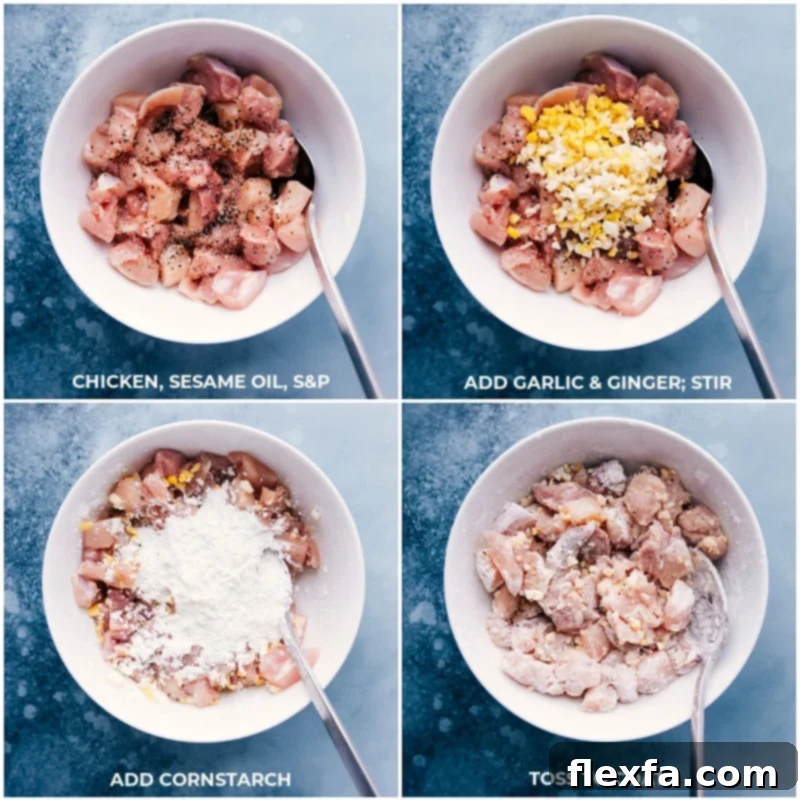
Marinate and Coat Chicken: In a medium bowl, combine the diced chicken with 1 tablespoon of toasted sesame oil, minced ginger, and minced garlic. Season with 1/4 teaspoon salt and 1/4 teaspoon pepper. Toss to ensure the chicken is evenly coated. Next, add 1/4 cup of cornstarch and mix until all chicken pieces are thoroughly coated. Once all chicken and veggies are prepped, bring a large pot of water to a rolling boil for the ramen noodles.
-
Stir-Fry: Heat a wok or a large, deep sauté pan (at least 12 inches in diameter) over high heat. Add 2 tablespoons of vegetable oil and swirl it to coat the bottom and sides of the pan. Once the oil is shimmering, add the diced yellow onion. Cook for 4-5 minutes, stirring frequently, until the onion softens and becomes translucent. Push the cooked onion to the edges of the pan, creating a space in the center. Add the cornstarch-coated chicken mixture to the center of the pan. Cook, stirring frequently, for about 4 minutes, until the chicken is just browned on the outside (it doesn’t need to be cooked through yet). Add the sliced mushrooms to the pan and sauté for another 2 minutes, stirring with the chicken and onion. Pour the prepared General Tso sauce over the ingredients. Cook for 1-2 minutes, stirring constantly, until the sauce thickens to a consistency where a wooden spoon can draw a track through it. Reduce the heat to low, then add all the thinly sliced bok choy leaves. Cook for only 30 seconds, stirring gently, just until the leaves begin to wilt.
-
Cook Ramen Noodles: While the chicken and vegetables are stir-frying, prepare the ramen noodles. Open the instant ramen packages and discard the seasoning packets. Cook the ramen noodles according to package directions, but reduce the cooking time by 1 minute and 30 seconds (e.g., for 3-minute ramen, cook for 90 seconds). Do not add any salt to the pasta water. Drain the noodles thoroughly.
-
Combine and Serve: Add the drained ramen noodles directly to the skillet with the stir-fry. Using tongs, toss everything together to thoroughly coat the noodles with the sauce and fully wilt the bok choy. Taste the finished dish and adjust for salt and pepper as needed – the flavors should be vibrant and well-balanced. Garnish with toasted sesame seeds and thinly sliced green onions if desired. For individual servings, add an extra drizzle of toasted sesame oil or a sprinkle of red pepper flakes for more heat. Serve hot and enjoy!
Recipe Notes
Note 2 (Brown Sugar): The specified amount of light brown sugar is balanced for 2-3 teaspoons of chili garlic sauce and often with additional red pepper flakes at serving. If you prefer a less sweet dish or are using less chili garlic sauce, gradually add the brown sugar, tasting as you go, until you reach your desired sweetness.
Note 3 (Optional Garnishes): Elevate your General Tso Ramen with finely sliced green onions, red pepper flakes for extra heat, an additional drizzle of toasted sesame oil, and toasted sesame seeds for texture and flavor.
Note 4 (Bok Choy Preparation): This recipe specifically uses the bok choy leaves. You can use leftover bok choy stems in another recipe, such as a stir-fry or soup base. Ensure you wash the bok choy thoroughly, then dry it completely in a salad spinner or by patting it dry with paper towels before adding it to the stir-fry; excess water can dilute the sauce.
Storage: Store any leftover General Tso Ramen in an airtight container in the refrigerator for up to 3 days. To prevent the noodles from becoming soggy, it’s ideal to store the sauce and noodles separately if possible. Reheat gently on the stovetop over low heat or in the microwave, adding a splash of water or broth if the sauce has thickened too much.
Nutrition
Serving: 1 serving | Calories: 479kcal | Carbohydrates: 53g | Protein: 28g | Fat: 19g | Saturated Fat: 8g | Trans Fat: 1g | Cholesterol: 81mg | Sodium: 1259mg | Potassium: 1528mg | Fiber: 6g | Sugar: 26g | Vitamin A: 13240IU | Vitamin C: 140mg | Calcium: 358mg | Iron: 5mg
Nutrition information is automatically calculated, so should only be used as an approximation.
Like this? Leave a comment below!