
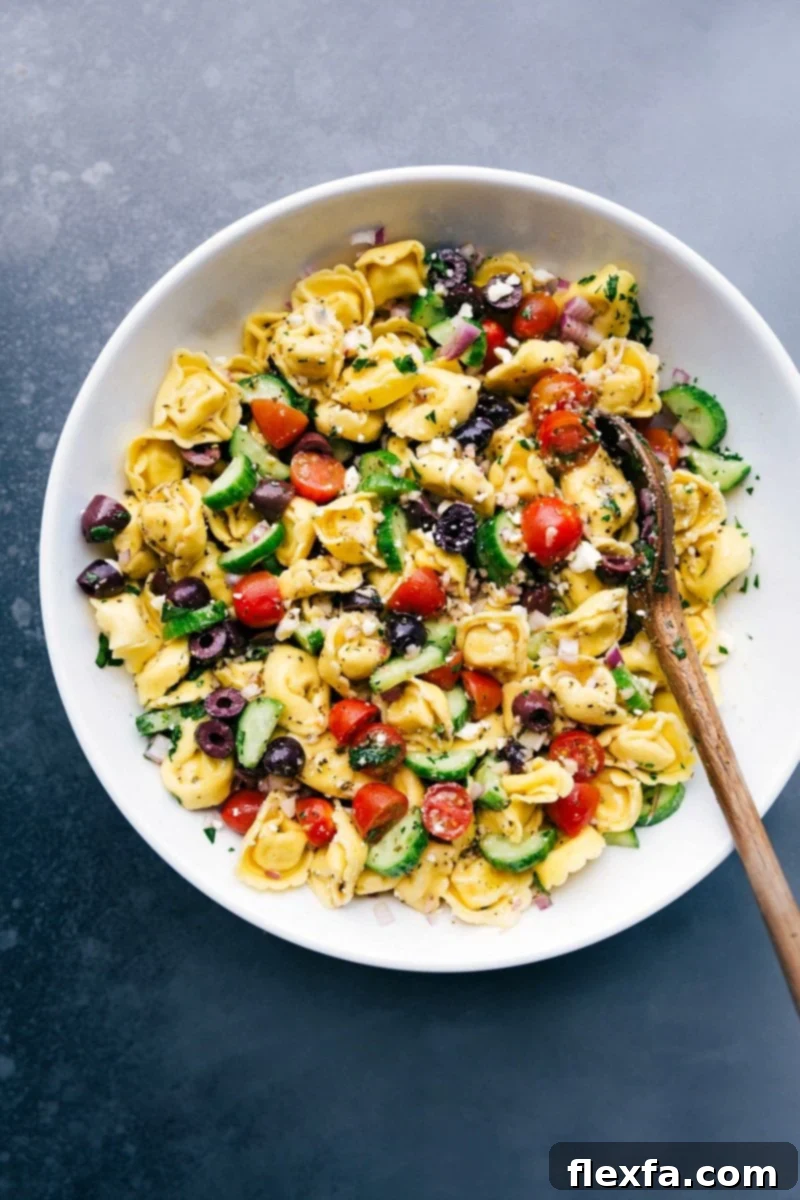
Greek Tortellini Salad is a culinary delight, bursting with flavor and texture. It features tender cheese tortellini, savory feta, crisp cucumbers, sweet cherry tomatoes, sharp red onions, and briny Kalamata olives—all generously tossed in a vibrant, homemade Greek vinaigrette. This refreshing dish is not just a salad; it’s an experience that captures the essence of Mediterranean cuisine.
This versatile salad pairs wonderfully with grilled Greek chicken or savory meatballs for a more substantial meal. For those seeking a lighter or low-carb alternative, consider exploring a Greek quinoa salad, which offers similar fresh flavors without the pasta.
Greek Tortellini Salad: The Ultimate Summer Side Dish
A well-crafted pasta salad is always a beloved staple during the warmer months, especially when brought to a vibrant cookout or a bustling potluck. However, elevating this classic by substituting traditional pasta with delectable tortellini truly transforms it into something extraordinary. This simple swap introduces a depth of flavor and a delightful chewiness that regular pasta simply can’t match.
Drawing inspiration from our popular Greek Pasta Salad, we’ve carefully re-imagined the recipe. By tweaking a few key ingredients and, most importantly, replacing the pasta with tortellini, we’ve created a fun and sophisticated twist on a timeless favorite. The addition of tortellini fundamentally changes the character of the salad, imparting a richer, more savory profile and an abundance of cheesy goodness that makes every bite a luxurious treat. It’s the kind of salad that disappears quickly at any gathering, leaving everyone craving more.
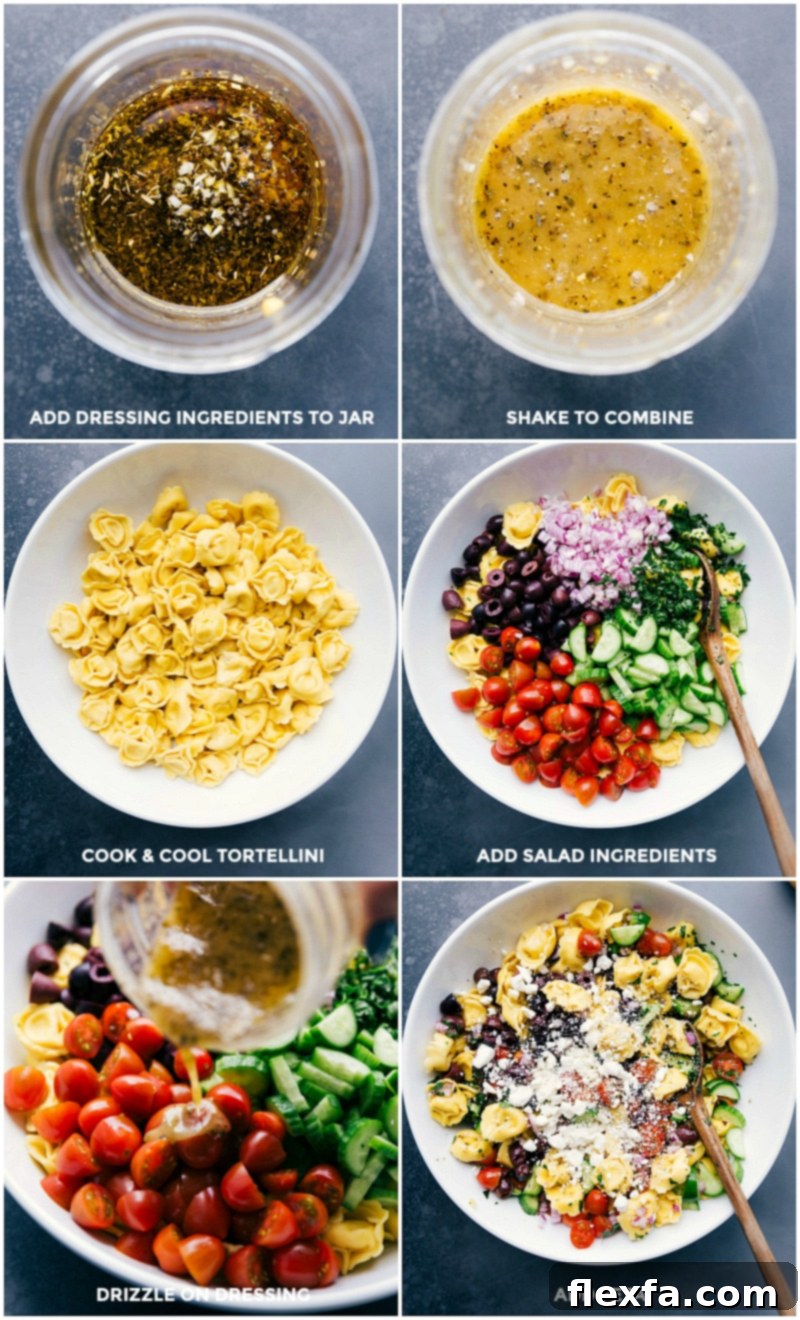
Crafting the Perfect Greek Tortellini Salad Dressing
The dressing is the heart and soul of any great salad, and our Greek vinaigrette is no exception. Each ingredient plays a crucial role in creating a balanced, flavorful dressing that perfectly complements the rich tortellini and fresh vegetables. Here’s a breakdown of the components and how to get the best out of them:
- Olive Oil: The foundation of any good Mediterranean dressing. Invest in a high-quality extra virgin olive oil; its fruity, peppery notes will significantly enhance the overall flavor. The difference between a good and a mediocre olive oil is truly noticeable in a raw dressing.
- Red Wine Vinegar: Provides the essential tang and acidity that cuts through the richness of the tortellini and feta. If red wine vinegar isn’t available, white wine vinegar can be used as a substitute, perhaps with a small splash of balsamic vinegar to add a touch of depth and complexity to the flavor profile.
- Lemon Juice: Freshly squeezed lemon juice brightens the dressing with its zesty citrus notes. To extract the maximum amount of juice from your lemon, roll it firmly on your counter for a few seconds before slicing and juicing. This simple trick helps to break down the internal membranes, releasing more juice.
- Honey: A touch of honey balances the acidity of the vinegar and lemon, adding a subtle sweetness that rounds out the flavors. To prevent sticky messes when measuring, lightly coat your spoon with a little oil before scooping out the honey; it will slide right off!
- Dijon Mustard: Acts as an emulsifier, helping to bind the oil and vinegar together, creating a smooth, cohesive dressing. It also contributes a sharp, pungent flavor that adds complexity. Remember to shake your jar of Dijon well before using, as it tends to separate over time.
- Minced Garlic: Fresh garlic is indispensable for that authentic Greek taste. For the best flavor distribution and to allow the garlic’s sharpness to mellow into the dressing, let the prepared vinaigrette sit for at least 5–10 minutes before serving, or even longer in the fridge.
- Dried Oregano: This herb is quintessential to Greek cuisine, offering an earthy, aromatic note. To release its full potential, rub the dried oregano between your fingers before adding it to the dressing. This simple action helps awaken the herb’s essential oils and intensifies its flavor.
- Salt and Pepper: Essential seasonings to enhance all the other flavors. Add these to taste preference, adjusting until the dressing is perfectly seasoned. Don’t be shy about tasting and tweaking!
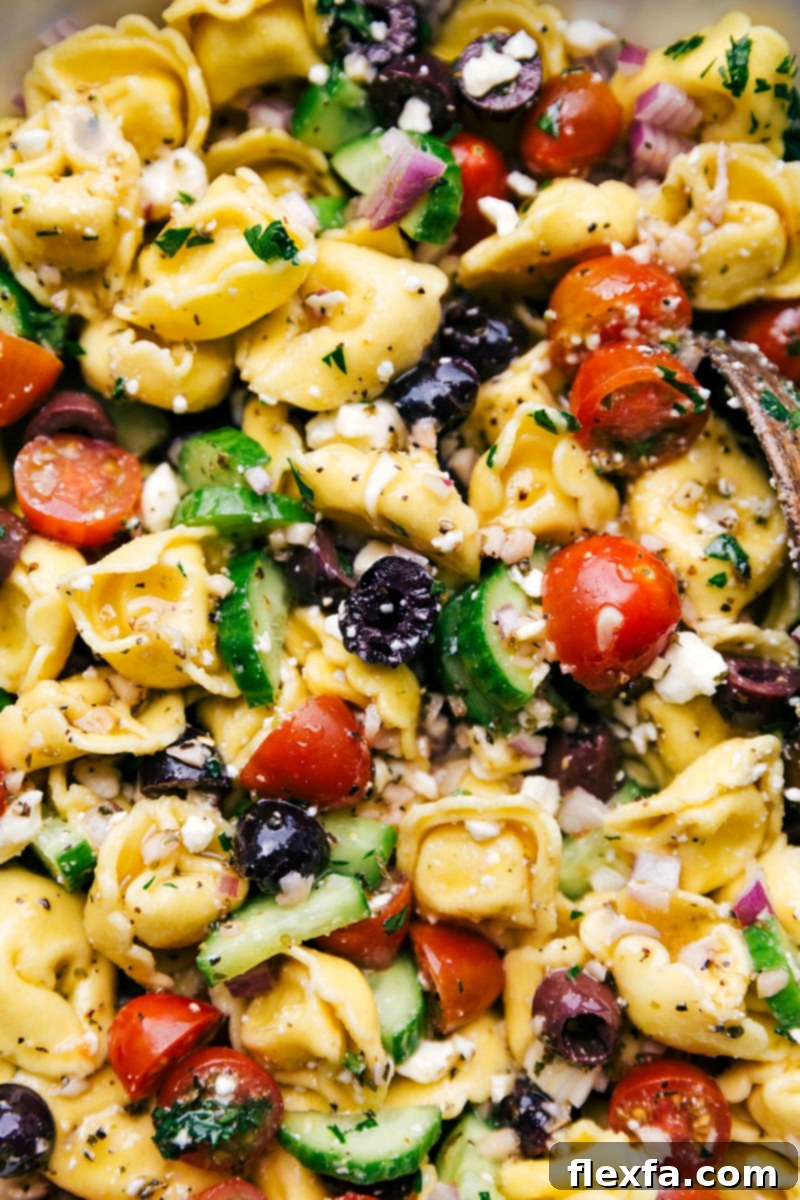
Expert Tips for a Flawless Greek Tortellini Salad
Achieving a truly outstanding Greek Tortellini Salad involves a few key techniques and considerations. Follow these tips to ensure your salad is always a hit:
- Choose Your Tortellini Wisely: The quality of your tortellini makes a significant difference. Whether you opt for fresh, frozen, or shelf-stable varieties, pick a cheese-filled tortellini that you genuinely enjoy the taste of. Fresh tortellini often offers a more delicate texture, while frozen or shelf-stable options provide convenience. Experiment to find your favorite brand and type to elevate your salad.
- Mellow Out Red Onion: Raw red onion can sometimes be overpowering for some palates. If you find its flavor too strong or pungent, a simple trick can help: dice the red onion and soak it in a bowl of salty ice water for about 10 minutes. This process significantly tames its sharp edge, leaving a milder, crisper texture that blends beautifully into the salad. Remember to drain it thoroughly before adding.
- Season Your Pasta Water: This is a golden rule for any pasta dish, and tortellini is no exception. Cold salads can often taste bland if the pasta itself is under-seasoned. Add approximately 1 teaspoon of salt for every 4 cups of water when cooking your tortellini. This seasons the pasta from the inside out, providing a foundational layer of flavor that carries through the entire dish. Don’t hesitate to add a little more salt to the finished salad if needed.
- Avoid Overcooking the Tortellini: For a perfect salad, your tortellini should be cooked just until tender, achieving an “al dente” texture. Consult the package directions and cook precisely to the recommended time. If tortellini becomes too soft or mushy, it will easily fall apart when tossed with the other ingredients and dressing, resulting in a less appealing texture in your salad.
- Opt for Persian or English Cucumbers: These cucumber varieties are ideal for salads. They boast thin skin that generally doesn’t require peeling, tiny, barely noticeable seeds, and a fantastic, refreshing crunch. Their mild flavor and firm texture hold up exceptionally well in tossed salads.
- Chill for Optimal Flavor: While tempting to serve immediately, allowing the salad to chill in the refrigerator for at least 30 minutes to an hour (or even longer) before serving allows the flavors to meld and deepen. The tortellini and vegetables will absorb the delicious vinaigrette, resulting in a more cohesive and flavorful dish.
Quick Tip: Understanding “Al Dente” Pasta
What exactly does it mean to cook pasta al dente? This Italian phrase translates to “to the tooth,” and it perfectly describes the desired texture for pasta. Al dente pasta has a slight firmness when you bite into it—it’s tender but still offers a pleasant resistance. If you were to cut a piece of al dente pasta, you might notice a tiny, pale speck of uncooked starch in the very center. Importantly, al dente does not mean uncooked or hard pasta; it’s just ever-so-slightly undercooked beyond what might be considered fully soft, ensuring it holds its shape and texture in a salad.
Exciting Variations to Explore
One of the best aspects of this Greek Tortellini Salad is its adaptability. Feel free to customize it with your favorite ingredients or what you have on hand to create new and exciting flavor combinations:
- Introduce a Creamy Element: For an extra layer of richness and creaminess, consider adding a ripe avocado. Dice it just before serving and add it to individual plates, as avocados tend to brown and soften too much when mixed into the entire salad in advance. Alternatively, a dollop of creamy hummus or a swirl of plain Greek yogurt could also add a delightful creamy tang.
- Make it a Greek Chicken Tortellini Salad: Transform this side dish into a complete meal by incorporating some diced grilled chicken. Rotisserie chicken offers a quick and convenient option, or you can use Greek-seasoned and cooked chicken breast. For an extra boost of flavor, marinate your chicken using this delicious chicken marinade before grilling or baking.
- Swap Black Olives for Kalamata Olives: While Kalamata olives offer a distinctive briny, fruity flavor that is classic in Greek dishes, if you only have regular black olives on hand, they make a perfectly acceptable substitute. They provide a milder, saltier note that still complements the other ingredients well.
- Add Roasted Red Peppers: Roasted red peppers introduce a sweet, smoky depth and a beautiful color to the salad. You can conveniently purchase jars of roasted red peppers at most grocery stores, typically found near pickles, capers, and artichoke hearts. For a fresh and crisp addition, raw red or green bell peppers, thinly sliced or diced, would also be a wonderful complement.
- Incorporate More Vegetables: Don’t limit yourself to the suggested vegetables! Artichoke hearts (marinated or canned), spinach, or even blanched green beans can be excellent additions, contributing new textures and nutritional benefits.
- Experiment with Cheeses: While feta is traditional, crumbled goat cheese or small cubes of fresh mozzarella could offer interesting textural and flavor variations.
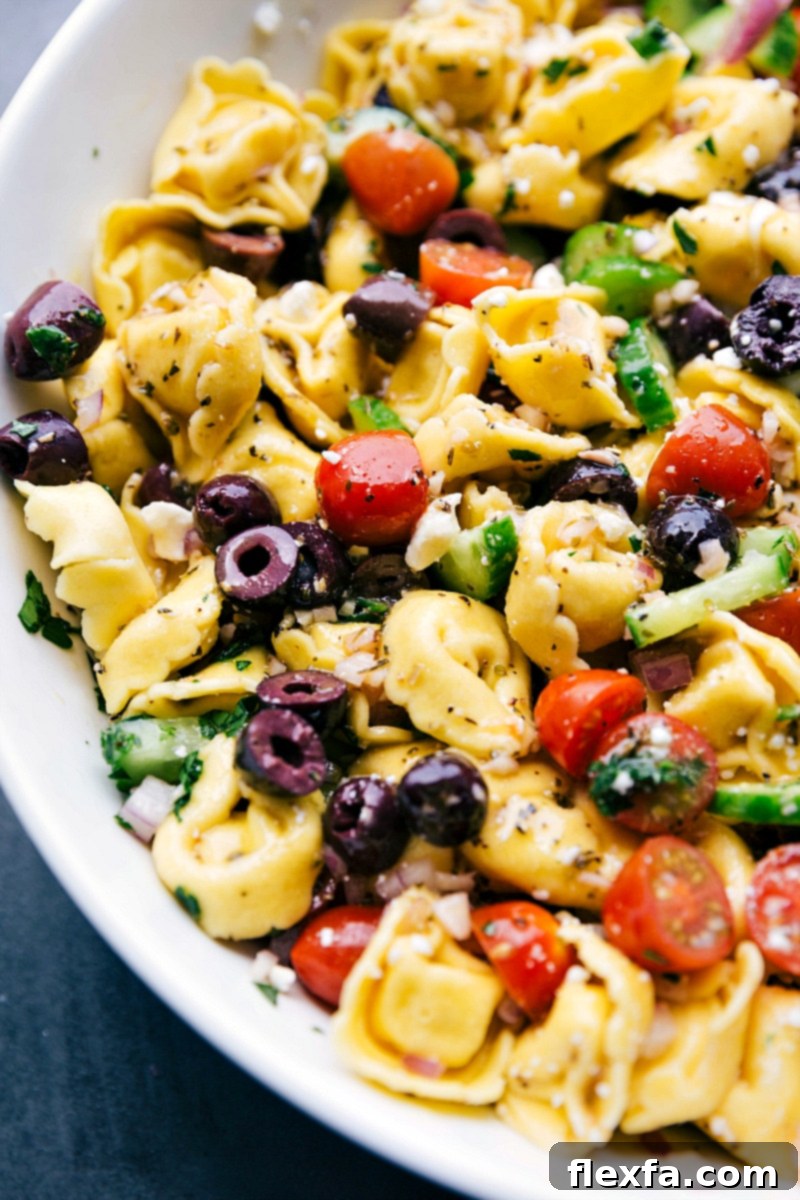
How Long Will Greek Tortellini Salad Last? (Storage & Meal Prep Tips)
For the freshest and most vibrant flavors, we highly recommend enjoying Greek Tortellini Salad on the same day it’s made. As the salad sits, the bold flavors of the red onion and olives tend to intensify, and the dressing can begin to break down the delicate tortellini, leading to a softer texture over time.
However, if you’re planning for meal prep or need to store leftovers, there’s an effective strategy to extend its freshness for several days. You can refrigerate the ingredients separately in airtight meal prep containers. Store the cooked tortellini, diced vegetables (cucumbers, tomatoes, onions, olives), crumbled feta cheese, and the dressing in individual compartments or containers. Then, at mealtime, simply assemble your bowl by combining the desired portions of veggies, tortellini, and feta, and drizzle with the chilled dressing. Prepared this way, your Greek Tortellini Salad components will remain fresh and delicious for 4 to 5 days in the refrigerator. For more comprehensive meal-prepping advice, you might find valuable tips in our recipe for Greek Couscous Salad.
It’s important to note that this salad does not freeze or thaw well. The raw vegetables lose their crispness and become watery upon thawing, and the tortellini’s texture also suffers significantly when subjected to freezing and defrosting. Therefore, freezing is not recommended for this particular dish.
Pro-Tip: Make the Dressing in Advance! If you have the time, preparing the Greek vinaigrette a day or even a few days ahead can greatly benefit the salad. This dressing truly shines when made in advance and allowed to chill in the fridge; the flavors have ample opportunity to meld and intensify, resulting in a more harmonious and robust taste. Plus, a chilled dressing is simply more refreshing! It’s normal for the dressing to separate while chilling, so remember to give it a good shake for about 5-10 seconds just before adding it to your salad to re-emulsify the ingredients.
More Delicious Salad Recipes to Try
If you love vibrant, fresh, and flavorful salads, you’ll want to explore these other fantastic recipes:
- Broccoli Salad with a rich, creamy dressing – a delightful blend of textures and flavors.
- Chicken Salad with crunchy pecans and sweet dried cranberries – perfect for sandwiches or a light lunch.
- Italian Pasta Salad featuring an inspired vinaigrette and classic Italian flavors.
- Turkey Taco Salad served with a refreshing and creamy cilantro dressing.
- Potato Salad, a timeless classic made with a creamy, savory mayo-based dressing.
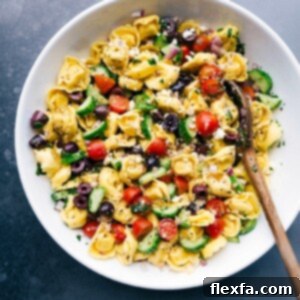
Greek Tortellini Salad
Equipment
-
Wide-mouth Mason Jar or other sealable container
Ingredients
- 1 (16-ounce) package cheese-filled tortellini fresh or frozen
- 1/2 cup red onion diced
- 1 cup Persian cucumbers or English cucumber, cut into half moons
- 1 cup cherry tomatoes halved
- 3/4 cup Kalamata olives halved or thinly sliced
- 1/3 cup feta cheese crumbled
- 3 to 4 tablespoons finely chopped flat-leaf parsley optional
- 1/4 cup + 2 tablespoons olive oil
- 1 lemon
- 1-1/2 tablespoons honey
- 1-1/2 tablespoons Dijon-style mustard
- 3/4 teaspoons minced garlic
- 3 tablespoons red wine vinegar
- 1-1/2 teaspoons dried oregano
- 3/4 teaspoon salt
- 1/2 teaspoon pepper
Instructions
-
Combine all dressing ingredients in a mason jar. Juice the lemon to get 1-1/2 tablespoons of lemon juice and add it to the jar. Shake thoroughly to combine, ensuring no honey or Dijon sticks to the bottom. If needed, use a spoon to stir, then shake again. Store the dressing in the fridge until ready to use. To serve, shake the dressing again right before adding it to the salad and drizzle over the prepared ingredients.
-
Prepare tortellini according to package directions. Make sure to generously salt the water (add 1 teaspoon of salt to every 4 cups of water). Properly salting the pasta water is crucial, as it seasons the tortellini from within, preventing the whole salad from tasting under-seasoned. Drain, rinse under cold water to stop the cooking process and cool it down, then toss with 2 tablespoons of the prepared dressing. Set aside in the fridge to chill thoroughly.
-
Prepare the vegetables: dice the red onion (and soak in ice water if desired to mellow its flavor), cut the cucumbers into half moons, halve the cherry tomatoes, halve or thinly slice the olives, and crumble or cut the feta cheese into small chunks.
-
In a large bowl, toss together the completely cooled tortellini with all the prepared vegetables. Add some chopped fresh flat-leaf parsley, if desired, for extra freshness and color. Drizzle the Greek vinaigrette over the salad to your preference; you may not wish to use all of it (though many dressing lovers, like myself, will use it all!). Toss gently but thoroughly to combine, ensuring all ingredients are coated. Finally, add the crumbled feta cheese and toss again gently to avoid breaking up the cheese too much. Taste and adjust seasonings to preference, adding any additional salt or pepper as needed.
-
Cover the salad tightly and chill in the fridge for a minimum of 30 minutes to 1 hour. This resting period allows the flavors to meld beautifully. Toss once more before serving, and then enjoy your delicious Greek Tortellini Salad!
Recipe Notes
You can refrigerate the ingredients separately in meal prep containers (veggies, tortellini, feta cheese, and dressing) and dress individual bowls at mealtime. Stored this way, this Greek Tortellini Salad will last 4–5 days in the fridge. For more detailed meal-prepping tips, consult our recipe for Greek Couscous Salad.
Nutrition
Calories: 383kcal |
Carbohydrates: 44.4g |
Protein: 12g |
Fat: 18.3g |
Cholesterol: 39.2mg |
Sodium: 496.6mg |
Fiber: 2.6g |
Sugar: 7g
Nutrition information is automatically calculated, so should only be used as an approximation.
Enjoyed this recipe? Share your thoughts below!