
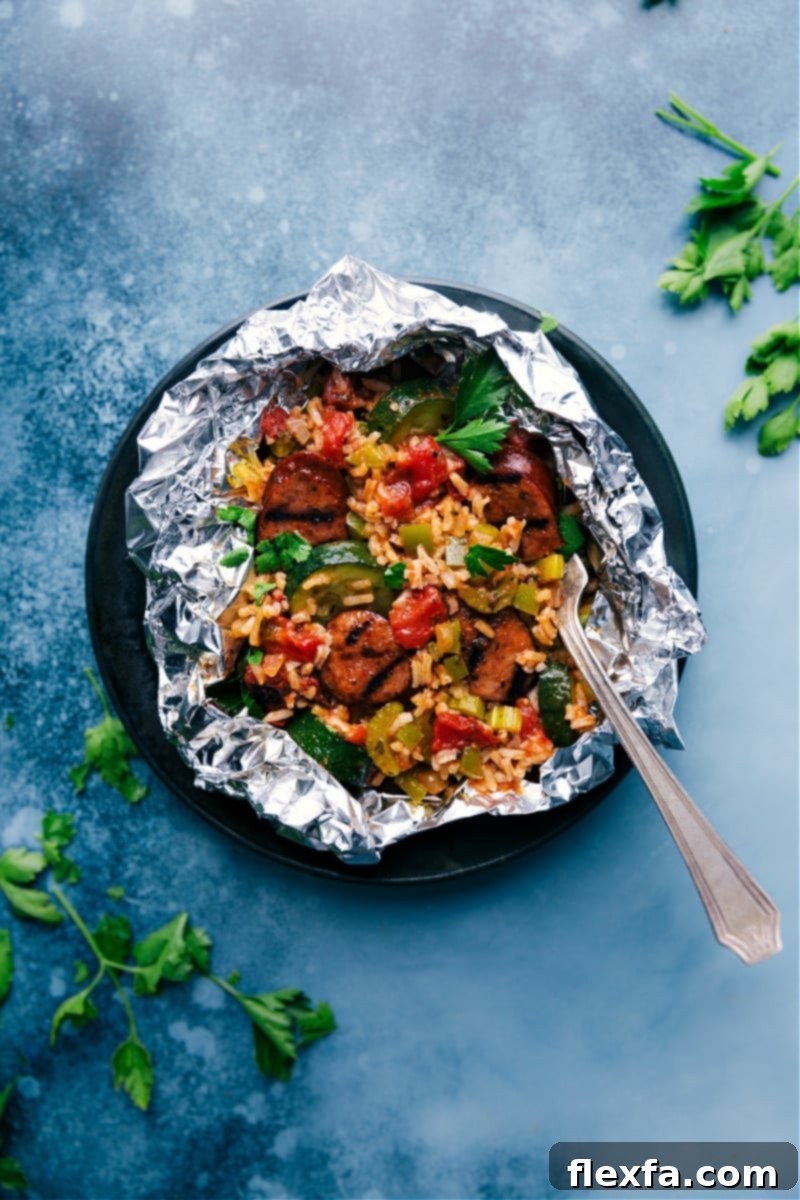
Tin Foil Jambalaya offers a revolutionary approach to a beloved classic. This incredibly simple recipe blends savory Cajun sausage, fresh vegetables, tender rice, and a robust medley of spices into convenient foil packets. Just mix your ingredients, seal them up, and toss them on the grill, in the oven, or even over a campfire for a truly unforgettable meal with minimal cleanup. Experience big flavor with effortless preparation!
Looking for more easy foil packet meal ideas? You’ll love other foil favorites like Baked Potato Foil Packs, hearty Hobo Foil Packets, or our delightful tin foil Pesto and Sausage meal.
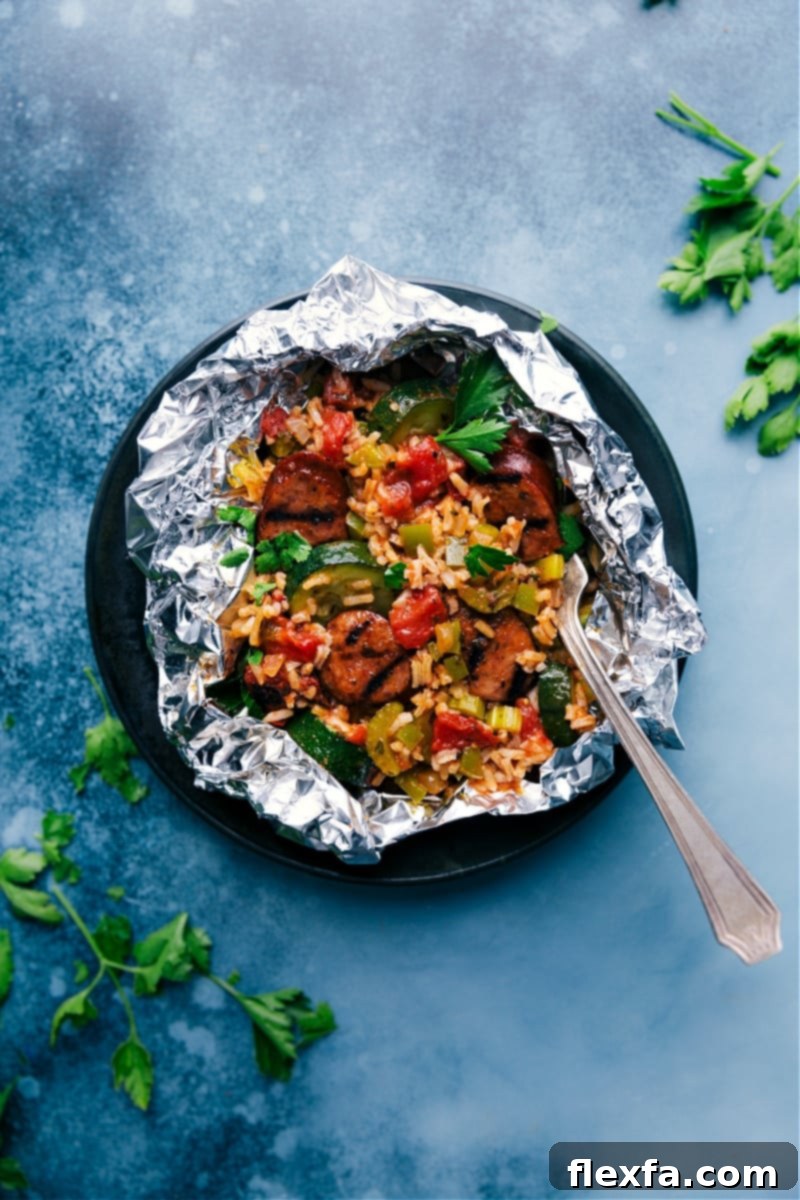
The Ultimate Easy Tin Foil Jambalaya: Your Go-To for Quick & Flavorful Meals
Jambalaya, with its rich history and vibrant flavors, has long been a culinary staple in Louisiana. Our Tin Foil Jambalaya takes inspiration from this iconic dish, streamlining the cooking process for modern convenience. While it’s important to note that this method isn’t strictly authentic to traditional, long-simmered jambalaya – after all, it’s cooked in a tin foil packet! – it successfully captures the spirit and delicious essence of the original with remarkable ease.
Forget the hours of stirring and watchful waiting that traditional jambalaya often demands. This recipe is designed for those busy weeknights, spontaneous camping trips, or backyard grill-outs when you crave robust flavor without the fuss. Inspired by classic jambalaya ingredients and spices (much like our popular One-Pan Jambalaya), the core idea behind this foil packet version is a simple, incredibly tasty meal that requires minimal cleanup. And let me tell you, this Tin Foil Jambalaya absolutely delivers on that promise. It’s truly easy to prepare and packed with an explosion of savory, spicy goodness!
Just a quick heads-up: this dish typically comes with a noticeable kick! We love it spicy, but we’ve included tips below on how to adjust the heat level to suit your preference. Whether you prefer a mild warmth or a fiery blaze, you can tailor this recipe to your palate, though it will always retain its inherent bold character.
Why Choose Foil Pack Jambalaya for Your Next Meal?
Beyond its delicious taste, the foil packet method offers several compelling advantages that make this Tin Foil Jambalaya a fantastic choice for a variety of occasions:
- Effortless Cleanup: This is arguably the biggest selling point! Since all the ingredients cook directly in the foil, there are virtually no pots or pans to scrub afterward. Simply discard the foil, and enjoy your meal without the dread of dish duty.
- Perfect for Camping & Outdoor Cooking: Foil packets are the ultimate campfire or grill meal. They’re easy to transport, cook directly in coals or on grates, and make serving a breeze in any outdoor setting. No special cookware needed!
- Consistent Cooking & Flavor Infusion: The sealed foil creates a steamy environment that locks in moisture and evenly cooks all ingredients. This method also allows the spices and aromatics to deeply infuse into the rice, sausage, and vegetables, resulting in maximum flavor in every bite.
- Individual Portions: Each packet is a self-contained meal, making portion control easy and serving simple. Everyone gets their own perfectly cooked jambalaya, hot and ready to eat.
- Versatility: As you’ll see, these packets can be cooked using multiple methods – oven, grill, or campfire – making this recipe adaptable to almost any cooking situation.
Customizing Your Spice Level: From Mild to Wild
One of the beauties of this Tin Foil Jambalaya recipe is its adaptability, especially when it comes to heat. While it’s true that reducing spice can sometimes diminish the overall flavor complexity, you can counteract this by enhancing other aromatic elements. If you opt for less spicy seasonings, consider boosting the salt, freshly ground black pepper, or adding a touch more dried herbs like thyme or sage to ensure the dish remains vibrantly flavorful.
To create a milder Tin Foil Jambalaya: Consider reducing the ground cayenne pepper to just 1/4 teaspoon, or even omitting it entirely if you’re particularly sensitive to heat. Skip the fresh jalapeño, and dial back the Cajun seasoning to about 1/2 teaspoon. You’ll still get a wonderful blend of savory notes without the intense burn, allowing the other ingredients to shine.
For those who crave more heat: Don’t hesitate to include the diced jalapeño (seeds and all, if you dare!) and increase the amount of Cajun seasoning to your liking. A dash more cayenne pepper can also amplify the fiery zest, bringing an authentic Louisiana warmth to your foil packets. For an even deeper heat, a pinch of red pepper flakes can also be added.
The Secret to Tender Rice in Foil Packs: Instant Perfection
The entire premise of this Tin Foil Jambalaya recipe revolves around maximum ease of preparation and a speedy dinner solution! Achieving perfectly cooked, tender rice—without it turning mushy or undercooked—is critical in a foil packet environment. This is where your choice of rice becomes paramount.
For this specific recipe, you absolutely *must* use Minute® (instant) rice. Regular long-grain or other uncooked rice varieties simply will not cook properly within the sealed foil packets in the allotted time, nor will they absorb the flavors as effectively. Instant rice is pre-cooked and dehydrated, meaning it rehydrates and cooks much faster, making it ideal for this quick-cooking method. It ensures your jambalaya is ready promptly and consistently tender, not gritty or overcooked.
A crucial step during preparation is to soak the instant rice in chicken broth before combining it with the other ingredients. This pre-soaking softens the rice grains, giving them a head start on absorption, and more importantly, infuses them with a foundational layer of rich, savory flavor right from the beginning. Using broth instead of plain water significantly enhances the depth of taste in the final dish. For an exceptional taste, I highly recommend using a high-quality chicken stock such as Swanson’s® chicken stock, known for its robust and well-balanced flavor profile.
Essential Ingredients for Your Tin Foil Jambalaya: A Flavor Breakdown
Beyond the rice, each ingredient plays a vital role in building the signature flavors of this convenient jambalaya. We’ve carefully selected components that contribute to both taste and texture, ensuring a delightful eating experience with every bite. Understanding their role helps you appreciate the symphony of flavors and even empowers you to experiment with variations.
- Sausage: The star of our protein show! I consistently opt for Cajun-style andouille smoked sausage. Its distinct smoky, spicy notes perfectly complement the robust seasonings of the jambalaya, providing a foundational flavor that truly defines the dish. A key advantage of using pre-cooked smoked sausage is that you don’t have to worry about cooking it through; it just needs to heat up and meld with the other flavors, saving you valuable prep time. If authentic Andouille isn’t available, a good quality smoked kielbasa or even a spicy chicken sausage can be delicious alternatives, though the flavor profile will shift slightly.
- Fire-roasted diced tomatoes: These are a game-changer! Unlike regular diced tomatoes, fire-roasted varieties are charred before being crushed and canned. This process imparts a wonderfully smoky and subtly sweet depth of flavor without any extra effort on your part. They contribute significantly to the rich, complex base of the jambalaya, adding a dimension that regular tomatoes simply can’t match.
- The “Holy Trinity” of Vegetables: While not explicitly listed as a single ingredient, the classic Cajun base of celery, onion, and green bell pepper forms the aromatic foundation of any good jambalaya. These vegetables, when finely diced and cooked, release their natural sugars and savory notes, creating an essential layer of flavor and texture. Their consistent sizing is key for even cooking in the foil.
- Zucchini: A fantastic addition for both texture and nutrition. Zucchini adds a pleasant tenderness and mild sweetness that balances the spicier elements of the dish, and it cooks beautifully in the steamed environment of the foil packet. If zucchini isn’t your preference or isn’t on hand, you can easily swap it for another quick-cooking vegetable like extra diced green bell pepper, corn kernels, or even thinly sliced mushrooms.
- Tomato Paste: A small but mighty ingredient, tomato paste provides concentrated tomato flavor and helps thicken the sauce, adding richness and depth to the overall dish. It acts as a binding agent for the flavors and gives the jambalaya a more robust body.
- Olive Oil: Essential for coating the ingredients and ensuring everything cooks evenly and prevents sticking in the foil packets. It also contributes a subtle fruity note and helps carry the fat-soluble flavors of the spices throughout the dish.
- Herbs & Spices: Cajun seasoning is obviously central, providing that characteristic spicy and savory punch. Dried parsley, thyme, and optional sage add layers of aromatic complexity and herbaceous freshness that elevate the overall taste. Don’t forget salt and pepper, which are crucial for seasoning to taste and balancing all the bold flavors.
Tin Foil Jambalaya: Versatile Cooking Methods for Any Adventure
One of the most remarkable features of this Tin Foil Jambalaya is its incredible versatility when it comes to cooking. Whether you’re at home with a kitchen full of appliances, enjoying the great outdoors, or gathered around a backyard grill, these foil packets adapt beautifully. Keep in mind that heat distribution and intensity can vary significantly across different cooking environments—stovetops, ovens, grills, and campfires—so the suggested timing should be used as a guide. Always check for doneness, especially when experimenting with a new method or heat source, and remember to expect steam when opening packets!
- Stovetop (no foil option): If you prefer a more traditional one-pot approach or don’t have foil, this method works wonderfully. Cook the entire jambalaya mixture in a large pot or skillet over medium-high heat. You’ll need to stir frequently to prevent sticking and ensure even cooking, for approximately 12-15 minutes, or until the rice is tender and most liquid has been absorbed. Add a splash of olive oil or chicken broth if the mixture appears too dry. This method might yield slightly different textures compared to the steamed packets, with a bit more browning on the ingredients, but the flavors will still be fantastic.
- Oven (foil packs): This is a highly reliable and consistent method for perfectly cooked foil packet jambalaya. Divide the prepared mixture evenly among four robust foil sheets. Carefully seal each packet (refer to our detailed sealing tips below). Place the sealed packets directly on your oven racks. Bake in a preheated oven at 400°F (200°C) for 30-40 minutes. For crisp-tender vegetables and slightly firmer rice, aim for 30-35 minutes. If you prefer softer vegetables and a more yielding rice texture, extend the baking time to 38-40 minutes. This method is excellent for hands-off cooking.
- Grill (foil packs): Perfect for warmer weather and adding a subtle smoky char to your meal. Preheat your grill to medium-high heat, aiming for an approximate temperature of 450°F (230°C). Place the sealed foil packs directly on the clean grill grates. Cook for 20-25 minutes, making sure to flip the packets once halfway through cooking to ensure even heat distribution and prevent one side from over-browning. The grilling method often imparts a lovely, subtle char and smoky depth to the exterior of the ingredients within.
- Campfire (in foil packs): The quintessential camping meal for adventurers! Prepare your campfire until you have a good bed of hot, glowing coals (avoid direct, roaring flames, which can burn the packets too quickly). Place the sealed foil packs directly within the hot coals. Cooking time can vary significantly here, ranging from 20 to 40 minutes, depending on the intensity and consistency of your coals. It’s crucial to use tongs and flip the packets every 5 minutes or so to prevent burning and ensure even cooking. With very hot coals, your jambalaya can be ready in as little as 20 minutes, delivering a truly rustic and delicious experience under the open sky.
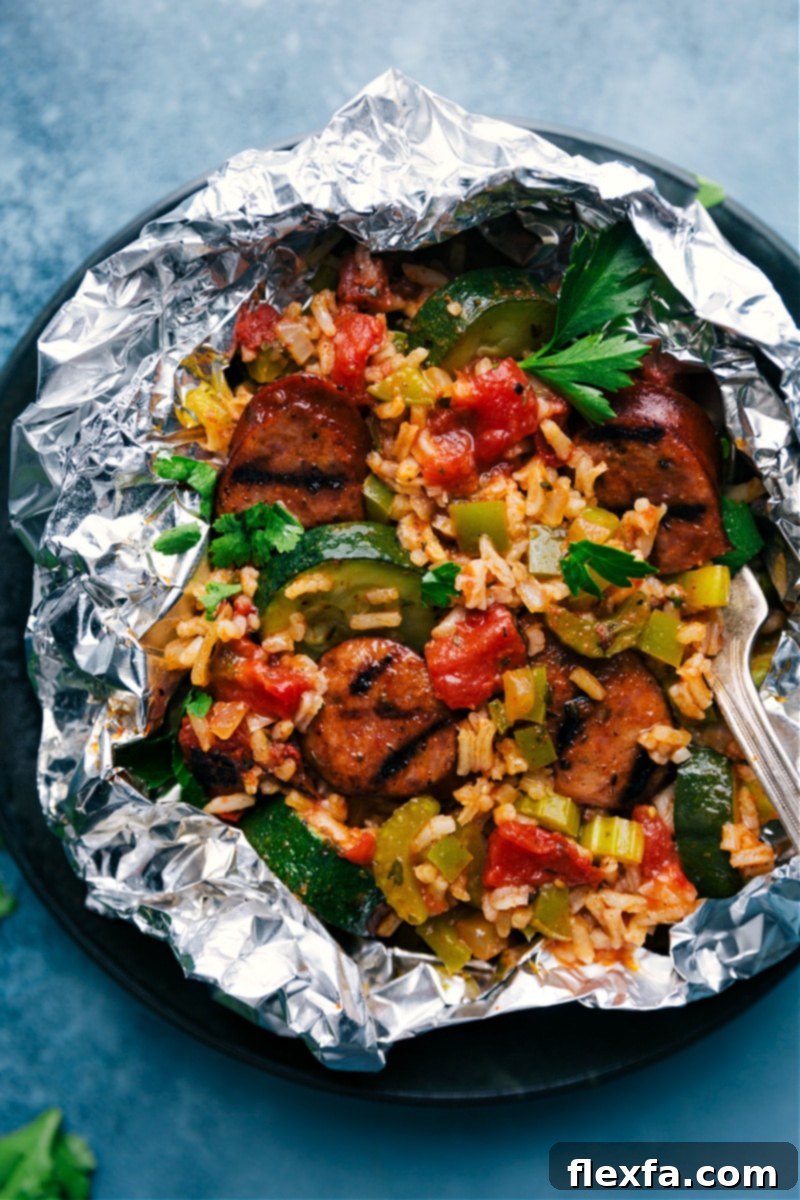
Pro Tips for Perfect Tin Foil Jambalaya Every Time
Achieving outstanding results with your Tin Foil Jambalaya is simple when you follow a few key guidelines. These tips will help ensure your packets are cooked to perfection, packed with flavor, and easy to enjoy, making you a foil packet master!
- Seal the Foil Packets Completely, but Allow for Steam: This is arguably the most critical step. Ensure your foil packets are fully sealed to trap all the moisture and steam, which is essential for cooking the rice and vegetables uniformly. However, don’t create an overly tight vacuum. Leave a little bit of air space inside the packet for the steam to circulate freely. This allows for even cooking, prevents the packets from bursting under pressure, and ensures your ingredients come out perfectly tender. Think of it as creating a mini-steamer environment.
- Generously Spray the Foil with Nonstick Coating: A light coating of nonstick cooking spray on the inside of your foil packets is an absolute must. This simple step prevents the rice and other delicious ingredients from sticking to the aluminum foil, making cleanup even easier and ensuring you get every delicious morsel without waste. It’s a small step that makes a big difference.
- Season to Taste After Cooking: While you’ll add initial seasonings before cooking, flavors can sometimes mellow or intensify during the cooking process. After carefully pulling the jambalaya packets from the oven or grill, let them cool for a few minutes. Then, open one (carefully, mind the steam!), give it a taste, and don’t be afraid to add a pinch more salt and/or freshly ground black pepper if needed. A final touch of seasoning can truly make all the vibrant flavors come alive and perfectly balance the dish.
- Dice Aromatics Evenly for Consistent Cooking: The “holy trinity” of onion, bell pepper, and celery are crucial flavor contributors to any jambalaya. To ensure they cook evenly and integrate seamlessly into the final dish, strive to dice them as uniformly (and relatively small) as possible. Consistent sizing means consistent tenderness and flavor distribution throughout your jambalaya, preventing some veggies from being crunchy while others are mushy.
- Choose Heavy-Duty Foil: Using heavy-duty aluminum foil is highly recommended for this recipe. It’s significantly more durable and less prone to tearing or puncturing, especially when you’re flipping packets on the grill or handling them over hot campfire coals. If you only have regular foil available, simply use two layers per packet for added strength and security, but be aware this might slightly increase cooking time.
Quick Tip: How to Expertly Seal Your Foil Packs for Optimal Cooking
- Prepare Your Foil: Begin by tearing off four strips of heavy-duty aluminum foil. Each strip should be approximately 2 feet long to allow ample room for folding and creating secure seals.
- Distribute the Mixture: Carefully divide the prepared jambalaya mixture equally into the center of each foil piece. Ensure the mixture is in the middle and not too close to the edges, as you need space to seal the packet securely. Avoid overfilling.
- First Fold (Lengthwise Seam): Bring the two short sides of the foil together in the middle, directly above the mixture. Gently fold them down, creating a tight seam (usually a double fold works best). Continue folding downwards until this seam is completely sealed, leaving a bit of space between the food and the foil for steam circulation.
- Second Fold (Ends): Once the lengthwise seam is secure, take one of the open ends of the packet. Roll it up tightly towards the center, creating a robust, double-fold seal. Repeat this process for the other open end. This double-folding technique ensures no steam or liquids can escape during cooking.
- Ready to Cook! Your foil packs are now perfectly sealed and ready to be cooked using your preferred method: oven, grill, or campfire.
(Note: Do not double-wrap foil unless you are specifically using regular, non-heavy-duty foil. Using two sheets of heavy-duty foil can significantly alter cooking times and may lead to undercooked food. If using regular foil, always use two sheets per packet for durability, and be prepared to add a few minutes to the cooking time, checking for doneness frequently.)
More Delicious and Easy Grilling & Foil Pack Recipes
If you’ve fallen in love with the convenience and flavor of this Tin Foil Jambalaya, you’ll be thrilled to explore more of our easy grilling and foil pack recipes that make mealtime a breeze. Perfect for summer cookouts, quick weeknight dinners, or adventurous camping trips, these dishes are designed to deliver maximum taste with minimal effort and cleanup.
- Grilled Flank Steak with a vibrant and simple herb chimichurri sauce – a sophisticated yet easy option.
- Our crowd-pleasing Grilled Fajita Chicken, packed with sizzling peppers and onions, perfect for a customizable family meal.
- A sweet and smoky treat: Grilled Pineapple, wonderfully caramelized and served with a scoop of ice cream for a simple dessert.
- Flavorful Grilled Chicken with Avocado Salsa, accompanied by perfectly grilled corn on the cob – a light and fresh option.
- Another fantastic and easy option: Foil Pack Garlic Butter Sausage & Veggies, featuring an unbeatable seasoning blend that everyone will love.
Print Recipe
Tin Foil Jambalaya Recipe
Recipe Video
Watch a quick video tutorial for this Tin Foil Jambalaya:
Watch Tin Foil Jambalaya Video

Equipment
-
Heavy-duty aluminum foil
-
Large Mixing Bowl
-
Sharp Knife and Cutting Board
Ingredients
- 1 cup Instant Minute Rice
- 1 cup chicken stock or broth; water works in a pinch
- 5 tablespoons olive oil
- 1 teaspoon Cajun seasoning
- 1/2 teaspoon ground cayenne pepper (see note 1 for spice adjustment)
- 1 tablespoon dried parsley
- 1 teaspoon dried thyme
- Salt and pepper to taste
- 1/4 teaspoon dried sage (optional)
- 1 diced jalapeño (optional, for extra heat)
- 1/2 cup thinly sliced celery (about 2 stalks)
- 1/2 cup finely chopped yellow onion (about 1/2 large onion)
- 1 cup diced green bell pepper (about 1 small pepper)
- 1-1/4 cup diced zucchini (about 1 small zucchini, optional)
- 1 (13-ounce) package andouille sausage, sliced into 1/2-inch coins (I use Cajun style andouille smoked sausage)
- 1 (14.5-ounce) can fire-roasted diced tomatoes, drained
- 2 tablespoons tomato paste
- Fresh parsley (optional, to garnish)
Instructions
-
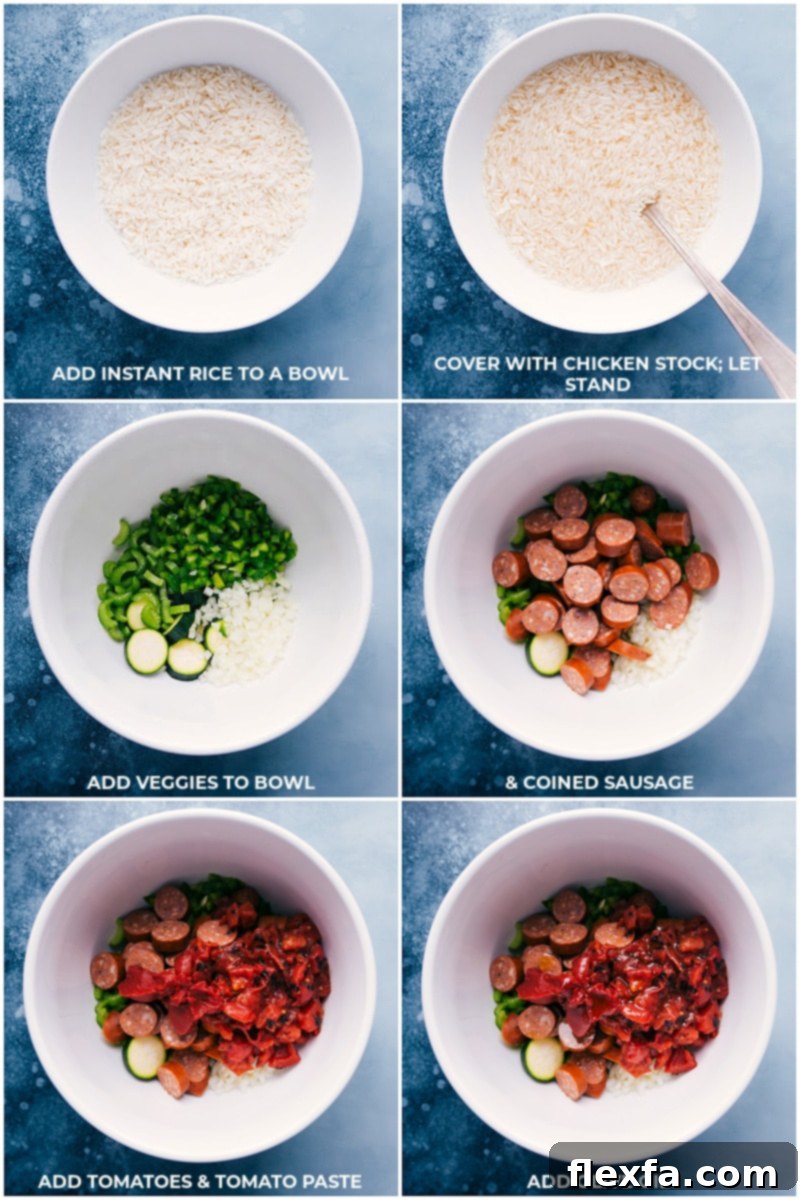
In a small bowl, combine the uncooked instant rice and chicken stock. Let this mixture stand for about 10 minutes to allow the rice to soften and absorb some liquid. You do not need to pre-cook the rice, and do not drain any remaining liquid.
-
Preheat your oven or grill to 400°F (200°C). Prepare your foil packets by tearing off four sheets of heavy-duty aluminum foil, each approximately 2 feet long. Generously spray the inside of each foil sheet with cooking spray to prevent sticking.
-
Carefully prepare your vegetables: thinly slice the celery, finely chop the yellow onion, dice the green bell pepper, and coin the zucchini into thick (3/4-inch) pieces if you are using it. Slice the andouille sausage into 1/2-inch-thick coins. Ensure the fire-roasted diced tomatoes are well-drained.
-
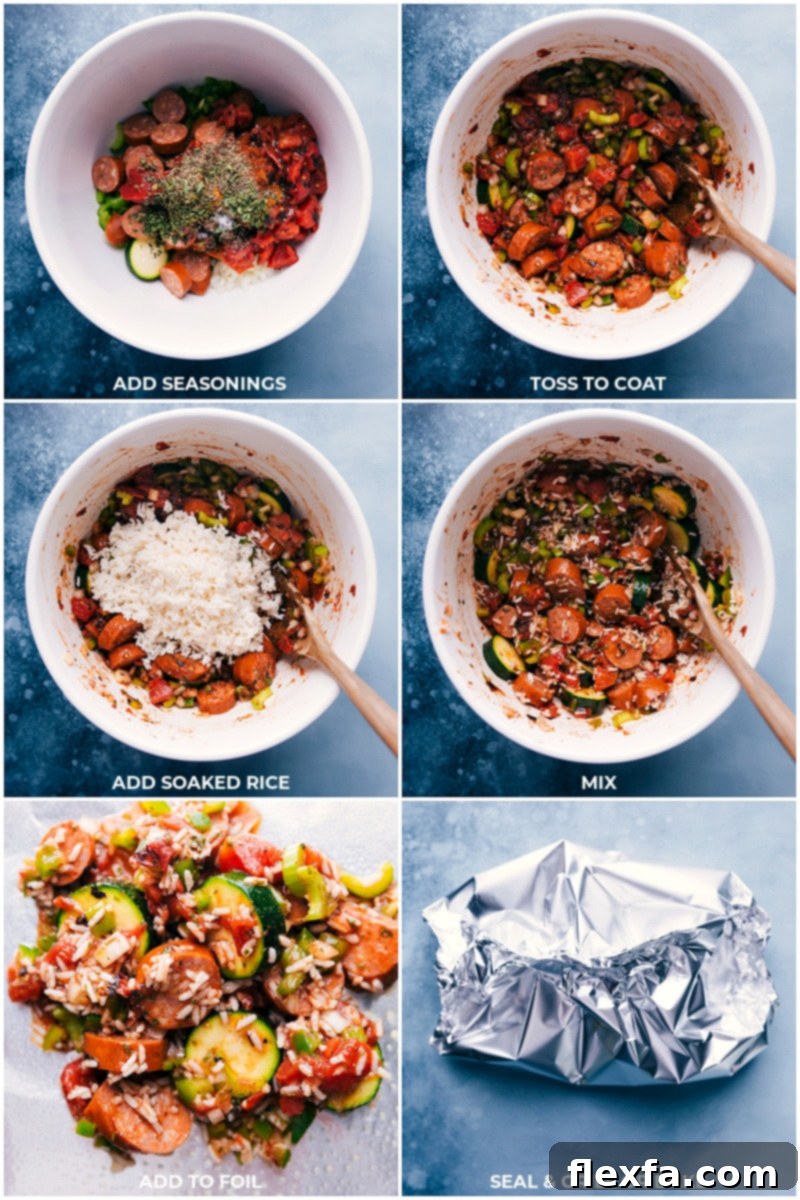
In a very large mixing bowl, combine the sliced celery, chopped onion, diced bell pepper, zucchini (if using), and sliced sausage. Add the tomato paste and the drained diced tomatoes. Incorporate all your chosen seasonings (refer to Note 1 for spice level adjustments), along with salt and pepper to taste (a good starting point is a heaping 1/4 teaspoon salt and 1/8 teaspoon pepper). If you desire additional heat, now is the time to add the diced jalapeño. Gently stir until all these ingredients are thoroughly combined. Finally, add the soaked rice, along with any liquid remaining in its bowl. Stir gently once more until the rice is fully incorporated with the other ingredients.
-
Divide the entire jambalaya mixture evenly among the 4 prepared sheets of foil. Each packet should contain a generous 1 and 1/2 cups (approximately 330g) of the mixture. Seal the foil packs tightly to ensure no air escapes, but remember to leave a little room inside for steam to circulate (refer to Note 2 and the “Quick Tip” for detailed sealing instructions). To seal, bring the short sides of the foil together in the middle and gently fold down to create a complete seal. Then, roll up each of the open ends securely.
-
For Oven Cooking: Place the sealed packets directly on the oven racks. Bake for 30–40 minutes (we find 35 minutes yields the best results for crisp-tender veggies and perfectly cooked rice). For Grill Cooking: Place packets on a preheated grill over medium-high heat for 25–30 minutes, flipping them halfway through cooking. Cook until the rice is tender and the vegetables reach your desired doneness. (Note: Only open one packet at a time to check for doneness, as releasing steam from all packets will prolong cooking time for the others.)
-
Carefully open each foil pack, being mindful that hot steam will be released. If desired, garnish with fresh parsley. Allow the jambalaya to cool slightly, then taste and add any additional seasoning (salt, pepper) as needed to enhance the flavors. Serve and enjoy hot!
Recipe Notes
Note 2 (Foil Wrapping): It is generally best to use only one sheet of heavy-duty foil per packet, as using more can alter the cooking time due to reduced heat transfer. However, if you don’t have heavy-duty foil, you will need to use 2 sheets of regular foil per packet for durability and to prevent tearing. If using two sheets of regular foil, you might need to add a few minutes to the overall cooking time and check for doneness more frequently.
Storage: Any leftover Tin Foil Jambalaya can be conveniently stored still wrapped in its foil packet, or transferred to an airtight container. Keep refrigerated for 3-4 days. Reheat gently in the microwave or oven until warmed through.
Nutrition
Calories: 749kcal |
Carbohydrates: 57g |
Protein: 25g |
Fat: 46g |
Saturated Fat: 11g |
Trans Fat: 1g |
Cholesterol: 79mg |
Sodium: 1007mg |
Potassium: 583mg |
Fiber: 3g |
Sugar: 4g |
Vitamin A: 666IU |
Vitamin C: 7mg |
Calcium: 61mg |
Iron: 6mg
Nutrition information is automatically calculated and should only be used as an approximation.
Love this recipe? Leave a comment below!
Your feedback helps us create more delicious content and inspire other home cooks!