

Welcome to the ultimate visual guide on How to Cut a Mango! Whether you’re aiming for perfect cubes for a fruit salad or elegant strips for a savory dish, this comprehensive tutorial will equip you with all the skills you need. We’ll demystify the process, answer your most pressing questions about mangoes, and inspire you with countless delicious ways to incorporate this versatile tropical fruit into your diet. Prepare to transform your kitchen experience and enjoy mangoes like never before!

Mastering the Mango: Two Simple Cutting Methods
Mangoes, often hailed as the “King of Fruits,” are bursting with vibrant flavor, essential vitamins, and dietary fiber. Their juicy, sweet flesh makes them a delightful addition to smoothies, salsas, desserts, and savory dishes. However, many find the large, flat pit and slippery skin intimidating. Fear not! We’re here to show you two foolproof methods to cut a mango with ease and minimal waste.
Choosing the Perfect Mango: A Foundation for Success
Step One: Select a Perfectly Ripe Mango
Before you even pick up a knife, the most crucial step is selecting a good mango. A perfectly ripe mango ensures both ease of cutting and maximum flavor. Don’t let color be your guide; a red blush is often a sign of the variety, not ripeness. Green mangoes can be ripe, and red ones can be unripe!
- Judge by Feel, Not Color: The most reliable indicator of ripeness is a gentle squeeze. A ripe mango will give slightly under pressure, much like a ripe peach or avocado. If it’s rock-hard, it needs more time. If it squishes easily, it’s likely overripe.
- Aromatic Clues: Sometimes, a ripe mango will emit a sweet, fruity aroma near the stem end. This inviting scent is a good sign that the fruit is ready to be enjoyed.
- Avoid Blemishes: Look for mangoes that are free of significant bruises, wrinkles, or overly soft spots, which can indicate spoilage.
If your mango isn’t quite ripe yet, don’t worry! We’ll cover ripening tips later in this guide to help you achieve that ideal sweetness and texture.
Method 1: The Scooping Method (No Peeler Needed!)
This popular technique is perfect for perfectly ripe mangoes, allowing you to easily separate the sweet flesh from the skin and pit with minimal fuss. It’s often referred to as the “hedgehog” or “porcupine” cut.
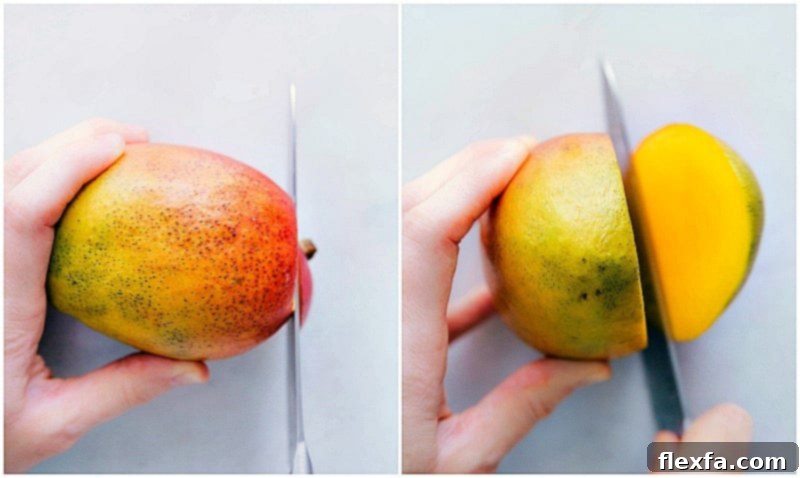
Step Two: Stabilize and Prepare – Cut Off the Stem
For safety and stability, lay the mango on its side on a clean cutting board. Carefully slice off the very top portion where the stem was attached. Your goal is to create a flat, even surface on the bottom of the fruit. This allows the mango to stand upright securely on your cutting board, preventing it from rolling or shifting while you make further cuts, greatly reducing the risk of injury.
Once the stem end is removed, stand the mango upright on this newly flattened base. Recall that mangoes contain a long, flat, oval-shaped pit in their center. Your primary objective is to skillfully cut around this pit to yield two large “cheeks” of fruit, plus the smaller pieces from the narrow sides.
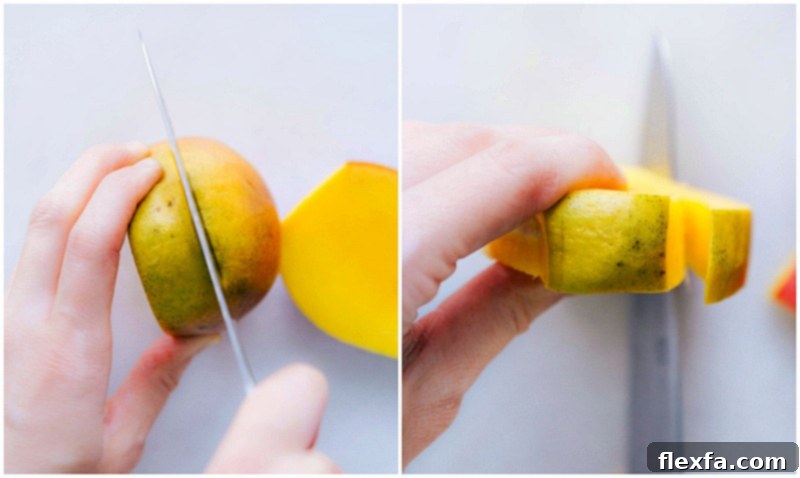
Step Three: Navigate the Pit – Cut Off the Two Wider, Flat Sides
Imagine you possess X-ray vision and can clearly see the flat pit nestled inside the mango. Position your knife about a quarter-inch away from the center line, parallel to the pit. Make a clean, steady cut down one side, separating a large oval piece of mango flesh (a “cheek”) from the pit. Repeat this process on the opposite side of the mango, aiming for another large cheek. You should now have two substantial, skin-on pieces of mango, and the central pit section.
Step Four: Harvesting the Sides (The Cook’s Snack!)
With your X-ray vision still engaged, observe the remaining fruit attached to the two narrow sides of the pit. Carefully slice down these narrower edges, removing any edible flesh. The amount of fruit here can vary, but it’s often a decent amount. If there’s enough to incorporate into your recipe, fantastic! Otherwise, this sweet, succulent bonus fruit is the well-deserved reward for your hard work – a delightful chef’s snack!
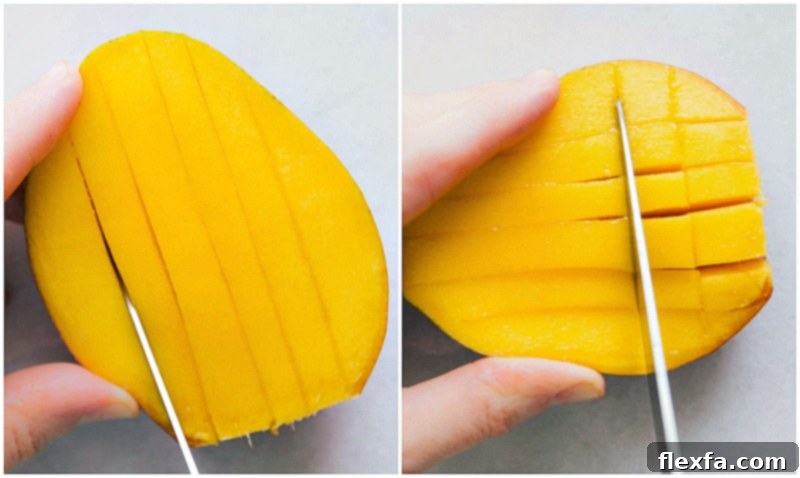
Step Five: Scoring for Cubes or Strips – Make Vertical Cuts
Take one of the large mango cheeks, skin-side down. Using a sharp knife, gently make vertical cuts through the flesh, but be careful not to pierce through the skin. The spacing of these cuts will determine the width of your mango chunks or strips. For smaller cubes, make closer cuts; for larger chunks, space them further apart. If your ultimate goal is mango strips rather than cubes, you can skip the next horizontal cutting step.
Step Six: Completing the Grid – Make Horizontal Cuts
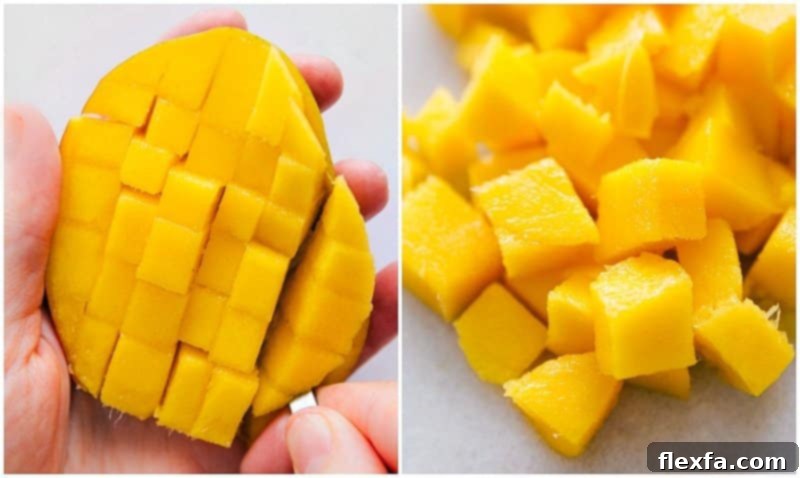
Now, rotate the mango cheek 90 degrees. Still being careful not to cut through the skin, make horizontal cuts across the vertical scores you just made. This creates a neat grid pattern within the mango flesh. The closer your horizontal cuts, the smaller your final mango cubes will be. This method keeps the cubes attached to the skin until you’re ready to scoop them out, making for a less messy process.
Step Seven: The Gentle Scoop – Extract the Chunks
Once your mango cheek is scored, take a sturdy spoon with a relatively sharp edge. Position the spoon between the mango flesh and the skin, near one end. Gently run the spoon along the inside of the skin, scooping out the perfectly formed mango chunks. They should detach easily. If your mango is slightly firmer, a paring knife can assist in separating the cubes from the skin, but a ripe mango makes this step a breeze with just a spoon.
Step Eight: Enjoy!
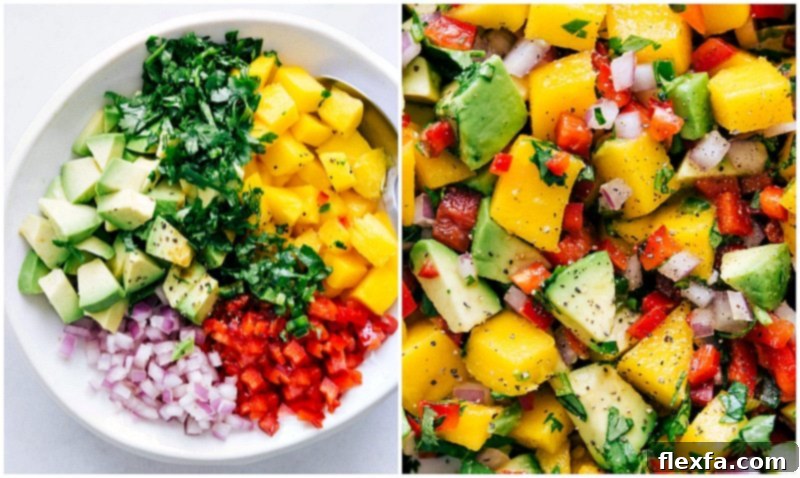
Your beautiful mango chunks or strips are now ready! Enjoy them as a refreshing snack on their own, or integrate them into one of the many delightful recipes we’ll share at the end of this post. The possibilities are endless for this juicy tropical delight!
Method 2: The Peeling Method (For Firmer Mangoes or Preference)
If you prefer to work with a peeled mango, or if your mango isn’t quite ripe enough for the scooping method, this technique offers excellent control. It’s also ideal if you need perfectly clean strips or larger pieces before dicing.
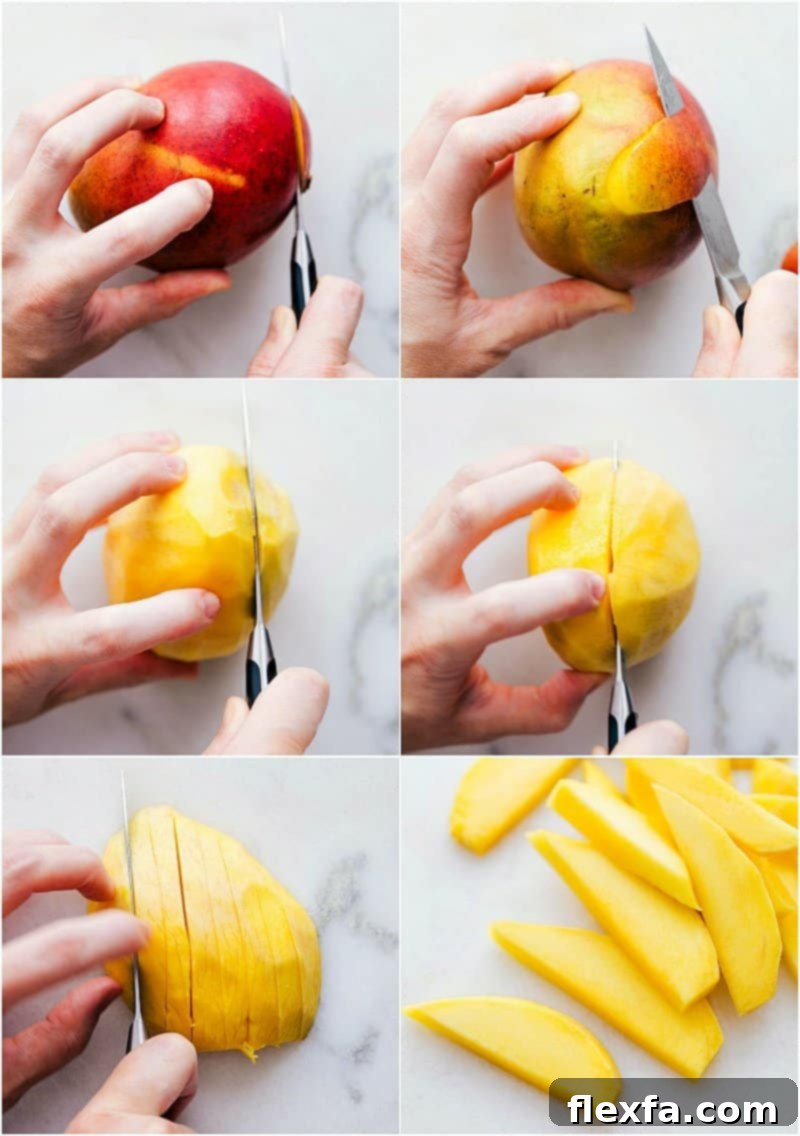
Step One: Prepare and Stabilize the Mango
Just as with the scooping method, begin by laying the mango on its side. Carefully slice off the stem end to create a flat, stable base. This is crucial for safety and ease of handling during the peeling process. Once the base is flat, stand the mango upright on your cutting board.
Step Two: Peel the Mango Skin
With the mango standing upright, use either a sharp paring knife or a vegetable peeler to carefully remove the skin. Work from top to bottom, following the natural curve of the fruit. Try to take off as little of the precious fruit flesh as possible with the peel. For a firmer mango, a peeler is often safer and more efficient. For very ripe, soft mangoes, a knife might be easier.
Step Three: Cut Off the Two Flat, Wider Sides Around the Pit
Once peeled, the mango’s pit is still hidden, but easier to estimate. Carefully make two substantial cuts along the widest sides of the mango, slicing around the flat, oval pit in the center. Again, aim to get two large, clean pieces of mango flesh, maximizing your yield.
Step Four: Remove Fruit from the Smaller Remaining Sides
With the pit now exposed or mostly exposed, carefully trim any remaining fruit from the narrower sides and edges around the pit. This ensures you’re getting every last bit of delicious mango. This fruit can be added to your main batch or enjoyed immediately as your personal chef’s perk!
Step Five: Cut the Wide Sides Into Strips
Take one of the large, peeled mango cheeks. Lay it flat on your cutting board. Using your knife, slice the mango into uniform strips. The thickness of your strips can be customized based on your recipe needs – thin strips for a delicate salad or thicker ones for grilling or snacking.
Step Six: Dice Strips Into Chunks (Optional)
If your recipe calls for mango chunks rather than strips, simply gather your strips together and cut across them horizontally to create neat, evenly sized cubes. This method gives you excellent control over the final shape and size of your mango pieces.
Beyond the Cut: Creative Ways to Enjoy Your Mangoes
Now that you’ve mastered the art of cutting, it’s time to unleash the full potential of this incredible fruit! Mangoes are incredibly versatile and can elevate a wide array of dishes, from refreshing beverages to gourmet meals.
- Vibrant Mango Salsa: A classic for a reason! Combine diced mango with red onion, cilantro, jalapeño, lime juice, and a pinch of salt. Serve this refreshing salsa with crispy tortilla chips, alongside grilled chicken or fish, or as a bright topping for shrimp or chicken tacos.
- Tropical Fruit Salads: Mangoes are a star in any fruit medley. Toss cut mangoes with other tropical delights like pineapple, kiwi, and berries for a burst of flavor and color. A simple squeeze of lime and a sprinkle of mint can make it extraordinary.
- Refreshing Frozen Treats: Blend diced mangoes into your morning açai bowl or your favorite smoothie for a creamy, naturally sweet boost. For a simple homemade sorbet, blend frozen mango with a splash of orange juice and freeze in ice trays for delightful, easy-to-pop cold treats.
- Layered Parfaits: Create a delicious and healthy parfait by layering creamy vanilla yogurt, a generous amount of homemade granola, and fresh, juicy mango chunks. It’s a perfect breakfast or light dessert.
- Savory Skewers & Kebabs: Mangoes aren’t just for sweet dishes! Thread cubes of mango alongside chicken, shrimp, or bell peppers onto skewers. Grill or broil for a deliciously sweet and savory meal with a unique tropical twist.
- Exotic Smoothies & Juices: Blend fresh mango with coconut milk, yogurt, and a touch of honey for a luscious mango lassi, or combine with other fruits for a vibrant juice.
- Dessert Toppings: Spoon fresh mango over ice cream, pancakes, waffles, or a simple bowl of sticky rice with coconut milk for an irresistible dessert.
Our Favorite Recipes Featuring Fresh Mango
Need more inspiration? Here’s a curated collection of our favorite recipes that beautifully showcase the versatility and incredible flavor of mangoes:

(from top left to lower right):
Chicken Veggie Kabobs
Asian Chicken Tacos with Mango Slaw
Cilantro-Lime Chicken with Mango Salsa
Pina Colada Fruit Salad
The BEST Mango Salsa
Chicken Quinoa Bowls with a Mango Black Bean Salsa
Mango Essentials: Storage, Ripening, and FAQs
Mango Storage Tips:
Storing Unripe Mangoes: Always keep unripe mangoes at room temperature. They should never be refrigerated before they are fully ripe, as this can halt the ripening process and negatively affect their flavor and texture. At room temperature, mangoes will continue to ripen naturally over several days, becoming sweeter and softer. Keep a close eye on them, as they can transition from perfectly ripe to overripe quite quickly.
Storing Ripe Mangoes: Once your mangoes reach peak ripeness, you can transfer them to the refrigerator. This will significantly slow down the ripening process, extending their freshness for 3 to 5 days. Whole, ripe mangoes can typically last for about a week in the fridge.
Storing Cut Mangoes: For convenience, peeled, sliced, or cubed mangoes should be stored in an airtight container in the refrigerator. They will remain fresh and delicious for 2 to 3 days. For longer storage, mangoes can be frozen. Spread cut mango pieces in a single layer on a baking sheet and freeze until solid (2-4 hours), then transfer them to a freezer-safe bag or container. They will keep well in the freezer for up to six months, perfect for smoothies or sauces.
Speeding Up Mango Ripening:
To accelerate the ripening process, place unripe mangoes in a brown paper bag. You can also add an apple or a banana to the bag. These fruits release ethylene gas, a natural plant hormone that helps ripen other fruits faster. Seal the bag loosely and leave it at room temperature, checking daily for desired ripeness.
Common Mango Cutting Questions Answered:
- How do I cut a mango without peeling it first? The first tutorial in this post, the “Scooping Method,” is specifically designed for cutting a mango without peeling, making it quick and mess-free.
- Can you cut a mango with a cup or glass? Yes, this is a popular and fun hack! After cutting off the two large cheeks of the mango (as shown in Step 3 of Method 1), simply take one cheek, skin-side out, and slide the thin edge of a glass or cup between the skin and the flesh. Push the glass down firmly, and the mango flesh should scoop right out. For a visual demonstration, you can check out this clever hack by Buzzfeed (scroll down past oranges and avocado hacks).
- Can you cut a mango exactly in half? Due to the large, flat pit in the center, it’s not possible to cut a mango into two perfectly equal halves through the middle like you would an apple. However, by cutting the two large “cheeks” off the sides of the pit, you effectively get two substantial, nearly equal portions of fruit.
- How do I know if a mango is bad? Signs of a spoiled mango include a very soft or mushy texture (beyond just being ripe), strong off-putting or fermented odors, visible mold, or large black spots on the skin. If it shows these signs, it’s best to discard it.
- What is the mango pit and how do I avoid it? The pit is the large, flat, fibrous seed in the center of the mango. It’s not edible. The key to successfully cutting a mango is to visualize this pit and make your cuts around it, as demonstrated in both methods above, to maximize the amount of delicious fruit you yield.
With these techniques and tips, you’re now fully equipped to enjoy fresh mangoes with confidence and creativity. Happy cutting and even happier eating!