
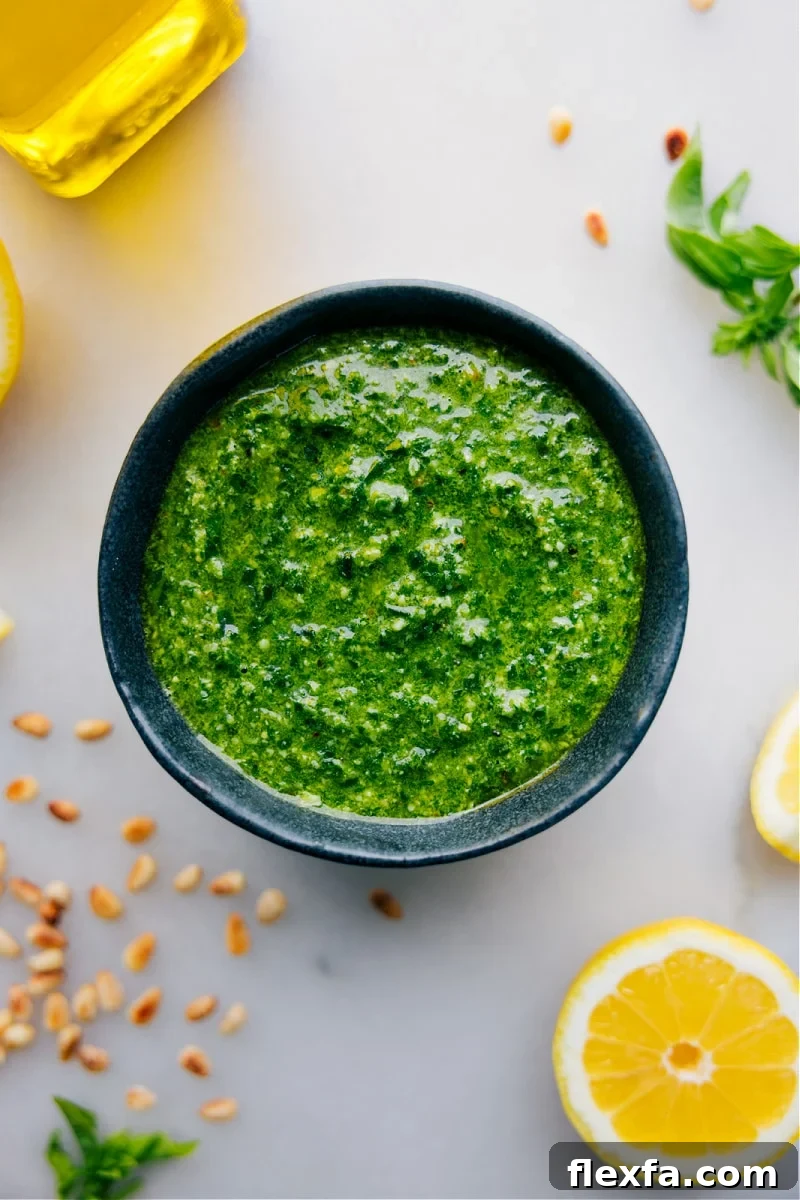
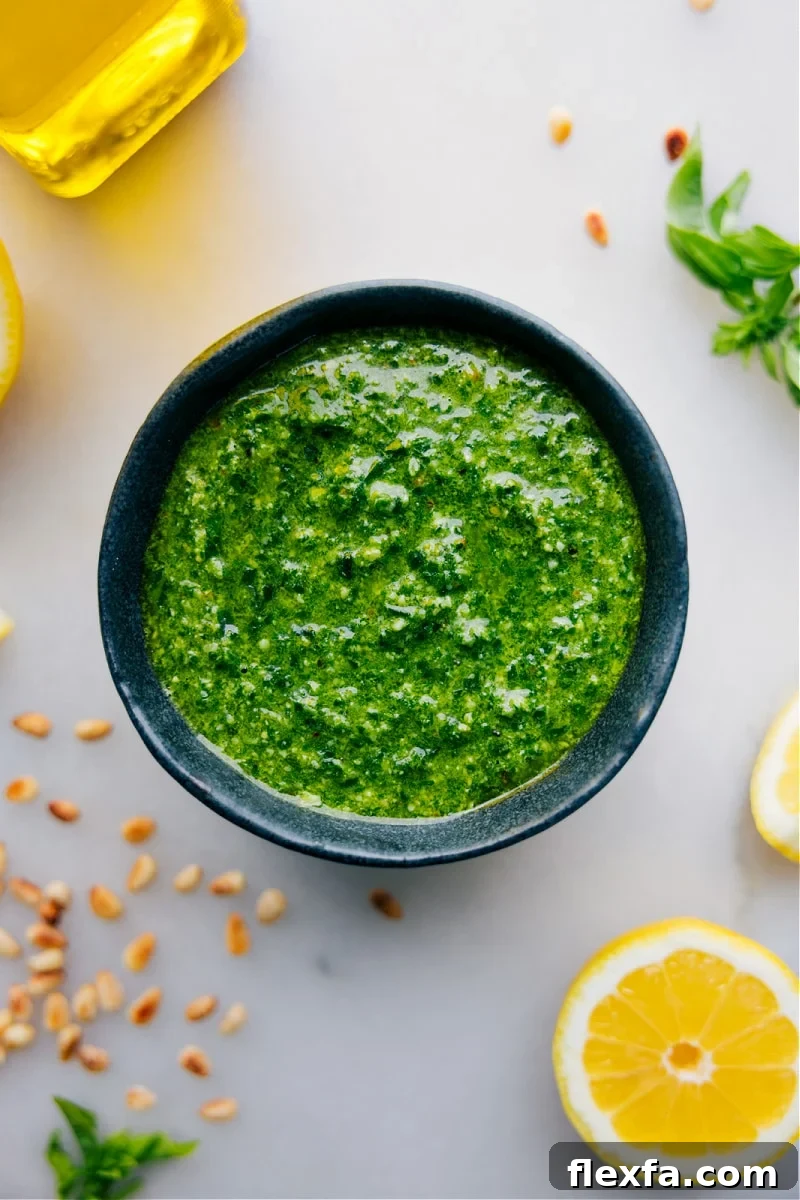
This Pesto Sauce Recipe is quick to prepare, bursting with fresh flavor, and the simplest way to elevate dinner in minutes.

author’s note
The Pesto Recipe I Flew Home Thinking About!
I used to enjoy ordering pesto but never quite nailed it at home. After tasting an unforgettable pesto in New Zealand, I asked the chef for the recipe and began experimenting until I developed my current version.
Now I keep fresh basil on hand because this pesto is a staple in my kitchen. It brightens simple meals instantly—toss it with pasta, spread it on sandwiches, spoon it over grilled chicken, or eat it straight from a spoon. No judgment.
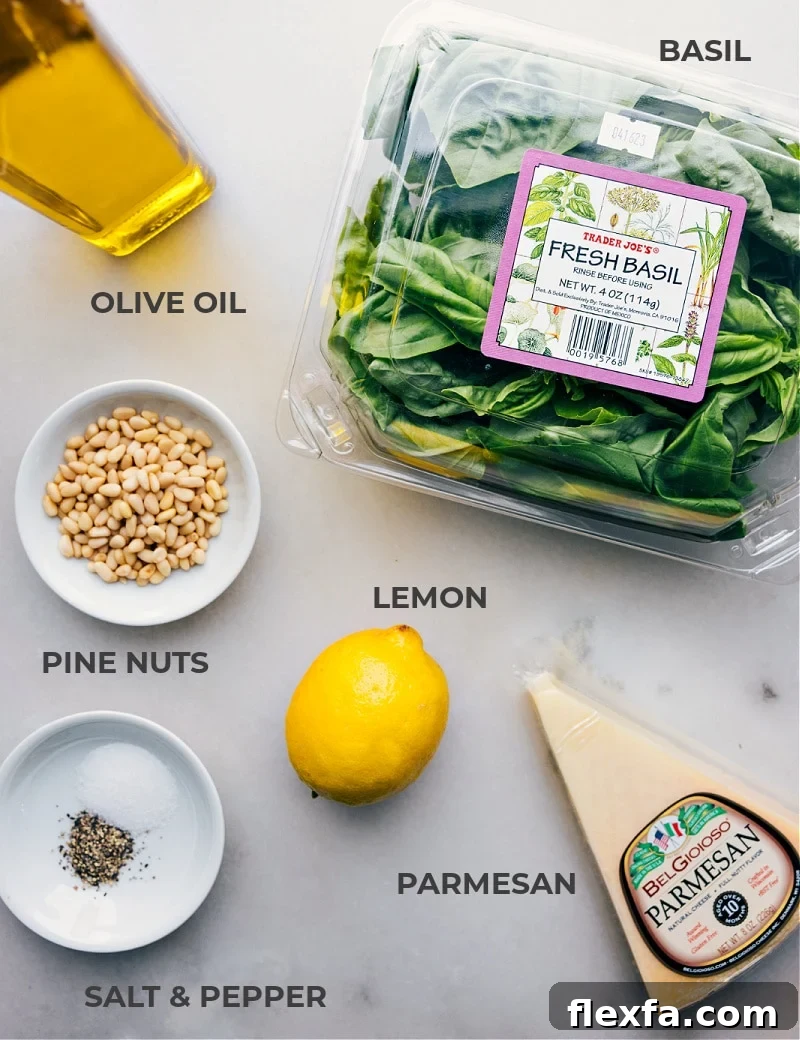
Pesto Sauce Recipe Ingredients
| Ingredient | Tips & Swaps |
|---|---|
| Fresh basil | Use fresh basil for the best flavor; older leaves change color and taste. |
| Pine nuts | Toast first for more depth. Swap with walnuts, cashews, almonds, or sunflower seeds if desired. |
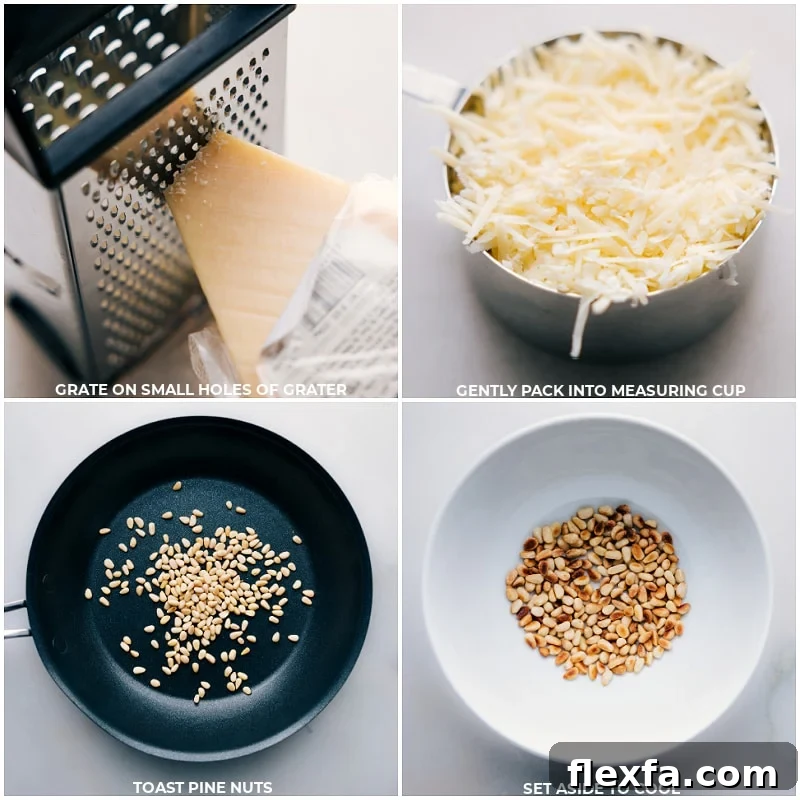
| Parmesan cheese | Grate from a block on small holes for the best texture and flavor. |
| Olive oil | Choose a good-quality olive oil because its flavor comes through. |
| Fresh lemon juice | Add more for a brighter, punchier pesto. |
| Salt & pepper | Season gradually and taste as you go. |
Get The Right Quantity Of Basil
Measuring basil by volume is unreliable because leaves compress differently. For consistent results use a food scale when possible.
- Tip: A food scale removes guesswork and ensures you use the right amount of basil.
- For this recipe use 4 ounces (about 100–110 g) of fresh basil. If you don’t have a scale, buy a packet labeled with its weight.
Variations
Switch Things Up
- Different greens: Try arugula, spinach, kale, or parsley in place of basil for new flavors.
- Nut substitutes: Walnuts, cashews, almonds, or hazelnuts all work and change the pesto’s character.
- Allergy swap: Use sunflower seeds if nuts are a concern.
chelsea’s recipe tip
Tools You Can Use For This Pesto Sauce Recipe
You can make pesto with different tools depending on batch size and texture preference:
- Food processor: Best for larger batches and a smooth, even texture.
- Blender: Works well for big batches; you may need to scrape the sides while blending.
- Immersion blender: Handy for small batches; texture may be slightly chunkier.
- Spice or nut grinder: Useful for finishing a smoother texture after initial processing.
Storage
- Refrigerate: Store pesto in an airtight container for up to 3 days. Pour a thin layer of olive oil on top to reduce browning.
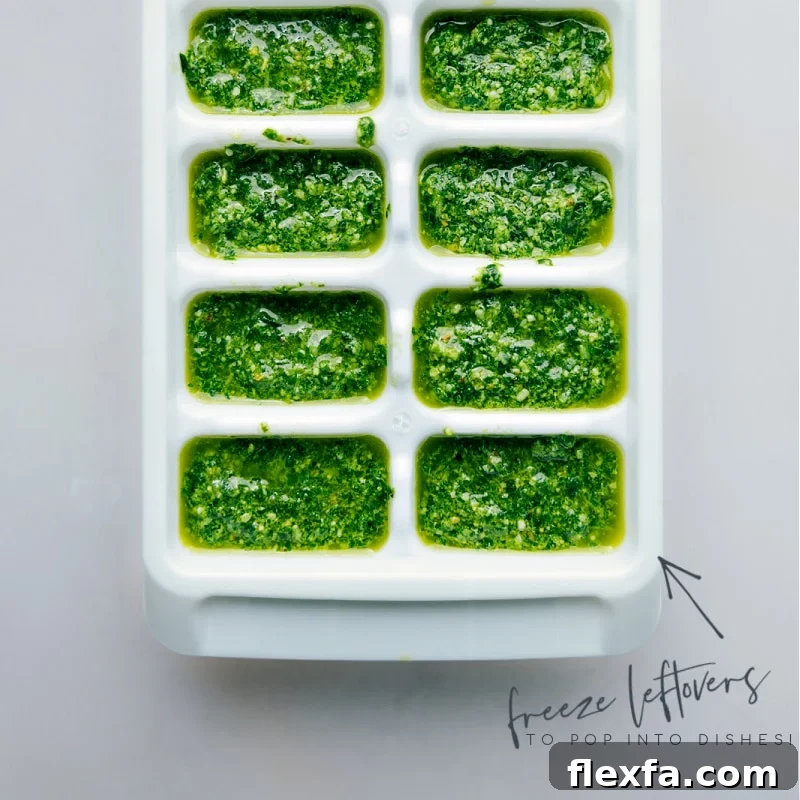
- Freeze: Pesto freezes well for up to 3 months. Freeze in ice cube trays, then transfer cubes to a labeled freezer bag.
- Use frozen cubes: Thaw in the fridge or add frozen cubes directly to hot pasta, soup, or sauces.
Use Pesto In One Of These Favorite Recipes:
Sandwiches
Pesto Chickpea Salad
Dinner
Pesto Rice
Dinner
Creamy Pesto Orzo (30 Minutes; ONE Pot!)
Lunch
Pesto Chicken Salad
Pesto Recipe
Equipment
-
Small pan
-
Food scale (recommended)
-
Food processor, blender, or nut grinder
Ingredients
- 2-1/2 tablespoons pine nuts
- 4 ounces fresh basil
- 11 tablespoons olive oil (or 3/4 cup minus 1 tablespoon)
- 1/3 cup freshly grated Parmesan cheese
- 2 tablespoons lemon juice
- Salt and pepper, to taste
Instructions
-
Preheat a small pan over medium-high heat without oil. Spread pine nuts in an even layer and toast, stirring frequently, until lightly golden. Watch closely to prevent burning. Transfer to a bowl to cool.
-
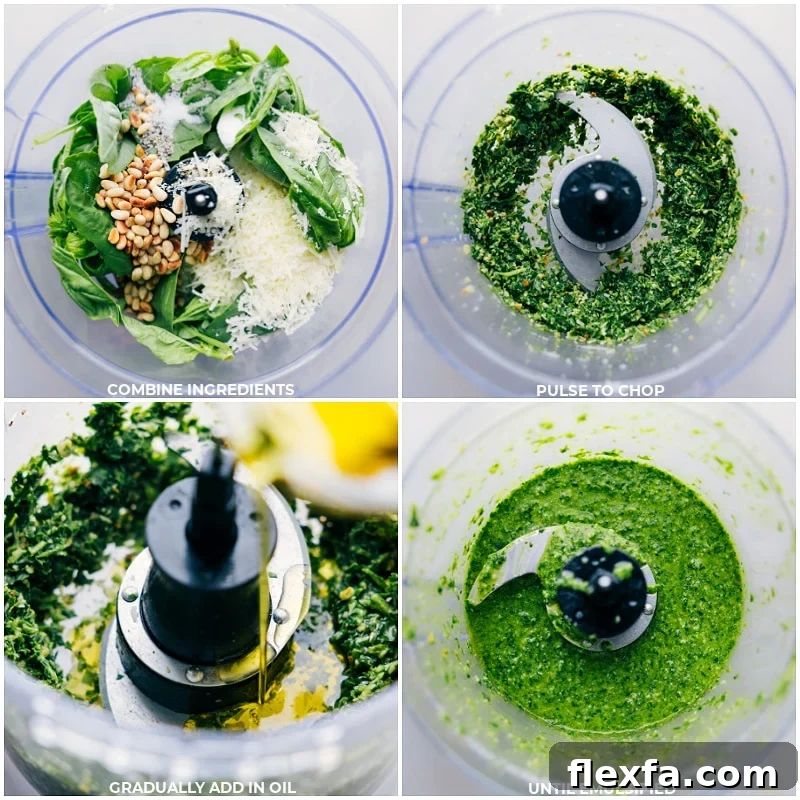
Place toasted pine nuts, basil, Parmesan, lemon juice, salt, and pepper in a food processor or blender. Pulse until the ingredients are finely chopped, scraping the sides as needed. I typically start with about 1/2 teaspoon salt and 1/4 teaspoon pepper, then adjust later.
-
While pulsing, gradually stream in the olive oil until the pesto reaches your desired consistency. If the mixture stays too coarse, transfer to a nut grinder or continue pulsing and scraping the bowl until smoother.
-
Taste and adjust: add more salt if it tastes bitter, extra lemon juice to brighten, or more cheese for creaminess. The pesto should be concentrated in flavor and will mellow when mixed into a dish. If you prefer a thinner pesto, add a little more olive oil.
-
Serve suggestions: toss with pasta, spread on avocado toast, use on sandwiches or wraps, or spoon over grilled chicken, fish, or steak.
Recipe Notes
Note 2: A nut grinder can help achieve an ultra-smooth texture if your food processor or blender doesn’t fully break down the ingredients.
Note 3: You’ll need about 4 ounces (100–110 g) of fresh basil. If basil has been in the fridge too long it can turn brown when blended, so choose fresh leaves.
Note 4: Use a block of Parmesan and grate it finely. Pre-grated or canned Parmesan can be too salty and may not blend as smoothly.
Storage: Keep pesto airtight in the fridge for up to 3 days or freeze up to 3 months. Freeze in ice cube trays for convenient portions.
Nutrition
Nutrition information is an approximation.
How To Use This Pesto Sauce Recipe
- Toss with pasta: Use as the base for creamy pesto pasta or a pesto pasta salad.
- Spread on toast, wraps, or sandwiches: Brighten avocado toast, sandwiches, or wraps with tomatoes and mozzarella.
- Use as a dip: Serve with fresh vegetables, crackers, or breadsticks as a flavorful dip.
- Top grilled meat or fish: Spoon over grilled chicken, fish, or steak for an instant flavor boost.