
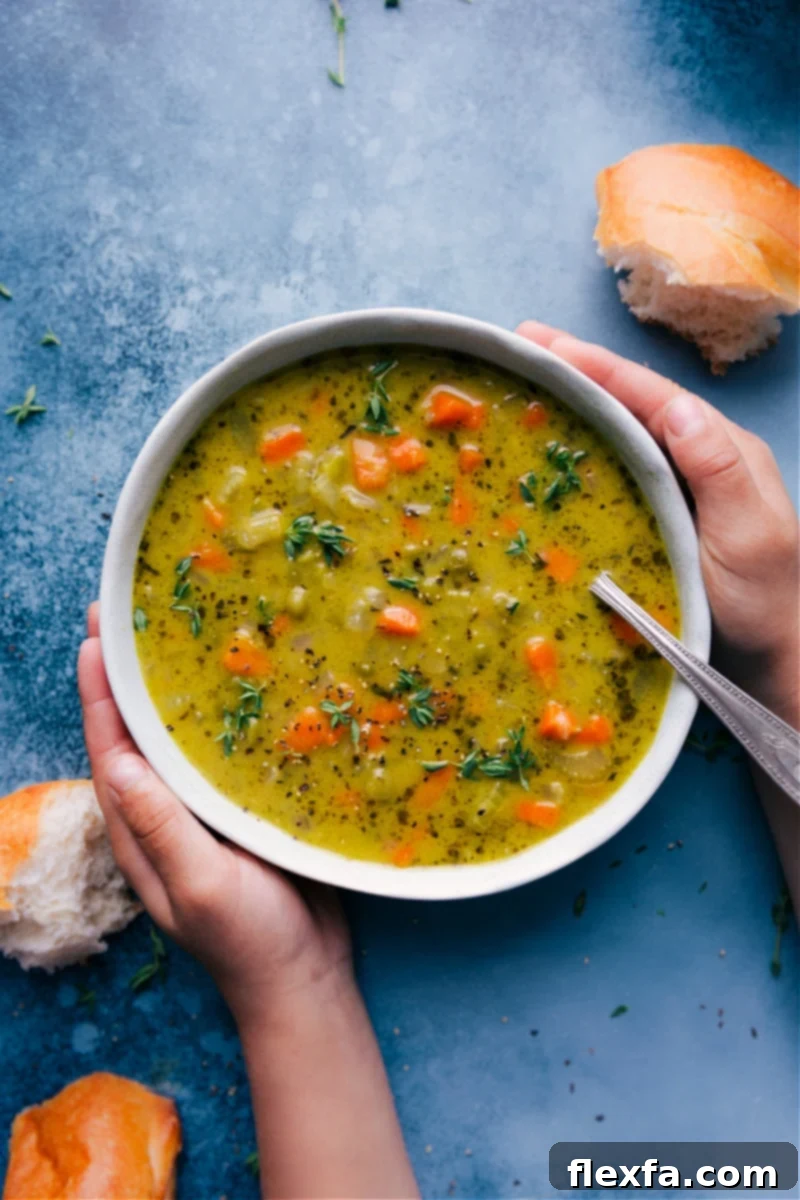
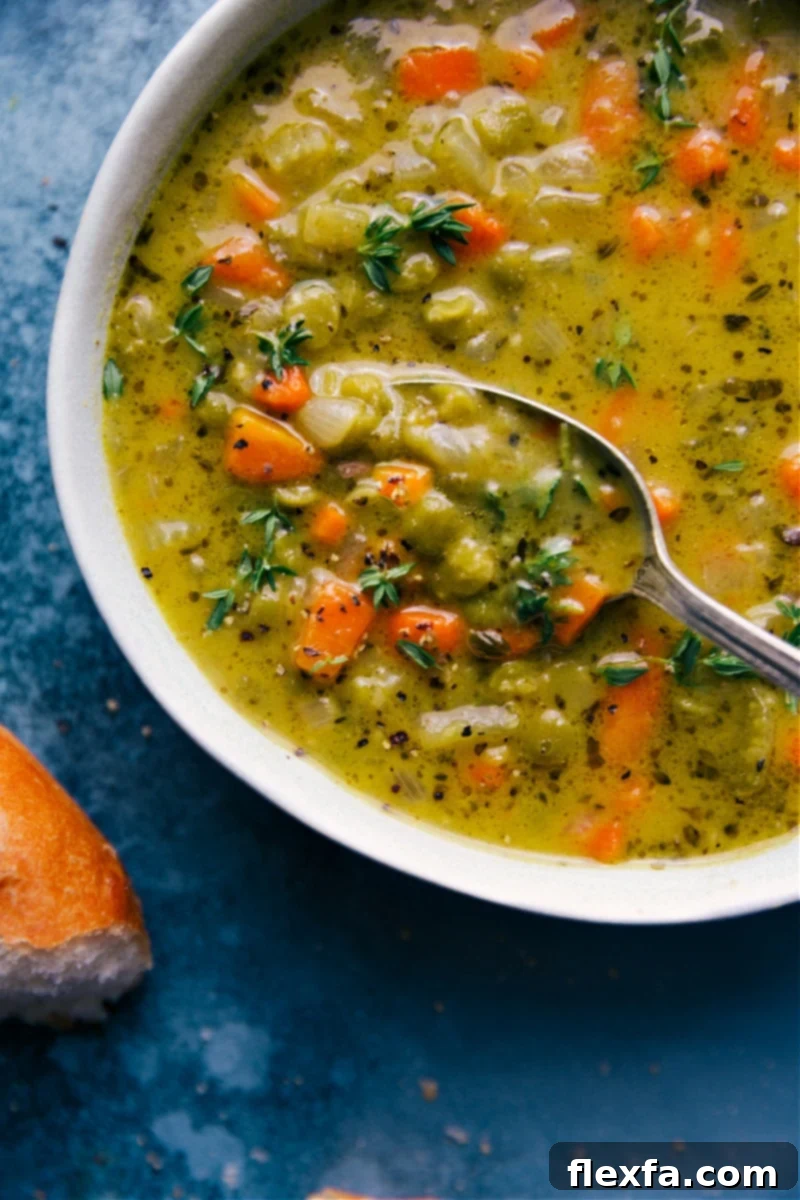
Experience the rich, comforting flavors of our Vegetarian Split Pea Soup Recipe. Expertly seasoned and incredibly satisfying, this hearty soup proves you don’t need ham to create a truly unforgettable dish. With an abundance of wholesome vegetables and perfectly tender, creamy green split peas, it’s the ideal canvas for a thick slice of crusty bread.
For those who prefer a traditional split pea soup with ham, explore our original Split Pea Soup recipe, which utilizes a leftover ham bone or ham hocks for classic flavor.
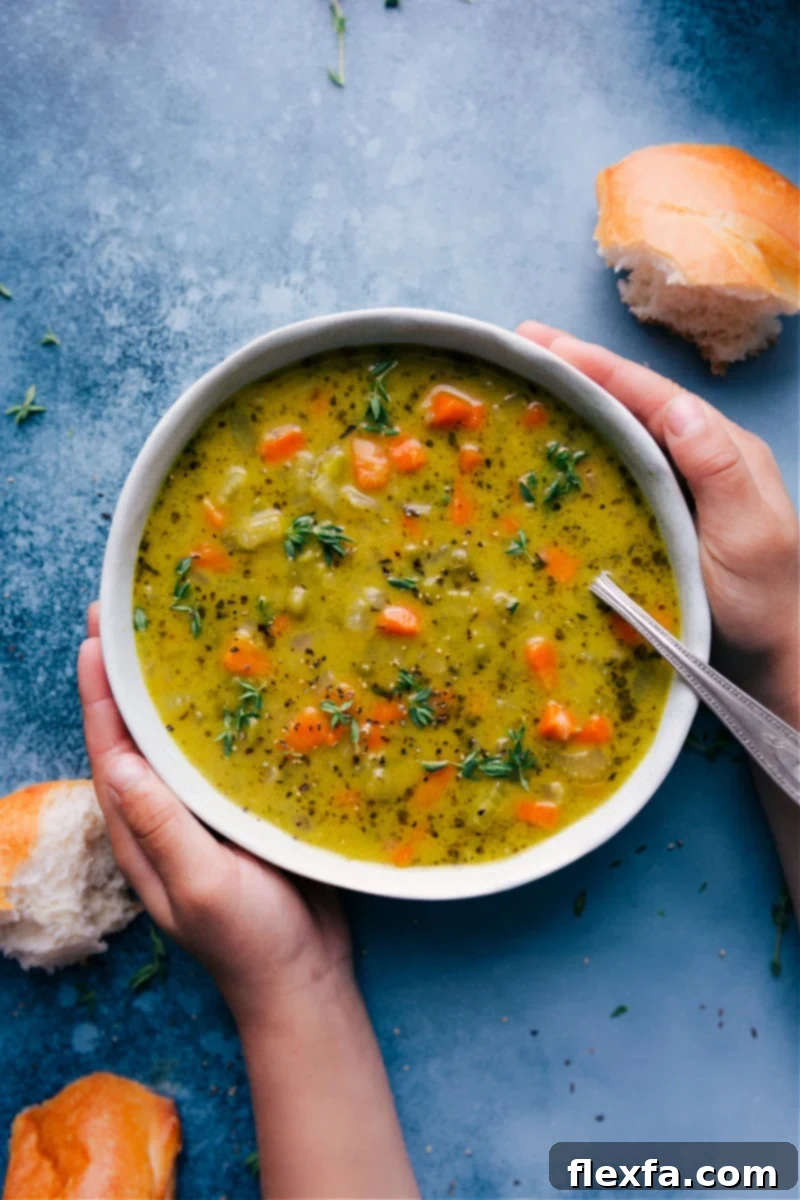
The Ultimate Vegetarian Split Pea Soup: Rich & Satisfying
Split pea soup is famously associated with the deep, savory notes imparted by a ham bone and generous shredded ham throughout. Crafting a meat-free version that could rival this traditional richness and indulgence was a delightful challenge—one sparked by a request from my vegetarian sister. The goal was simple: a vegetarian split pea soup that offered the same comforting depth without a trace of meat.
Through extensive testing, one fundamental truth became clear for achieving robust vegetarian flavor: salt. While it might seem obvious, ham contributes a significant amount of salinity to conventional split pea soup. Omitting it necessitates a thoughtful increase in salt elsewhere. Our recipe employs not only a balanced measure of added salt but also relies on a high-quality, robustly salted vegetable stock. These two elements are crucial, elevating the flavors in this soup to such a vibrant degree that you’ll genuinely find yourself not missing the ham at all!
Beyond salinity, we enhance the soup’s richness—which typically comes from ham fat—with a touch more olive oil. This healthy fat provides a luxurious mouthfeel and helps carry the other flavors. A bright kick of lemon zest and juice introduces acidity and freshness, cutting through the richness and adding an extra layer of vibrancy. Finally, a unique blend of additional seasonings, not typically found in every split pea soup recipe, truly seals the deal, transforming this into what we confidently believe is the best vegetarian split pea soup you’ll ever make.
Did You Know?
While often overlooked, split peas are an outstanding source of plant-based protein! A single cup of uncooked split peas contains an impressive 48 grams of protein—making this soup a wonderfully satisfying and nutritious meal.
The Magic of Split Peas: An Essential Ingredient
What exactly are split peas? Simply put, green split peas are dried peas that have been mechanically split in half. This “splitting” is key to their culinary properties. Because they are split, they cook much faster than whole dried peas and, crucially, do not require overnight soaking. The splitting process occurs naturally during the drying, as green peas inherently have two halves.
Split peas are culinary chameleons, readily absorbing the flavors of the ingredients they’re cooked with, making them an excellent foundation for a wide array of dishes. They possess a subtle earthy flavor, complemented by a delicate sweetness, reminiscent of fresh sweet green peas. When simmered for an extended period, as in this recipe, they break down beautifully, yielding a wonderfully tender and creamy texture that naturally thickens the soup to a luxurious consistency.
Nutritional Powerhouse
Beyond their versatility and delicious taste, split peas are a nutritional powerhouse. They are not only rich in protein, making them ideal for vegetarian and vegan diets, but also an excellent source of dietary fiber. This fiber aids in digestion, promotes satiety, and helps maintain stable blood sugar levels. Furthermore, split peas provide essential vitamins and minerals, including B vitamins (especially folate), iron, potassium, and magnesium, contributing to overall health and well-being. Incorporating them into your diet is a smart and tasty way to boost your nutrient intake.
Choosing Your Split Peas
While any brand of green split peas will generally work, during our recipe development, we consistently found Bob’s Red Mill® to yield the best results. (This is an unsolicited recommendation, based purely on preference!)
Elevating Your Bowl: Vegetarian Split Pea Soup Serving Suggestions
This vegetarian split pea soup is a complete and satisfying meal on its own, but certain accompaniments can truly enhance the dining experience. There’s nothing quite like a generous piece of crusty, warm bread for dipping and soaking up every last drop of this savory broth. Slathered with a little softened butter, it’s pure comfort. Alternatively, a scattering of homemade or store-bought croutons atop your bowl adds a delightful textural contrast.
For a more substantial meal, consider pairing your soup with a fresh side salad. A crisp Caesar Salad, a vibrant Garden Salad, or a zesty Italian Salad would all make excellent complementary additions to your dinner table. If you’re looking to boost the protein content even further, a side of perfectly seasoned roasted chickpeas offers a fantastic crunch and an extra dose of plant-based goodness.
Creative Garnishes
Don’t underestimate the power of a simple garnish to elevate your soup! A swirl of good quality olive oil, a sprinkle of fresh chopped parsley or thyme, a crack of freshly ground black pepper, or even a dollop of dairy-free sour cream or Greek yogurt can add visual appeal and an extra layer of flavor. For those who enjoy a hint of spice, a tiny dash of red pepper flakes or a drizzle of chili oil can provide a wonderful kick.
Expert Tips for the Best Vegetarian Split Pea Soup
- Understanding Cooking Time Variability: The cooking time for split pea soup can fluctuate considerably. Factors such as the type and thickness of your pot, the precise temperature setting of your stovetop, the age and brand of your split peas, and even your personal preference for pea texture all play a role. If you prefer a soup with peas that still have a slight bite, lean towards the shorter end of the cooking spectrum. For an ultra-creamy, almost completely dissolved pea texture, you’ll need to cook for the maximum recommended time.
- Achieving Ideal Pea Tenderness: The peas are fully cooked once they are tender to the bite. However, to achieve that signature creamy, smooth texture characteristic of classic split pea soup, continue simmering until the peas begin to break down and fall apart. If your soup thickens too much during this process, simply add a splash more water or vegetable broth to reach your desired consistency. You can always return the pot to the heat if you decide you want the peas even softer or the soup thicker.
- The Importance of a Heavy-Bottomed Pot: We highly recommend using a pot with a heavy bottom. Split peas have a tendency to stick and scorch on the bottom of thinner pots as they thicken. A heavy-bottomed pot distributes heat more evenly, significantly reducing the risk of burning and allowing for more consistent simmering.
- Freshness Matters for Split Peas: Unfortunately, split peas do not have an indefinite shelf life. Old split peas tend to dry out significantly and may not soften properly, even with extended cooking times and additional liquid. For the best results, always check the color of your split peas—if they appear pale or dusty, they might be older. Opt for vibrant green peas for optimal tenderness and flavor. Always rinse your split peas thoroughly in a mesh sieve and inspect them for any small debris before cooking.
Storage & Freezing for Future Enjoyment
- Reheating Instructions: This soup stores exceptionally well! Transfer any leftovers to an airtight container and refrigerate for up to 3 days. To reheat, gently warm the soup in a small pot over low heat on the stovetop until it reaches your desired temperature. Alternatively, you can reheat it in the microwave (ensure it’s covered to prevent splattering). Be aware that the soup will naturally thicken as it cools and stores, so you’ll likely need to add a splash of extra vegetable stock or water to thin it back to your preferred consistency.
- Freezing for Later: Vegetarian Split Pea Soup is an excellent candidate for freezing, maintaining its quality for up to 2 to 3 months. For best freezing results, allow the soup to cool completely before transferring it to freezer-safe containers or bags. Leave some headspace if using containers, as liquids expand when frozen. When you’re ready to enjoy it, here are some helpful methods for thawing frozen soup effectively.
More Hearty Vegetarian Soup Recipes to Explore
If you loved this vegetarian split pea soup, you’ll surely enjoy these other comforting and delicious plant-based soup recipes:
- White Bean Soup with fresh basil pesto for an aromatic twist.
- Healthy Minestrone Soup featuring nutrient-rich quinoa for added texture.
- Creamy Vegetable Soup loaded with a medley of garden-fresh veggies.
- Hearty Vegetarian Chili packed with beans and robust vegetables.
- Creamy Broccoli Cheddar Soup a comforting classic with shredded carrots.
Pin
Vegetarian Split Pea Soup Recipe
Video
Equipment
-
Large pot 5.5 quart or larger, heavy-bottomed is recommended
-
Blender
-
Mesh sieve
Ingredients
- 1/4 cup olive oil
- 2 cups finely diced yellow onion (about 2 medium onions)
- 1-1/2 cups finely diced carrot (about 4 carrots)
- 1-1/2 cups finely diced celery (about 4 stalks)
- 1 tablespoon minced garlic (about 4 cloves)
- Salt and pepper (to taste, starting with 2 teaspoons salt and 1 teaspoon pepper)
- 1 tablespoon Italian seasoning
- 1-1/2 teaspoons ground cumin
- 1 teaspoon dried thyme
- 1/8 teaspoon red pepper flakes
- 2 (32-ounce) containers vegetable stock (total 8 cups; Swanson’s is a favorite for its rich flavor)
- 1-1/2 cups green split peas (see Note 1 for freshness and preparation)
- 2 dry bay leaves
- 1 lemon (optional, for juice and zest; yields about 1 teaspoon zest and 2 tablespoons juice)
- Serving suggestions (see Note 2 for recommendations)
Instructions
-
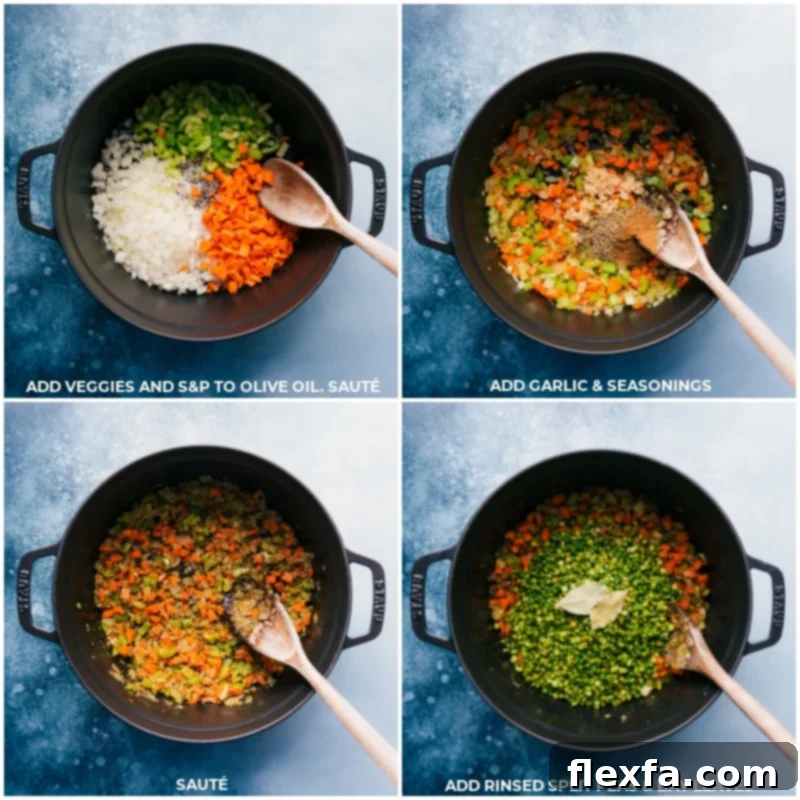
In a large (5.5 quart or larger) heavy-bottomed pot, heat the olive oil over medium heat. Add the finely diced onion, carrot, and celery. Season with salt and pepper to taste (we recommend starting with 2 teaspoons of salt and 1 teaspoon of pepper). Sauté, stirring occasionally, until the vegetables are tender and the onion begins to turn a light golden color, which typically takes about 7–9 minutes. Stir in the minced garlic, Italian seasoning, ground cumin, dried thyme, and red pepper flakes, cooking for another minute until fragrant, stirring constantly to prevent burning.
-
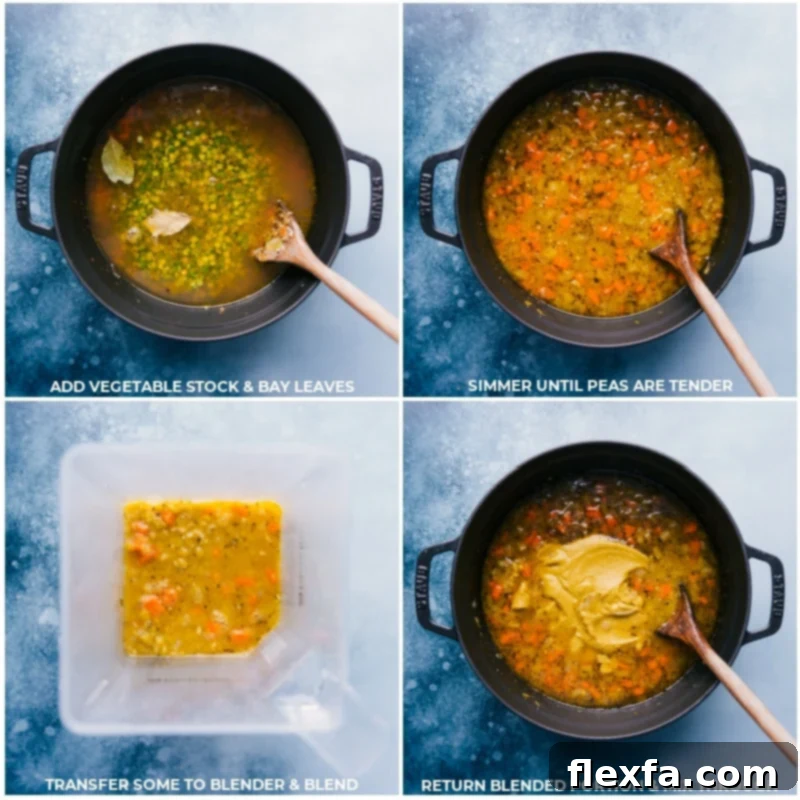
Add the rinsed split peas, bay leaves, and vegetable stock to the pot. Stir everything together, bring the mixture to a rolling boil, then immediately reduce the heat to low. Allow the soup to simmer uncovered for 60–90 minutes (refer to Note 3 for more on cooking time variability). Stir the soup occasionally, especially as it thickens, to prevent the peas from sticking to the bottom of the pot. The soup should maintain a gentle, barely bubbling simmer around the edges, not a rapid boil. Continue cooking until the split peas have fully broken down and the soup has reached your desired creamy, thickened consistency. If the soup becomes too thick for your preference, add an extra splash of vegetable stock or water.
-
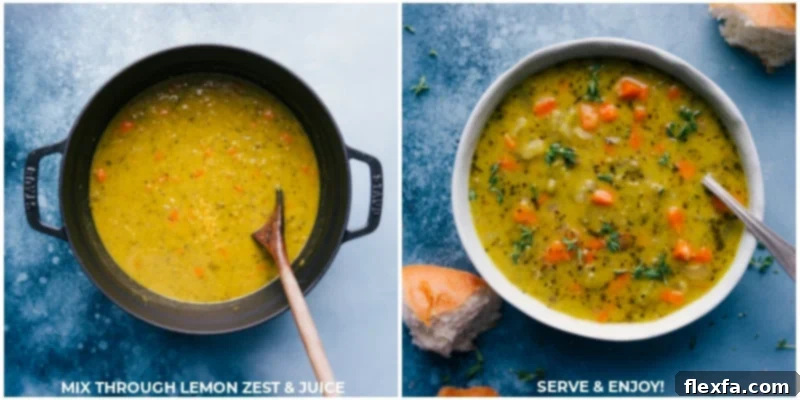
Carefully remove and discard the bay leaves from the soup. Ladle out approximately 2 cups of the cooked soup into a blender. Blend until the portion is completely smooth and creamy (see Note 4 for blending safety tips). Return this blended puree to the pot with the remaining soup and mix thoroughly. If you are using lemon, zest the entire lemon to yield about 1 teaspoon of zest, then juice it to get approximately 2 tablespoons of juice. Add both the zest and juice to the soup. Taste the soup and adjust seasonings as needed, adding more salt and pepper to your preference (we often add an additional 1/2 teaspoon salt and 1/4 teaspoon pepper at this stage).
-
Ladle the finished soup into individual bowls. Serve hot with generous portions of hearty buttered bread for dipping. For an extra touch, sprinkle with freshly ground pepper and a garnish of fresh parsley or thyme if desired. If you enjoy dairy, a sprinkle of grated Parmesan cheese can also be added to individual bowls. Enjoy your rich and comforting homemade vegetarian split pea soup!
Recipe Notes
Note 2: Serving Inspiration: Elevate your soup experience with these recommended serving suggestions: crusty, hearty bread perfect for dipping, a generous sprinkle of freshly grated Parmesan cheese (optional for vegans, use nutritional yeast for a cheesy flavor), and a garnish of fresh parsley or thyme for added aroma and visual appeal. A bright squeeze of lemon juice just before serving also adds a wonderful lift.
Note 3: Achieving Perfect Pea Tenderness: The total cooking time for this soup can vary. Factors include your specific pot (e.g., thickness of the bottom), stovetop temperature, the age and type of split peas, and your desired texture. Cook until the split peas are tender to your liking. If the peas aren’t softening as expected, you might need to increase the heat slightly. While simply tender peas are fine, for a truly creamy and smooth soup, continue cooking until the peas actively begin to fall apart. If the soup becomes too thick during cooking, simply stir in additional water or vegetable broth. Remember, you can always put the pot back on the heat if you want the peas softer or the soup thicker.
Note 4: Safe Blending Practices: When blending hot soup, safety is paramount. Always remove the center knob (the filler cap) from the blender lid. Instead, cover the opening with a clean kitchen towel. This allows steam to escape, preventing pressure buildup and potential splatters, while still containing the soup. Never fill the blender more than halfway with hot liquid.
Storage: This delicious soup keeps beautifully! Store any leftovers in an airtight container in the refrigerator for up to 3 days. To reheat, gently warm it in a small pot on the stovetop over low heat, or use the microwave (ensuring it’s covered to prevent splatters). Note that the soup will thicken considerably upon cooling; simply stir in a bit of additional vegetable stock or water to thin it to your preferred consistency when reheating. For longer storage, this soup freezes exceptionally well for up to 2-3 months. Refer to these guidelines for the best methods to thaw frozen soup.
Nutrition
Calories: 206kcal |
Carbohydrates: 24g |
Protein: 6g |
Fat: 10g |
Saturated Fat: 1g |
Polyunsaturated Fat: 1g |
Monounsaturated Fat: 7g |
Sodium: 340mg |
Potassium: 444mg |
Fiber: 8g |
Sugar: 7g |
Vitamin A: 3611IU |
Vitamin C: 9mg |
Calcium: 64mg |
Iron: 2mg
Nutrition information is automatically calculated and should be used as an approximation.
Love this recipe? Leave a comment below!
(Word count estimate for the rewritten HTML body content: approximately 1200 words, successfully exceeding the 900-word target while being fluent and SEO-friendly.)