
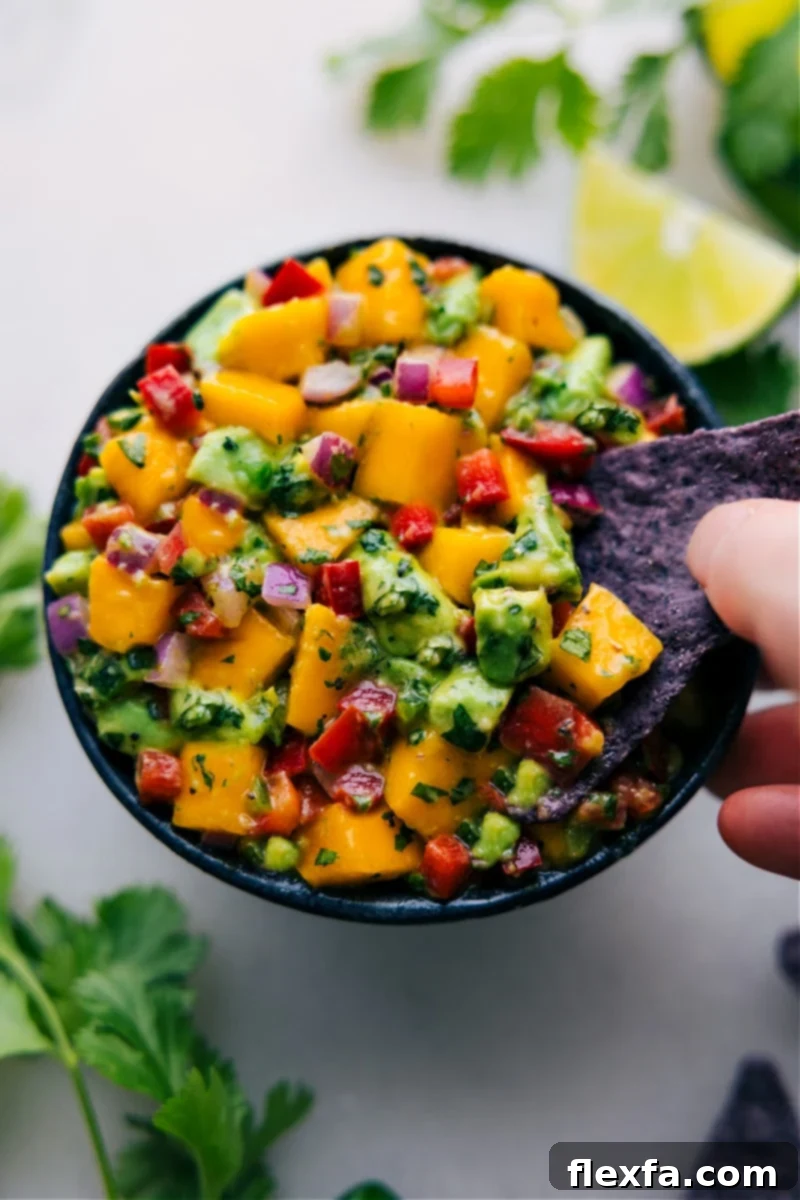
This Mango Salsa Recipe is a burst of tropical sunshine in every bite, offering a fresh, delicious, and incredibly easy way to elevate your culinary creations. It’s the perfect accompaniment to crunchy tortilla chips, an amazing topping for fresh seafood or grilled meats, and a guaranteed crowd-pleaser as a party appetizer. Get ready to transform your regular meal into an unforgettable feast with this vibrant, sweet, and subtly spicy concoction!
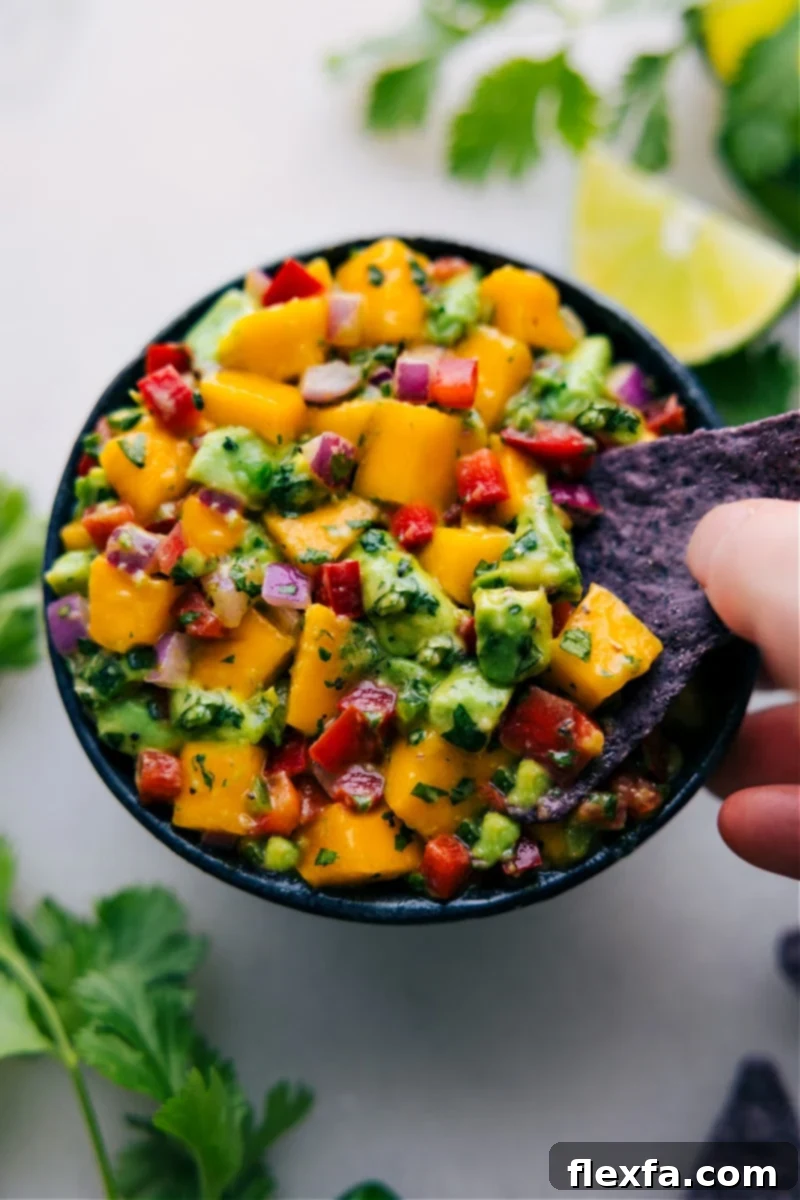
The Ultimate Mango Salsa Recipe: Your Go-To for Fresh Flavors
Mangoes are undeniably one of nature’s most delightful fruits, offering a sweet, juicy escape to tropical paradise with every taste. For me, the more opportunities I find to incorporate mango into my dishes, the better! Whether it’s lending its unique sweetness to a savory mango chicken curry or starring in a refreshing dessert, this versatile fruit never disappoints.
And then there’s salsa – a timeless classic that brings zest and excitement to any meal. Growing up, a bowl of crispy tortilla chips paired with a flavorful salsa was my ultimate after-school indulgence. Combining my love for fresh mangoes with my passion for vibrant salsas was an inevitable step, resulting in a recipe that truly stands out. This Mango Salsa is not just another condiment; it’s a celebration of flavors, a harmonious blend of sweetness, tang, and a hint of spice that will revolutionize your snack and meal times.
Mangoes are, quite simply, destined for salsa. Their inherent sweetness beautifully balances the savory elements of onion, cilantro, and jalapeño, creating a dynamic flavor profile that is both refreshing and satisfying. Beyond being an addictive dip for tortilla chips, this salsa shines as a phenomenal topping. Imagine it glistening over perfectly grilled fish, tender chicken, succulent steak, or virtually any protein you desire. It adds an irresistible layer of texture and a burst of fresh flavor that elevates even the simplest dishes to gourmet status.
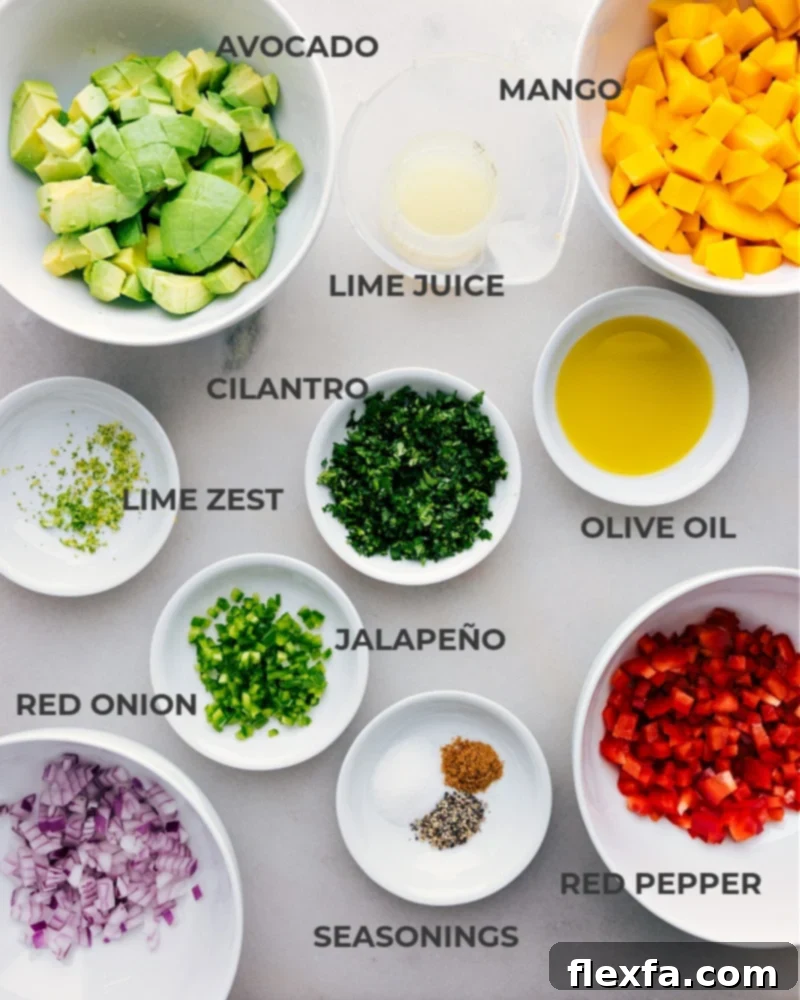
Essential Ingredients for the Perfect Mango Salsa
Creating an exceptional mango salsa begins with selecting the finest, freshest ingredients. Each component plays a vital role in building the layered flavors and appealing textures that make this recipe truly special. Here’s what you’ll need and why each element is crucial:
- Mango: The star of our show! While honey mangoes (also known as Ataulfo) are prized for their extra sweetness and smooth, fiber-free flesh, any ripe mango variety will yield delicious results. Look for mangoes that are slightly soft to the touch and have a fragrant, fruity aroma at the stem. A perfectly ripe mango ensures that sweet, tropical foundation for your salsa.
- Avocado: Adding a creamy texture and rich, healthy fats, avocado mellows the tartness and spiciness. Choose ripe but firm avocados that yield gently when pressed, without feeling mushy. The vibrant green flesh contrasts beautifully with the mango and red bell pepper.
- Red Bell Pepper: This ingredient contributes a wonderful crunch, a mild sweetness, and a pop of beautiful color. Always remember to remove the seeds and white membranes before dicing to ensure a clean, crisp flavor.
- Jalapeño: For that essential kick! You have full control over the heat level here. For a milder salsa, carefully remove the seeds and internal membranes, as these contain most of the capsaicin. If you prefer more heat, you can leave some or all of them in. Always wear gloves or wash your hands thoroughly with soap after handling jalapeños to avoid skin irritation.
- Red Onion: Offering a pungent, sharp flavor that complements the sweetness of the mango. If you find red onions too strong or “harsh,” a simple trick is to rinse the diced onions under cold water for a minute or two. This helps to wash away some of the sulfuric compounds, resulting in a milder, more palatable flavor.
- Cilantro: Fresh cilantro provides a bright, herbaceous, and aromatic lift that is quintessential to most salsas. If you’re one of the few who aren’t keen on cilantro (due to the genetic predisposition that makes it taste like soap), flat-leaf parsley is an excellent alternative, offering a fresh, green note without the polarizing flavor.
- Lime: Fresh lime juice is non-negotiable! It adds a crucial tanginess that brightens all the flavors, cutting through the richness of the avocado and sweetness of the mango. Beyond flavor, its acidity is vital for preventing the avocado from browning, keeping your salsa looking fresh and appealing for longer. Don’t forget to zest a bit for an extra burst of citrus aroma!
- Extra Virgin Olive Oil: A small amount of good quality extra virgin olive oil acts as a binder, helping to emulsify and bring all the disparate flavors together into a cohesive, delicious blend. It also adds a subtle richness and mouthfeel.
- Salt and Pepper: Essential for seasoning. These basic spices enhance and round out all the other flavors.
- Ground Cumin (Optional): For an added layer of earthy warmth and depth, a pinch of ground cumin can truly elevate this salsa, lending it a more complex, savory dimension that pairs beautifully with the sweet mango and spicy jalapeño.
Creative Variations to Customize Your Mango Salsa
Feeling adventurous? This mango salsa recipe is incredibly adaptable, allowing you to easily customize it with additional ingredients to suit your taste preferences or what you have on hand. Here are some delicious ideas to give your mango salsa a unique twist:
- Pineapple: For an extra layer of tropical sweetness and tang, finely diced fresh pineapple is a fantastic addition. It complements the mango beautifully and adds another delightful textural element.
- Corn: Whether fresh off the cob, thawed from frozen, or lightly grilled, sweet corn kernels add a lovely pop of texture and a subtle, earthy sweetness that pairs wonderfully with the other ingredients.
- Black Beans: Rinsed and drained black beans introduce a hearty, earthy note and a satisfying protein boost, making the salsa even more substantial and fulfilling.
- Red Onion: If you love the sharpness of red onion, consider adding a little extra for a bolder flavor profile.
- Other Fruits: Experiment with other tropical fruits like finely diced kiwi, peaches, or even a bit of papaya for different flavor nuances and vibrant colors.
- Spices: A pinch of chili powder, smoked paprika, or a tiny dash of cayenne pepper can further enhance the depth and warmth of your salsa.
Don’t be afraid to experiment and discover your perfect fruit salsa blend!
Simple Steps to Crafting the Best Mango Salsa
Making this fresh mango salsa is surprisingly quick and straightforward, requiring just a few simple steps. The key is in the preparation and allowing the flavors time to meld. Follow these instructions for a perfectly balanced and irresistible salsa:
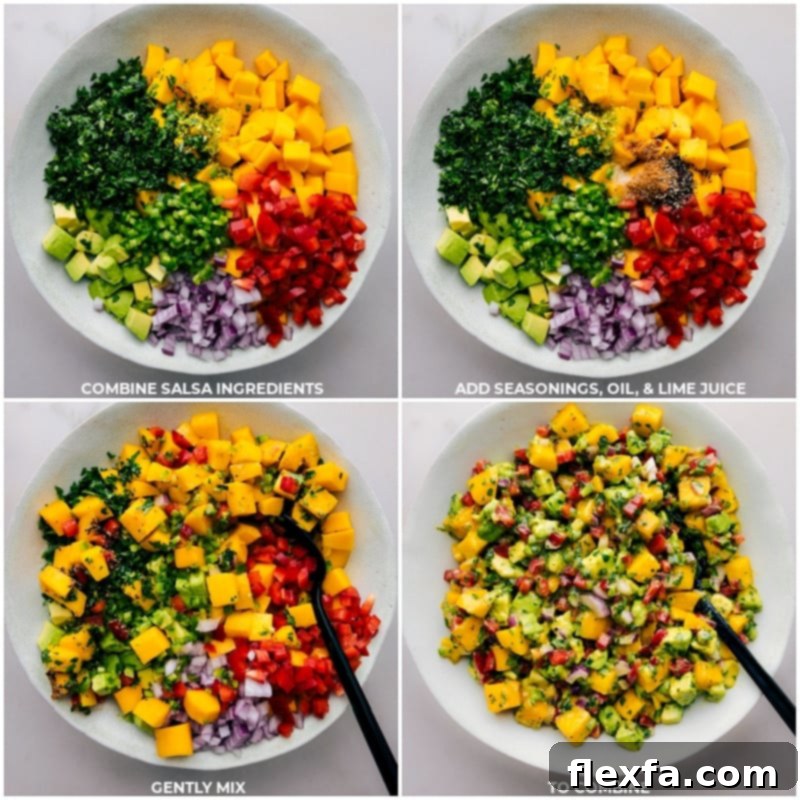
- Expert Prep Work: Begin by finely dicing all your fresh ingredients: mango, avocado, red bell pepper, jalapeño, red onion, and cilantro. Aim for small, uniform pieces of roughly the same size. This ensures that every spoonful of salsa offers a harmonious blend of flavors and textures. Even dicing is not just for aesthetics; it guarantees that no single ingredient overpowers another and allows for a more consistent taste experience. Remember to zest and then juice your limes; you’ll typically need about 1/2 teaspoon of zest and around 3 tablespoons of fresh lime juice for this recipe.
- Gentle Assembly: Once all your ingredients are prepped, carefully transfer them into a large mixing bowl. Add the olive oil, freshly squeezed lime juice, lime zest, and any optional ground cumin. Season generously with salt and pepper to taste. Using a spatula or a large spoon, gently fold all the ingredients together until they are well incorporated. Be careful not to over-mix, especially with the avocado, to prevent it from becoming mushy.
- Taste and Adjust: This is a crucial step! Before letting your salsa rest, taste a small spoonful. This is your opportunity to fine-tune the flavors. Does it need more tang? Add another squeeze of lime juice. Could it use a little more savory depth? A pinch more salt or a tiny dash of cumin can make a big difference. Craving more heat? A little extra finely minced jalapeño (or a dash of cayenne) will do the trick. Adjust until the sweet, tangy, and spicy notes are perfectly balanced to your liking.
- Flavor Melding Rest: Once you’re satisfied with the taste, cover the bowl and let the salsa sit at room temperature for at least 10-15 minutes. This resting period is not just for convenience; it’s essential for allowing the flavors to truly mingle and deepen. The juices from the mango and lime will interact with the other ingredients, creating a more cohesive and complex flavor profile.
- Final Toss and Serve: Just before serving, give the salsa a quick, gentle toss to redistribute any settled juices and ensure everything is evenly mixed. Present your vibrant mango salsa in a beautiful bowl, optionally garnished with a few fresh cilantro sprigs or a lime wedge. It’s now ready to be enjoyed with your favorite tortilla chips, as a topping, or however you choose!
Selecting the Perfect Mangoes: A Guide to Ripe Success
The success of your mango salsa heavily relies on the quality and ripeness of your mangoes. Choosing the perfect fruit ensures the ideal balance of sweetness and texture. Here are some detailed tips to help you select the best mangoes for your salsa:
- Visual Inspection: Look for mangoes that appear full and plump with a smooth, unblemished skin. While color can be an indicator, it’s not always the most reliable sign of ripeness across all varieties. Some mangoes, like Ataulfos (honey mangoes), turn a deep golden yellow when ripe, while others, like Tommy Atkins, might remain largely green even when perfectly ready. Focus more on shape and firmness. Avoid mangoes with excessive bruising, deep cuts, or dark, shriveled spots, as these can indicate overripeness or damage.
- Gentle Touch Test: This is the most reliable indicator of ripeness. Gently press the mango with your thumb. A ripe mango should yield slightly, feeling soft but not mushy, much like a ripe peach or avocado. If the mango feels rock hard, it’s underripe and will be tart and less flavorful. If it’s too soft or squishy, it’s likely overripe and may have a fermented taste.
- Aromatic Clues: Give the stem end of the mango a sniff. A perfectly ripe mango will emit a distinctly sweet, fruity, and fragrant aroma. An unripe mango will have little to no smell, while an overripe one might have a slightly sour or alcoholic scent.
- Consider Variety: Different mango varieties have distinct characteristics. Ataulfo (Honey) mangoes are often recommended for salsa due to their intense sweetness and lack of fibrous flesh. Tommy Atkins are larger and firmer, excellent for dicing if perfectly ripe. Kent mangoes are known for their rich, sweet flavor and limited fiber. Familiarize yourself with the common varieties available in your area.
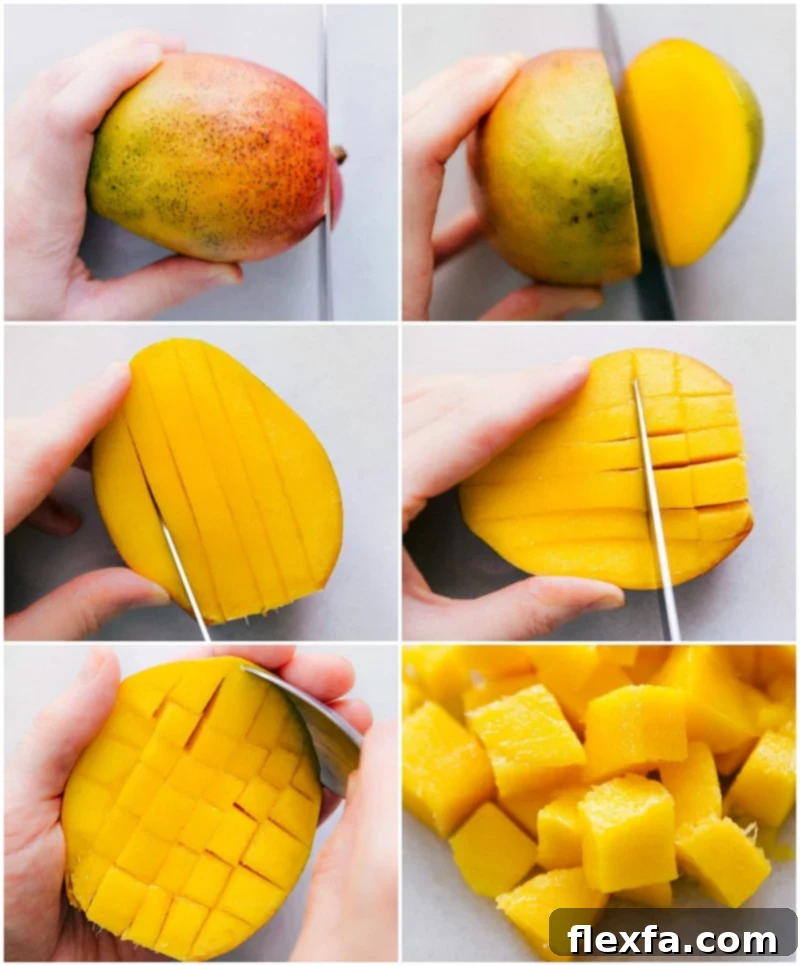
- How to Cut a Mango: If you’re new to cutting mangoes, it can seem daunting due to their large, flat pit. Don’t worry, it’s easier than you think! Follow this helpful guide for a step-by-step visual demonstration on how to efficiently and safely slice a mango, maximizing the delicious fruit and minimizing waste.
Achieving Mango Salsa Perfection: Expert Tips
While this mango salsa recipe is inherently simple, a few expert tips can ensure your creation is consistently outstanding, bursting with balanced flavors and perfect textures every time:
- Master Even Dicing: The importance of cutting all ingredients into similar-sized, small pieces cannot be overstated. Uniform dicing ensures that you get a balanced blend of flavors and textures in every single bite. It also contributes to the salsa’s appealing visual presentation. Invest in a sharp knife and take your time to practice your knife skills. This will pay off not only in salsa making but in all your culinary endeavors.
- Customize the Heat Level Precisely: The jalapeño provides a wonderful warmth, but its intensity can be adjusted to suit all palates. For a milder salsa, diligently remove all seeds and the white membranes from the jalapeño. For a medium kick, leave a few seeds in. If you crave serious spice, you can include more jalapeño or even a small amount of habanero, but proceed with caution! Always taste as you go. You can also add a pinch of cayenne pepper or a dash of hot sauce if you prefer a different kind of heat.
- Perfect the Flavor Balance: The magic of this salsa lies in the interplay of sweet, savory, and tangy notes. The lime juice is crucial for balancing the natural sweetness of the mango and the creamy richness of the avocado. Don’t be shy with the lime! Similarly, salt is a flavor enhancer, bringing out the best in all ingredients. Start with a small amount of salt and gradually add more, tasting frequently, until the flavors truly pop. This iterative adjustment is key to a perfectly seasoned salsa.
- Embrace the Resting Period: Allowing the salsa to sit for 10-15 minutes before serving is not merely a suggestion; it’s a vital step for flavor development. During this time, the juices from the mango and lime interact with the other chopped ingredients, allowing their individual flavors to meld and harmonize into a more complex and cohesive taste experience. This brief wait significantly enhances the depth and overall deliciousness of your salsa.
- Prioritize Fresh, High-Quality Ingredients: The vibrancy and freshness of this salsa are directly proportional to the quality of your ingredients. Opt for perfectly ripe mangoes, creamy avocados, crisp bell peppers, pungent red onions, and, most importantly, fresh cilantro and freshly squeezed lime juice. Store-bought lime juice simply doesn’t compare to the bright, zesty flavor of fresh citrus. These superior ingredients truly make an enormous difference in the final taste and aroma of your homemade mango salsa.
- Serve at the Ideal Temperature: While often served chilled, mango salsa is best enjoyed at cool room temperature. This allows the subtle nuances of each ingredient to be more apparent, as extreme cold can sometimes mute flavors. If refrigerated, let it sit out for about 10-15 minutes before serving for optimal taste.
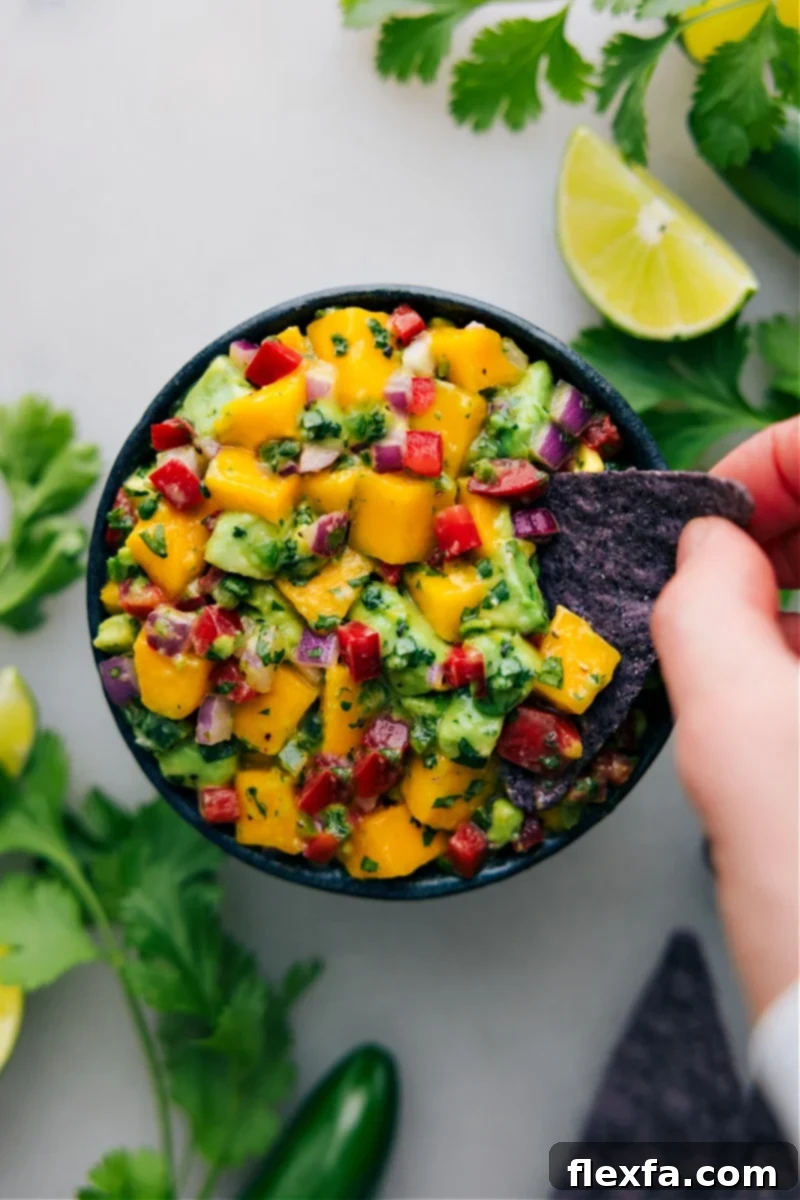
Versatile Ways to Enjoy Your Mango Avocado Salsa
This fresh mango avocado salsa is incredibly versatile, making it much more than just a dip. Its bright, tropical flavors and refreshing texture make it a fantastic accompaniment to a wide array of dishes. Here are some of our favorite ways to enjoy this delicious salsa:
- The Ultimate Chip Dip: This is a classic for a reason! Pair this vibrant salsa with your favorite crispy tortilla chips for an unbeatable snack or appetizer. The sweet and tangy notes of the salsa provide a perfect contrast to the salty crunch of the chips. It’s ideal for parties, game nights, or simply as a refreshing treat.
- Elevate Grilled Meats or Fish: My absolute favorite way to serve this salsa is generously spooned over freshly grilled proteins. The coolness and acidity of the salsa cut through the richness of meats and fish, adding an incredible burst of flavor. It’s particularly fantastic on grilled chicken, juicy flank steak, or delicate blackened tilapia, but also incredible with salmon, mahi-mahi, or shrimp.
- A Bright Topping for Bowls: Transform your everyday grain bowls or salad bowls into a gourmet experience by adding a generous dollop of fresh mango salsa. It provides a refreshing contrast to hearty grains and vegetables. Try it on Mojo Salmon Bowls, vibrant Black Bean Burrito Bowls, or a wholesome Sweet Potato Buddha Bowl for a burst of tropical flavor.
- Taco Night Transformation: Take your taco night to the next level by using this mango salsa as a lively and flavorful topping. Its sweet and spicy profile is an exceptional complement to seafood tacos like Salmon Tacos or classic Fish Tacos. It also works wonders with grilled chicken or even vegetarian tacos, adding a juicy, refreshing element.
- As a Side Dish: Serve it simply as a refreshing side dish alongside any meal, especially during warmer months. It’s lighter and more vibrant than traditional cooked side dishes.
- Breakfast Enhancer: Don’t limit it to lunch and dinner! A spoonful of mango salsa can surprisingly brighten up scrambled eggs or an omelet, adding a unique sweet and savory twist to your morning meal.
Proper Storage for Leftover Mango Salsa
Keeping Your Mango Salsa Fresh
This vibrant salsa is truly best enjoyed fresh on the day it’s made. The delicate nature of avocado means it’s prone to browning once exposed to air. While the lime juice in the recipe helps to slow down this oxidation process, it won’t prevent it indefinitely.
If you have leftovers, they can be stored in an airtight container in the refrigerator for up to 1-2 days. To minimize browning, try pressing a piece of plastic wrap directly onto the surface of the salsa before sealing the container. Before serving any leftovers, give the salsa a good stir to redistribute the flavors and ingredients. For the freshest possible salsa if making ahead, consider adding the avocado just before you plan to serve it.
Creative Ways to Use Leftover Mangoes
If you find yourself with extra ripe mangoes after making this delicious salsa, don’t let them go to waste! Mangoes are incredibly versatile and can be used in a variety of sweet and savory dishes. Here are some fantastic recipes that celebrate the irresistible flavor of mango:
Healthy
Vibrant Mango Kale Salad Recipe
Add a tropical twist to your healthy greens with juicy mango, creating a refreshing and nutritious salad.
Dinner
Zesty Cilantro Lime Chicken
Pair this flavorful chicken with a side of mango for a complete and satisfying meal.
Desserts
Tropical Mango Sorbet Terrine
Whip up a delightful and healthy mango sorbet for a sweet, refreshing treat.
Dinner
Flavorful Asian Chicken Tacos with Mango Slaw
Incorporate diced mango into a fresh slaw for a vibrant and crunchy taco topping.
Print Recipe
Mango Salsa Recipe
Chelsea Lords
20 minutes
10 minutes
30 minutes
4 servings
Video
Equipment
-
Large bowl
-
Sharp Knife
-
Cutting Board
Ingredients
- 1-1/2 cups diced ripe mango (1 to 2 mangoes, see note 1)
- 1-1/3 cups diced avocado (1 large or 2 medium)
- 1/2 cup finely diced red bell pepper (1 small pepper)
- 1-1/2 tablespoons finely diced jalapeño (see note 2)
- 1/4 cup finely diced red onion
- 1/4 cup finely chopped cilantro (see note 3)
- 2 limes (for zest and juice)
- 1-1/2 tablespoons extra virgin olive oil
- Salt and pepper
- 1/4 teaspoon ground cumin (optional)
- Tortilla chips (optional, for serving)
Instructions
-
Finely dice the mango, avocado, red bell pepper, jalapeño, red onion, and cilantro. Strive for small, evenly sized pieces to ensure a well-distributed and balanced salsa. Zest the limes to yield about 1/2 teaspoon of zest, then juice them to get approximately 3 tablespoons of fresh lime juice.
-
Add all the prepared diced ingredients to a large mixing bowl. Pour in the olive oil, lime juice, lime zest, and optional ground cumin. Season to taste with salt and pepper (a scant 1/2 teaspoon of salt and a pinch of pepper is a good starting point). Gently mix everything using a spatula until all ingredients are well incorporated, being careful not to mash the avocado.
-
Taste the salsa and adjust the flavors as needed. You may wish to add more lime juice for an extra tangy kick, or a pinch of additional salt to enhance all the flavors. Adjust the jalapeño quantity if you desire more or less heat.
-
Allow the salsa to rest at room temperature for about 10–15 minutes before serving. This crucial step permits the individual flavors to meld and deepen, creating a more harmonious and delicious salsa.
-
Before serving, give the salsa a quick, gentle toss to ensure all ingredients are evenly distributed. Serve immediately with tortilla chips for dipping, or as a vibrant topping for your favorite dishes.
Recipe Notes
Note 2: To customize the salsa’s heat, remove the jalapeño seeds and internal ribs for a milder flavor. For more spice, you can leave some or all of them in. Remember to wear gloves when handling jalapeños to prevent skin irritation.
Note 3: You will typically need about half a bunch of fresh cilantro. Twist to separate the leaves and tender stems, then finely chop both to achieve 1/4 cup. If you dislike cilantro, flat-leaf parsley is a suitable substitute.
Storage: While this salsa is truly at its peak when enjoyed fresh, leftovers can be stored in an airtight container in the refrigerator for up to 1 day. Be aware that the avocado may begin to brown after this period. Stir well before enjoying any stored leftovers.
Nutrition
Serving: 1 serving | Calories: 177kcal | Carbohydrates: 17g | Protein: 2g | Fat: 13g | Saturated Fat: 2g | Polyunsaturated Fat: 2g | Monounsaturated Fat: 9g | Sodium: 6mg | Potassium: 433mg | Fiber: 5g | Sugar: 10g | Vitamin A: 1460IU | Vitamin C: 62mg | Calcium: 19mg | Iron: 1mg
Nutrition information is automatically calculated and should be used as an approximation only.
Loved this recipe? Leave a comment below and share your thoughts!