

Welcome to the world of irresistible homemade treats! This easy, foolproof Toffee recipe is an absolute must-try, especially during the holidays. Imagine a delicate, buttery crunch that melts in your mouth, generously coated with a luscious layer of chocolate, and finished with exquisitely sugared and toasted almonds. It’s truly the perfect confection for elevating any party spread or for crafting thoughtful, delicious gifts that will impress everyone.
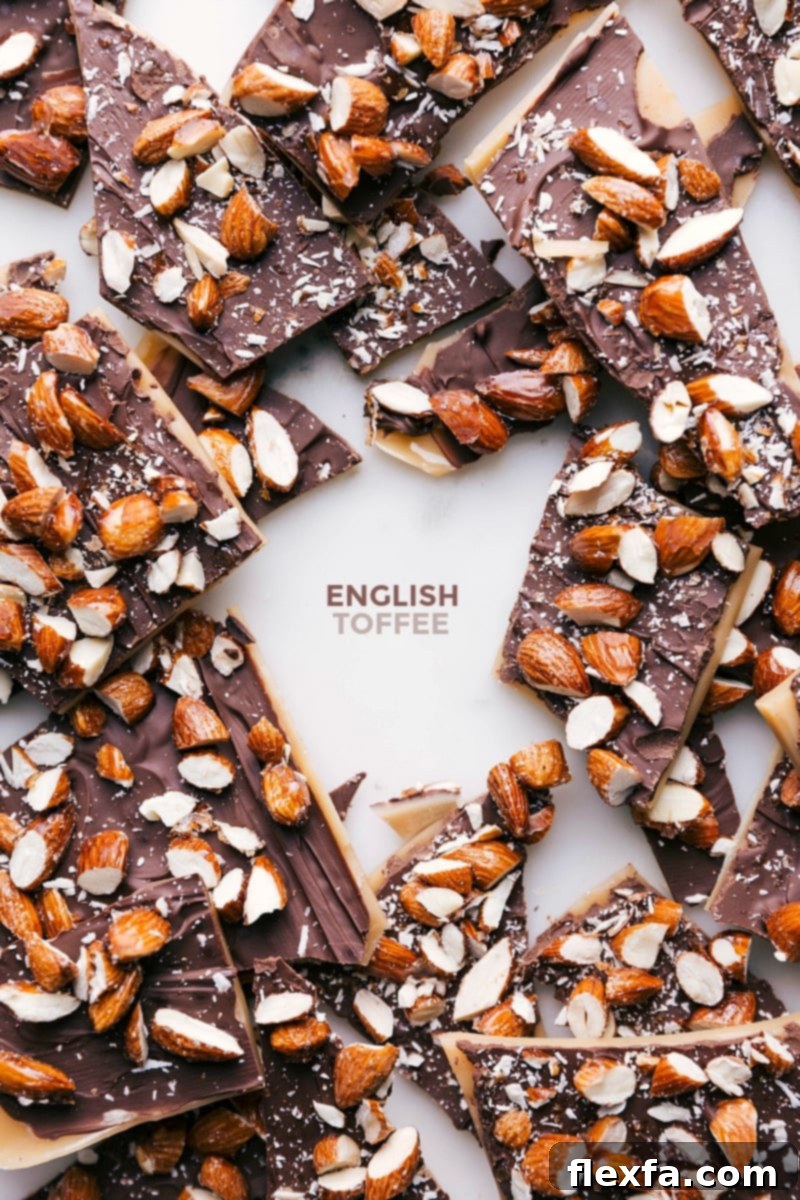
Crafting The Best Homemade Toffee: A Holiday Essential
There are certain confections that simply define the holiday season, and for me, a batch of rich, buttery toffee is at the very top of that list. I’ll seize any opportunity to whip up this delightful treat, but the festive period offers the perfect excuse to make generous quantities to share with cherished friends and neighbors. There’s an unmatched joy in presenting a beautifully packaged box of homemade toffee, often alongside other festive delights like a creamy fudge.
What makes this particular toffee recipe truly exceptional and a perennial favorite isn’t just its foolproof nature, but a special touch that elevates it far beyond the ordinary. Instead of simply scattering plain chopped nuts on top, we take an extra step: we candy and toast the almonds first. This seemingly small detail, requiring minimal additional time, makes a monumental difference in flavor and texture. The sugared almonds add a caramelized sweetness and an extra layer of crunch that complements the buttery toffee and rich chocolate perfectly. Trust me, every batch I make garners rave reviews and disappears almost instantly!
Making toffee from scratch can seem intimidating, but with this recipe, it’s an enjoyable and rewarding process. The result is a gourmet-quality candy that tastes far more complex than its simple ingredients suggest. The contrast between the crisp, golden toffee base, the smooth, melting chocolate, and the crunchy, sweet almonds creates a symphony of textures and flavors in every bite. It’s a testament to how simple, high-quality ingredients, handled with care, can create something truly spectacular.
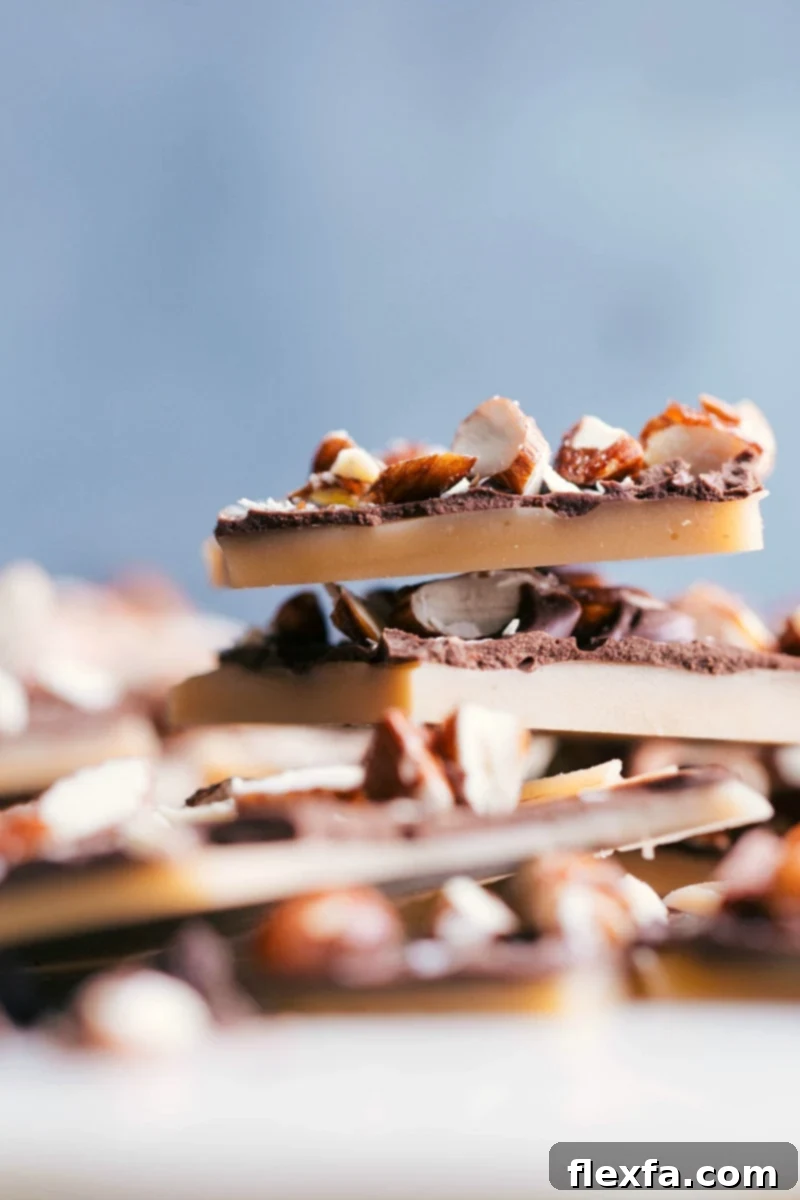
Essential Ingredients for Perfect Toffee
Crafting exceptional toffee requires a few key ingredients. While the list is short, the quality and preparation of each component play a vital role in achieving that coveted buttery, crunchy perfection.
- Sugared Almonds: This is our secret ingredient! Preparing these first allows them to cool and firm up, ready to add their unique texture and caramelized flavor. While plain almonds will work, the sugared variety truly elevates the toffee, adding a delightful crunch and extra sweetness. For the exact quantities, refer to the recipe card below.
- Butter: Opt for high-quality unsalted butter, softened to room temperature. This ensures it melts evenly into the sugar mixture, preventing separation and contributing to a smooth, rich toffee base. Margarine should be avoided as it can affect the texture and flavor.
- Granulated Sugar: The backbone of any good toffee. Sugar not only provides sweetness but, through careful heating, caramelizes to form the distinct crunchy, brittle texture that defines toffee.
- Water: A small amount of water helps dissolve the sugar crystals more effectively at the beginning of the cooking process, aiding in achieving a smooth, uniform texture and preventing premature crystallization.
- Fine Sea Salt: Even a tiny pinch of fine sea salt is transformative. It perfectly balances the sweetness of the toffee and chocolate, enhancing the overall flavor profile and adding a subtle depth that makes the toffee truly addictive.
- Chopped Chocolate: The choice of chocolate is crucial for the top layer. You can use semi-sweet, dark, or milk chocolate, depending on your preference. High-quality chocolate bars, coarsely chopped, melt more smoothly and provide a superior flavor compared to chocolate chips, which are formulated to hold their shape during baking.
Quick Tip: Choosing Your Chocolate
While I personally enjoy a delightful mix of all three chocolate types—semi-sweet, dark, and milk—feel free to choose your absolute favorite. If you prefer a less sweet toffee, sticking exclusively with a good quality dark chocolate will provide a wonderful, rich contrast. For those with an extra sweet tooth, milk chocolate will deliver that classic, creamy sweetness. Remember, the quality of your chocolate makes a significant impact on the final taste!
How To Make Perfectly Foolproof Toffee
Follow these detailed steps to create a batch of homemade toffee that is both impressive and incredibly delicious. Patience and precision are your best friends here!
- Prepare the Sugared Almonds: First, preheat your oven to 350°F (175°C) and ensure a rack is placed in the center. In a large mixing bowl, combine the brown sugar and 1 teaspoon of salt. Add 1 tablespoon of water and stir thoroughly until a sticky glaze forms. Introduce the whole almonds to this mixture and toss them until each nut is evenly coated. Spread these sugared almonds in a single layer onto a parchment paper-lined baking sheet. Toast them in the preheated oven for 8–10 minutes, or until they appear shiny and reach a light golden color. Keep a close eye on them to prevent burning. Once toasted, remove the almonds from the oven and let them cool completely on the pan before giving them a coarse chop. This is also an excellent time to finely chop and measure your chosen chocolate, setting it aside for later.
- Prepare the Pan: Line a half sheet pan (approximately 13×18 inches or 33×46 cm) with a silicone baking mat. A silicone mat is highly recommended for easy removal of the finished toffee and for significantly simplifying cleanup. If you don’t have a silicone mat, generously butter the entire surface of the pan or use parchment paper, ensuring it extends slightly beyond the edges for easy handling.
- Begin the Toffee Base: Place a large, 2-quart (2-liter) ceramic pot over low heat for about 30 seconds to gently warm it. Take one stick of unsalted butter and rub it over the bottom and sides of the warmed pot. Then, add that stick of butter and the remaining butter to the pot. Carefully add the granulated sugar to the very center of the pan, followed by slowly pouring the water directly on top of the sugar. Finally, add the fine sea salt. This precise layering helps to prevent sugar crystals from adhering to the sides of the pot, which can cause crystallization in the final toffee.
- Melt and Dissolve Slowly: Keep the mixture over low heat. Using a wooden spoon, stir slowly and gently. The goal in this stage is to melt the butter completely and dissolve all the sugar crystals. This process requires patience and should take approximately 10–12 minutes. The “low and slow” approach is crucial here to ensure proper dissolution. As the mixture heats, use a wet pastry brush to carefully brush down any sugar crystals that cling to the sides of the pan. A light-colored pot can be particularly helpful for easily spotting any rogue sugar crystals. Towards the end of this 10–12 minute period, the mixture will likely begin to gently boil.
- Cook to Hard-Crack Stage: Once the sugar is fully dissolved and the mixture is boiling, increase the heat slightly above medium, but not quite to medium-high. Attach a reliable candy thermometer to the side of the pan, ensuring it does not touch the bottom. From this point forward, stir the mixture constantly at a slow and even speed, always in the same direction. After about 8–10 minutes, the mixture will come to a rolling boil and gradually start to deepen in color. Continue cooking until the toffee reaches the “hard-crack stage” – precisely 300°F (149°C) at sea level. If you live in a high-altitude area (such as Utah), aim for 285–290°F (140-143°C). Watch the thermometer diligently, as the temperature can rise quite quickly once it starts to color. As soon as it hits the target temperature, immediately remove it from the heat.
- Pour, Spread, and Finish: Quickly and carefully pour the hot toffee onto your prepared sheet pan. Working with urgency, gently tilt the sheet pan from side to side, and up and down, to encourage the hot candy to spread into an even, thin layer that fills most of the pan. It’s perfectly fine if it slightly goes up the sides. Allow the toffee to sit at room temperature for 5–8 minutes, until it’s firm enough to touch but still very hot. Evenly sprinkle your chopped chocolate over the surface of the warm toffee. The residual heat from the toffee will quickly melt the chocolate. Let it sit for a few minutes to soften completely, then use an offset spatula to gently spread the melted chocolate evenly over the entire surface. Immediately and gently press the chopped sugared almonds into the soft chocolate layer.
- Set and Break: Allow the finished toffee to stand undisturbed at room temperature until it is completely firm and set, which typically takes about 6–8 hours. Avoid the temptation to refrigerate it, as this can sometimes lead to condensation and a sticky texture. Once fully firm, use your hands to easily break the large slab of toffee into irregular, bite-sized pieces.

Expert Tips for Unforgettable Homemade Toffee
Achieving toffee perfection is within your reach with these invaluable tips. They address common challenges and help ensure your homemade candy turns out beautifully every time:
- Invest in a Quality Candy Thermometer: This is arguably the most crucial tool for perfect toffee. Precision in temperature is paramount, as even a few degrees can drastically change the texture from perfectly brittle to soft or burnt. I highly recommend investing in a reliable, accurate candy thermometer (like this one, for example). Before you begin, you can test its accuracy by placing it in boiling water; it should read 212°F (100°C) at sea level. Without an accurate thermometer, guessing when the toffee is ready is incredibly difficult and often leads to disappointing results.
- Don’t Limit Your Nuts: While sugared almonds are a highlight of this recipe, feel free to customize! If almonds aren’t your favorite, or if you simply want to experiment, pecans, walnuts, or even pistachios can be delicious alternatives. The key is to still candy and toast them first, as this extra step dramatically enhances their flavor and adds an unparalleled crunch, no matter the type of nut.
- Quality of Ingredients Truly Matters: With a recipe containing so few components, the quality of each ingredient becomes incredibly important. Using high-quality unsalted butter will provide a richer, purer flavor. Similarly, a premium brand of chocolate will melt more smoothly and offer a superior taste profile, elevating your toffee from good to absolutely divine. This isn’t the time to skimp on ingredients!
- Avoid Sudden Heat Changes and Stir Gently: Patience is a virtue in toffee making. To prevent the butter and sugar from separating, which can result in a greasy or grainy texture, avoid drastic temperature fluctuations. Do not rush the process by turning up the heat too high, especially during the initial melting stage. Cook it slowly over low heat until the sugar completely dissolves. Once boiling, maintain a consistent, gentle stirring motion in the same direction. Aggressive or inconsistent stirring can introduce air or cause the mixture to crystallize.
- Proper Pan Choice: The pot you use significantly impacts the success of your toffee. A wide, heavy-bottomed, light-colored ceramic pot is ideal. The wide surface area allows for even heat distribution and faster evaporation, while a light interior helps you monitor the color change of the toffee, which is critical for preventing overcooking. A heavy bottom prevents scorching. A good example is this ceramic pot.
- Choosing the Right Chocolate Topping: Always opt for good-quality dipping chocolate bars that you chop yourself, rather than chocolate chips. Chocolate chips contain stabilizers designed to help them hold their shape during baking, which means they don’t melt and spread as smoothly or evenly over the hot toffee. For that perfectly glossy, smooth chocolate layer, chopped chocolate is the way to go.
- Timing is Everything for the Chocolate Layer: After pouring the hot toffee onto the pan, allow it to cool and firm up slightly (about 5-8 minutes) before sprinkling on the chopped chocolate. This brief cooling period helps prevent the chocolate from seizing or becoming overly thin. Once the chocolate is sprinkled, let it sit for a couple of minutes to melt from the residual heat before spreading it with an offset spatula. If your toffee cools too much before you can spread the chocolate, a quick and gentle pass with a hair blow dryer can warm it up just enough to make it spreadable again.
Toffee Storage Guidelines
To keep your delicious homemade toffee fresh and perfectly crunchy, store it in an airtight container at room temperature. It will remain wonderfully fresh and enjoyable for up to 2 weeks. It’s crucial to store it in a cool, dry place, especially if you live in a humid climate, as humidity can cause the toffee to become sticky and lose its desirable crisp texture. You can also layer pieces with parchment paper to prevent sticking.
Explore More Irresistible Holiday Treats
If you loved making this toffee, you’ll surely enjoy these other delightful recipes perfect for holiday gatherings or anytime you crave something sweet:
- The Best Snickerdoodle Cookies
- Sweet Raspberry Almond Thumbprint Cookies
- Decadent Tiger Butter Fudge
- Classic Homemade Turtle Candy
- Easy 3-Ingredient Christmas Cookies

Homemade Toffee with Sugared Almonds
Chelsea Lords
20
30
8
8 50
20 servings (13 x 18 inch pan of toffee)
Recipe Video
Equipment
-
Half sheet pan (13″ x 18″) nonstick
-
Silicone baking mat or parchment paper
-
Candy Thermometer
-
Large pot with a light-colored interior
-
Pastry brush
Ingredients
- 3 tablespoons light brown sugar firmly packed
- 1 teaspoon salt
- 1 tablespoon water
- 1-1/2 cups whole almonds
- 2 cups unsalted butter at room temperature; do not use margarine
- 2 cups granulated sugar
- 1/4 cup water
- 1-1/4 teaspoon fine sea salt reduce to 1 teaspoon if sensitive to salt or greatly reduce if using table salt
- 1-3/4 cups chopped semi-sweet chocolate or dark chocolate or milk chocolate, see note below
Instructions
-
Sugared Almonds: Preheat oven to 350°F and place a rack in the center of the oven. In a large bowl, combine brown sugar and 1 teaspoon salt. Mix in 1 tablespoon water and stir until you get a glaze. Add almonds and toss until evenly coated. Spread almonds evenly on a parchment paper-lined sheet pan and toast 8–10 minutes or until shiny and light golden. Remove almonds from oven and let cool completely, then give them a coarse chop. Set aside. This is a good time to chop and measure your chocolate.
-
Prepare Pan: Line a half sheet pan (13×18 inches) with a silicone baking mat or generously butter the pan. I highly recommend the baking mat for ease of removal and cleaning.
-
Start Toffee Base: Heat a large, 2-quart ceramic pot over low heat for 30 seconds. Rub a stick of butter over the bottom and sides. Then add that stick of butter to the pot along with the remaining butter. Carefully add the sugar to the very center of the pan and pour the water slowly on top of the sugar. Add the salt. We want to avoid any sugar crystals getting on the sides of the pan.
-
Melt and Dissolve: Keeping the mixture over low heat, use a wooden spoon to stir slowly and gently to melt the butter and dissolve the sugar. It should take 10–12 minutes to completely dissolve the sugar (low and slow is the key here). Use a wet pastry brush to brush any sugar off the sides of the pan. A light-colored pan helps you to see if any sugar is clinging to the sides. Near the end of the 10–12 minutes, the mixture will likely start boiling a little.
-
Cook to Hard-Crack: Increase heat to a little over medium (but not quite medium high). Add candy thermometer to the pan and make sure it’s not touching the bottom. From here on out, stir constantly at a low and even speed in the same direction. After about 8–10 minutes, the mixture will come to a boil and slowly start to take on color. Cook the toffee to hard-crack stage (300°F at sea level) (In high-altitude areas, such as Utah where I live, cook to 285–290°F). Watch it carefully because it may reach the temperature quickly. Once it reaches hard-crack stage, pour it onto the prepared sheet pan. Working quickly, tilt the sheet pan from side to side and up and down to get the candy in an even layer and to fill most of the pan. It’s okay if it goes up the sides a little.
-
Add Toppings & Set: Let Toffee sit at room temperature until it is firm to the touch but still hot, 5–8 minutes. Sprinkle the chopped chocolate evenly on the Toffee. The chocolate melts quickly; let it melt for a few minutes, then use an offset spatula to evenly spread the chocolate over the Toffee. Quickly and gently press in chopped and sugared almonds. Let Toffee stand at room temperature until completely firm, about 6–8 hours. When completely firm, use your hands to break it into bite-sized pieces.
Recipe Notes
Additional Tips:
- Do not increase the heat until sugar is 100% dissolved over low heat. This will take 10–12 minutes and requires patience. Make sure to brush the sides with a wet pastry brush if sugar is clinging to the sides.
- Stir steadily and consistently, stirring in the same direction at a slow speed. If you whisk or stir too quickly, the toffee may separate.
- Ensure your candy thermometer is accurate (as discussed in the tips section above), and make sure the thermometer doesn’t touch the bottom of the pot.
- The pot you use makes a huge difference. Use a wide, light-colored ceramic pot; this is a great option for making Toffee.
- Top the toffee with good-quality dipping chocolate (not chocolate chips). Chocolate chips are formulated to withstand baking in the oven and hold their shape, so they don’t melt and spread as well on hot toffee.
- Wait about five minutes after pouring the toffee before adding the chocolate. Spread the toffee mixture evenly in the pan, and wait for it to firm up slightly before spreading the chocolate evenly with a spatula. If the toffee cooled off too much before you could add the chocolate, use a hair blow dryer to gently warm it up again.
Storage: Toffee can be stored in an airtight container at room temperature for up to 2 weeks.
Nutrition
Calories: 346kcal |
Carbohydrates: 30.5g |
Protein: 2.6g |
Fat: 25.4g |
Cholesterol: 48.8mg |
Sodium: 3.1mg |
Fiber: 1.7g |
Sugar: 28.4g
Nutrition information is automatically calculated, so should only be used as an approximation.