
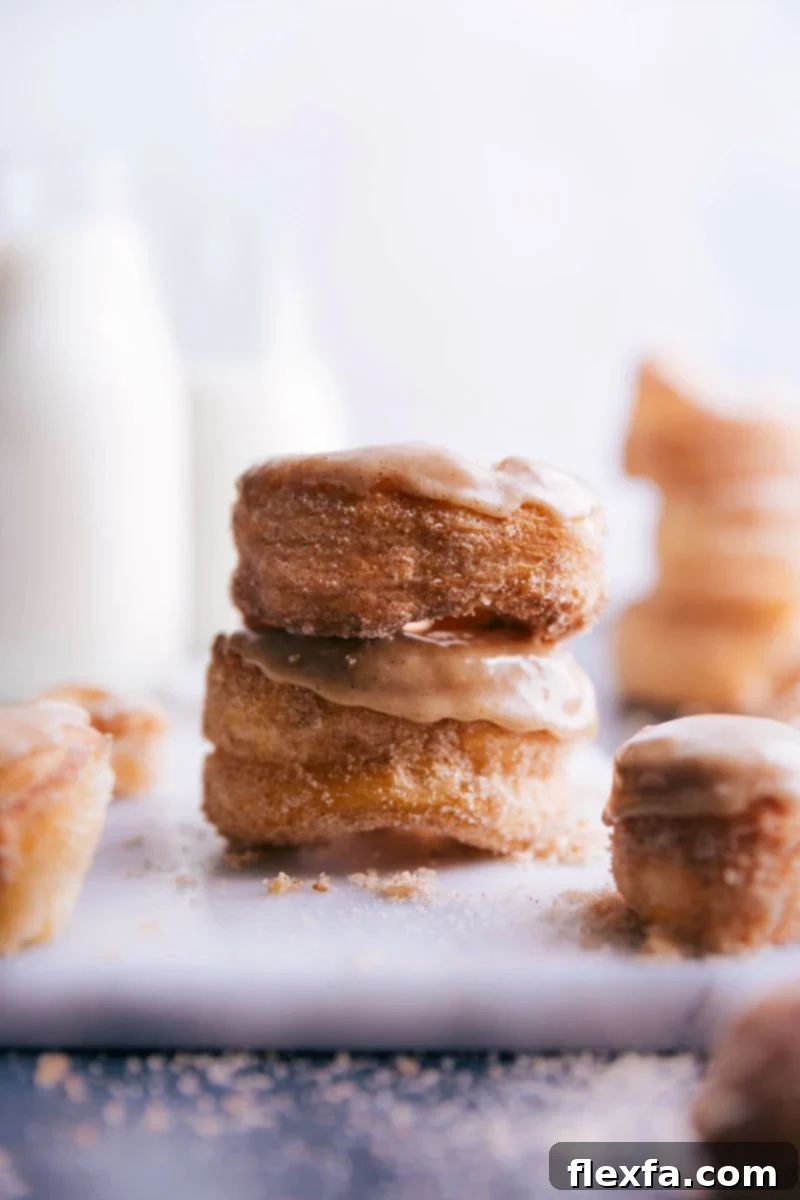
This **Cronut Recipe** is a game-changer for anyone craving that perfect flaky, buttery, and sweet pastry. Imagine biting into a delicate, fried pastry that combines the best of a croissant with the beloved sweetness of a donut – all achievable in just 35 minutes, thanks to one incredibly easy store-bought shortcut! Forget long hours of laminating dough; gourmet indulgence is now within your reach.
There’s truly nothing quite like savoring a warm, freshly made cronut. Its intricate layers and delightful crunch make it an irresistible treat, especially when paired with a comforting cup of rich hot chocolate or a festive creamy pumpkin spice steamer. This recipe promises an unforgettable dessert experience that’s surprisingly simple to create at home.
What Exactly Is A Cronut? The Viral Croissant-Donut Hybrid
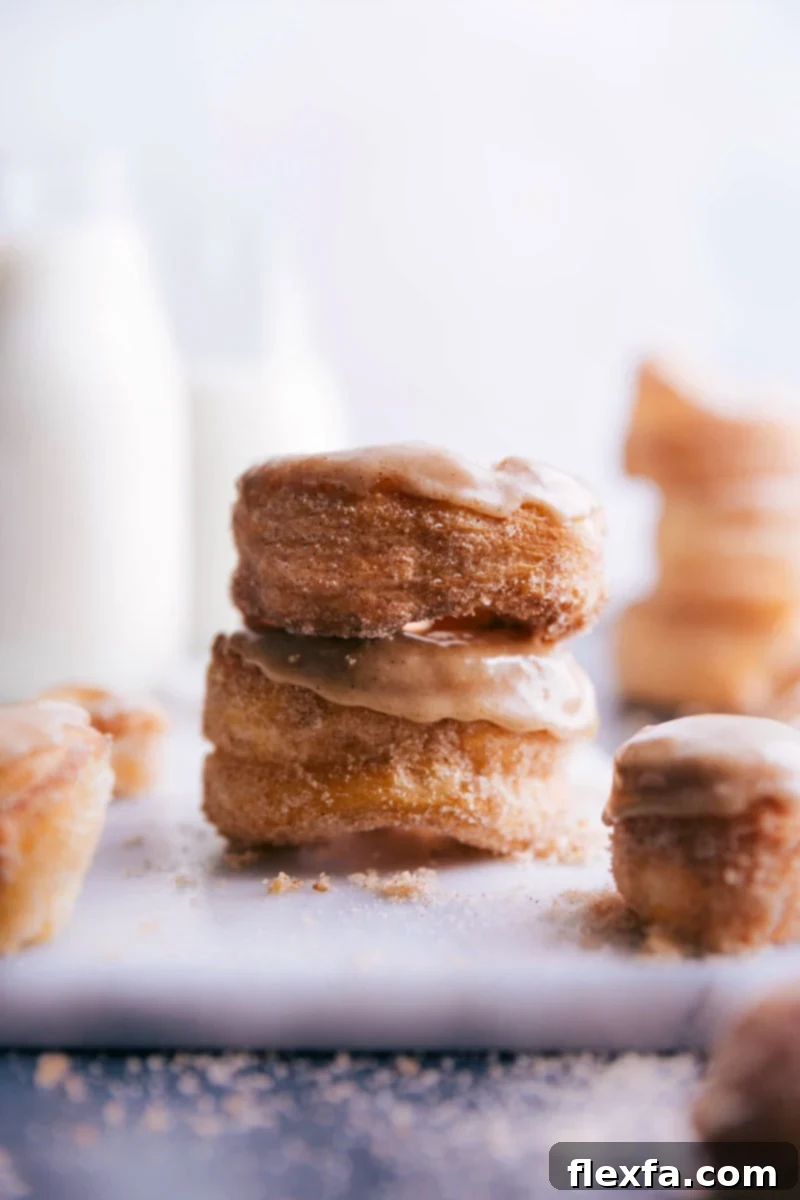
For those unfamiliar with this delightful pastry, a cronut is a celebrated hybrid that ingeniously marries the delicate, buttery layers of a French croissant with the familiar fried, sweet appeal of an American donut. This culinary marvel was first conceived by acclaimed New York City pastry chef Dominique Ansel in 2013. He introduced his unique creation at his Soho bakery, sparking a worldwide phenomenon that saw queues stretching for blocks and cronuts selling out within minutes.
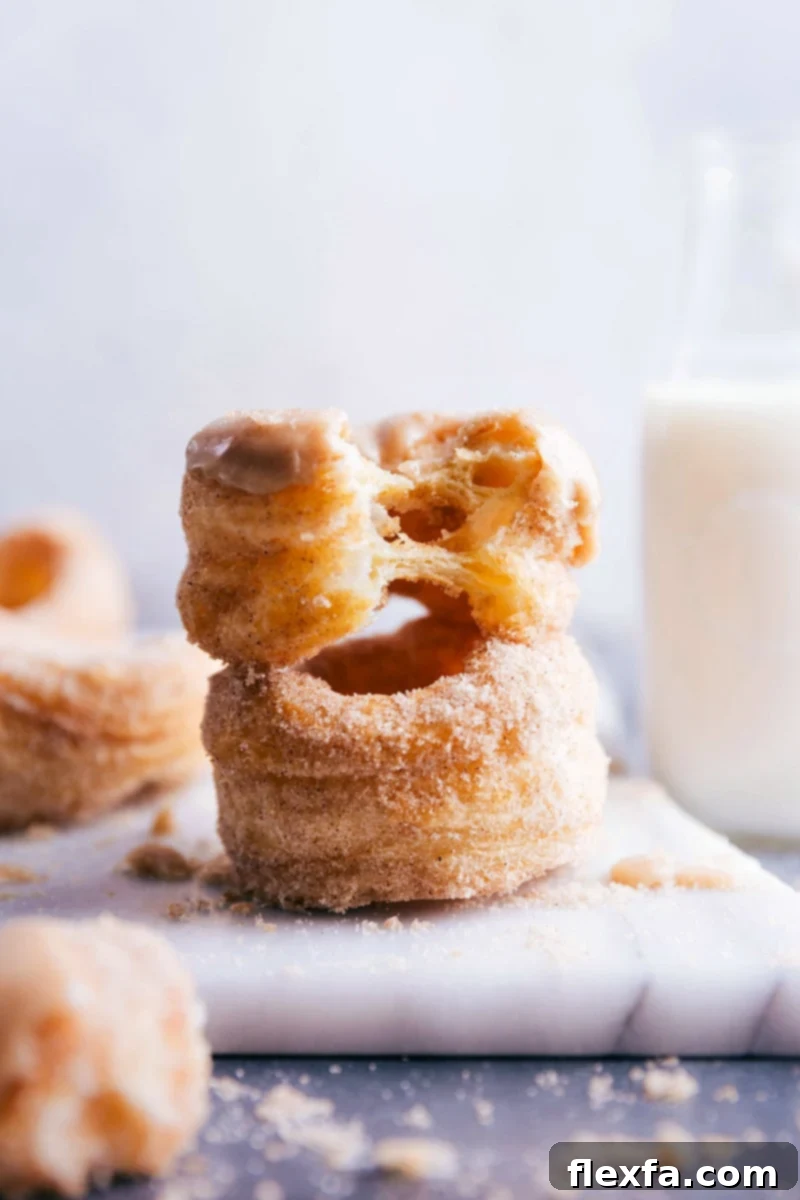
Ansel’s original **Cronut** recipe involves a meticulously crafted dough, similar to croissant dough, which is then proofed, fried, and infused with flavored cream, rolled in sugar, and finished with a delicate glaze. The result is a pastry that boasts an incredible texture: crispy on the outside, with dozens of flaky, tender layers on the inside, offering a sophisticated chewiness that sets it apart from both its parent pastries. It truly offers the best of both worlds, providing the structural elegance of a croissant and the indulgent sweetness of a donut.
Since its invention, the cronut has inspired countless variations and imitators, cementing its status as a modern classic in the world of gourmet desserts. While the original can be notoriously difficult and time-consuming to recreate from scratch due to the complex lamination process, our simplified **easy cronut recipe** allows you to experience this viral sensation in your own kitchen without the fuss, bringing that bakery-quality taste directly to your table.
Essential Ingredients for Your Homemade Cronuts
The beauty of this quick cronut recipe lies in its simplicity and the use of readily available ingredients. You don’t need exotic items; just a few key components will unlock pastry perfection. Here’s what you’ll need to gather:
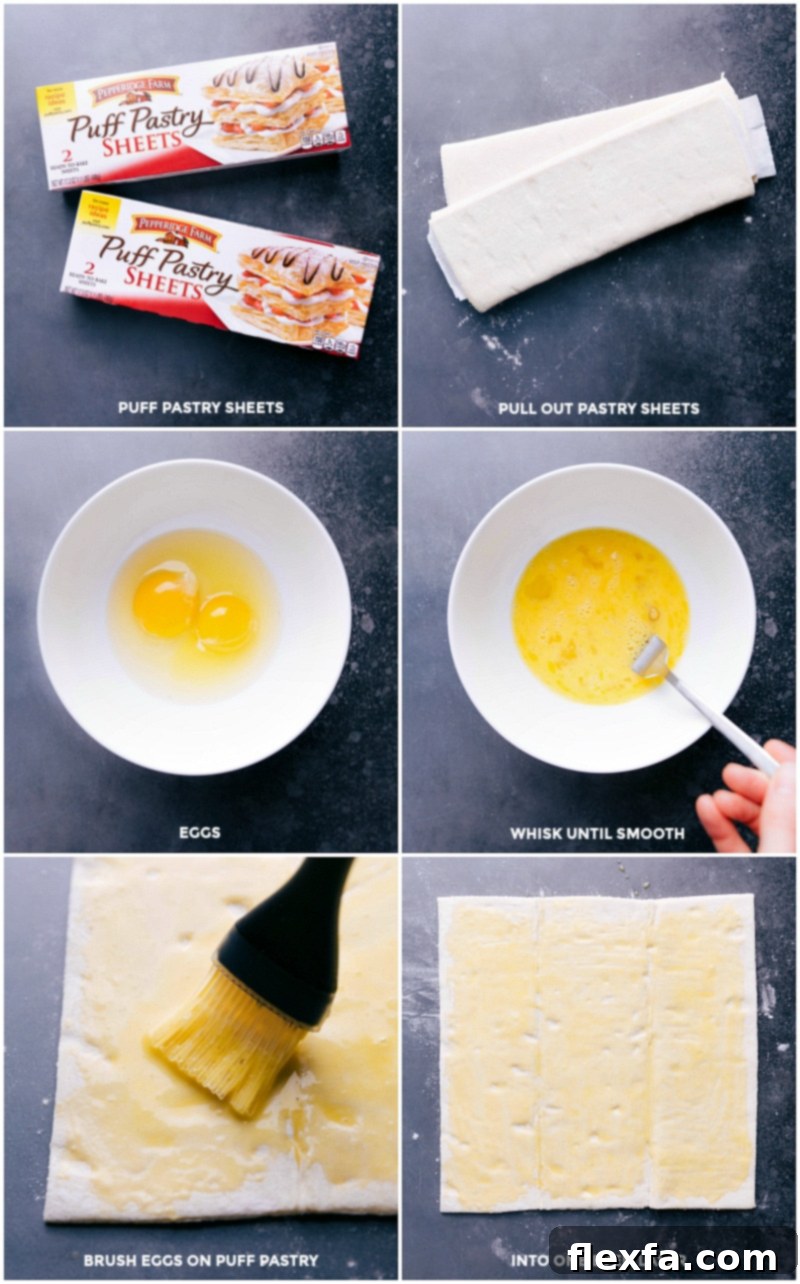
- Puff Pastry Dough (Store-Bought): This is our incredible shortcut! Frozen puff pastry sheets form the flaky, light, and buttery base of your cronuts. Opt for a quality brand like Pepperidge Farm’s® for consistent results. It saves you hours of folding and chilling dough from scratch, making homemade cronuts accessible to everyone.
- All-Purpose Flour: A small amount of flour is crucial for dusting your work surface. This prevents the delicate puff pastry from sticking as you handle it, ensuring a smooth preparation process.
- Vegetable or Canola Oil (for Frying): Essential for achieving that golden, crispy exterior. A neutral-flavored oil with a high smoke point is best, such as vegetable oil or canola oil. The amount needed will vary depending on the size and depth of your frying vessel.
- Large Eggs: Whisked eggs create an egg wash, which is brushed onto the puff pastry before folding and chilling. This helps to bind the layers slightly and contributes to a beautiful, golden-brown and crispy finish when fried.
- Granulated Sugar and Ground Cinnamon: This classic combination creates the irresistible cinnamon-sugar coating that defines many fried pastries. The hot cronuts are rolled in this mixture immediately after frying, ensuring a sweet, aromatic crust.
For the Optional Sweet Glaze:
While the cinnamon-sugar coating is delicious on its own, a simple glaze adds an extra layer of sweetness and elegance. Here are the ingredients for our easy cronut glaze:
- Powdered Sugar (Confectioners’ Sugar): Forms the base of the smooth, sweet glaze.
- Unsalted Butter (Very Soft): Adds richness and helps achieve a velvety texture in the glaze. Ensure it’s very soft for easy mixing.
- Maple Syrup: Provides a lovely depth of flavor and helps thin the glaze to the perfect consistency. You can substitute with milk if preferred.
- Vanilla Extract: Enhances the overall sweetness and aroma of the glaze.
- Ground Cinnamon: A pinch of cinnamon in the glaze complements the cinnamon-sugar coating beautifully, tying all the flavors together.
Crafting Your Own Cronuts: A Step-by-Step Guide
Creating these divine pastries is simpler than you might imagine. Follow these detailed steps for perfect homemade cronuts every time:
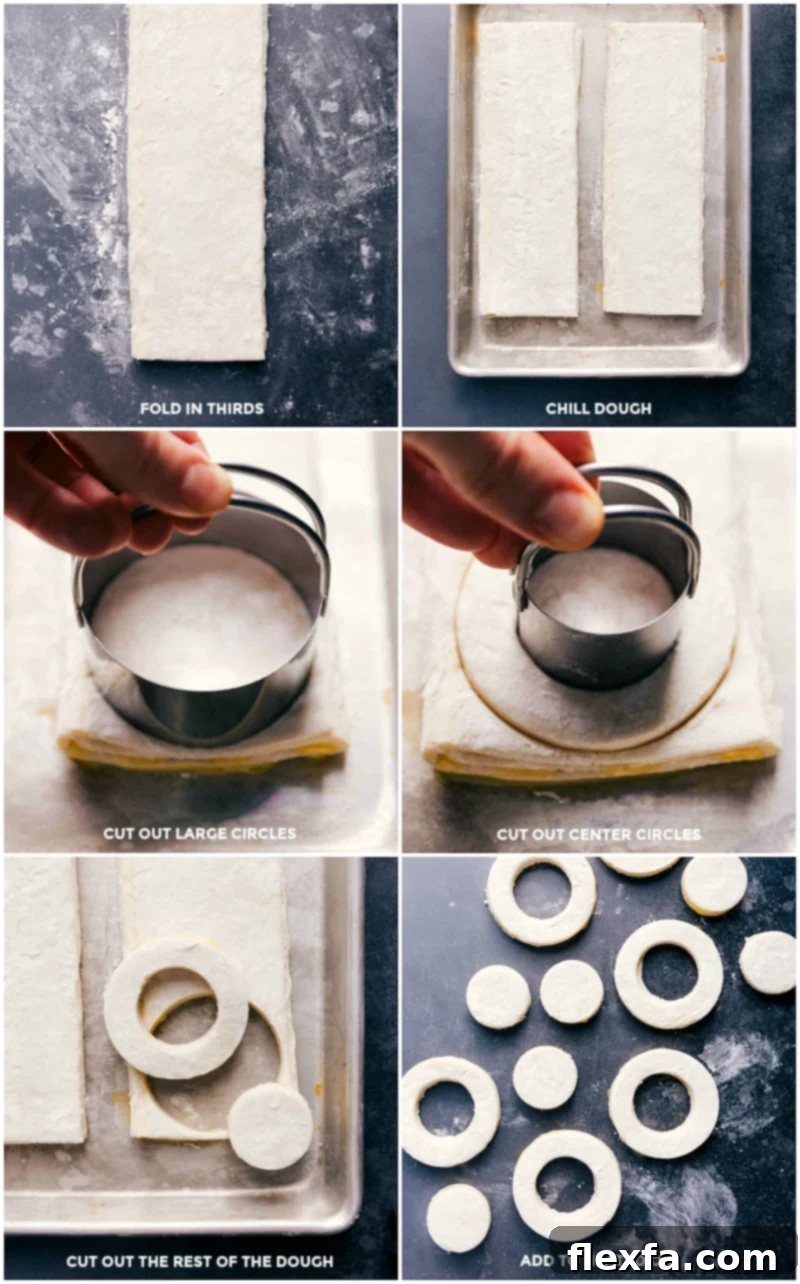
- Thaw and Prepare the Dough: Begin by following the package directions to properly thaw your puff pastry sheets. Most brands, like Pepperidge Farm, come with two sheets per package. Once thawed, lightly flour a clean, flat working surface. Carefully unfold one sheet of puff pastry onto the floured surface. Avoid rolling it out or pressing it down, as this can compress the layers. In a small bowl, whisk two large eggs briskly with a fork to create an egg wash. Using a pastry brush, gently brush one side of the puff pastry sheet with this egg wash. Then, fold the dough sheet into thirds, just like a letter, mirroring how it was originally folded in its packaging. Repeat this process with the second sheet of puff pastry. Place both folded dough sheets into the freezer for 20 minutes. This chilling step is crucial; it helps the butter in the pastry solidify, ensuring distinct, flaky layers when fried.
- Heat the Frying Oil: While your dough is chilling, prepare your frying oil. Pour enough vegetable or canola oil into a deep fryer or a heavy-bottomed, deep pot to fill it about 1/3 full (typically 1-2 quarts for a pan, or more for a deep fryer). Use a **candy thermometer** to monitor the oil temperature, aiming for a consistent 350°F (175°C). Maintaining the correct temperature is vital: if the oil is too hot, your cronuts will burn on the outside and remain raw or doughy inside; if it’s too cool, they’ll absorb too much oil and become overly chewy and greasy.
- Cut the Cronut Shapes: Once the dough has chilled, remove it from the freezer. Lightly flour your work surface again. Using a donut cutter or two round biscuit cutters (a 2½-inch cutter for the cronut and a 1½-inch cutter for the center hole), carefully cut out your cronut shapes. You should be able to get approximately 3 large cronuts and 3 donut holes from each puff pastry sheet, totaling 6 cronuts and 6 donut holes. Don’t discard the dough scraps! You can gather them, gently press them together (without overworking), and fry them as delicious mini fritters or ‘cronut bites’ to avoid waste.
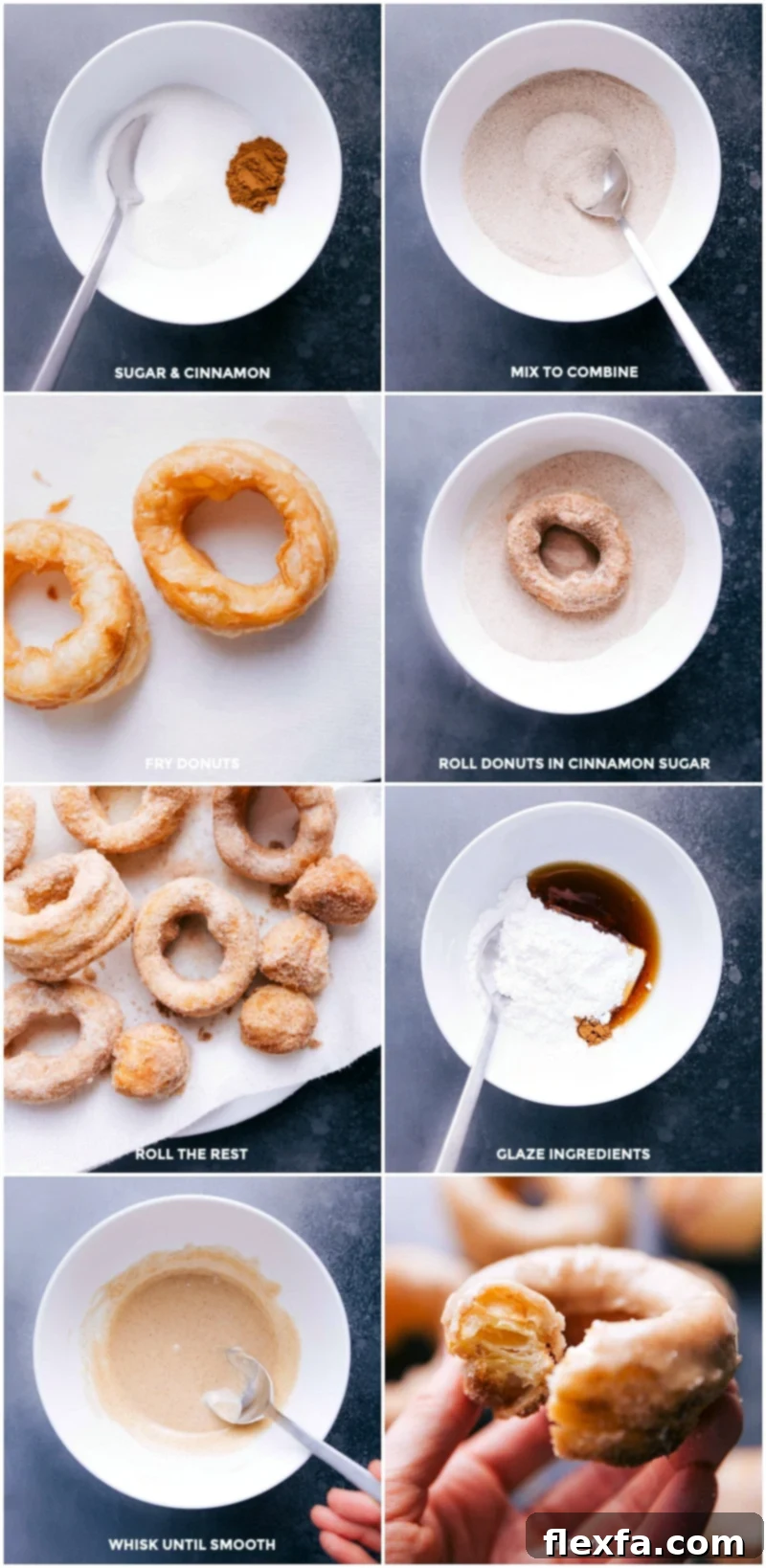
- Fry to Golden Perfection: With your oil at 350°F, carefully place 3-4 cronuts into the hot oil at a time. Do not overcrowd the pot, as this will lower the oil temperature significantly. Fry each cronut for about 5 minutes in total, flipping them every 1 to 1½ minutes with a fork or slotted spoon, until both sides are puffed up and beautifully golden brown. Continue to monitor the oil temperature, adjusting the heat as needed to keep it at a steady 350°F. Once fried, use a slotted spoon to remove the cronuts and place them on a plate lined with several layers of paper towels to drain excess oil. Repeat this process until all cronuts and donut holes are fried.
- Coat in Cinnamon Sugar: Immediately after draining, while the cronuts are still hot, transfer them to a bowl containing your cinnamon-sugar mixture. You’ll need to prepare this mixture in advance by stirring together ½ cup granulated sugar and 1 teaspoon ground cinnamon. Using tongs or two forks, gently spoon the cinnamon sugar over the hot cronuts, rotating them until they are generously and evenly coated. It’s crucial to do this step while they are hot, as the sugar will adhere much better. At this point, you can enjoy your cronuts as is, or proceed to the next step for an optional glaze.
Quick Tip: Locating Puff Pastry Dough
Puff pastry dough is a freezer aisle staple! You’ll typically find it near other frozen desserts, pies, or even frozen breakfast items in most grocery stores. If you’re having trouble locating it, don’t hesitate to use a store’s online locator app or ask a store associate for assistance. Always remember to carefully follow the thawing instructions on the package before you begin, as improper thawing can affect the pastry’s flakiness.
Mastering Your Homemade Cronuts: Expert Tips
Achieving bakery-quality cronuts at home is easier with these crucial tips:
- Precision with Oil Temperature is Key: This is arguably the most important tip. Use a **candy thermometer** for precise oil temperature control. The ideal frying temperature is 350°F (175°C). If the oil is too cool, the cronuts will become greasy and dense. If it’s too hot, they’ll brown too quickly on the outside, leaving the inside raw and doughy. Constantly monitor and adjust the heat throughout the frying process.
- Fry in Small Batches: To maintain a consistent oil temperature, avoid overcrowding your fryer or pot. Fry only 3-4 cronuts at a time. Frying too many at once will drastically drop the oil temperature, leading to undercooked, greasy pastries. Patience here ensures evenly cooked, perfectly crisp cronuts.
- Roll While Hot: The moment your cronuts come out of the oil and have briefly drained on paper towels, immediately roll them in the cinnamon-sugar mixture. The heat from the pastry allows the sugar to adhere properly. If you wait too long, the sugar won’t stick, and you’ll miss out on that delightful sweet crunch.
- Don’t Overwork Puff Pastry: Puff pastry relies on its delicate layers for flakiness. Handle it gently. Avoid excessive rolling or pressing down on the dough when preparing it. The less you manipulate it, the better the layers will puff up during frying.
- Proper Thawing is Essential: Always follow the package instructions for thawing puff pastry. Thawing at room temperature for too long can make the butter too soft, compromising the layers. Conversely, using still-frozen pastry will result in uneven frying.
- Drain Thoroughly: After frying, allow the cronuts to drain on a wire rack placed over paper towels. This helps remove excess oil, preventing them from becoming greasy and ensuring a crispier texture.
- Serve Fresh: While cronuts can be stored, they are undeniably best enjoyed hot and fresh, right after being coated and/or glazed. The texture and warmth are unparalleled at this point.
Storage Solutions for Your Cronuts
While cronuts are truly best enjoyed fresh, you can store leftovers to savor later. Here’s how to keep them delightful:
- Airtight Container: Always store cronuts in an airtight container to prevent them from drying out and to maintain their freshness.
- Room Temperature: For optimal texture, store cronuts at room temperature for up to 2 days. This helps preserve their delicate flakiness.
- Refrigeration: If you need to store them for longer, refrigerate them for up to 5 days. Be aware that refrigeration can slightly alter the texture, making them a bit firmer.
- Reheating: Before serving, gently reheat refrigerated cronuts in a preheated oven (around 300°F/150°C for 5-7 minutes) or a microwave for a few seconds to restore some of their warmth and tenderness.
More Irresistible Dessert Recipes to Explore:
If you’ve fallen in love with making your own delicious cronuts, you’ll surely enjoy these other fantastic dessert recipes that are perfect for any occasion!
Desserts
Churros
Desserts
Cinnamon Roll Cupcakes
Desserts
Mini Oreo Cheesecakes
Desserts
Cinnamon Roll Cookie Recipe

Easy Homemade Cronut Recipe
Chelsea Lords
Homemade Cronut recipe in 35 minutes or less? Yes, please! With sweet croissant-donut pastries, you get all the flaky, tender, sweet goodness—no fuss required.
6 large cronuts and 6 donut holes
Equipment
- Deep fryer or deep, heavy-bottomed pot and candy thermometer
- Biscuit cutters (2.5-inch and 1.5-inch)
- Pastry brush
- Slotted spoon or tongs
- Plate lined with paper towels
- Wire rack (optional, for draining)
Ingredients
Cronuts
- 1 (17.3-ounce) package puff pastry sheets (see Note 1)
- Flour for work surface
- 1 gallon vegetable oil (3.78L; or canola oil, see Note 2)
- 2 large eggs
- 1/2 cup granulated sugar
- 1 teaspoon ground cinnamon
Optional Glaze
- 1/2 cup powdered sugar
- 1/2 tablespoon unsalted butter, very soft
- 2 tablespoons maple syrup (or milk)
- 1/4 teaspoon vanilla extract
- 1/8 teaspoon ground cinnamon
Instructions
- Follow package directions to thaw the puff pastry dough. If using Pepperidge Farm’s dough, there should be 2 sheets per package. Lightly flour a flat working surface. Unfold the 2 dough sheets (do not roll it out or press it down) and place them on a lightly floured surface.
- Pour oil into a deep fryer or heavy-bottomed deep pot (see Note 2). Use a candy thermometer to gauge heat or set the deep fryer to 350°F (175°C). It’s very important to monitor the heat constantly—too hot and the cronuts will be burned on the outside and raw/doughy inside; too cool and they will end up overly chewy and greasy.
- Crack both eggs into a small bowl and briskly whisk with a fork. Using a pastry brush, brush one side of each puff pastry dough sheet with the egg wash. Then, fold up each dough sheet in thirds (like a letter, replicating how you removed it from the packaging). Place both folded sheets in the freezer for 20 minutes to firm up the butter layers.
- Using donut or pastry cutters, cut out large cronuts. I use a 2½-inch cutter to get 3 cronuts per sheet of puff pastry. Use a 1½-inch cutter to cut out the center of each cronut. Repeat with the other sheet of puff pastry dough for a total of 6 cronuts and 6 donut holes. You can also save dough scraps and fry them up to avoid wasting dough.
- Carefully place 3-4 cronuts at a time in the hot oil (350°F) and fry for 5 minutes, flipping every 1 and a half minutes with a fork or slotted spoon, until each side has puffed up and is golden brown. Continue to monitor the heat constantly. Use a slotted spoon to remove the fried cronuts and place them on a plate lined with a few paper towels to drain excess oil. Repeat until all cronuts and donut holes have been fried.
- Meanwhile, in a separate bowl, stir together the ½ cup granulated sugar and 1 teaspoon cinnamon until combined. Using tongs or two forks (as the cronuts are hot straight out of the fryer), transfer the hot, drained cronuts from the paper-towel-lined plate into this sugar mixture. Gently spoon cinnamon sugar over the cronuts and rotate them until generously coated. Enjoy them immediately, or proceed to the next step for an optional glaze.
- Optional Glaze: In a small bowl, whisk together the powdered sugar, very soft unsalted butter, maple syrup, vanilla extract, and 1/8 teaspoon ground cinnamon until smooth. If the glaze is too thick, add a little more maple syrup (or milk) 1 teaspoon at a time until it reaches a dippable consistency. You can microwave the glaze for 5–10 seconds to make it thinner for dipping. Gently dip the warm, cinnamon-sugar-coated cronuts into the glaze or drizzle it artfully over them. Let the glaze set for a minute, then enjoy! Cronuts are truly at their best when served hot and fresh, immediately after being coated in sugar and/or glazed!
Recipe Notes
Note 1: I highly recommend Pepperidge Farm’s® puff pastry dough. You can usually locate it in the frozen aisle of most grocery stores, often next to frozen baked goods or desserts. Always read and follow the thawing directions on the package before using the dough. While puff pastry dough might seem a bit pricey, a single package often costs about what 1–2 individual cronuts would at a gourmet bakery!
Note 2: The exact amount of oil needed will depend on your pot. Aim to fill your pot about 1/3 full. A deep fryer typically requires more oil, but 1–2 quarts will usually suffice for a deep pan. While the original cronut recipe traditionally uses grapeseed oil, I find that vegetable or canola oil works perfectly and is more readily available.
Nutrition Note: Please be aware that the nutritional information provided below does not include the oil absorbed during the frying process, as this can vary significantly.
Storage: Store any leftover cronuts in an airtight container at room temperature for up to 2 days. For extended freshness, you can refrigerate them for up to 5 days. Reheat gently in the oven or microwave before serving for the best experience.
Nutrition Information
Serving: 1 serving |
Calories: 198 kcal |
Carbohydrates: 43 g |
Protein: 2 g |
Fat: 2 g |
Saturated Fat: 1 g |
Cholesterol: 57 mg |
Sodium: 22 mg |
Potassium: 31 mg |
Fiber: 1 g |
Sugar: 42 g |
Vitamin A: 108 IU |
Calcium: 17 mg |
Iron: 1 mg
Nutrition information is automatically calculated and should be used as an approximation only.
Love this Easy Cronut Recipe? Share your thoughts below!