
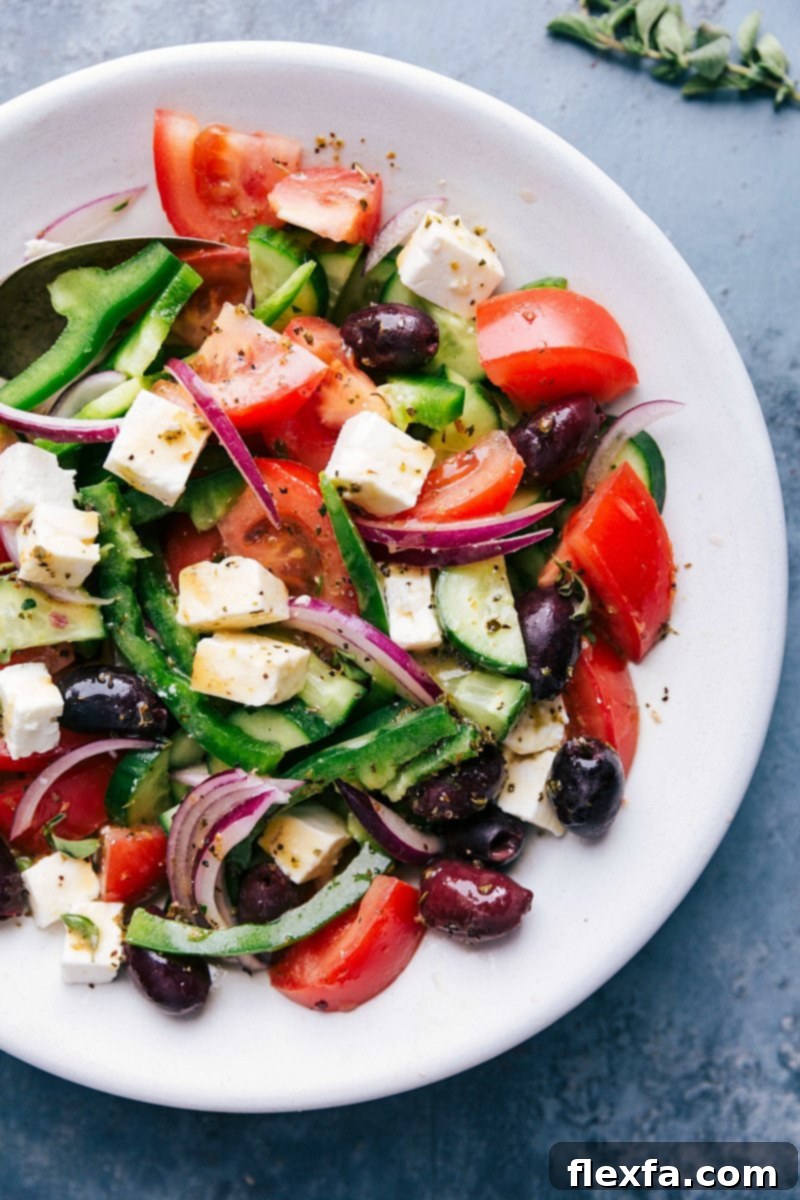
Authentic Greek Salad: A Timeless Mediterranean Classic
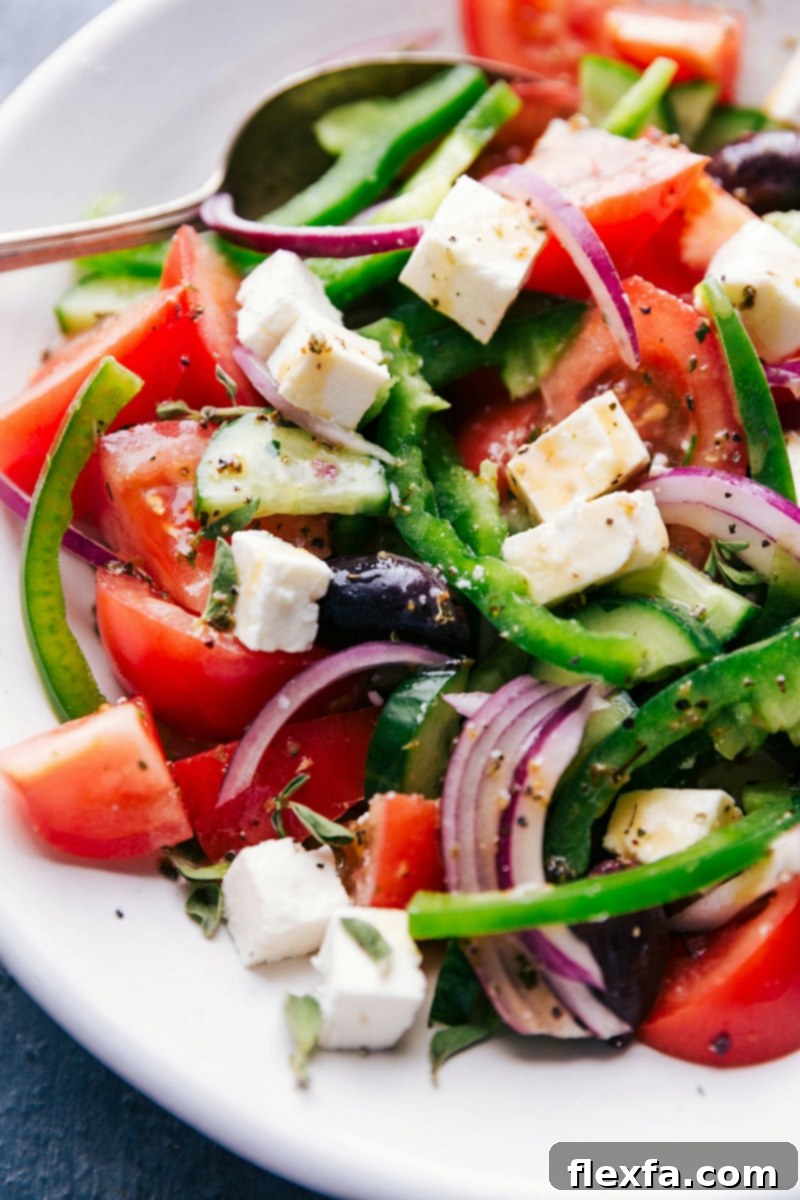
Embark on a culinary journey to the sun-drenched shores of Greece with our exquisite Greek Salad recipe. This vibrant and refreshing dish, known locally as “Horiatiki Salata,” is more than just a salad; it’s a celebration of fresh, high-quality ingredients harmoniously blended to create an unforgettable taste experience. Featuring juicy, ripe tomatoes, crisp cucumbers, sharp red onions, crunchy bell peppers, salty Kalamata olives, and creamy feta cheese, all generously drizzled with a homemade, zesty Greek dressing, this salad promises a burst of Mediterranean flavors in every bite. It’s an ideal addition to any meal, a perfect side dish, or a light and satisfying main course.
The beauty of an authentic Greek salad lies in its simplicity. There are no fancy leafy greens here, allowing the true flavors of the vegetables, the brine of the olives, and the tang of the feta to shine through. Our recipe guides you through creating this classic with ease, ensuring a delightful and healthy meal that captures the essence of Greek cuisine.
Why You’ll Fall in Love with This Greek Salad
There are countless reasons why this Greek salad stands out as a beloved classic. Its refreshing taste and vibrant colors make it a feast for both the eyes and the palate. Here’s why we believe it will become a staple in your kitchen:
- Unbeatable Freshness & Flavor: At its heart, a great Greek salad relies on the quality of its produce. We select only the juiciest, vine-ripened tomatoes, crisp cucumbers, and vibrant bell peppers. When combined with the salty tang of feta and the rich depth of Kalamata olives, each ingredient contributes to a symphony of fresh, natural flavors that truly sing. This salad isn’t just a mix of vegetables; it’s a testament to how simple, fresh ingredients can create something extraordinary.
- Nutrient-Packed Goodness: Beyond its incredible taste, this salad is a powerhouse of nutrition. Loaded with vitamins, minerals, and antioxidants from the fresh vegetables, and healthy fats from the olive oil, it’s a meal that nourishes your body from the inside out. It’s an excellent source of fiber and essential nutrients, making it a wholesome and guilt-free addition to any diet. Eating well has never been so delicious or easy.
- Exquisite Homemade Dressing: The secret to an exceptional Greek salad often lies in its dressing. Our homemade blend elevates the entire dish, marrying premium olive oil, freshly squeezed lemon juice, pungent garlic, and aromatic dried herbs into a perfectly balanced vinaigrette. This zesty, savory, and slightly sweet dressing coats every ingredient, tying all the distinct flavors together into a cohesive and delicious culinary experience. Forget store-bought options; once you try this homemade dressing, you’ll never go back.
- Remarkably Customizable: While the classic Greek salad is perfect as is, its versatility is one of its greatest strengths. Feel free to adapt it to your personal preferences or dietary needs. Add slices of ripe avocado for a creamy texture and extra healthy fats, or incorporate grilled chicken, shrimp, or chickpeas for a protein-packed meal. Whether you prefer a strictly traditional approach or enjoy a modern twist, this salad provides a fantastic base for your culinary creativity.
- Effortless Preparation: In today’s busy world, an easy and quick recipe is a treasure. This Greek salad comes together with minimal fuss, making it perfect for weeknight dinners, meal prep, or entertaining guests. Simple chopping and mixing are all it takes to create a spectacular dish. Spend less time in the kitchen and more time enjoying delicious, healthy food with your loved ones.
The Heart of the Mediterranean: Key Ingredients in Greek Salad
The magic of a truly authentic Greek salad begins with its carefully selected components. Each ingredient plays a crucial role, contributing to the salad’s signature taste and texture. Here’s a closer look at what goes into our perfect Greek salad:
- Ripe Tomatoes: The foundation of any great Greek salad. We recommend using ripe, red tomatoes that are bursting with natural sweetness and juiciness. Whether you opt for robust beefsteak tomatoes cut into wedges or sweet cherry tomatoes halved, their freshness provides the essential vibrant base for the salad.
- Crisp Cucumbers: Offering a refreshing crunch and a cool contrast to the other flavors. Persian or English cucumbers are ideal due to their thin skins and fewer seeds, eliminating the need for peeling. Slice them into perfect half-moons for an appealing presentation and an enjoyable texture.
- Sharp Red Onion: A small red onion, very thinly sliced, contributes a pungent, slightly spicy kick that is characteristic of Greek salad. For those who find raw onion too intense, a simple trick of soaking the slices in salted ice water for 10 minutes can mellow their sharpness without sacrificing flavor.
- Vibrant Bell Pepper: Typically, a green bell pepper is used for its distinct crispness and slightly bitter undertone, adding another layer of texture and a pop of color. You can experiment with other bell pepper colors like yellow or orange for a milder flavor and different visual appeal.
- Authentic Feta Cheese: The star of the show! For an authentic experience, choose a block of genuine Greek feta, preferably made from sheep’s or goat’s milk. Its creamy texture and salty, tangy flavor are irreplaceable. While crumbled feta is convenient, cubing a block allows for a richer taste and better texture distribution throughout the salad.
- Flavorful Kalamata Olives: These dark, almond-shaped olives are a must-have. Known for their distinct fruity, salty, and slightly wine-like flavor, Kalamata olives add a depth and brininess that elevates the entire dish. Always use pitted olives for ease of eating.
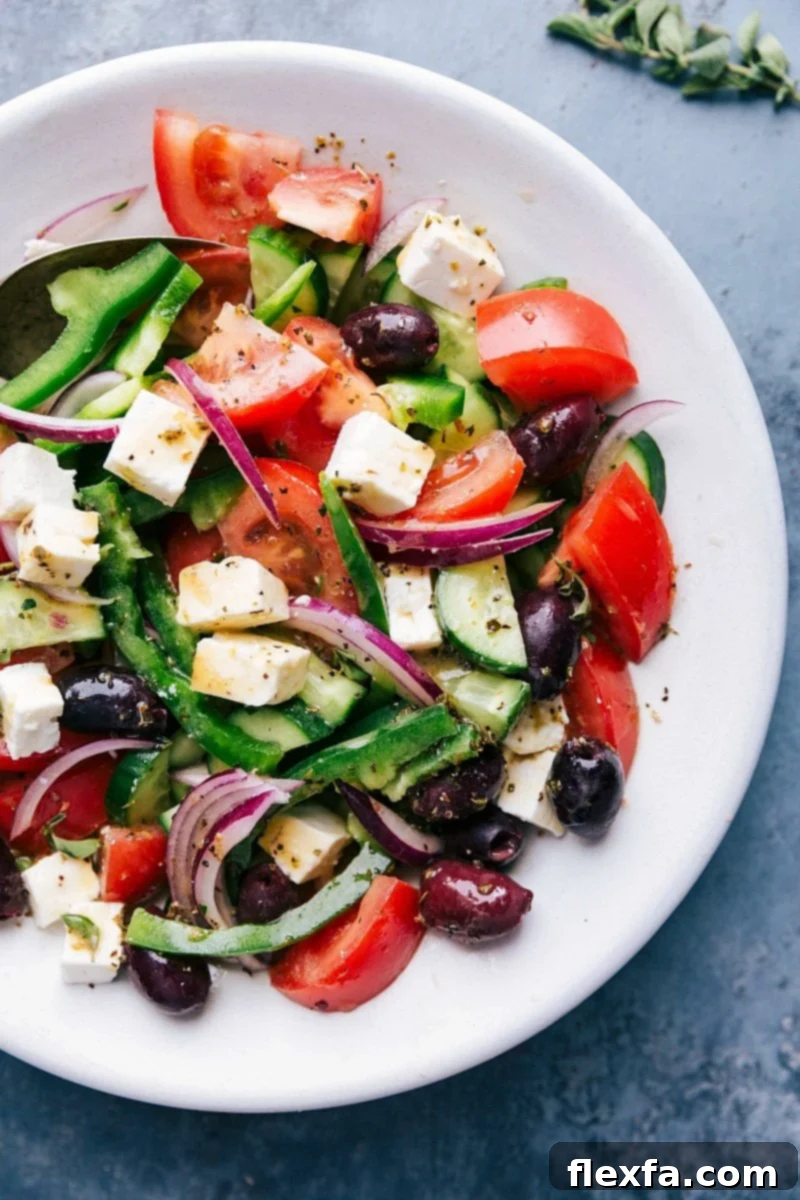
The Secret Sauce: Homemade Greek Dressing
No Greek salad is complete without its signature dressing. Our homemade Greek dressing is the magic ingredient that brings all the fresh components together, infusing them with a bright, zesty, and savory profile. It’s incredibly easy to prepare and far superior to any store-bought option.
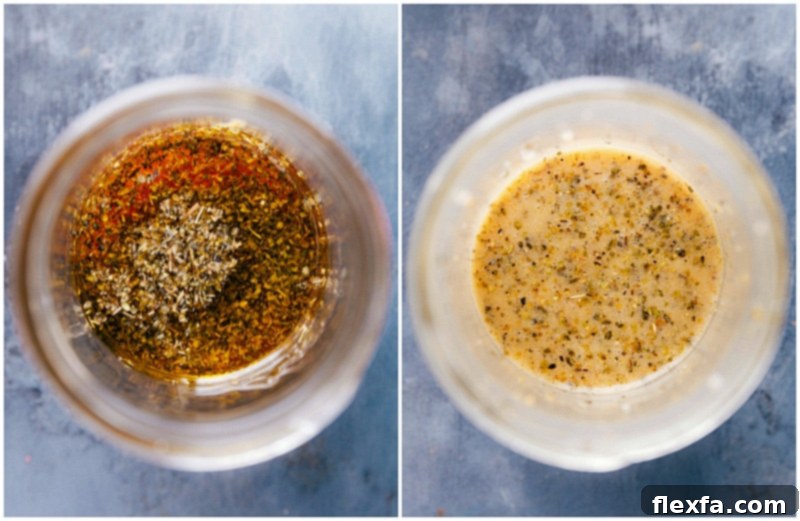
The dressing is a simple yet potent blend of extra virgin olive oil, fresh lemon juice, red wine vinegar, minced garlic, a touch of honey for sweetness, Dijon mustard for emulsion and tang, and dried oregano for that quintessential Mediterranean aroma. The key is to shake it vigorously until all ingredients are well combined and slightly emulsified, creating a creamy texture that beautifully coats the vegetables. Allowing the dressing to sit for a few minutes before serving can enhance its flavors, letting the garlic and herbs truly bloom.
How To Make The Best Greek Salad: Step-by-Step Guide
Creating this irresistible Greek salad is surprisingly simple. Follow these straightforward steps to bring the flavors of Greece to your table:
- Prepare the Greek Dressing: Begin by combining all your dressing ingredients in a wide-mouth mason jar or another sealable container. This includes extra virgin olive oil, freshly squeezed lemon juice (approximately 1-1/2 tablespoons from one lemon), red wine vinegar, honey, Dijon-style mustard, minced garlic, and dried oregano. Season generously with salt and freshly ground black pepper to taste. Secure the lid and shake vigorously for about 30 seconds until all ingredients are thoroughly combined and emulsified. Set the dressing aside in the refrigerator for at least 10-15 minutes; this brief resting period allows the flavors to meld and intensify, making the dressing even more delicious.
- Chop and Prepare Your Fresh Veggies: Precision in chopping enhances both the appearance and texture of your salad.
- For the tomatoes, cut them into 6 even wedges, then slice each wedge into 2-3 smaller, bite-sized pieces. If using cherry tomatoes, simply halve them.
- Slice your Persian or English cucumbers into attractive half-moons, discarding the ends.
- Take your small red onion and slice it very thinly. Remember, if you prefer a milder onion flavor, soak the slices in salted ice water for 10 minutes, then drain thoroughly before adding to the salad.
- Cut the green bell pepper into thin strips for a consistent crunch.
- Cube the feta cheese into 1/2-inch blocks. This traditional method allows the feta to hold its shape and contribute creamy bursts of flavor throughout the salad.
- Lastly, drain your Kalamata olives. If they are not already pitted, remove the pits. You may also halve them if desired, though whole olives are also perfectly acceptable.
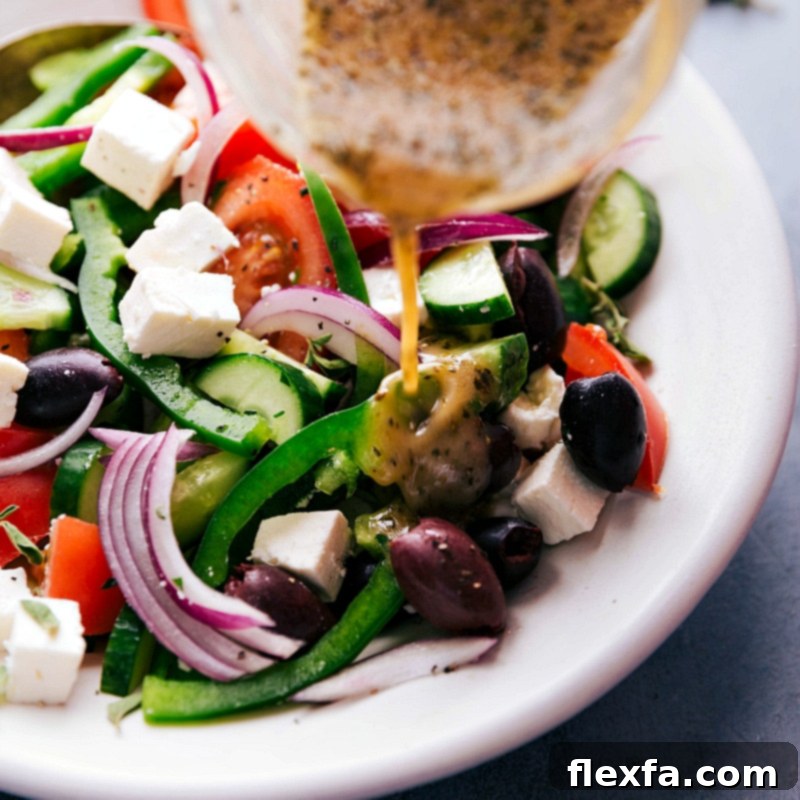
- Assemble and Serve Your Greek Salad: In a large mixing bowl, gently combine the prepared tomatoes, cucumbers, red onion, bell pepper, feta cheese, and Kalamata olives. Add the chilled Greek dressing, drizzling it over the salad gradually. Start with about half to two-thirds of the dressing, then toss gently to coat all the ingredients. Taste and add more dressing if desired; you might not need all of it, depending on your preference. Serve your Greek salad immediately to enjoy its peak freshness and crisp texture. While leftovers can be stored, this salad is truly best when enjoyed fresh on the same day.
Creative Variations and Serving Suggestions
While the classic Greek salad is a masterpiece in itself, it’s also incredibly versatile. Feel free to experiment with these ideas to customize your salad to your liking:
- Boost Your Protein: Transform your Greek salad into a hearty main course by adding grilled chicken, blackened shrimp, or even grilled halloumi cheese. For a vegetarian or vegan option, roasted chickpeas or marinated tofu cubes work wonderfully.
- Add Creaminess: Incorporate diced avocado for a rich, creamy texture and an extra dose of healthy fats. Its smooth consistency complements the crisp vegetables beautifully.
- Olive Experimentation: Don’t limit yourself to just Kalamata olives. Experiment with other types like large green Halkidiki olives or even a mix of black and green varieties for a more complex briny profile.
- Enhanced Flavor Boosters: Elevate the flavor further with additions like capers for a salty tang, tender artichoke hearts, or sweet and savory sun-dried tomatoes (oil-packed and drained) for an intensified Mediterranean taste.
- A Mediterranean Twist: For a slightly different flavor profile, a drizzle of balsamic glaze can add a touch of sweet and sour depth, creating a delightful Mediterranean fusion.
- Fresh Herb Infusion: While oregano is classic, fresh dill or mint can add a bright, aromatic twist to your Greek salad. Chop them finely and toss them in just before serving.
Serving Suggestions:
Greek salad is an incredibly versatile dish that pairs well with a multitude of meals. Serve it as a refreshing side alongside grilled fish, lamb kofta, or chicken souvlaki. It’s also excellent with warm pita bread and hummus, or as part of a larger mezze platter with tzatziki and dolmades. For a lighter lunch, enjoy it on its own or with a crusty piece of whole-grain bread.
Storage Tips for Optimal Freshness
To ensure your Greek salad remains as fresh and delicious as possible, proper storage is key. The golden rule for salads is to keep the dressing separate until just before serving. This prevents the vegetables from becoming soggy.
Store leftover salad in an airtight container in the refrigerator for up to 1-2 days. If you’ve already dressed the salad, try to consume it within a few hours for the best texture. The prepared dressing, when stored separately in an airtight jar in the refrigerator, will keep well for up to a week, making it perfect for other salads or even as a marinade.
The Healthy Choice: Benefits of Greek Salad
Beyond its delicious taste, the Greek salad is a cornerstone of the renowned Mediterranean diet, celebrated for its numerous health benefits:
- Rich in Antioxidants: Tomatoes, cucumbers, and bell peppers are packed with antioxidants like Vitamin C, lycopene, and beta-carotene, which help protect your cells from damage.
- Heart-Healthy Fats: Extra virgin olive oil is a primary component, providing monounsaturated fats that are known to improve cholesterol levels and reduce the risk of heart disease.
- Excellent Source of Fiber: The abundance of fresh vegetables contributes significant dietary fiber, aiding digestion and promoting a feeling of fullness, which can support weight management.
- Hydrating and Refreshing: High water content in cucumbers and tomatoes helps keep you hydrated, especially during warmer months.
- Bone Health: Feta cheese provides a good source of calcium, crucial for strong bones.
Incorporating Greek salad into your regular diet is an easy and delicious way to boost your overall health and well-being.
Frequently Asked Questions About Greek Salad
Here are some common questions about this delightful Mediterranean staple:
- Is Greek salad healthy?
Absolutely! Greek salad is incredibly healthy. It’s rich in fresh vegetables, healthy fats from olive oil, and provides essential vitamins and minerals. It’s a key component of the Mediterranean diet, known for its benefits to heart health and overall well-being. - What makes a Greek salad authentic?
An authentic Greek salad typically does not include lettuce. Its core ingredients are tomatoes, cucumbers, red onion, green bell pepper, Kalamata olives, and a generous slab or cubes of real Greek feta cheese, all dressed simply with extra virgin olive oil and a touch of red wine vinegar and oregano. - Can I make Greek salad ahead of time?
You can prep the vegetables a few hours ahead and store them separately in airtight containers in the refrigerator. However, for the best texture and freshness, it’s highly recommended to assemble the salad and add the dressing just before serving. This prevents the vegetables from becoming soggy. - How long does Greek salad last?
Undressed Greek salad components can last for 1-2 days in the refrigerator. Once dressed, it’s best consumed within a few hours. Leftovers that have been dressed may become watery and lose their crispness after 12-24 hours. - What are the best types of olives to use?
Kalamata olives are traditionally used and highly recommended for their distinct flavor. You can use pitted or unpitted, though pitted are more convenient for salads. Other Greek olive varieties like Halkidiki or Nafplion can also be used for a slightly different taste.
More Delightful Salad Recipes to Explore
If you’re a fan of fresh, vibrant salads, you’ll love exploring these other delicious options from our collection:
- Olive Garden Salad (Copycat)
- Healthy Italian Salad
- Avocado Quinoa Salad
- Panzanella Salad
- Refreshing Cucumber Salad
Greek Salad Recipe Details
Classic Greek Salad
By: Chelsea Lords
Greek Salad is a refreshing mix of tomatoes, cucumbers, red onions, bell pepper, olives, and feta, all tossed in a zesty homemade Greek dressing. It’s a quick, healthy, and authentic Mediterranean delight.
- Prep Time: 20 minutes
- Total Time: 20 minutes
- Servings: 6 as a side
Equipment
- Wide-mouth Mason Jar or other sealable container for dressing
- Large mixing bowl
- Sharp knife and cutting board
Ingredients
Salad
- 3 cups ripe tomatoes, cut into wedges (about 3 medium tomatoes)
- 2-1/2 cups Persian cucumbers or English cucumber, sliced into half moons (approx. 4 Persian cucumbers)
- 1 cup red onion, very thinly sliced (1 small red onion)
- 1-1/4 cup green bell pepper, thinly sliced (1 small green pepper)
- 1-1/4 cup feta cheese, cut into 1/2-inch blocks (7–8 ounces)
- 1/2 cup Kalamata olives, pitted and halved if desired
Dressing
- 1/4 cup + 2 tablespoons olive oil (extra virgin recommended)
- 1 lemon (to yield 1-1/2 tablespoons lemon juice)
- 1-1/2 tablespoons honey
- 1-1/2 tablespoons Dijon-style mustard
- 3/4 teaspoon minced garlic
- 1-1/2 teaspoons dried oregano
- 3 tablespoons red wine vinegar
- Salt and freshly ground black pepper, to taste
Instructions
- Dressing Preparation: In a mason jar or a small bowl, combine the olive oil, lemon juice, honey, Dijon mustard, minced garlic, dried oregano, and red wine vinegar. Season generously with salt and pepper. Close the jar tightly and shake vigorously, or whisk thoroughly, until all ingredients are well combined and the mixture is slightly emulsified. For best flavor, let the dressing sit for 10-15 minutes in the refrigerator before use.
- Vegetable & Feta Prep: Cut the tomatoes into medium wedges, then slice each wedge into 2-3 smaller pieces. Slice the cucumbers into half-moon shapes. Thinly slice the red onion. Cut the green bell pepper into thin strips. Cube the block of feta cheese into 1/2-inch pieces. Ensure Kalamata olives are drained and pitted; halve them if you prefer.
- Assemble & Serve: In a large mixing bowl, gently combine the prepared tomatoes, cucumbers, red onion, bell pepper, feta cheese, and Kalamata olives. Drizzle with the prepared dressing, starting with about two-thirds of it and adding more to your preference after tasting. Toss gently until all ingredients are evenly coated. Serve immediately for optimal freshness.
Recipe Notes
- Tomato Selection: If fresh, ripe tomatoes are out of season, sweet cherry tomatoes or grape tomatoes are an excellent substitute. Halve them before adding to the salad.
- Mellowing Red Onion: To reduce the sharpness of raw red onion, slice it thinly and soak in a bowl of salted ice water for about 10 minutes. Drain thoroughly before adding to your salad.
- Extra Dressing: This recipe often yields a bit of extra dressing. Store any leftovers in an airtight container in the refrigerator for up to a week. It’s fantastic with other salads, raw veggies, or even as a marinade for grilled meats.
- Storage of Leftovers: Any leftover salad should be stored in an airtight container in the refrigerator for 1-2 days. If possible, keep the dressing separate and add it right before serving to prevent the vegetables from becoming soggy and to maintain their crispness.
Nutrition Information
Nutrition information is automatically calculated and should be used as an approximation. Actual values may vary based on specific ingredients and preparation methods.
Leave a comment below and share your thoughts!