
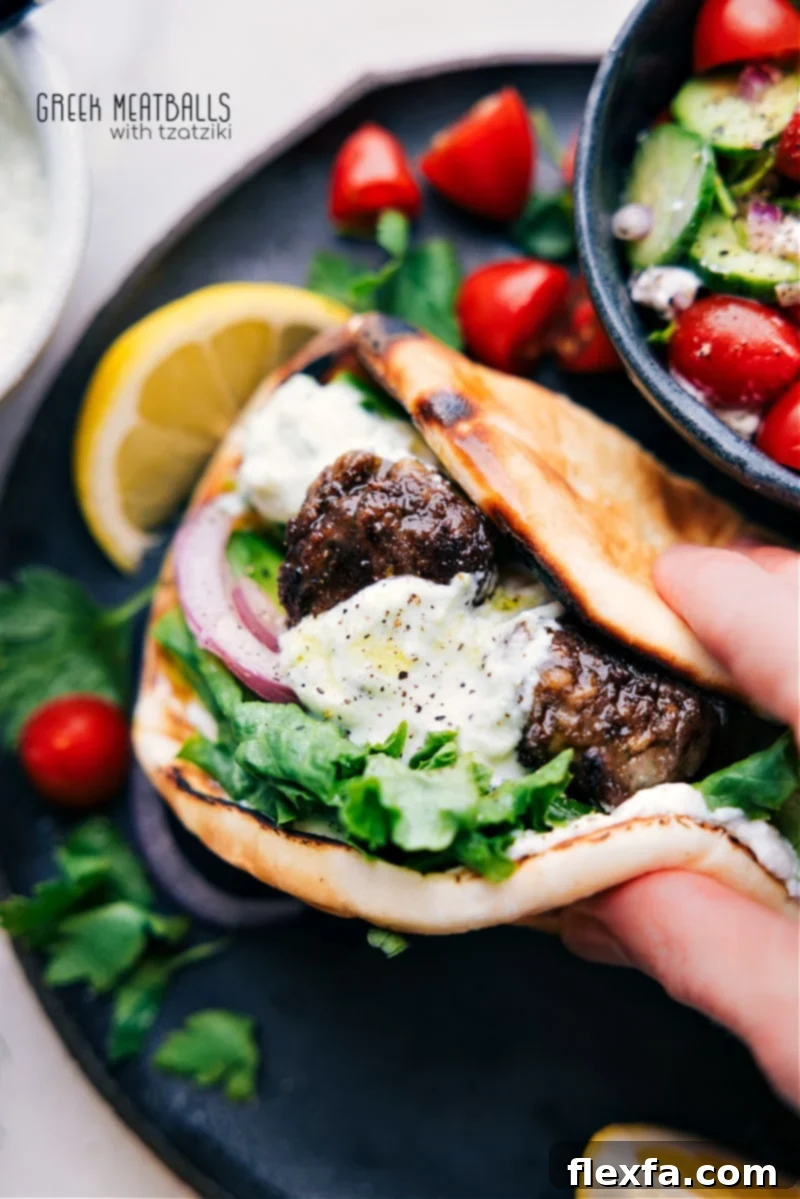
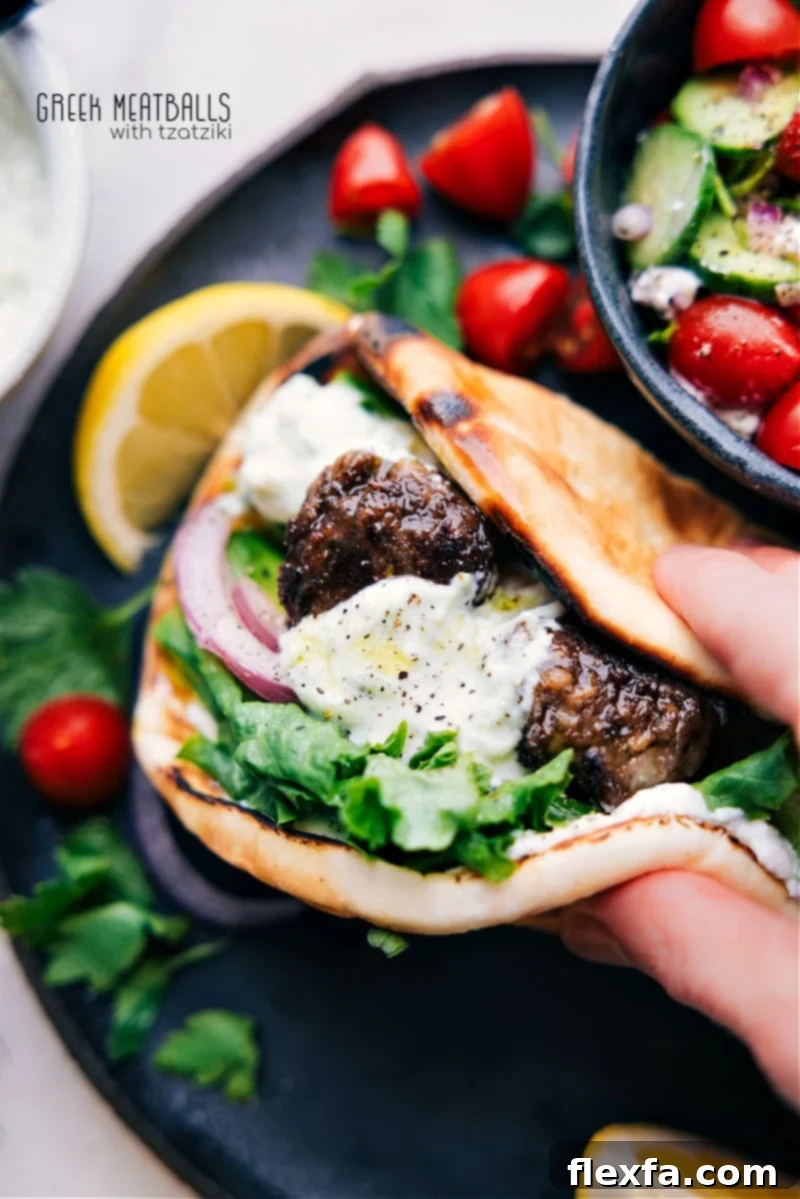
Greek Meatball Recipe: Experience a burst of authentic Mediterranean flavor with these incredibly juicy meatballs, boasting irresistible crispy edges. Perfectly nestled in warm pita bread with fresh vegetables and cooling tzatziki, this dish is a culinary journey to Greece in every bite.

Author’s Note
A Weeknight Dinner That Feels Special & Effortless!
Some meals just have a magical way of transporting you, even on the busiest weeknights. This Greek Meatball recipe, affectionately known as Keftedes, is precisely that kind of dinner. It’s a dish I rely on to feel extraordinary without demanding hours of prep or cooking time in the kitchen. The very first time I tested and perfected this recipe, I had all the ingredients prepped and ready while my children were setting the table. By the time the pita bread was perfectly toasted and a vibrant swirl of homemade tzatziki was nestled into a serving bowl, dinner was ready to be devoured.
The proof, as they say, was in the pudding – or rather, in the empty plates and enthusiastic requests for seconds. It was clear then and there that these flavorful, crispy-edged, and wonderfully juicy meatballs would instantly become a cherished staple in my home. They effortlessly evoke the warm, inviting aromas and tastes of a quaint, family-run restaurant I once enjoyed during a memorable trip to Greece years ago. Now, I can effortlessly bring those cherished flavors and memories right to my kitchen table, perfectly suited for the demands of even the most bustling weeknight schedule. This recipe is a true testament to the idea that special meals don’t always require immense effort.
The Irresistible Appeal of Authentic Greek Meatballs (Keftedes)
Greek meatballs, universally known as Keftedes (κεφτέδες), are far more than just a simple dish; they are a culinary celebration deeply rooted in Mediterranean tradition. Renowned for their robust flavors and delightful texture, Keftedes stand apart from many other meatball varieties often drenched in heavy sauces. Instead, they typically boast a lighter, fresher profile, allowing the natural zest of lemon, the brightness of fresh herbs, and the cooling creaminess of tzatziki to truly shine. This particular recipe captures the very essence of traditional Greek home cooking, transforming humble, accessible ingredients into something truly extraordinary.
What precisely makes these Greek Meatballs so exceptionally special? It’s the meticulously balanced blend of vibrant fresh herbs, such as flat-leaf parsley and aromatic mint, combined with earthy spices like oregano and cumin, all harmoniously integrated into the rich foundation of quality ground beef. The culinary outcome is a meatball that is incredibly juicy and tender on the inside, perfectly contrasted by a wonderfully crisp and golden-brown exterior. This exquisite textural interplay is paramount to their universal appeal, elevating them from a mere meal to an unforgettable dining experience. Furthermore, Keftedes are inherently versatile, making them a fantastic choice for a quick family dinner, an elegant appetizer, or a proud center piece on a larger mezze spread.
Why This Greek Meatball Recipe Will Become Your New Go-To
- Explosion of Authentic Flavor: Each succulent meatball is a concentrated bite of Mediterranean deliciousness, thanks to a thoughtfully curated combination of fresh herbs and aromatic spices that are foundational to Greek cuisine.
- Perfect Crispy-Juicy Texture: We achieve that coveted crispy, golden-brown crust while meticulously maintaining a tender, moist, and juicy interior – a true hallmark of expertly cooked Keftedes. This textural contrast is incredibly satisfying.
- Effortlessly Weeknight Friendly: Despite their gourmet taste and presentation, these Greek Meatballs are surprisingly simple and quick to prepare, making them an ideal and stress-free solution for even your busiest weeknights.
- Remarkably Versatile Serving Options: Whether elegantly tucked into warm pita bread for a quick meal, served as a hearty accompaniment alongside fluffy lemon rice, or presented as a star component of a grand Mediterranean mezze platter, they adapt beautifully and deliciously to virtually any mealtime or occasion.
- Unanimously Family Approved: Both children and adults will unequivocally fall in love with these flavorful, bite-sized morsels, effortlessly transforming dinner time into a much-anticipated, enjoyable event.
- Healthy & Wholesome: Aligned with the principles of the Mediterranean diet, these meatballs offer a balanced meal rich in protein and fresh ingredients, providing a wholesome and satisfying dining experience.
Essential Ingredients for Irresistible Greek Meatballs
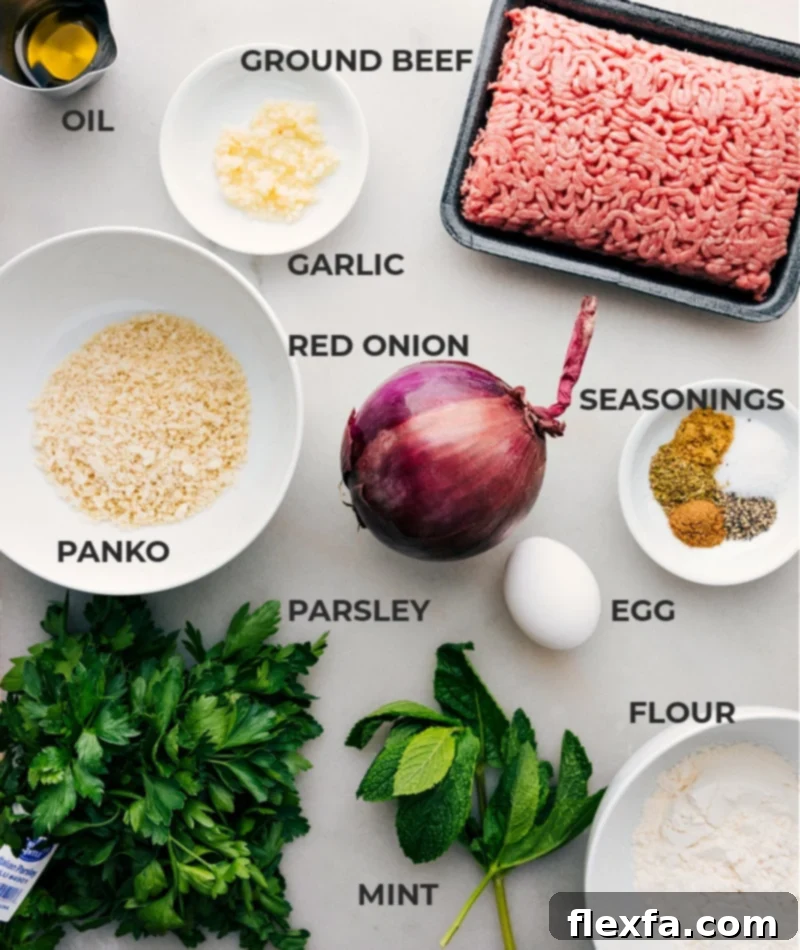
Crafting truly memorable Greek meatballs begins with the careful selection of high-quality ingredients and a deep understanding of how each component contributes to the final flavor and texture. Here’s an in-depth look at what you’ll need to create these culinary delights, along with some invaluable tips and clever substitutions to elevate your Keftedes to perfection.
| Ingredient | Why It Works & Expert Tips |
|---|---|
| Ground Beef (80/20 chuck) | The 80/20 lean-to-fat ratio is absolutely crucial for achieving juicy, flavorful meatballs without them becoming overly greasy. The fat renders during cooking, keeping the meatballs moist and tender. For an even richer, more profound, and truly authentic Mediterranean taste, consider using a blend of half ground beef and half ground lamb. This adds a distinctive depth of flavor highly cherished in Greek cuisine. |
| Panko Breadcrumbs | Panko breadcrumbs are indispensable for creating a remarkably light, airy texture within the meatballs, effectively preventing them from becoming dense or rubbery. Their flaky structure absorbs moisture beautifully. If panko isn’t readily available, crushed Ritz crackers can offer a buttery flavor profile, or regular fine breadcrumbs can be used, though they might result in a slightly denser meatball. For gluten-free options, use gluten-free panko or finely ground almond flour. |
| Fresh Parsley & Mint | These vibrant fresh herbs are non-negotiable for imparting authentic Greek flavor, contributing a bright, herbaceous lift and aromatic freshness that dried herbs simply cannot replicate. Flat-leaf parsley is preferred for its robust flavor. If absolutely necessary, dried herbs can be used, but reduce the quantity by half as their flavor is far more concentrated. However, for the most exquisite taste, fresh is always superior here! |
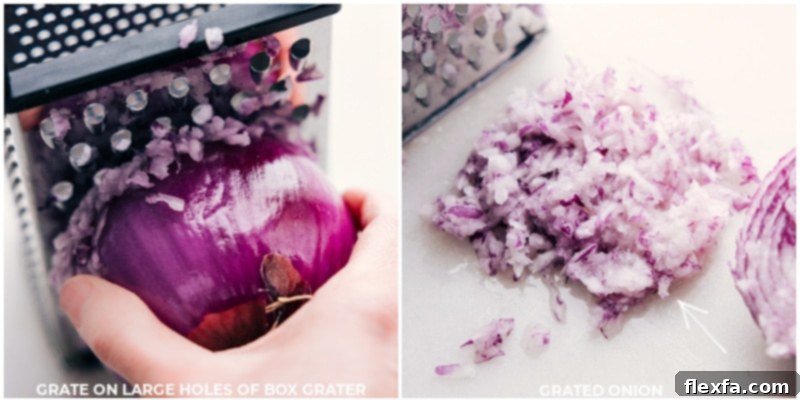
| Red Onion | Finely grated red onion provides a crucial sharp, sweet, and fresh bite to the meatballs. Grating it on the large holes of a box grater ensures it integrates seamlessly and melts into the meat mixture during cooking without leaving large, overpowering chunks. This also adds essential moisture, keeping the meatballs tender. Yellow onion or shallots are suitable alternatives if red onion is unavailable. |
| Beef Bouillon Powder | This often-overlooked secret ingredient is a game-changer. Beef bouillon powder brilliantly amplifies the savory, umami notes of the beef, adding an incredible layer of depth and complexity that truly makes these meatballs sing. If you only have bouillon cubes, simply crumble one very finely and ensure it’s well distributed. |
| Egg | The large egg serves as a vital binder, helping all the ingredients coalesce and preventing the meatballs from crumbling apart during the mixing, shaping, and cooking processes. For those seeking an egg-free alternative, a flax egg (prepared by mixing 1 tablespoon of ground flaxseed with 3 tablespoons of water and allowing it to rest for 5 minutes to thicken) can be used effectively. |
| Oregano, Cumin, Garlic, Salt & Pepper | These classic Mediterranean spices form the aromatic backbone of the Keftedes, infusing them with their signature flavor. Dried oregano is traditional and provides an earthy, warm note. Ground cumin adds a subtle, exotic depth. Freshly minced garlic is highly recommended for the most potent aroma and vibrant taste. Adjust the amounts of salt and freshly ground black pepper to your personal taste, but do not skip them – they are absolutely crucial for that unmistakable Greek flavor profile. |
| Olive Oil & Cooking Spray | A touch of olive oil in the mixture adds richness and flavor, while cooking spray is strategically used for greasing the baking sheet and the meatballs themselves. This method allows for achieving that desirable crispy exterior when baking, without introducing excessive added fat, resulting in a healthier yet equally delicious outcome. |
How to Make Authentic Greek Meatballs (Step-by-Step Guide for Keftedes)
Creating these delectable Greek Meatballs (Keftedes) is a surprisingly straightforward process that consistently yields impressive and incredibly flavorful results. By following these detailed, step-by-step instructions, you’ll achieve perfectly juicy and wonderfully crispy meatballs every single time, making you feel like a Greek culinary master.
- Preheat Oven and Prepare Baking Sheet: Begin by preheating your oven to a precise 400°F (200°C). This ensures the oven is at the correct temperature for even cooking and browning. Next, take a dark-colored, rimmed baking sheet and generously grease it with cooking spray. The dark color helps in achieving better browning and crispiness. Set this prepared sheet aside. In a small, shallow bowl, measure out 1/3 cup of all-purpose flour; this will be used for dredging the meatballs later.
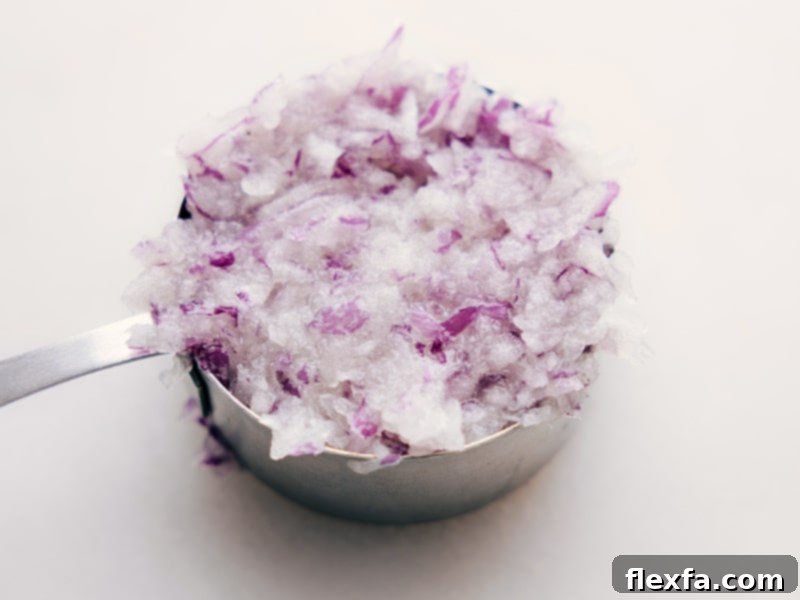
- Grate the Onion with Precision: Peel one large red onion and cut it carefully in half. For this recipe, you’ll only need one half of the onion. Using the large holes of a box grater, finely grate one half of the red onion until you have a completely filled ½ cup of grated onion. This fine grate is essential because it ensures the onion’s pungent, sweet flavor is thoroughly infused throughout the meatballs without creating large, overpowering chunks. It also introduces vital moisture, contributing to the meatballs’ tender texture. Add the grated onion directly into a large mixing bowl. (The remaining half of the red onion can be brilliantly used for making pickled red onions, as detailed in our comprehensive recipe notes section, or saved for another delicious recipe.)
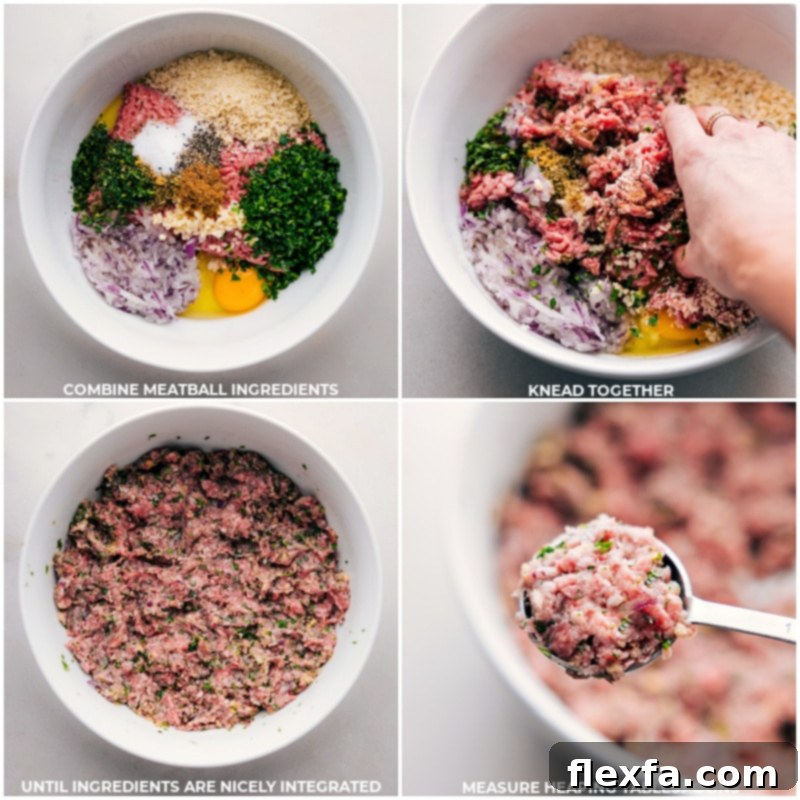
- Combine All Meatball Ingredients: To the large mixing bowl containing the finely grated onion, add the pound of ground beef (80/20 chuck is ideal), the ½ cup of panko breadcrumbs, ¼ cup of finely chopped fresh flat-leaf parsley, the optional but highly recommended 1 tablespoon of finely chopped fresh mint, 1 large egg, ½ teaspoon of dried oregano, ½ teaspoon of ground cumin, ½ teaspoon of beef bouillon powder, 1 ½ teaspoons of freshly minced garlic (equivalent to about 2 cloves), 1 tablespoon of olive oil, ¾ teaspoon of salt, and ¼ teaspoon of black pepper.
- Mix Gently (Do Not Overwork): Using your clean hands, gently knead and thoroughly mix all the ingredients together until they are just combined and evenly distributed. It is paramount to be careful not to overwork the meat mixture, as excessive handling can lead to the protein tightening up, resulting in tough and less desirable meatballs. Mix just until everything is homogeneously incorporated.
- Shape the Meatballs Evenly: To make the shaping process smoother and prevent the meat mixture from sticking to your hands, lightly grease your hands with cooking spray. Using a tablespoon measuring spoon, scoop a heaping tablespoon of the meat mixture. Roll this portion into an evenly sized, compact ball. Repeat this process with the remaining meat mixture, aiming to create approximately 24-27 meatballs from the entire batch. Consistency in size is critically important for ensuring that all the meatballs cook evenly at the same rate.
- Flour and Arrange on Baking Sheet: Working meticulously with one meatball at a time, lightly roll each shaped ball in the previously prepared bowl of all-purpose flour, ensuring it receives a thin, even coating. Gently shake off any excess flour. This delicate flour coating contributes significantly to the desirable crispy exterior of the cooked meatballs. Carefully arrange the floured meatballs on the generously greased baking sheet, making sure they are spaced adequately apart from each other. Proper spacing allows for optimal air circulation around each meatball, which is crucial for uniform browning and crispiness.
- Bake to Golden Perfection: Once all the meatballs are arranged, generously spray the tops of the meatballs with cooking spray. This further aids in achieving a beautiful, golden-brown crust. Place the baking sheet in the preheated 400°F (200°C) oven and bake for an initial 15 minutes. After this time, carefully use a sturdy metal spatula (and if comfortable and cautious, your fingers or tongs, as they will be hot!) to gently flip each meatball over. Return the baking sheet to the oven and continue baking for an additional 5-8 minutes, or until the meatballs are gloriously golden brown, slightly charred in spots on each side, and thoroughly cooked through to the center. For ground beef, the internal temperature should register 160°F (71°C) on a meat thermometer.
- Prepare Your Accompaniments: While the meatballs are in their final stages of baking, take this opportune moment to prepare your delightful accompaniments. This includes making the vibrant homemade tzatziki sauce and the tangy pickled red onions (full recipes for both are provided in the detailed notes section below), and lightly toasting your pita bread to warm perfection.
- Serve Immediately and Enjoy: Once baked, promptly remove the hot, crispy Greek meatballs from the oven. Generously pile them into warm, soft pita bread, adding your favorite fresh veggies such as crisp lettuce, juicy tomato slices, and cool cucumber. Don’t forget a sprinkle of the homemade pickled red onions for an extra zing! Finish with a lavish drizzle of the creamy homemade tzatziki sauce over the pitas. Serve immediately and savor every delicious, authentic bite!
What To Serve With Flavorful Greek Meatballs (Keftedes)
The remarkable versatility of Greek Meatballs is undoubtedly one of their most appealing qualities. They possess the ability to effortlessly transform into the hearty star of a substantial dinner, serve as an elegant and delectable appetizer, or become a vibrant and protein-rich addition to a fresh salad. Here are some of our absolute favorite and most recommended ways to enjoy these culinary gems, ensuring every meal is a memorable one:
- The Quintessential Classic Pita Sandwich: This is arguably the most traditional, satisfying, and authentically Greek way to savor Keftedes. Begin with soft, warm pita bread, then generously stuff it with a few hot, flavorful meatballs. Layer in crisp, fresh lettuce, thinly sliced ripe tomatoes, cool cucumber, and for an extra burst of tang, our homemade pickled red onions (find the recipe in our notes!). Finish this handheld masterpiece with a generous, cooling dollop of creamy homemade tzatziki sauce. It’s a complete, wholesome, and utterly delicious meal in itself!
- Hearty Sides: Lemon Rice or Pilaf: For a more substantial and comforting meal, serve your perfectly cooked Greek meatballs alongside a steaming portion of fragrant Lemon Rice or a traditional Greek-style rice pilaf. The bright, tangy notes of the lemon rice beautifully complement the savory and herbaceous flavors of the meatballs, creating a perfectly balanced plate.
- Elegant Appetizer Presentation: Effortlessly transform your Keftedes into a sophisticated and crowd-pleasing appetizer. Simply skewer individual meatballs with decorative toothpicks and artfully arrange them on a platter. Serve them with an assortment of small bowls filled with creamy tzatziki, a zesty spicy feta dip (tyrokafteri), or even simple lemon wedges for a refreshing squeeze over each bite. They are perfect for entertaining guests!
- Grand Mezze Platter Extravaganza: Elevate your dining experience by creating an impressive and colorful mezze platter, positioning your Greek meatballs as the undeniable centerpiece. Surround them with a diverse array of other Mediterranean delights. Think creamy hummus, delicate stuffed grape leaves (dolmades), a medley of briny olives, bite-sized cubes of tangy feta cheese, refreshing cucumber sticks, vibrant bell pepper strips, and plenty of warm pita wedges for scooping.
- Fresh & Light Salad Topper: For a lighter, yet equally satisfying and nutrient-packed meal, consider slicing the cooked meatballs and tossing them into a vibrant, crisp salad. They pair exceptionally well with a refreshing couscous salad, a hearty avocado quinoa salad, or a classic Greek salad dressed with a light, zesty vinaigrette. This option is perfect for a healthy lunch or a lighter dinner.
Storage & Reheating Tips for Greek Meatballs
Whether you’re planning ahead with meal prep or simply have delicious leftovers, proper storage and reheating techniques are key to enjoying these Greek Meatballs at their best for days to come.
Maximizing Your Greek Meatball Leftovers
- Refrigeration: Any leftover cooked Greek meatballs should be stored promptly in an airtight container in the refrigerator. When stored correctly, they will maintain their delicious flavor and texture for 4-5 days. Always ensure that tzatziki sauce and other fresh toppings are stored separately to preserve their optimal freshness and prevent the meatballs from becoming soggy.
- Freezing for Future Enjoyment: These versatile meatballs freeze wonderfully, making them an excellent candidate for convenient future meals! To freeze, first allow the cooked meatballs to cool completely to room temperature. Then, arrange the cooled meatballs in a single layer on a parchment-lined sheet pan. Place the sheet pan in the freezer, uncovered, for about an hour, or until the meatballs are completely solid. This crucial step prevents them from sticking together in a large clump. Once individually frozen, transfer the meatballs to a labeled and dated freezer-safe container or a heavy-duty freezer bag. They will happily keep well in the freezer for up to 3 months, ready for a quick meal anytime.
- Reheating from Frozen: To reheat your frozen Greek meatballs, preheat your oven to a moderate 300°F (150°C). Place the frozen meatballs on a foil-lined baking sheet to catch any drips and aid in cleanup. Bake them for approximately 15-20 minutes, or until they are thoroughly thawed and heated through to the center. For the best texture, avoid overheating, which can dry them out.
- Reheating from Refrigerator: Reheat refrigerated meatballs quickly and easily in the microwave for 1-2 minutes, or until they are warmed through. Alternatively, for a slightly crisper finish, you can reheat them in a skillet over medium heat with a splash of water or broth, covered, until they are hot and steamy. For ultimate crispiness, a quick few minutes in an air fryer will bring back that delightful exterior.

Mastering the Perfect Pairings: Homemade Tzatziki & Quick Pickled Red Onions
While these Greek meatballs are undeniably fantastic on their own, pairing them with fresh, vibrant, and tangy accompaniments truly elevates the entire meal to an authentic Mediterranean dining experience. Our homemade tzatziki and quick pickled red onions are incredibly simple to prepare and add essential layers of flavor and texture that you simply won’t want to skip. They are the perfect complement to the savory Keftedes.
Quick Pickled Red Onions (Referenced as Note 1 in Recipe)
These bright, tangy, and slightly sweet pickled red onions offer a wonderful crunch and a burst of acidity that brilliantly cuts through the richness of the meatballs. They’re remarkably easy to make and can be prepared efficiently while your meatballs are being mixed and shaped.
- Ingredients: You will need one half of a large red onion (very thinly sliced), 2 tablespoons of red wine vinegar, ½ teaspoon of salt, and 1 ½ teaspoons of granulated sugar.
- Instructions: Begin by very thinly slicing half of your large red onion. Place these delicate slices into a small bowl. Pour the red wine vinegar over the onions, then evenly sprinkle with the salt and sugar. Stir everything together thoroughly to ensure the sugar and salt completely dissolve into the vinegar. Toss the onions gently every 5-10 minutes for about 30 minutes, or until they have softened considerably and transformed into a vibrant, beautiful pink hue. For optimal flavor development and convenience, it is ideal to start preparing these pickled onions first, as they can sit and marinate perfectly while you proceed with preparing the rest of your delicious meal.
Homemade Tzatziki Sauce (Referenced as Note 2 in Recipe)
No truly authentic Greek meatball experience is complete without a generous dollop of cool, creamy, and garlicky tzatziki sauce. Our homemade version is exceptionally fresh and boasts a superior flavor profile. For the best possible taste, it can even be prepared a day in advance, allowing all the wonderful flavors to meld and deepen beautifully.
- Ingredients: Gather ½ cup of grated Persian or English cucumber (there’s no need to peel these types of cucumbers), ½ cup of plain Greek yogurt (full-fat for ultimate creaminess), 1 teaspoon of freshly minced garlic, ½ teaspoon of fresh lemon zest, 1 tablespoon of fresh lemon juice, 1 ½ tablespoons of good quality olive oil, 1 ½ teaspoons of red wine vinegar, ¼ teaspoon of salt, and ⅛ teaspoon of black pepper.
- Instructions: Using the large holes of a box grater, grate the unpeeled cucumber to yield approximately ½ cup. This is a crucial step for a thick, non-watery tzatziki: place the grated cucumber in a clean paper towel or a thin, absorbent kitchen towel and squeeze out as much excess moisture as humanly possible. The drier the cucumber, the creamier your tzatziki will be. In a medium-sized bowl, combine the thoroughly squeezed cucumber with the plain Greek yogurt, minced garlic, lemon zest, lemon juice, olive oil, red wine vinegar, salt, and pepper. Stir all the ingredients together thoroughly until they are completely well combined and smooth. Refrigerate the prepared tzatziki until you are ready to serve. For the most profound and delicious flavor, allow it to chill for at least 30 minutes, or even better, overnight, to let the flavors fully meld and develop.
Frequently Asked Questions About Greek Meatballs (Keftedes)
To help you perfect your Greek Meatball making skills and answer any common queries, here are some frequently asked questions:
- Can I use ground lamb instead of beef for these Keftedes?
- Absolutely! In fact, many authentic and traditional Keftedes recipes prominently feature ground lamb, or a delightful combination of both lamb and beef. Using all ground lamb will impart a distinct, richer, and more deeply authentic Mediterranean flavor that is highly recommended for an unparalleled culinary experience. If you opt for lamb, aim for an 80/20 lean-to-fat ratio to ensure the meatballs remain incredibly juicy and tender.
- How can I adapt this Greek Meatball recipe to be gluten-free?
- Making this recipe gluten-free is quite simple! You will need to substitute the traditional panko breadcrumbs with an equal amount of certified gluten-free breadcrumbs or, alternatively, use finely ground almond flour for a similar binding effect. Additionally, ensure that the all-purpose flour used for dredging the meatballs is replaced with a suitable gluten-free flour blend (such as rice flour, a 1-to-1 gluten-free all-purpose flour blend, or chickpea flour). Always diligently double-check the labels of any packaged ingredients, such as bouillon powder, for hidden gluten content.
- What if I don’t have fresh herbs available for the meatballs?
- While fresh flat-leaf parsley and mint undoubtedly offer the most vibrant and authentic flavor profile, you can certainly substitute with dried herbs if fresh ones are unavailable. As a general rule, use approximately half the amount of dried herbs compared to what is called for fresh (e.g., ⅛ cup of dried parsley and ½ tablespoon of dried mint). Keep in mind that the overall flavor profile might be slightly less bright and herbaceous, but the meatballs will still be utterly delicious.
- Can I pan-fry these Greek meatballs as an alternative to baking?
- Yes, you absolutely can pan-fry these Greek meatballs, and it’s a fantastic cooking method! To pan-fry, heat 1-2 tablespoons of olive oil in a large, heavy-bottomed skillet over medium-high heat until shimmering. Once the oil is hot, carefully add the floured meatballs in batches, being diligent not to overcrowd the pan. Overcrowding can lower the pan’s temperature and prevent proper browning. Cook the meatballs for 3-4 minutes per side, turning them frequently, until they are beautifully and evenly browned on all surfaces and cooked through to an internal temperature of 160°F (71°C). Pan-frying will typically yield a more intensely crispy exterior but may require a bit more oil. For a combination of browning and even cooking, you could also briefly pan-fry them to get a crust, then finish them in the oven.
- How do I know when the Greek meatballs are thoroughly cooked?
- The most reliable and accurate way to determine if your Greek meatballs are cooked through is by using a reliable meat thermometer. Insert the thermometer into the very center of a few meatballs; it should consistently register an internal temperature of 160°F (71°C) for ground beef. Visually, the meatballs should also exhibit a beautiful, golden-brown crust on the outside, and when cut open, there should be absolutely no pink visible in the center.
More Delicious Mediterranean & Dinner Recipes:
Dinner
Greek Chicken Recipe
Salads
Greek Tortellini Salad
Dinner
Meatball Sliders Recipe
Dinner
Italian Stuffed Peppers

Print Recipe
Greek Meatballs Recipe (Keftedes)
Chelsea Lords
40 minutes
20 minutes
1 hour
6 servings
Recipe Video (for reference)
Equipment
-
Large sheet pan (15″ x 21″)
-
Box grater
-
Large mixing bowl
-
Measuring spoons and cups
-
Metal spatula
Ingredients
- Cooking spray
- 1/3 cup all-purpose flour
- 1 large red onion divided, see Note 1 for pickling option
- 1 pound ground beef 80/20 chuck
- 1/2 cup panko breadcrumbs
- 1/4 cup fresh flat-leaf parsley finely chopped
- 1 tablespoon Fresh mint finely chopped, optional but recommended
- 1 large egg
- 1/2 teaspoon dried oregano
- 1/2 teaspoon ground cumin
- 1/2 teaspoon beef bouillon powder
- 1-1/2 teaspoons minced garlic approximately 2 cloves
- 1 tablespoon olive oil
- 3/4 teaspoon salt
- 1/4 teaspoon pepper
- 6 pitas
- Tzatziki sauce homemade or store-bought, see Note 2 for homemade recipe
- Fresh serving suggestions such as crisp lettuce, sliced tomato, fresh cucumber, crumbled feta cheese, and pickled red onions (see Note 3)
Instructions
-
Preheat your oven to 400°F (200°C). Generously grease a dark-colored, rimmed baking sheet with cooking spray and set it aside. Place the 1/3 cup of all-purpose flour into a small, shallow bowl for dredging.
-
Peel the red onion and cut it in half. Grate one half of the red onion on the large holes of a box grater until you have a full 1/2 cup of finely grated onion. Add this grated onion to a large mixing bowl. To the bowl, add the ground beef (80/20 chuck), panko breadcrumbs, finely chopped fresh flat-leaf parsley, finely chopped fresh mint (if using), the large egg, dried oregano, ground cumin, beef bouillon powder, minced garlic, olive oil, salt, and pepper. Gently knead and mix all the ingredients until they are just integrated and evenly combined, taking care not to overwork the meat.
-
Lightly grease your hands with cooking spray to prevent sticking. Use a tablespoon measuring spoon to scoop a heaping tablespoon of the meat mixture and roll it into an evenly-sized ball. Repeat this process with the remaining meat mixture to form approximately 24–27 meatballs. Working with one meatball at a time, roll each one to lightly coat it in the flour, shaking off any excess. Arrange the floured meatballs, spaced apart, on the prepared baking sheet.
-
Generously spray the tops of the meatballs with cooking spray. Bake for 15 minutes. Then, using a metal spatula, gently flip each meatball over. Continue to bake for another 5–8 minutes, or until the meatballs are beautifully golden brown and slightly charred on each side, and fully cooked through to an internal temperature of 160°F (71°C).
-
While the meatballs are baking, prepare the optional homemade tzatziki sauce and quick pickled red onions (refer to Notes 1 and 2 below for recipes), and lightly toast your pita bread.
-
Lightly toast the pita bread (refer to Note 4 for method). For a rich base, you can spread 2 tablespoons of plain Greek yogurt inside each pita and sprinkle with salt to taste. Layer in crisp lettuce, fresh cucumber slices and, if desired, add your homemade pickled red onions. Place 4–5 cooked meatballs on top and drizzle a generous amount of homemade tzatziki sauce over the pitas. Serve immediately and enjoy this authentic Greek feast!
Recipe Notes
Note 2: Homemade Tzatziki Sauce: This incredibly fresh, homemade sauce is the ultimate companion for your Greek meatballs and can be prepared a day ahead for optimal flavor development.
To make Tzatziki: Grate an unpeeled Persian or English cucumber (using the large holes of a grater) to yield approximately 1/2 cup. Place the grated cucumber in a clean paper towel or a thin kitchen towel and squeeze out as much moisture as humanly possible – this is key for a thick, non-watery sauce. In a bowl, combine the thoroughly squeezed cucumber with 1/2 cup of plain Greek yogurt (full-fat is recommended for creaminess), 1 teaspoon of minced garlic, 1/2 teaspoon of fresh lemon zest, 1 tablespoon of fresh lemon juice, 1 1/2 tablespoons of olive oil, 1 1/2 teaspoons of red wine vinegar, 1/4 teaspoon of salt, and 1/8 teaspoon of black pepper. Stir all ingredients together thoroughly until well combined and smooth. Refrigerate the tzatziki until you are ready to serve. For the best possible flavor, allow it to chill for at least 30 minutes, or even better, overnight.
Note 3: Additional Serving Suggestions & Ingredients: For a comprehensive and delightful filling for your pita sandwiches, beyond the meatballs, consider adding: 12 tablespoons of whole milk Greek yogurt (for an extra creamy base layer), 4 Persian cucumbers (sliced thinly lengthwise), 6 pieces of crisp green leaf lettuce, diced cherry tomatoes, and of course, the tangy pickled red onions from Note 1.
Note 4: How to Toast Pita Bread: To achieve perfectly warmed and lightly charred pita bread: Lightly spray both sides of the pita with cooking spray. Char them directly over a medium to medium-low gas flame on your stovetop for just a few seconds per side. Use tongs to safely flip them until they are lightly charred and warm. If you do not have a gas stove, you can achieve a similar effect by toasting them in a dry skillet over medium-high heat for 30 seconds to 1 minute per side, or briefly warming them in a toaster or toaster oven.
Nutrition Note: Please be aware that the provided nutrition information is calculated specifically for 4 meatballs only and does not include the pita bread, tzatziki sauce, pickled onions, or any other optional serving suggestions. These additions will alter the nutritional values.
Storage: For detailed instructions on how to best store and reheat your Greek meatballs, please refer to the dedicated “Storage & Reheating Tips” section located further above in this article.
Nutrition Information (per serving, 4 meatballs)
|
Calories: 280 kcal
|
Carbohydrates: 11 g
|
Protein: 16 g
|
Fat: 19 g
|
Saturated Fat: 6 g
|
Polyunsaturated Fat: 1 g
|
Monounsaturated Fat: 9 g
|
Trans Fat: 1 g
|
Cholesterol: 85 mg
|
Sodium: 103 mg
|
Potassium: 281 mg
|
Fiber: 1 g
|
Sugar: 1 g
|
Vitamin A: 291 IU
|
Vitamin C: 5 mg
|
Calcium: 40 mg
|
Iron: 2 mg
Disclaimer: Nutrition information is automatically calculated based on the provided ingredients and is an approximation. Actual values may vary significantly based on specific brands, ingredient quantities, and preparation methods. This information should be used for guidance only.
Loved this recipe? Leave a comment below!