
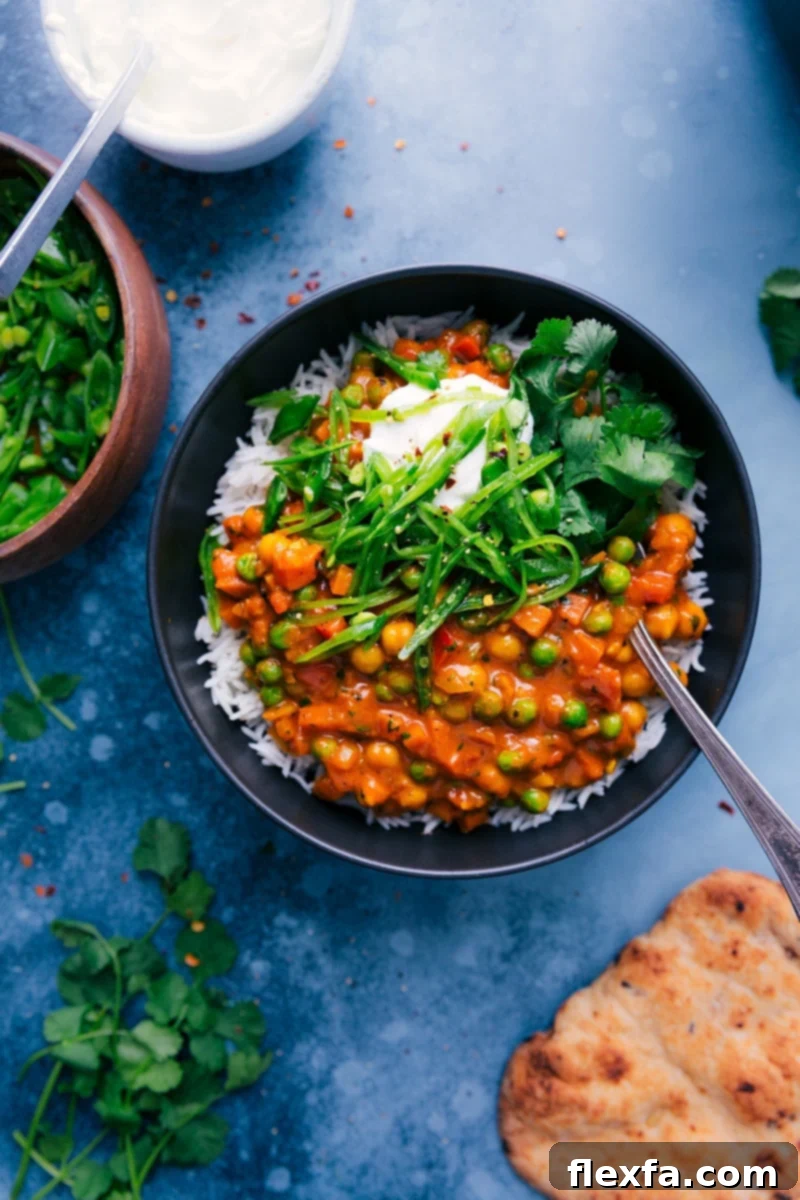
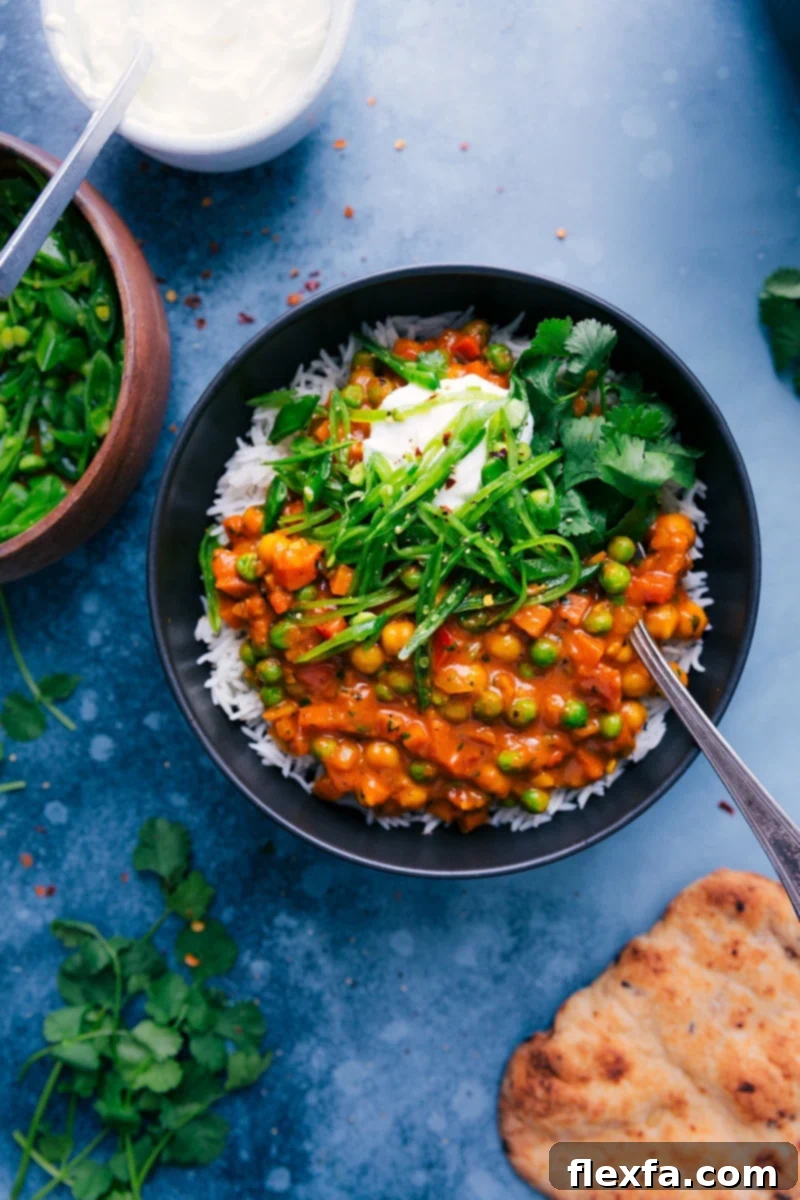
Welcome to a culinary journey that promises rich flavors and wholesome goodness! This Vegetarian Tikka Masala is a vibrant and incredibly satisfying dish, generously packed with a colorful array of fresh vegetables, hearty chickpeas, and a symphony of bold, aromatic Indian spices. It’s a delightful twist on a classic, offering all the comforting creaminess and spice of traditional Tikka Masala, but in a completely plant-based format. Perfect for any weeknight or special occasion, this meatless marvel is best served over a bed of fluffy basmati rice, adorned with a dollop of cooling Greek yogurt, a sprinkle of crisp snap peas, and accompanied by warm, pillowy naan bread.
If you’re exploring more delicious and easy meatless meal options, you’ll love diving into our other popular recipes. Be sure to try our incredibly flavorful Chickpea Curry, the wonderfully customizable Vegetarian Sushi Bowls, or our hearty and satisfying Quinoa Vegetarian Enchiladas. Each offers a unique taste adventure for your plant-based repertoire.

Author’s Note
The Veggie Tikka Masala My Kids Request Every Week!
As a busy parent, finding meals that satisfy everyone in the family can sometimes feel like a quest. In my household, Chicken Tikka Masala has long been a cherished classic, a go-to for its comforting flavors. However, I decided it was time to experiment with a plant-based alternative, and to my absolute delight, this vegetarian version became an instant sensation! In fact, it’s become even more popular than the original. My seven-year-old loved it so much that he even requested it for his birthday dinner this year – a testament to its irresistible appeal that truly warmed my heart and made me chuckle.
This particular recipe is brimming with an abundance of wholesome vegetables, including sweet onions, crunchy carrots, vibrant bell peppers, and tender sweet peas. For a significant boost of plant-based protein, we’ve incorporated nutrient-dense chickpeas, transforming this dish into an incredibly hearty and filling meal that won’t leave you wanting. The spice level is perfectly balanced, offering just the right amount of warmth without being overpowering. Plus, I’ll share simple tips on how to easily adjust the heat to suit your family’s preferences, whether you prefer a milder touch or a fiery kick. If you’re on the hunt for a vegetable-rich meal that the entire family will eagerly devour without a single complaint, your search ends here. This Vegetarian Tikka Masala is truly a fuss-free, crowd-pleasing winner!
Key Ingredient Insights for Your Vegetarian Tikka Masala
Crafting the perfect Vegetarian Tikka Masala begins with understanding the role each ingredient plays. Here’s a closer look at the key components that come together to create this flavorful dish, along with tips for optimal results and potential substitutions.
- Coconut Oil: More than just a cooking medium, coconut oil imparts a subtle sweetness and a delightful richness to the dish. It’s an excellent choice for sautéing vegetables as it holds up well to medium-high heat, adding a foundational layer of flavor. You can also use ghee or a neutral oil like avocado oil, but coconut oil adds a unique tropical depth.
- Onion, Carrot, & Red Pepper: These aromatic vegetables form the cornerstone of our tikka masala sauce. Dicing them finely and cooking them until just tender (crisp-tender) allows them to release their natural sweetness and soften beautifully, creating a harmonious blend of flavors and textures. Don’t rush this step; proper sautéing is key to building a rich base.
- Fresh Garlic & Ginger: The dynamic duo of Indian cuisine! Freshly minced garlic and ginger are non-negotiable for authentic flavor. Their pungent, aromatic qualities permeate the entire dish, providing a warmth and depth that jarred alternatives simply can’t replicate. While jarred options work in a pinch, we highly recommend fresh for the best taste. Ensure they are finely minced so their flavors seamlessly integrate into the sauce.
- Aromatic Spices: Our tikka masala boasts a carefully balanced blend of classic Indian spices, including garam masala, ground turmeric, ground cumin, ground coriander, and a touch of ground cardamom. This combination creates the signature warm, earthy, and fragrant profile of tikka masala. Using fresh, high-quality spices makes a significant difference in the final taste. Don’t be shy; these spices are the heart of the dish!
- Tomato Paste & Fire-Roasted Crushed Tomatoes: Tomato paste is essential for deepening the tomato flavor and adding a concentrated umami richness. Cooking it slightly before adding other liquids helps to mellow its acidity and unlock its full potential. Fire-roasted crushed tomatoes are a fantastic choice as they lend a smoky depth and sweetness, elevating the overall flavor profile. If fire-roasted aren’t available, regular crushed tomatoes will work well too, though you might miss that subtle smoky note.
- Chickpeas (Garbanzo Beans): The star plant-based protein of this dish! Canned chickpeas are incredibly convenient and add a wonderful texture and nutritional boost. They soak up the rich sauce beautifully, making each bite satisfying. Remember to drain and rinse them thoroughly before adding them to remove excess sodium and improve their texture.
- Coconut Milk: This is our secret to achieving that luscious, creamy texture without using dairy cream. Full-fat canned coconut milk provides the best richness and flavor, creating a velvety sauce that perfectly coats the vegetables and chickpeas. While lighter coconut milk can be used, full-fat is recommended for an indulgent consistency. For best results, use shelf-stable cans found in the international aisle, not the refrigerated beverage type.
- Sweet Peas & Fresh Cilantro: These vibrant additions are stirred in at the very end to preserve their bright color, fresh flavor, and tender texture. Sweet peas offer a pop of natural sweetness, while fresh cilantro provides a burst of herbaceous freshness that brightens the entire dish, adding that essential finishing touch.
Quick Tip: Selecting the Right Coconut Milk
When shopping for coconut milk, you’ll find various types. For this recipe, always look for shelf-stable cans, typically located in the international aisle alongside Latin or Asian products. These are thicker and richer than refrigerated carton varieties. My personal favorite and a brand that’s widely available in most local grocery stores is Imperial Kitchen®. The quality of your coconut milk can significantly impact the creaminess and flavor of your tikka masala, so choose wisely!
Mastering Vegetarian Tikka Masala: A Step-by-Step Guide
Creating this delicious Vegetarian Tikka Masala is a straightforward process, designed to bring out maximum flavor with minimal fuss. Follow these detailed steps to achieve a restaurant-quality dish right in your own kitchen.
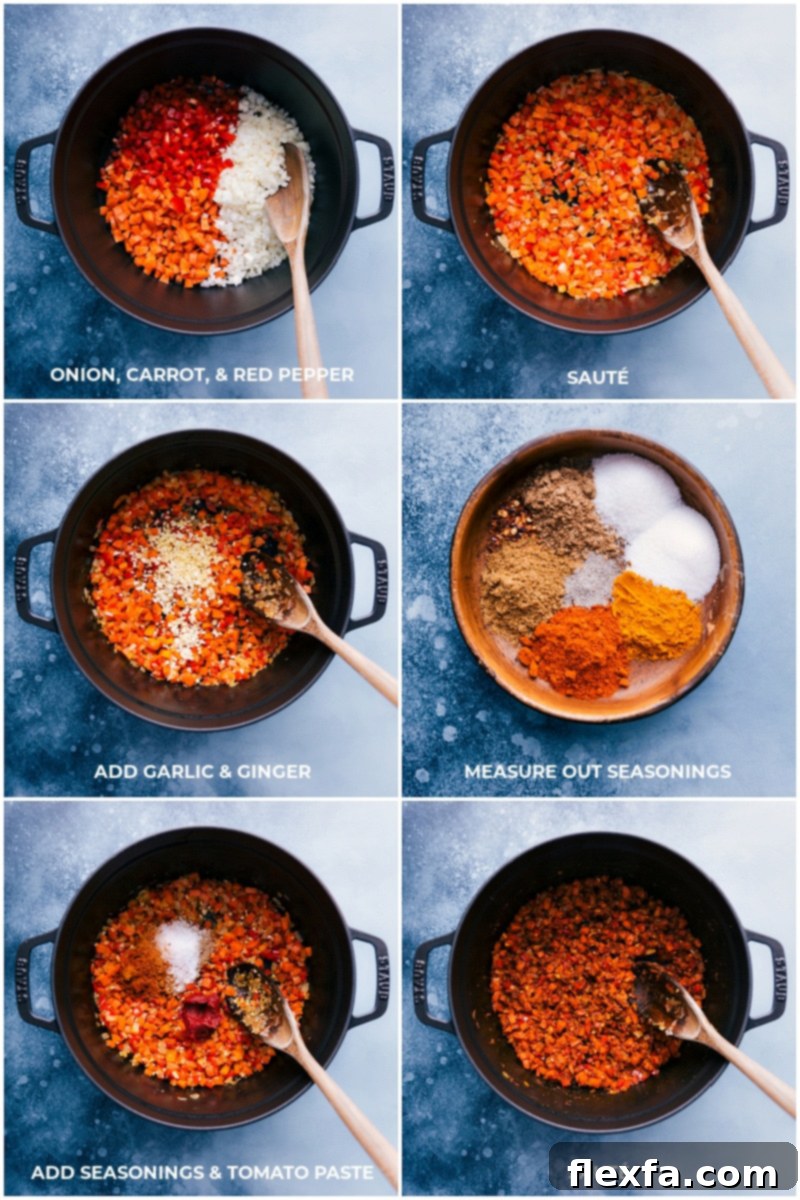
- Sauté the Aromatic Base: Begin by heating the coconut oil in a large, heavy-bottomed pot or Dutch oven over medium-high heat. Add your finely diced onion, carrot, and red pepper. Sauté these vegetables for 8-10 minutes, stirring occasionally, until they become tender-crisp and start to caramelize slightly. This initial sautéing step is crucial for building a flavorful foundation.
- Infuse with Garlic, Ginger, & Spices: Once the vegetables are softened, add the finely minced fresh garlic and ginger to the pot. Cook for about 1 minute, stirring constantly, until they become fragrant. Be careful not to burn them. Next, stir in your blend of ground spices (garam masala, turmeric, cumin, coriander, cardamom, sugar, salt, and red pepper flakes). Cook for another 3-4 minutes, continuing to stir. This step, known as “blooming” the spices, enhances their aromatic qualities and deepens their flavors significantly. Reduce heat if necessary to prevent the spices from burning.
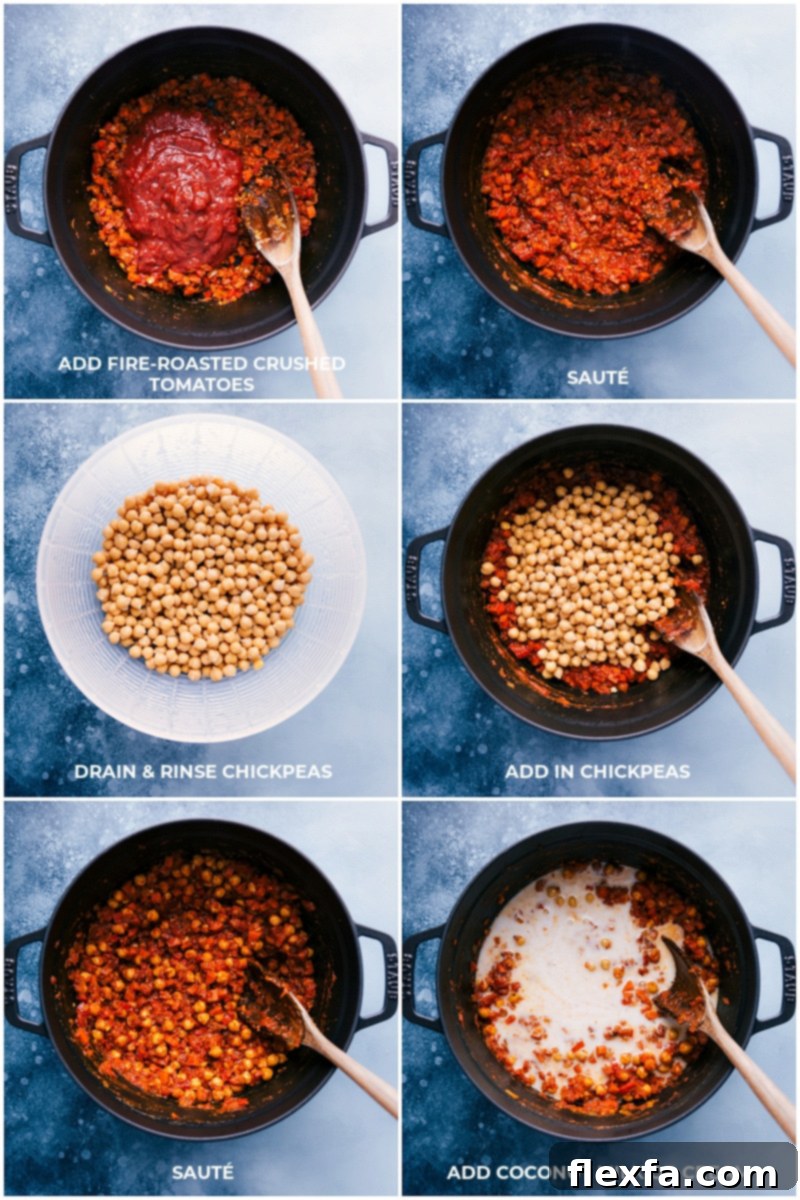
- Build the Rich Tomato Sauce: Now, incorporate the tomato paste into the pot, stirring it well with the spice-vegetable mixture. Cook for another 1-2 minutes, allowing the tomato paste to darken slightly and develop a richer flavor. Then, add the fire-roasted crushed tomatoes. Sauté for about 1 minute, using your spoon to scrape up any flavorful browned bits from the bottom of the pot. These fond bits are packed with umami and will contribute significantly to the sauce’s depth.
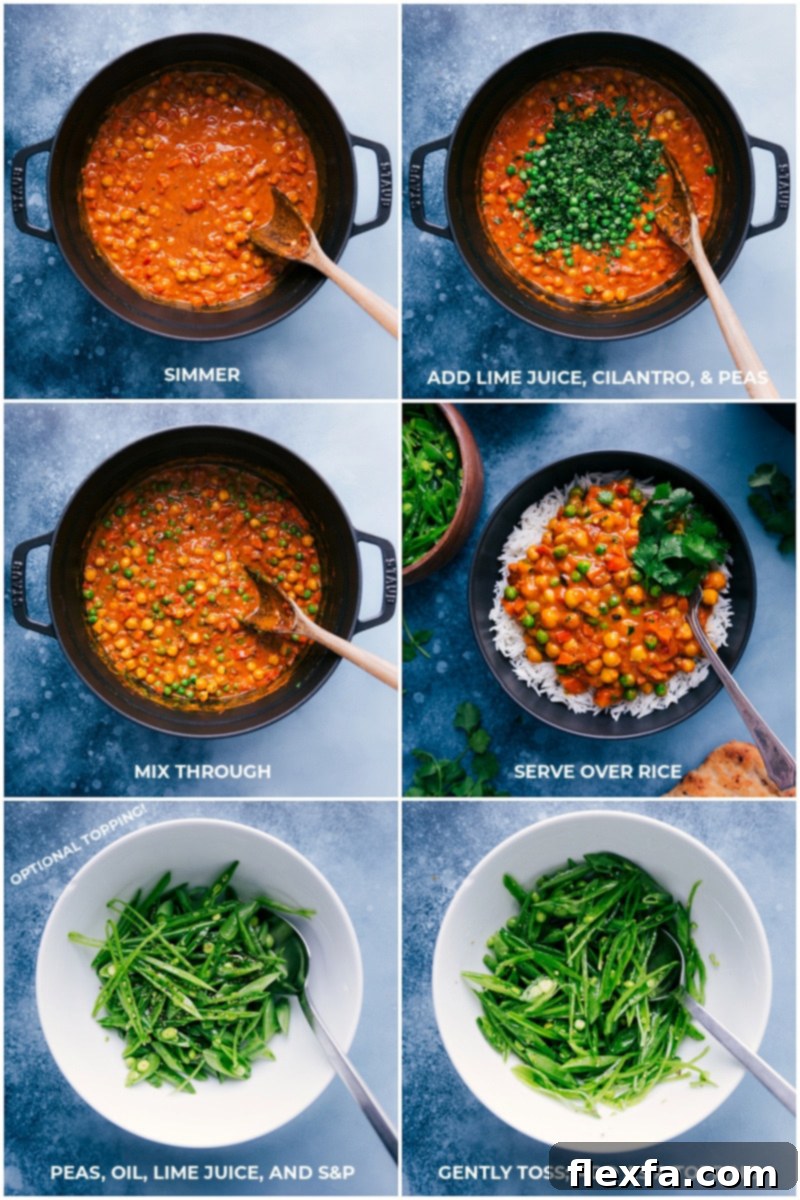
- Introduce Chickpeas & Coconut Milk for Simmering: Gently stir in the drained and rinsed chickpeas, allowing them to warm through for about a minute. Finally, pour in the creamy coconut milk, stirring everything together until well combined. Bring the mixture to a gentle simmer, then reduce the heat to low. Cover the pot partially and let it simmer for 10-20 minutes, stirring occasionally. This low, slow simmer allows the flavors to meld beautifully and the sauce to thicken to a luxurious consistency.
- Add the Fresh Finishing Touches: Just before serving, stir in the frozen sweet peas and freshly chopped cilantro. Cook for only 1-2 minutes, just enough to warm the peas through and wilt the cilantro slightly. This ensures they retain their vibrant color and fresh, crisp texture, adding a delightful contrast to the rich sauce. Taste and adjust seasonings as needed, adding a pinch more sugar if the sauce is too acidic or a bit more salt to your preference.
- Serve & Enjoy: Your aromatic Vegetarian Tikka Masala is now ready to be enjoyed! Ladle generous portions over warm, fluffy basmati rice. Garnish each serving with a dollop of cool Greek yogurt, a sprinkle of the optional snap pea topping, and a few fresh cilantro sprigs. Serve immediately with warm naan bread on the side for scooping up every last bit of this incredible sauce.
Pro Tips for the Perfect Vegetarian Tikka Masala
Elevate your Vegetarian Tikka Masala with these expert tips, ensuring a flawless and flavorful dish every time. From prep to serving, these insights will help you master this meatless masterpiece.
- Make It Ahead for Enhanced Flavor: One of the beautiful aspects of this dish is that its flavors deepen and meld even further over time. Preparing your Vegetarian Tikka Masala a day in advance allows the spices to fully integrate with the vegetables and chickpeas, resulting in an even richer, more complex taste. This makes it an ideal option for meal prepping or for effortlessly hosting guests, as it frees up your time on the day of serving. Simply reheat gently on the stovetop, adding a splash of water or coconut milk if the sauce has thickened too much.
- Master the Dice for Uniform Cooking: Achieving evenly cooked vegetables is key to a harmonious tikka masala. Take the time to dice your carrots, onions, and bell peppers into small, consistent pieces. This ensures that all vegetables cook at roughly the same rate and reach that perfect tender-crisp texture simultaneously. A food chopper can be a fantastic tool for speeding up this process and guaranteeing uniformity, especially if you’re preparing a larger batch.
- Customize the Spice Level to Your Liking: The beauty of homemade cooking lies in customization! If you prefer more heat, gradually add a pinch of cayenne pepper or extra crushed red pepper flakes during the spice-blooming stage. Start with a small amount, taste, and add more until you reach your desired intensity. Conversely, if you find the dish too spicy, a generous dollop of plain Greek yogurt or a squeeze of fresh lime juice stirred in at the end can help to cool and balance the flavors. A touch more sugar can also counteract excessive heat.
- Layer Flavors for Depth: The secret to truly outstanding curries lies in building flavor in distinct stages. Don’t rush through the steps. Allow the vegetables to soften and sweeten, give the garlic and ginger time to become fragrant, and most importantly, let the spices toast and bloom in the oil before adding any liquids. Each step contributes to a rich, multi-layered flavor profile that develops gradually and rewards your patience.
- Adjusting Consistency: If your sauce is too thin after simmering, let it simmer uncovered for a bit longer to reduce and thicken. If it’s too thick, add a small amount of vegetable broth or a little more coconut milk until it reaches your preferred consistency.
- Fresh Herbs are Best: While dried spices are essential, the fresh cilantro added at the end is crucial. It adds a bright, fresh counterpoint to the rich sauce. Don’t skip it!
Storage and Freezing Guidelines
- Refrigerator Storage: Allow your Vegetarian Tikka Masala to cool completely to room temperature before transferring it to an airtight container. Store it in the refrigerator for up to 4 days. You’ll find that the flavors often improve on the second day as they have more time to meld and deepen.
- Freezer Storage: For longer preservation, Vegetarian Tikka Masala freezes beautifully. Once cooled, transfer it to a freezer-safe gallon-size bag (pressing out as much air as possible) or an airtight freezer-safe container. It can be frozen for up to 2 months. When you’re ready to enjoy this delicious meal again, simply thaw it overnight in the refrigerator, then reheat gently on the stovetop over low heat until warmed through. Add a splash of water or coconut milk if needed to restore its ideal consistency.
Explore More Delicious Vegetarian Recipes
Dinner
Vegetarian Shepherd’s Pie
Tacos
Pinto Bean Tacos
Dinner
Vegetable Curry
Dinner
Black Bean Bowls
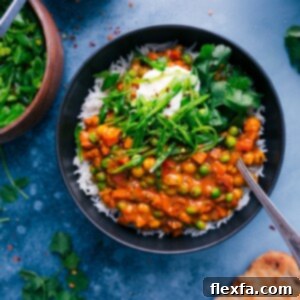
Vegetarian Tikka Masala Recipe
By Chelsea Lords
This Vegetarian Tikka Masala is a vibrant, incredibly flavorful, and satisfying dish. It’s brimming with wholesome vegetables, protein-packed chickpeas, and an exquisite blend of aromatic Indian spices, all simmered in a rich, creamy coconut milk sauce. Serve it over fluffy basmati rice, with a generous dollop of cool Greek yogurt, a sprinkle of crisp snap peas, and warm, tender naan bread for an unforgettable meatless meal that your whole family will adore!
Equipment
- Large cast-iron pot or Dutch oven
Ingredients
- 2 tablespoons coconut oil
- 1-1/2 cups finely diced yellow onion (1 large onion)
- 1-1/2 cups diced carrot (4 large carrots)
- 1 cup diced red pepper (1 pepper)
- 2 tablespoons finely minced garlic (4 to 5 cloves, fresh is best)
- 2 tablespoons finely minced ginger (peeled, 1-1/2 inch piece, fresh is best)
- 2-1/2 teaspoons garam masala
- 1-1/2 teaspoons ground turmeric
- 1-1/2 teaspoons granulated sugar
- 1-1/2 teaspoon salt (or to taste)
- 2 teaspoons ground cumin
- 2 teaspoons ground coriander
- 1/4 teaspoon ground cardamom
- 1/4 teaspoon crushed red pepper flakes (adjust to taste for heat)
- 2 tablespoons tomato paste
- 1 (14.5-ounce) can fire-roasted crushed tomatoes
- 2 (15.5-ounce) cans chickpeas (also called garbanzo beans, drained and rinsed)
- 1 (13.66-ounce) can full-fat coconut milk
- 1 cup frozen sweet peas
- 1/4 cup finely chopped fresh cilantro
- Serving suggestions (see notes below for basmati rice, warm naan, and Greek yogurt)
Optional Snap Pea Topping
- 1 cup snap peas (thinly sliced)
- 1 teaspoon olive oil
- 1 teaspoon lime juice
- Salt and freshly ground black pepper (to taste)
Instructions
- Cook Veggies & Aromatics: In your large cast-iron pot, heat the coconut oil over medium-high heat. Add the diced onion, carrot, and red pepper. Sauté for 8–10 minutes, stirring occasionally, until the vegetables are crisp-tender and begin to soften. Stir in the finely minced ginger and garlic and cook for about 1 minute until wonderfully fragrant.
- Bloom the Spices & Tomato Paste: Reduce the heat slightly if necessary. Add the garam masala, ground turmeric, granulated sugar, salt, ground cumin, ground coriander, ground cardamom, and crushed red pepper flakes to the pot. Stir well and cook for 4 minutes, allowing the spices to toast and become aromatic. Then, stir in the tomato paste and continue to cook for another minute, letting it deepen in color and flavor. Ensure you scrape the bottom of the pot to incorporate all the flavorful bits.
- Simmer with Tomatoes, Chickpeas & Coconut Milk: Pour in the fire-roasted crushed tomatoes and sauté for 1 minute, stirring and scraping the pot’s bottom thoroughly. Add the drained and rinsed chickpeas, sautéing for another minute to allow them to absorb some of the flavors. Finally, stir in the full-fat coconut milk until everything is well combined.
- Thicken the Sauce: Bring the mixture to a gentle simmer over low heat. Partially cover the pot and let it cook for 10–20 minutes, stirring occasionally. During this time, the flavors will meld, and the sauce will thicken to a rich, creamy consistency.
- Add Fresh Finishers & Season: Once the sauce has thickened to your liking, stir in the frozen sweet peas and finely chopped fresh cilantro. Cook for just 1-2 minutes until the peas are warmed through and the cilantro is wilted. Taste the tikka masala and adjust seasonings as needed. If the sauce is too acidic, a little more sugar can help balance it; add salt or pepper to your preference.
- Prepare Sides: While the tikka masala simmers, prepare your desired accompaniments. For the optional snap pea topping, combine the thinly sliced snap peas with olive oil, lime juice, a pinch of salt, and pepper in a small bowl; set aside. Warm your naan bread (refer to Note 2 for methods), cook your basmati rice (see Note 3 for instructions), and have plain Greek yogurt ready for serving.
- Serve & Enjoy: Ladle generous servings of the Vegetarian Tikka Masala over warm rice. Garnish with the fresh snap pea topping, a dollop of Greek yogurt, and additional cilantro sprigs. Serve immediately with warm naan bread and enjoy this comforting, flavorful meal!
Recipe Notes
Note 1: Serving Suggestions: For a complete and delightful meal, we highly recommend serving your Vegetarian Tikka Masala with fluffy basmati rice, warm and soft naan bread, a cooling dollop of plain Greek yogurt, and a sprinkle of additional fresh cilantro for garnish. These accompaniments perfectly complement the rich and spicy flavors of the main dish.
Note 2: Warming Naan Bread: Always warm your naan bread before serving to achieve the best texture and flavor. Here are a few simple methods:
- Stovetop Charring: Lightly spray both sides of the naan with olive oil. Place it directly over a medium stovetop flame (if you have a gas stove) or in a hot dry skillet. Grill for 15-30 seconds per side until slightly charred and puffed. Immediately cover with a kitchen towel to keep it soft and warm.
- Microwave Method: Wrap naan bread in a damp paper towel and microwave for 10–15 seconds until warm. Cover with a kitchen towel to retain warmth and softness.
- Toaster Oven/Oven: Briefly toast in a toaster oven or warm in a conventional oven preheated to 350°F (175°C) for 2-3 minutes.
- Mini Naan Option: For convenience, you can also purchase toaster-sized mini naan (like Stonefire® brand), which warm up quickly and easily.
Note 3: Perfect Basmati Rice: Achieving fluffy basmati rice is simple with these steps:
- Rinse: Rinse basmati rice thoroughly under cold, clear running water using a fine-mesh sieve until the water runs clear. This removes excess starch, preventing sticky rice.
- Soak: Soak the rinsed rice in fresh water for 5–10 minutes. This helps the grains elongate and cook more evenly.
- Boil: Bring a large pot of water to a rolling boil.
- Cook: Add the drained, soaked rice to the boiling water and cook for exactly 5 minutes without reducing the heat.
- Drain & Fluff: Immediately drain the rice using your sieve. Return it to the empty hot pot, cover tightly with a lid, and let it steam for 10 minutes off the heat. Fluff with a fork before serving.
- Important: This specific method is recommended only for basmati rice; cooking times and methods vary for other rice types.
Nutrition Note: Please be aware that the nutritional information provided below is calculated solely for the Vegetarian Tikka Masala itself and does not include any accompanying basmati rice or the optional snap pea topping. These values are estimates and may vary based on specific ingredients and preparation.
Storage: Allow the Vegetarian Tikka Masala to cool completely before storing. Transfer to an airtight container and refrigerate for up to 4 days. For longer storage, freeze in a gallon-size freezer bag or airtight container for up to 2 months. Thaw in the refrigerator overnight and reheat gently on the stovetop.
Nutrition Information
Serving: 1 serving
Calories: 372 kcal
Carbohydrates: 26 g
Protein: 7 g
Fat: 29 g
Saturated Fat: 25 g
Sodium: 101 mg
Potassium: 763 mg
Fiber: 6 g
Sugar: 10 g
Vitamin A: 7360 IU
Vitamin C: 108 mg
Calcium: 71 mg
Iron: 5 mg
Nutrition information is automatically calculated and should only be used as an approximation.
Loved this recipe? Share your thoughts below!
Perfect Pairings: What to Serve with Vegetarian Tikka Masala
Creating a truly memorable meal often comes down to the perfect accompaniments. This Vegetarian Tikka Masala is incredibly versatile, but I find these pairings elevate the experience to pure culinary bliss.
- Creamy Greek Yogurt: A dollop of cool, plain Greek yogurt is an absolute must-have. Its tangy, refreshing creaminess provides a beautiful contrast to the warm, spiced veggies and rich sauce. I highly recommend using full-fat plain Greek yogurt for the best flavor and texture, but a low-fat version can also work. It’s perfect for swirling into the curry or enjoying on the side to temper the heat.
- Fluffy Basmati Rice: Basmati rice is my go-to choice for its fragrant aroma and long, separate grains, which are ideal for soaking up the delicious tikka masala sauce. However, feel free to use any rice you prefer – jasmine, brown rice, or even a healthier option like cauliflower rice. You can find my detailed method for cooking perfect basmati rice in the Recipe Notes section above.
- Warm, Pillowy Naan Bread: No tikka masala meal is complete without warm naan! Its soft, chewy texture is perfect for scooping up every last drop of the rich sauce. I always make sure to warm it up just before serving. There are several easy ways to do this: charring it lightly on a stovetop flame (if you have a gas stove), warming it in a toaster oven, or even quickly microwaving it wrapped in a damp paper towel. Check out the Recipe Notes for more detailed warming instructions.
- Crisp Snap Pea Topping: This simple yet brilliant topping adds a wonderful element of fresh crunch and vibrant flavor. I thinly slice fresh snap peas and toss them lightly with a drizzle of olive oil, a squeeze of fresh lime juice, and a pinch of salt and pepper. This provides a refreshing counterpoint to the warmth of the curry, adding both texture and a burst of bright, herbaceous taste.
- Fresh Lemon or Lime Wedges: A squeeze of fresh citrus juice over your finished dish can brighten all the flavors, adding a zesty kick that complements the spices beautifully.
- A Simple Green Salad: For a lighter side, a simple green salad with a vinaigrette dressing can offer a refreshing contrast and help cleanse the palate.