
The Ultimate Guide to Perfect Meringue Cookies: Easy Recipe & Creative Dessert Ideas
Welcome to the definitive guide for crafting exquisite, melt-in-your-mouth Meringue Cookies. Often underestimated, these delightful treats are surprisingly simple to make when you know the secrets. This comprehensive recipe will equip you with all the essential tips and tricks for guaranteed success, ensuring perfectly crisp and airy meringues every single time. Beyond just baking, we’ll also explore the best and most creative ways to use these versatile cookies to effortlessly elevate a simple dessert into something truly extraordinary.

Author’s Culinary Journey
My Detroit Dessert Revelation: From Skeptic to Meringue Enthusiast!
For years, I confess, meringue cookies weren’t on my radar. With so many fantastic options like Snickerdoodles or rich Oatmeal Chocolate Chip Cookies, I found meringues a bit… boring. That all changed last April during a memorable trip to Detroit. While the food and drinks at The Grey Ghost were exceptional, it was their dessert that truly captivated my taste buds and inspired this recipe.
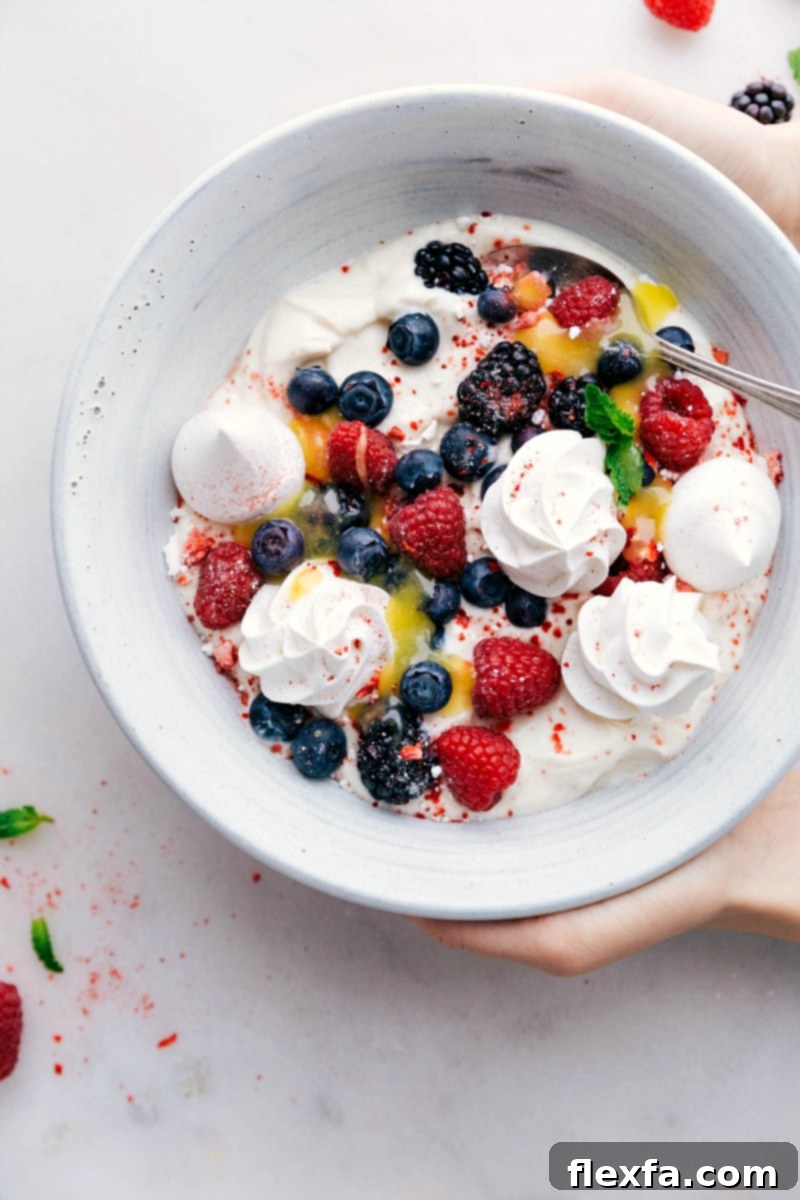
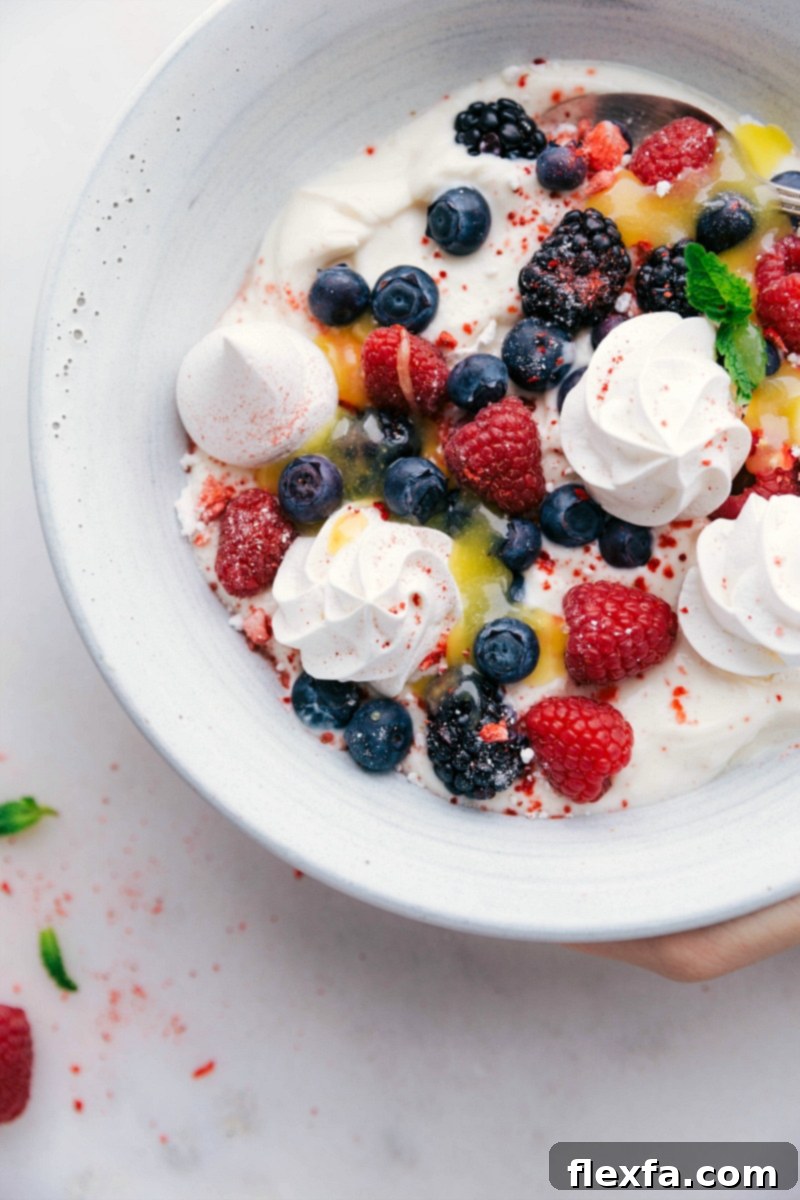
I was served mini sour cream cheesecakes, artfully garnished with vibrant berries, tangy lemon curd, and—you guessed it—crispy meringue cookies. The combination was pure magic! The delicate crunch and sweetness of the meringues provided a perfect textural contrast and balance to the creamy, tart components. Months later, I was still dreaming about that dessert and knew I had to recreate its essence. Today, I’m thrilled to share my perfected recipe for simple yet stunning meringue cookies, along with a version of that unforgettable dessert. The best part? These light-as-air treats are incredibly low in calories, with each cookie typically just 22 calories, making them a guilt-free pleasure!
What Makes Meringue Cookies So Special?
Meringue cookies, often referred to as “forgotten cookies” due to their low and slow baking process, are a testament to culinary elegance achieved through simplicity. Made primarily from whipped egg whites and sugar, they transform into delicate, crisp morsels with a unique airy texture that dissolves beautifully on the tongue. Their neutral canvas allows them to complement a wide array of flavors, from bright citrus to rich chocolate, making them a dessert chameleon. Moreover, being naturally fat-free, they offer a lighter alternative to many traditional cookies, perfect for those seeking a sweet indulgence without the heaviness.
Essential Tips for Meringue Cookie Success
Creating perfect meringue cookies might seem daunting, but by following a few critical steps, you can achieve professional-quality results every time. These foundational tips address common pitfalls and ensure your meringues are light, crispy, and free from cracks or chewiness.
-
The Humidity Factor: Choose Your Day Wisely
Meringue cookies are incredibly sensitive to moisture. High humidity, especially on rainy days, can cause meringues to absorb water, resulting in a sticky, chewy texture rather than the desired crispness. Always check the weather forecast before you start; a dry, low-humidity day is ideal for meringue making. If you must bake on a humid day, ensure your kitchen is as dry as possible, perhaps running a dehumidifier.
-
Cleanliness is Key: A Grease-Free Environment
Even the slightest trace of grease or oil can prevent egg whites from whipping up to their full potential, leading to flat or unstable meringues. It’s crucial to use a bowl that is meticulously clean and completely dry. Metal or glass bowls are highly recommended, as plastic bowls can sometimes retain residual grease even after washing. To be absolutely sure, wipe your bowl and whisk attachments with a paper towel dampened with lemon juice or white vinegar, then dry thoroughly before use.
-
Room Temperature Eggs: The Secret to Maximum Volume
Using room-temperature egg whites is non-negotiable for achieving the fluffiest, most voluminous meringue. Cold egg whites are more difficult to whip and won’t incorporate as much air, leading to a less airy end product. The best practice is to separate the egg yolks from the whites while the eggs are still cold (as cold eggs separate more easily). Then, let the separated egg whites sit on your countertop for at least 30 minutes to an hour, allowing them to reach room temperature before you begin whipping.
Mastering the Ingredients: What You Need for the Best Meringues
While the ingredient list for meringue cookies is deceptively short, understanding the role of each component is vital for achieving that perfect light and crisp texture. Here’s a closer look at the key ingredients and why they matter:
| Ingredient | Why it’s Important & Pro Tip |
|---|---|
| Egg whites | The foundation of meringue. Room temperature whites whip best, yielding maximum volume. Separate them when cold, then warm them up. |
| Cream of tartar | A crucial stabilizer. This acidic powder helps strengthen the egg white foam, preventing it from collapsing and ensuring a crisp, non-sticky meringue. While 1/2 tsp lemon juice per egg white can be a substitute, cream of tartar provides superior structure and stability. |
| Superfine sugar | Adds sweetness and contributes to the meringue’s structure. Its fine granules dissolve quickly and smoothly into the egg whites, resulting in a silkier, more stable meringue. If you don’t have superfine sugar, you can easily make your own by pulsing granulated sugar in a food processor until it reaches a finer consistency. |
| Vanilla extract | Infuses a classic, comforting flavor. For the whitest meringues, opt for clear vanilla extract, which won’t tint the delicate color of your cookies. Alternatively, you can experiment with other extracts like almond or peppermint for different flavor profiles. |
| Pinch of salt | A small amount of salt enhances the overall flavor and helps to further stabilize the egg whites as they whip, contributing to a more robust foam. Add it early in the whipping process. |
Step-by-Step Guide: How to Bake Flawless Meringue Cookies
Baking meringue cookies is a gentle process that rewards patience. The key is in carefully building the meringue’s structure and then slowly drying it out in a low oven. Here’s how to achieve that coveted light, airy, and crispy perfection:
- Prepare Your Eggs and Equipment: Begin by separating cold egg yolks from whites, then allow the whites to reach room temperature for about 30-60 minutes. Preheat your oven to a low 225°F (107°C) and line two large baking sheets with parchment paper. This prevents sticking and ensures easy removal. Avoid silicone mats, as parchment offers better crisping for meringues.
- Beat Egg Whites to Frothy Stage: In your meticulously clean and grease-free metal or glass bowl, combine the room-temperature egg whites, a pinch of salt, and cream of tartar. Start beating at a low speed with a hand mixer or stand mixer (fitted with a whisk attachment) until the mixture becomes visibly frothy and foamy. This initial slow beating helps to evenly distribute the ingredients.
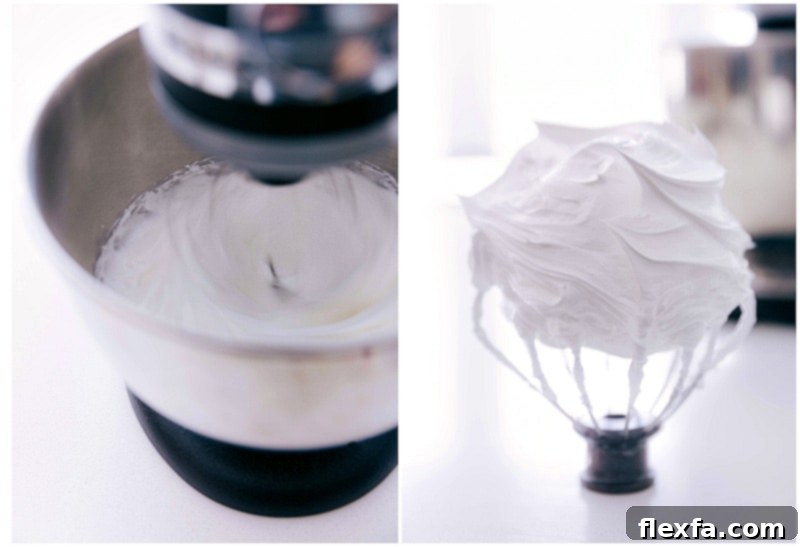
- Increase Speed and Whip Until Opaque: Once frothy, increase the mixer speed to high. Continue beating until the egg white mixture is no longer translucent, taking on a more opaque, white appearance. You’re building air and structure at this stage.
- Gradually Add Sugar for Stiff Peaks: With the mixer still running on high speed, begin adding the superfine sugar (or granulated sugar) very slowly, about a tablespoon at a time. Wait 10-15 seconds between each addition, allowing the sugar to fully dissolve into the egg whites. This slow process is crucial to prevent deflating the meringue and ensures a stable, glossy result. Continue beating until the mixture is thick, shiny, and forms stiff, upright peaks that hold their shape when you lift the whisk. The sugar should be completely dissolved; rub a small amount between your fingers to check for grittiness.
- Fold in Flavor: Gently stir in the vanilla extract and any optional lemon extract. Be careful not to overmix at this stage, as it can deflate the meringue.
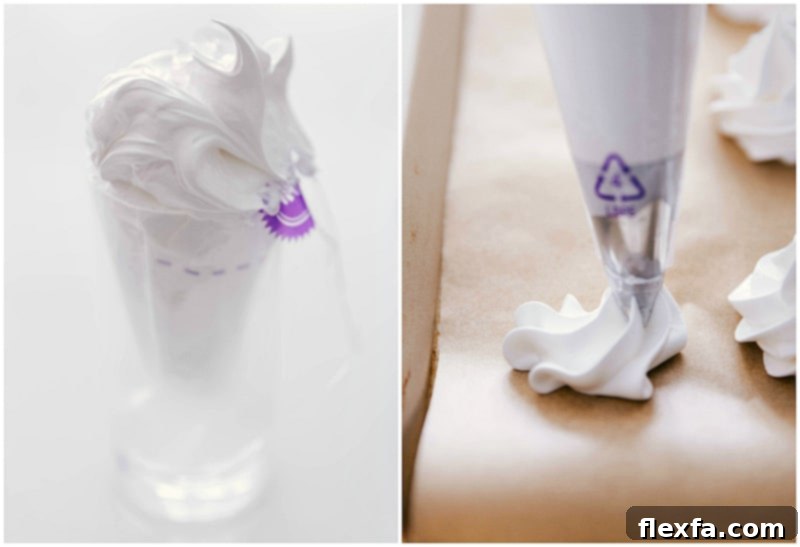
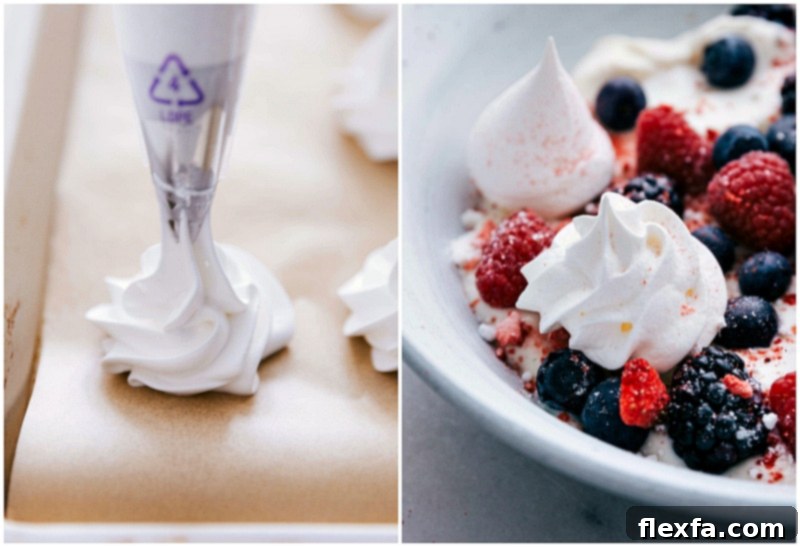
- Pipe Your Meringues: Transfer the meringue mixture to a large piping bag fitted with your desired star tip (or simply snip off the end of the bag for a rustic look). Pipe uniform cookies onto the prepared parchment-lined baking sheets. Since meringues do not spread during baking, you can place them relatively close together. Consistency in size will ensure even baking.
- Bake Low and Slow: Place the baking sheets in the preheated oven. Bake for 1 hour without opening the oven door. This extended low-temperature baking period is not about “cooking” the meringues but rather slowly drying them out, which is essential for their crisp texture.
- Cool in the Oven for Perfection: After 1 hour, turn off the oven completely. Do not open the oven door. Leave the meringues inside the closed oven for another 1 hour (or even longer, up to several hours or overnight) to cool down slowly and completely. This gradual cooling process is critical for preventing cracks, ensuring they dry thoroughly, and achieving that signature crispness.
- Garnish and Enjoy: Once fully cooled, carefully remove the meringues from the parchment paper. They are now ready to be garnished as desired or used to enhance your favorite desserts.
Meringue Cookies Recipe Card
Light, airy, and perfectly crisp Meringue Cookies made easy with foolproof tips. A delightful low-calorie treat or a stunning garnish for any dessert!
Author: Chelsea Lords
Prep Time: 20 minutes
Cook Time: 1 hour
Resting Time: 1 hour (in oven)
Total Time: 2 hours 20 minutes
Servings: 45 meringue cookies (depending on size)
Equipment
- 2 Large sheet pans (15″ x 21″)
- Parchment paper
- Hand mixer or stand mixer with whisk attachment
- Piping bag (new/clean is recommended)
- Star tip (optional, or just snip the bag)
- Clean, grease-free metal or glass bowl
Ingredients
- 4 large egg whites, at room temperature
- 1/8 teaspoon salt
- 1/2 teaspoon cream of tartar
- 1 cup superfine sugar (or granulated sugar, see note 1)
- 1-1/4 teaspoon vanilla extract (use clear vanilla for super white meringues)
- 1/4 teaspoon lemon extract (optional, for a citrus hint)
Instructions
- Separate egg yolks from whites while eggs are cold. Allow whites to come to room temperature (about 30-60 minutes). This is crucial for achieving maximum volume.
- Preheat oven to 225°F (107°C). Line 2 large sheet pans with parchment paper. Set aside.
- In a meticulously clean and grease-free metal or glass bowl, combine room-temperature egg whites, salt, and cream of tartar.
- Using a hand mixer or stand mixer (with the whisk attachment), stir at low speed until the mixture becomes frothy. Increase speed to high and beat until the mixture is no longer translucent and looks opaque white.
- With the mixer going at high speed, gradually add the superfine sugar, about a tablespoon at a time, allowing 10-15 seconds between each addition for the sugar to dissolve. This gradual process prevents deflating the meringue.
- Continue beating until the mixture is thick, glossy, the sugar is completely dissolved (test by rubbing a bit between your fingers), and stiff peaks form. The peaks should hold their shape firmly when the whisk is lifted.
- Gently stir in the vanilla extract and optional lemon extract.
- Transfer the meringue mixture to a large, clean piping bag fitted with a star tip (or snip the tip off the bag). Pipe uniform meringue cookies onto the prepared parchment-lined sheet pans. You can place them close together as they won’t spread.
- Bake for 1 hour. It is very important not to open the oven door during this time.
- After 1 hour, turn off the oven heat. Leave the oven closed and allow the meringues to stand inside for another 1 hour (or longer, up to several hours or overnight) to cool down completely and dry out fully. This prevents cracking and ensures crispness.
- Remove from the oven, peel gently from parchment paper, and garnish as desired.
Recipe Notes
Note 1: Superfine Sugar vs. Granulated Sugar: Superfine sugar is preferred for its ability to dissolve quickly and smoothly, resulting in a more refined texture. However, granulated sugar works well too! To make your own superfine sugar from regular granulated sugar, simply pulse it in a food processor for about 30 seconds until it becomes finer but not powdered.
Note 2: Optional Enhancements: Elevate your meringues further! Drizzle or dip cooled meringues in melted chocolate for a sophisticated touch. Crush freeze-dried strawberries or raspberries and sprinkle them on top for a burst of color and tartness. For more creative ideas, check out the “Favorite Ways to Serve Meringue Cookies” section below!
Storage: Store Meringue Cookies in an airtight container at room temperature for up to 1 week. It is crucial to keep them away from any heat and moisture to maintain their crisp texture.
Nutrition
Nutrition information is automatically calculated and should be used as an approximation.
Elevate Your Desserts: Creative Ways to Enjoy Meringue Cookies
Meringue cookies are far more than just a standalone treat; their delicate texture and subtle sweetness make them an incredibly versatile component for enhancing a wide variety of desserts. Here are some of my favorite ways to incorporate these crispy delights:
-
Lemon Blackberry Frozen Yogurt Parfait
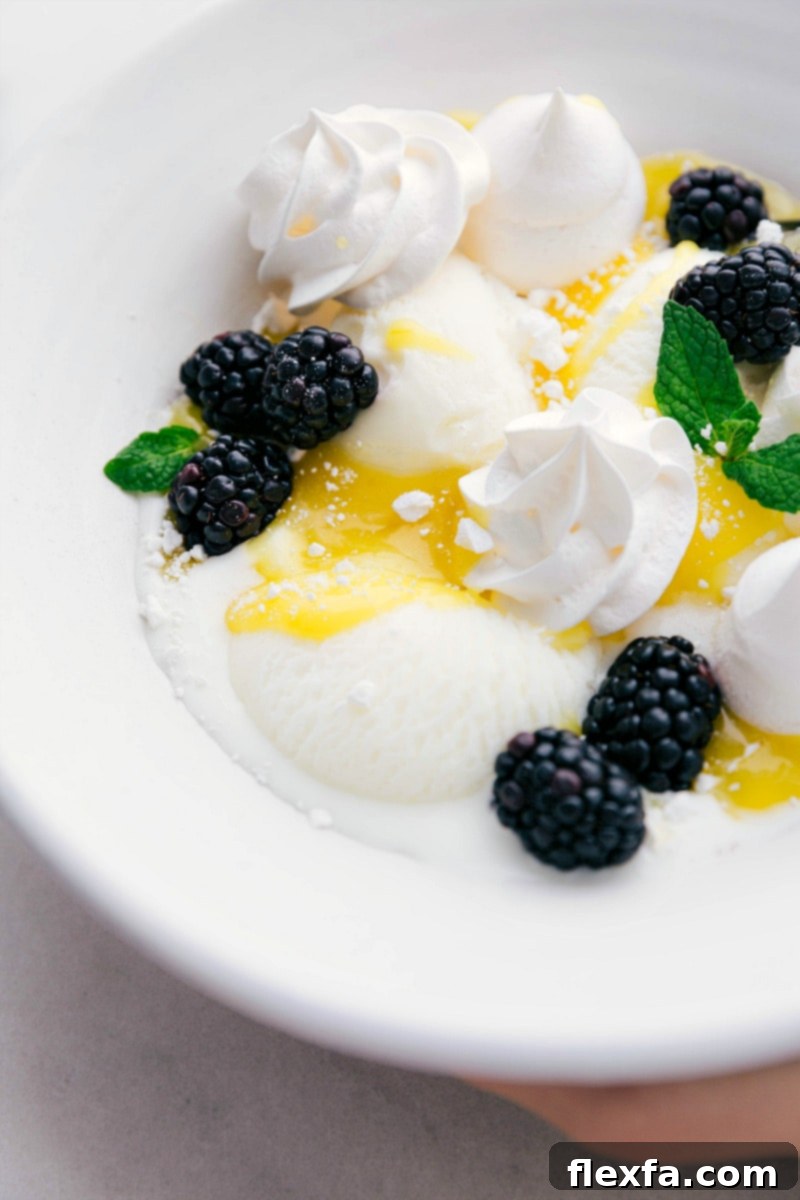
Create a refreshing and elegant parfait by layering creamy frozen yogurt with tangy lemon curd, fresh blackberries, and generous crumbles of meringue cookies. You can use store-bought vanilla frozen yogurt for convenience or whip up your own homemade version. The crisp texture of the meringues provides a wonderful contrast to the smooth yogurt and gooey lemon curd, while the berries add a burst of fresh flavor.
-
Deluxe Berry Yogurt Bowls
Transform your everyday breakfast or snack into a gourmet experience. Start with a generous base of thick Greek yogurt, rich in protein. Layer with a medley of fresh berries (strawberries, raspberries, blueberries), a few spoonfuls of bright lemon curd, and then top generously with crumbled meringue cookies or perfectly piped mini meringues for an extra delightful crunch. Finish with a fresh sprinkle of raspberries or strawberries for vibrant color and flavor.
-
Classic Eton Mess
For a truly traditional and simple yet stunning dessert, combine crushed meringues with whipped cream and fresh berries. The meringues soften slightly, creating a beautiful blend of textures.
-
Pavlova Topping
While a full pavlova features a large meringue base, crumbled meringue cookies make an excellent, quick topping for individual pavlova nests filled with cream and fruit. They add an extra layer of crispness and sweetness.
-
Hot Chocolate Toppers
For a cozy indulgence, float mini meringue cookies on top of a mug of hot chocolate or coffee. They slowly melt into the drink, adding a sweet, airy foam.
-
Ice Cream Sundaes & Mix-ins
Crush meringues and sprinkle them over ice cream sundaes for an instant textural upgrade, or gently fold them into softened ice cream before refreezing for a unique mix-in.
-
Elegant Trifle Layers
Use broken meringue pieces as a light, airy layer in trifles, alternating with cake, fruit, and custard for a sophisticated presentation.
-
Dipped & Decorated
Melt chocolate and dip the bottoms of your cooled meringues, then sprinkle with nuts, sprinkles, or more freeze-dried fruit for a professional, gift-worthy treat.
Storage for Maximum Crispness
To preserve their delicate texture, store leftover meringues in an airtight container at room temperature. It’s crucial to keep them away from any sources of heat or moisture. Properly stored, your meringue cookies will remain crisp and delicious for up to 1 week. Avoid refrigeration, as the humidity can quickly turn them soft and chewy.
Meringue Cookie Recipe FAQs
Chewy meringues are a common issue, usually stemming from one of three primary reasons: high humidity during baking, not beating your egg white mixture to truly stiff peaks, or not baking the cookies long enough to fully dry them out (or removing them from the oven too soon before they’ve cooled completely).
While not strictly mandatory, the acid in cream of tartar plays a significant role. It helps to stabilize the egg whites, making the meringue stronger and preventing it from becoming sticky or weeping. You can substitute lemon juice (1/2 teaspoon per egg white), but for the most stable and perfect results, I highly recommend using cream of tartar.
Perfectly baked meringues should be incredibly crisp, light, and completely dry to the touch (they should lose any shiny, sticky appearance). To test for doneness, gently try to lift one cookie from the parchment paper. If it easily releases and the bottom feels dry and crisp, they are ready. If there’s any stickiness or resistance, they need more time in the turned-off oven to dry.
Absolutely! Meringues are beautiful with a touch of color. Use gel food coloring, as liquid food coloring can add too much moisture and compromise the meringue’s stability. Add a tiny drop of gel coloring after the stiff peaks have formed and gently fold it in until evenly distributed. You can even stripe your piping bag with different colors for a marbled effect!
Cracking in meringues often occurs due to rapid changes in temperature or baking at too high a temperature. Baking them low and slow, and crucially, allowing them to cool completely within the turned-off oven, helps prevent sudden temperature shifts that can lead to cracks. Overbeating the egg whites can also sometimes make them more prone to cracking.
Quick Tip: Delicious & Gift-Worthy Dessert Ideas!
Looking for more impressive yet easy-to-make desserts, perhaps for gifting? Don’t miss these other fantastic recipes: Easy Turtle Bark, a delightful blend of chocolate and nuts; irresistible Buttercrunch Candy, a crunchy toffee treat; or perfectly spiced Candied Pecans!
More Delicious Cookie Recipes to Try:
Desserts
Mint Chocolate Chip Cookies
Desserts
Coconut Oil Chocolate Chip Cookies
Desserts
Thumbprint Cookies
Desserts
Lemon Cookies