
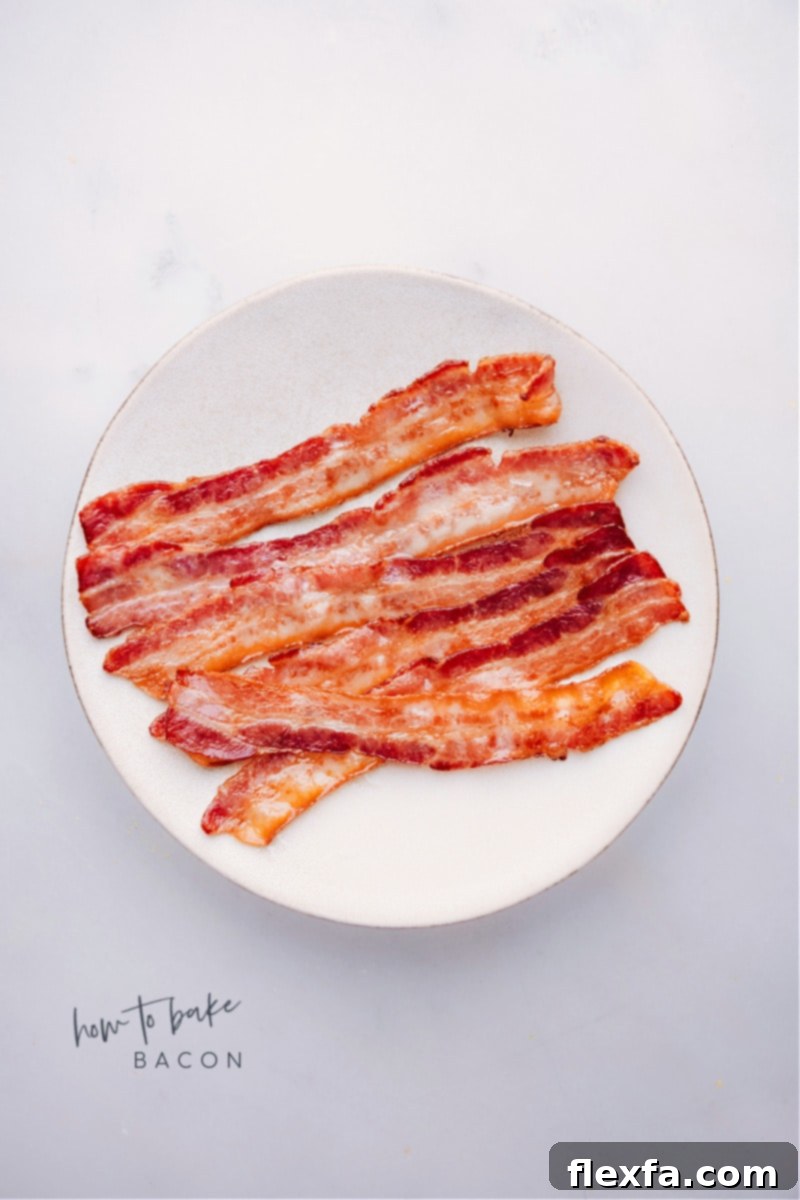
How to Bake Bacon: The Ultimate Guide to Crispy, Evenly Cooked Strips Without the Mess
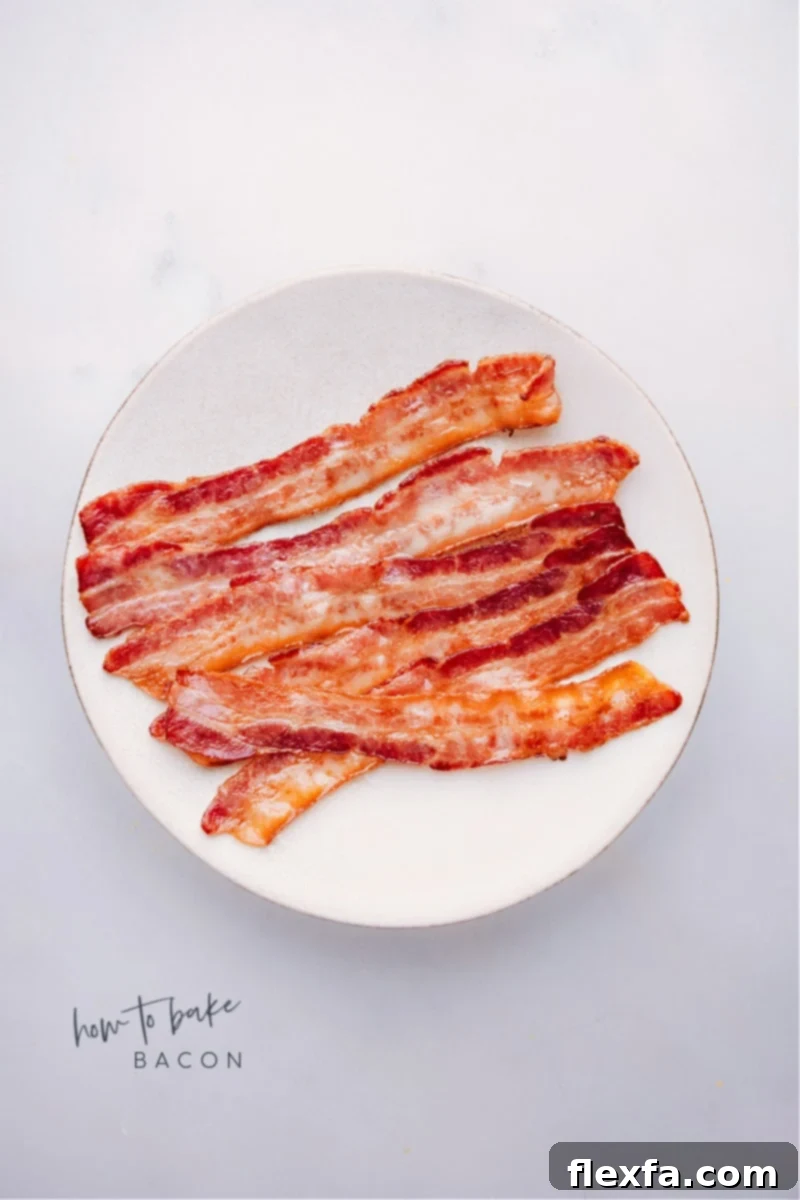
How to Bake Bacon: Achieve Perfect Crispy Results Every Time
Bacon is undeniably one of the most cherished foods globally, celebrated for its irresistible crispiness, savory depth, and deliciously salty flavor profile. It’s a breakfast staple, a sandwich enhancer, and a fantastic addition to countless dishes. While frying bacon on the stovetop has been the traditional method for generations, it often comes with a host of challenges: uneven cooking, excessive grease splatter, and the constant need for attention. What if there was a simpler, cleaner, and more consistent way to achieve perfectly crispy bacon? There is! Baking bacon in the oven is a game-changer, offering a hands-off approach that guarantees impeccable results with minimal effort and virtually no mess.
Why Baking Bacon is the Superior Method
Many home cooks are discovering the significant advantages of baking bacon over frying. This method not only simplifies the cooking process but also delivers a superior final product. Here’s why baking your bacon will become your new favorite technique:
-
Consistent Crispy Perfection
Baking bacon in the oven ensures that each strip cooks evenly from end to end. Unlike frying, where certain parts might brown faster or remain chewy, the consistent heat of the oven allows the bacon to render its fat uniformly, resulting in a perfectly crispy texture across all slices. No more soggy or burnt pieces – just a batch of beautifully golden, crunchy bacon.
-
Significantly Less Grease
One of the biggest frustrations with frying bacon is the amount of grease it generates, leaving your kitchen surfaces, stovetop, and even your clothes splattered. When you bake bacon on a cooling rack set over a sheet pan, the excess fat drips away as it cooks. This means less mess to clean up and, more importantly, a less greasy final product that still retains all its delicious flavor. The bacon doesn’t sit and cook in its own rendered fat, which often leads to a soggy texture.
-
Effortless and Hands-Off Cooking
Imagine being able to prepare other parts of your meal, enjoy a cup of coffee, or simply relax while your bacon cooks itself to perfection. Baking bacon is a truly hands-off method. Once the bacon is in the oven, you don’t need to stand over a hot stove, constantly flipping or adjusting. This frees up valuable time and attention, making breakfast or brunch preparation much more enjoyable and less stressful.
-
Easier Cleanup
With the fat dripping neatly onto a foil-lined sheet pan, cleanup is dramatically simplified. Simply discard the foil with the collected grease, and your sheet pan (and kitchen) remains relatively clean. This convenience alone is enough to convert many stovetop fryers to oven bakers.
-
Batch Cooking Made Simple
The oven allows you to cook a much larger quantity of bacon at once compared to a frying pan. This is ideal for feeding a crowd, meal prepping for the week, or simply ensuring you have enough crispy bacon for all your culinary needs without multiple batches.
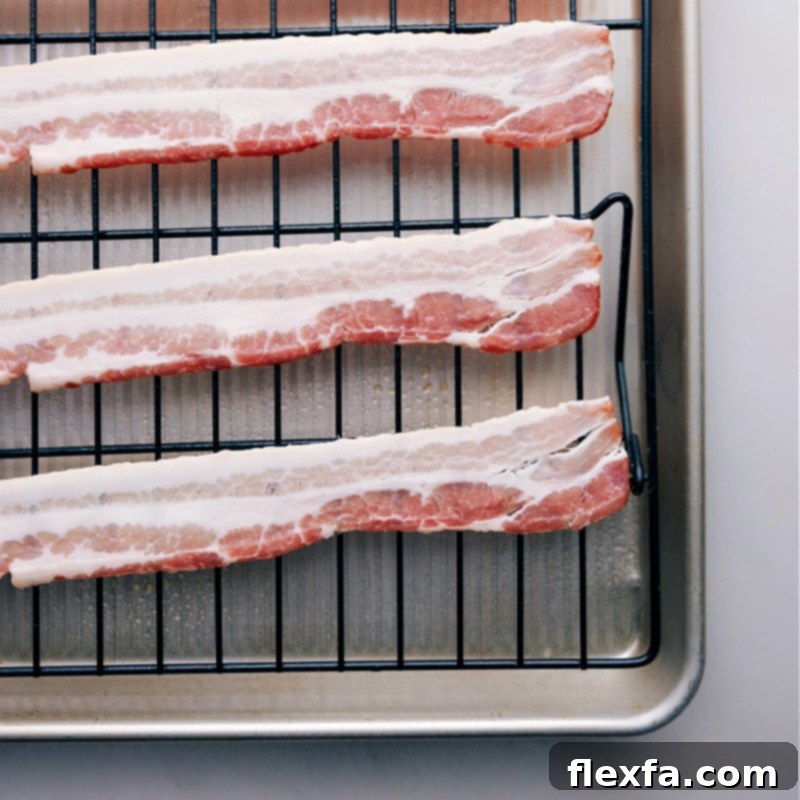
Your Step-by-Step Guide to Baking Crispy Bacon
Achieving perfectly baked bacon is incredibly simple once you know the right technique. Follow these easy steps and expert tips for bacon that’s consistently golden, crunchy, and delicious:
-
Preheat Your Oven to 400°F (200°C)
Ensure your oven is fully preheated before placing the bacon inside. A hot oven is crucial for immediate crisping and even cooking. If the oven isn’t hot enough, the bacon can steam rather than crisp, leading to a chewy texture.
-
Prepare Your Baking Setup
Select an extra-large sheet pan with raised sides. Line it completely with heavy-duty aluminum foil. The foil will catch all the rendered bacon grease, making cleanup effortless. Place an oven-safe, heavy-duty metal cooling rack directly on top of the foil-lined sheet pan. This rack elevates the bacon, allowing air to circulate and grease to drip off, which is key to achieving maximum crispiness.
-
Lightly Grease the Cooling Rack
To prevent your delicious bacon from sticking to the rack, lightly spray it with cooking spray (like olive oil or avocado oil spray). This small step ensures easy removal and keeps your bacon strips intact.
-
Arrange Bacon Slices Evenly
Lay the bacon slices in a single, even layer on the prepared cooling rack. It’s crucial that the slices do not touch or overlap. Overcrowding the pan will cause the bacon to steam instead of crisp, resulting in less-than-ideal texture. If you’re cooking a large quantity, use multiple sheet pans.
-
Bake Until Golden and Crisp
Place the sheet pan with the bacon in the preheated oven. Bake for approximately 15-20 minutes. The exact cooking time will vary depending on the thickness of your bacon slices and your desired level of crispiness. Thinner bacon will cook faster, while thicker cuts will take longer. Begin checking around the 12-15 minute mark, and continue baking until the bacon reaches your preferred golden-brown and crispy perfection. Keep a close eye on it, as bacon can go from perfectly done to burnt quickly.
-
Drain Excess Grease and Serve
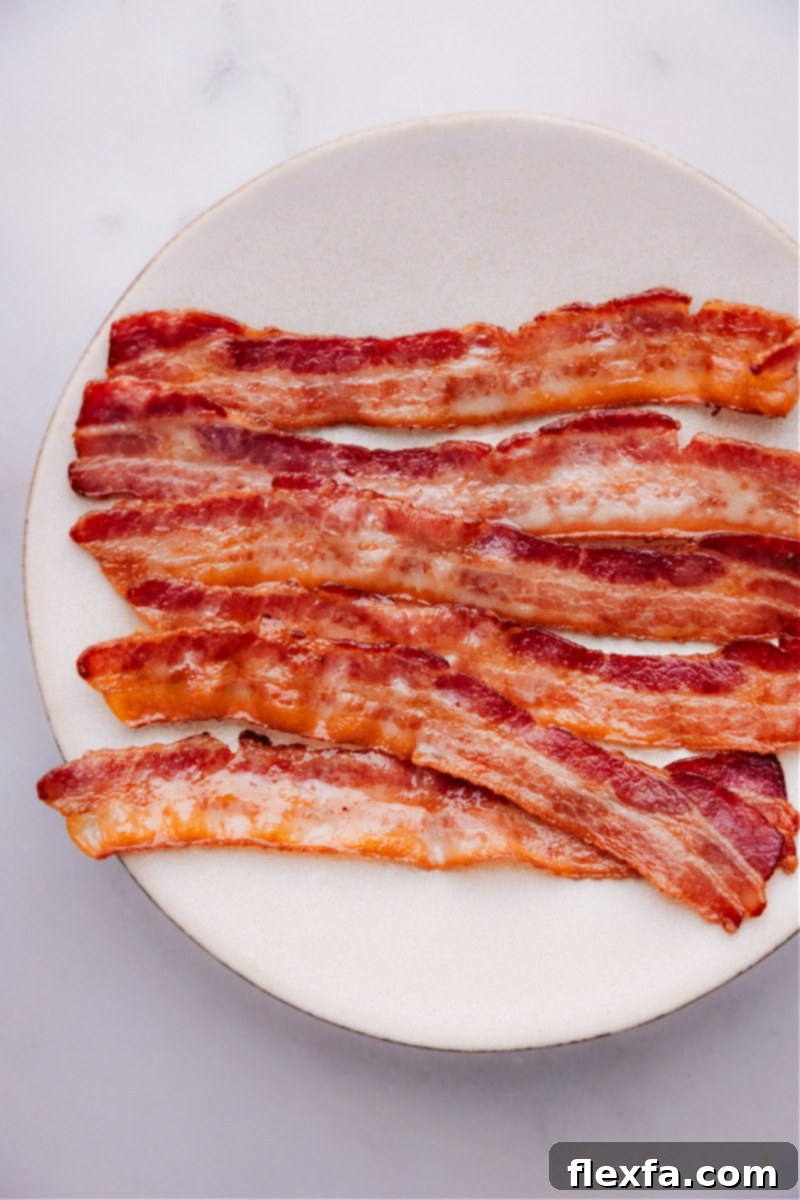
Once the bacon is cooked to your liking, carefully remove the sheet pan from the oven. Using tongs, transfer the crispy bacon strips to a plate lined with several layers of paper towels. Gently blot the top of the bacon with another paper towel to absorb any remaining surface grease. This final step enhances crispiness and makes the bacon less greasy to eat.
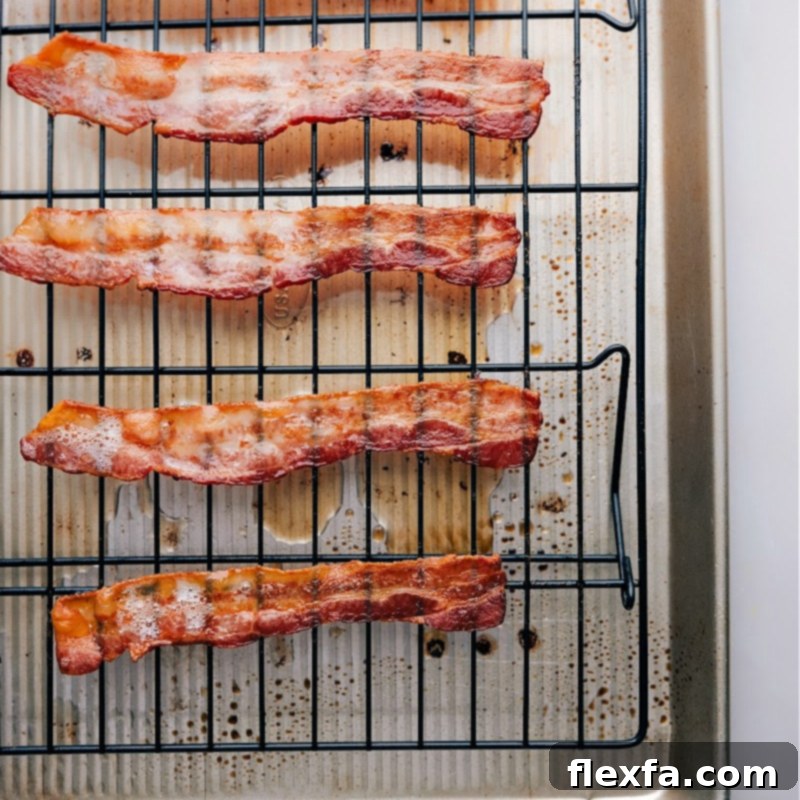
Tips for Achieving the Crispiest Oven Bacon
While the basic steps are straightforward, a few extra tips can elevate your oven-baked bacon from good to absolutely phenomenal:
-
Start with a Cold Oven (Optional, for flatter strips)
Some chefs prefer to place bacon in a cold oven and then turn it on. This allows the fat to render slowly and evenly as the oven heats up, often resulting in flatter, more uniformly cooked strips. If you prefer this method, place bacon on the rack in a cold oven, then set the temperature to 400°F (200°C) and add about 5-10 minutes to the total cooking time.
-
Don’t Overcrowd the Pan
As mentioned, proper spacing is critical. Give each bacon strip its own space on the rack. If you try to cram too many pieces onto one sheet, they will steam rather than fry, leading to limp bacon.
-
Adjust Temperature for Thickness
For very thin, delicate bacon, you might consider reducing the oven temperature slightly to 375°F (190°C) to prevent burning while still allowing it to crisp. For extra-thick cut bacon, 400°F (200°C) is usually perfect, but you may need to extend cooking time by an additional 5-10 minutes.
-
Consider Parchment Paper Instead of Foil (for direct contact)
If you don’t have a cooling rack or prefer your bacon to cook directly in its fat (though it will be less crispy and require draining), you can line the sheet pan with parchment paper instead of foil. This prevents sticking, but remember to drain the bacon quickly after cooking to avoid sogginess.
-
Season Your Bacon
While bacon is inherently flavorful, don’t hesitate to experiment with seasonings! A light dusting of black pepper, a sprinkle of brown sugar for candied bacon, or a pinch of cayenne pepper for a spicy kick can transform your strips.
Troubleshooting Common Oven Bacon Issues
Even with the best method, sometimes things don’t go exactly as planned. Here are solutions to common problems:
-
Bacon Isn’t Crispy Enough:
Ensure your oven was fully preheated. The bacon might need a few more minutes in the oven; don’t be afraid to let it cook until it reaches your desired crispness. Also, check that your bacon slices weren’t overlapping on the rack, as this causes steaming.
-
Bacon is Burnt:
Oven temperatures can vary, and bacon thickness plays a big role. Next time, start checking the bacon earlier (e.g., at 12 minutes) and watch it closely. If your oven tends to run hot, consider reducing the temperature to 375°F (190°C).
-
Too Much Smoke:
Smoke usually occurs from burnt grease. Make sure your sheet pan is adequately lined with foil to contain the rendered fat. If your oven is very dirty, residual food particles can also smoke. A clean oven is always best!
Creative Ways to Utilize Your Perfectly Baked Bacon
Once you’ve mastered the art of baking bacon, the possibilities are endless! Here are some fantastic ways to incorporate your beautifully crispy strips into various meals:
-
Elevate Your Breakfast Dishes
Baked bacon is a quintessential addition to almost any breakfast spread. Serve it alongside fluffy Scrambled Eggs, inside hearty breakfast burritos, or as a savory component in omelets and breakfast sandwiches. For a delightful sweet and savory contrast, crumble it over a stack of warm Pancakes or fluffy Waffles. It’s also superb with French toast or breakfast hash.
-
Enhance Salads with a Salty Crunch
Transform ordinary salads into extraordinary ones with the smoky, salty crunch of baked bacon. Crumble it generously over a classic Wedge Salad, a robust Caesar Salad, or even a vibrant green salad with vinaigrette. The texture and flavor elevate any leafy creation, adding a depth that is truly addictive. It pairs wonderfully with a creamy ranch or blue cheese dressing.
-
Upgrade Sandwiches and Wraps
Bacon is a legendary sandwich ingredient for good reason. Create the ultimate BLT (bacon, lettuce, tomato) with your perfectly crispy strips, or add a layer to turkey, chicken, or club sandwiches for an unparalleled burst of flavor and texture. It’s also a fantastic addition to savory wraps, like this delicious Turkey Avocado Ranch Club Wrap.
-
Add Depth to Pasta Dishes
Incorporating baked bacon into pasta dishes introduces a rich, smoky, and savory dimension. Dice it and mix into creamy favorites like Fettuccine Alfredo or a hearty Chicken Alfredo Recipe. It also works beautifully in carbonara, pasta salads, or even a simple mac and cheese for an adult twist.
-
Top Off Creamy Soups
A sprinkle of crumbled baked bacon is the perfect garnish for a variety of creamy soups. Its salty crispness provides a delightful textural contrast and flavor boost. Try it atop a comforting Cauliflower Soup, a rich Broccoli Cheddar Soup, potato leek soup, or even a classic tomato soup.
-
In Appetizers and Sides
Baked bacon can be the star of many appetizers. Wrap it around dates, scallops, or asparagus. Crumble it into deviled eggs, use it in stuffed mushrooms, or add it to cheesy potato casseroles for an extra layer of flavor.
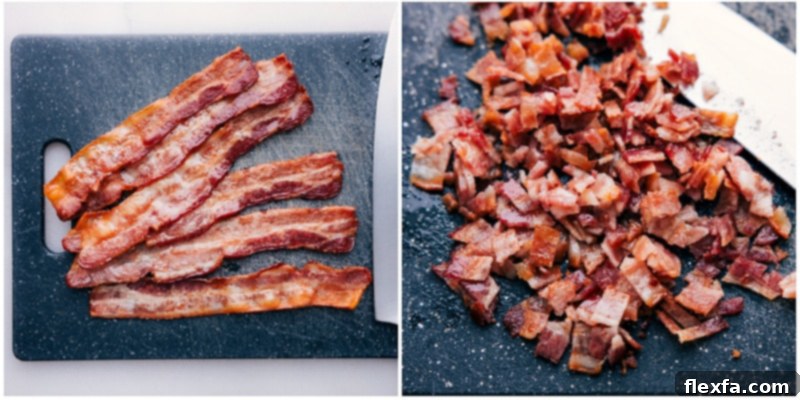
Storage and Reheating Your Baked Bacon
Cooked bacon can be incredibly convenient for meal prep or quick additions to dishes. Here’s how to store and reheat it properly:
-
Cool Completely
Before storing, allow the baked bacon to cool down to room temperature on the paper towel-lined plate. Storing warm bacon can create condensation, leading to soggy strips.
-
Airtight Storage
Once cooled, transfer the bacon to an airtight container or a resealable bag. This will prevent it from drying out and absorbing odors from other foods in your refrigerator.
-
Refrigerate or Freeze
Store cooked bacon in the refrigerator for up to 4-5 days. If you’ve made a large batch and want to keep it longer, you can freeze it for up to 1 month. For freezing, consider laying the strips flat on a baking sheet to freeze individually, then transfer to a freezer bag to prevent them from sticking together.
-
Reheating Instructions
- Oven Reheat: For best results and to regain crispiness, place bacon on a cooling rack over a sheet pan (or directly on foil if you don’t mind a little grease). Reheat in a preheated oven at 350°F (175°C) for 5-10 minutes, or until warmed through and crisp.
- Microwave Reheat: If you’re in a hurry and don’t mind slightly less crisp bacon, place strips on a microwave-safe plate lined with paper towels. Heat in 15-30 second intervals until hot.
Delicious Recipes to Pair with Your Baked Bacon
Looking for more inspiration? Here are some fantastic recipes where your perfectly baked bacon would be a welcome addition:
- Arugula Salad with a white balsamic vinaigrette: Add crumbled bacon for a savory kick.
- Cheesy Potatoes: Sprinkle diced bacon on top of the crunchy topping for extra flavor.
- Big Mac In A Bowl: Enhance this deconstructed classic with crispy bacon bits for added protein and taste.
- Biscuits and Gravy: Mix finely chopped bacon into the savory sausage gravy for a richer experience.
- Potato Leek Soup: Garnish with crispy crumbled bacon for a delightful textural and flavor contrast.
Print Recipe
Rating: 5 out of 5 stars (1 vote)
How To Bake Bacon
Chelsea Lords
Bacon lovers, this one’s for you! Skip the stovetop mess—learn How to Bake Bacon for perfectly crispy bacon slices every time. Here’s your step-by-step guide!
5 minutes
18 minutes
23 minutes
8 slices of bacon
Equipment
-
Rimmed sheet pan
-
Cooling rack
-
Aluminum foil
Ingredients
Adjust servings:
Units:
- Cooking spray
-
8
slices
bacon
(see note 1)
Instructions
-
Preheat your oven to 400°F (200°C).
-
Take an extra-large sheet pan with raised sides and line it well with foil. Place a metal cooling rack on top of the tray. Lightly grease the cooling rack with cooking spray.
-
Place bacon slices in an even layer (ensuring they are not touching) on top of the cooling rack.
-
Bake the bacon in the oven for 15–20 minutes or until golden and crisped to your liking. The cooking time may vary depending on the thickness of your bacon slices, so keep a close eye on them as they cook.
-
Remove the bacon from the oven and place it on a paper-towel-lined plate. Blot the excess grease off the bacon with another paper towel to remove any remaining grease. Enjoy whole pieces or dice to use in recipes.
-
You can wad up the foil with grease and discard or carefully transfer the grease to a mason jar. Save that rendered bacon grease in the fridge and use it in future recipes—it’s delicious!
Recipe Notes
Note 1: Each slice of bacon should be around 1 ounce for this timing. You can cook as many slices as you can fit on the cooling rack; this recipe assumes 8 slices.
Storage: Store cooked bacon in an airtight container in the fridge for a few days. Reheat in the oven or the microwave in 15–30 second intervals.
Nutrition
Serving: 1 serving | Calories: 117 kcal | Carbohydrates: 0.4g | Protein: 3.5g | Fat: 11.1g | Cholesterol: 18.5mg | Sodium: 185.4mg
Nutrition information is automatically calculated, so should only be used as an approximation.
Frequently Asked Questions About Baking Bacon
-
Can I use parchment paper instead of a cooling rack?
Yes, you can line your baking sheet with parchment paper if you don’t have a cooling rack. However, the bacon might not get as uniformly crispy as it would on a rack because it will cook in its own rendered fat. If using parchment paper, you’ll need to blot the bacon very well after cooking.
-
How long does baked bacon last?
Cooked bacon can be stored in an airtight container in the refrigerator for up to 4-5 days. For longer storage, it can be frozen for up to a month.
-
Can I pre-cook bacon for later?
Absolutely! Baking bacon is excellent for meal prep. Cook a large batch at the beginning of the week, store it, and reheat as needed for quick breakfasts, salads, or sandwiches.
-
What’s the best type of bacon to bake?
Any type of sliced bacon works well: thin-cut, regular-cut, or thick-cut. Just remember to adjust your cooking time accordingly. Thicker cuts will take longer, while thinner cuts will crisp up more quickly.
Conclusion: Embrace the Ease of Oven-Baked Bacon
Say goodbye to the splatter, the uneven cooking, and the constant attention required by stovetop frying. Baking bacon in the oven is a superior method that promises perfectly crispy, evenly cooked strips with minimal mess and maximum convenience. Whether you’re preparing a hearty breakfast, enhancing a salad, or adding a savory touch to your favorite pasta, this technique will streamline your cooking and elevate your results. Give oven-baked bacon a try, and you’ll wonder why you ever cooked it any other way!
Loved this guide? Share your thoughts in the comments below!