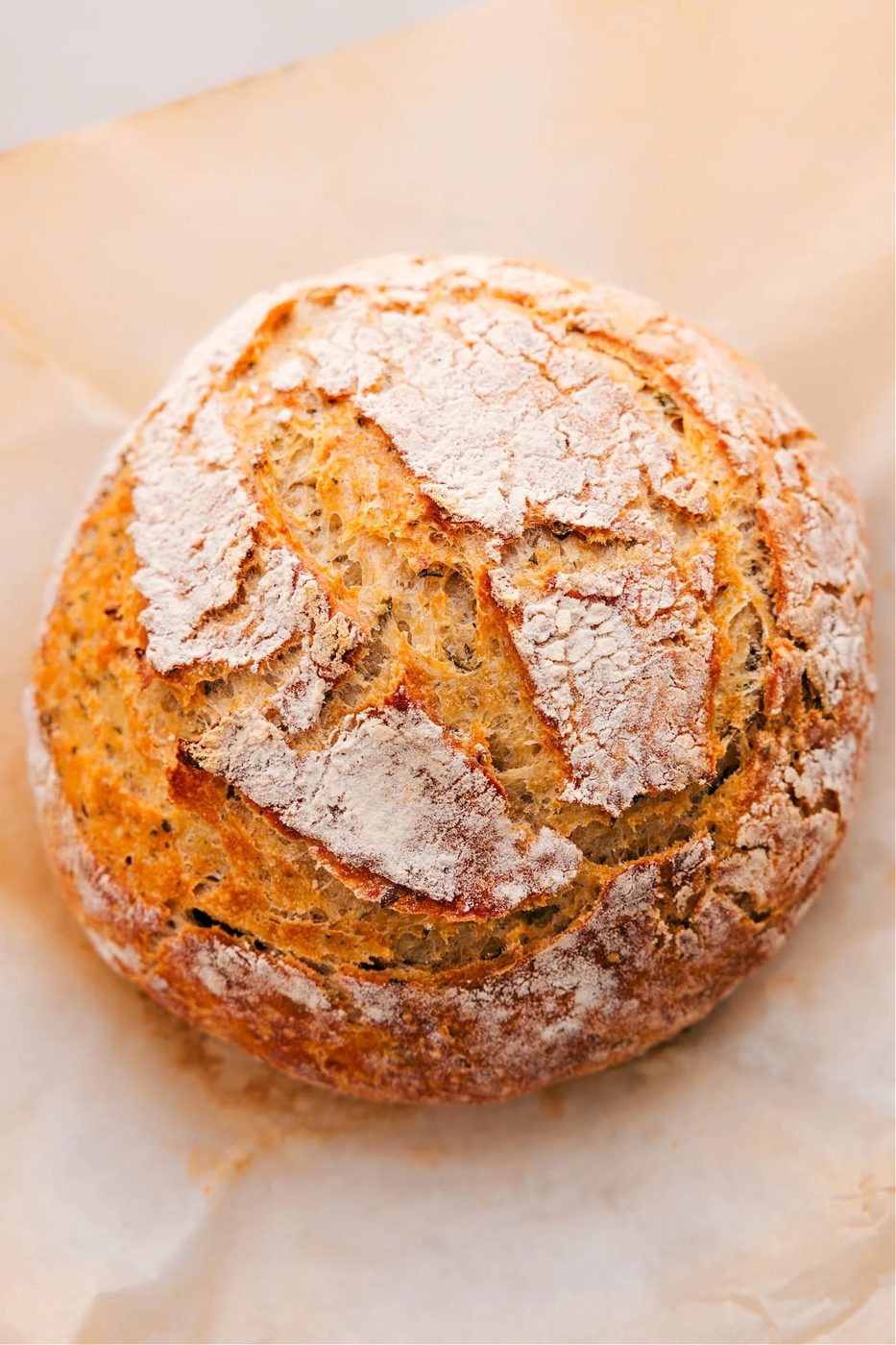
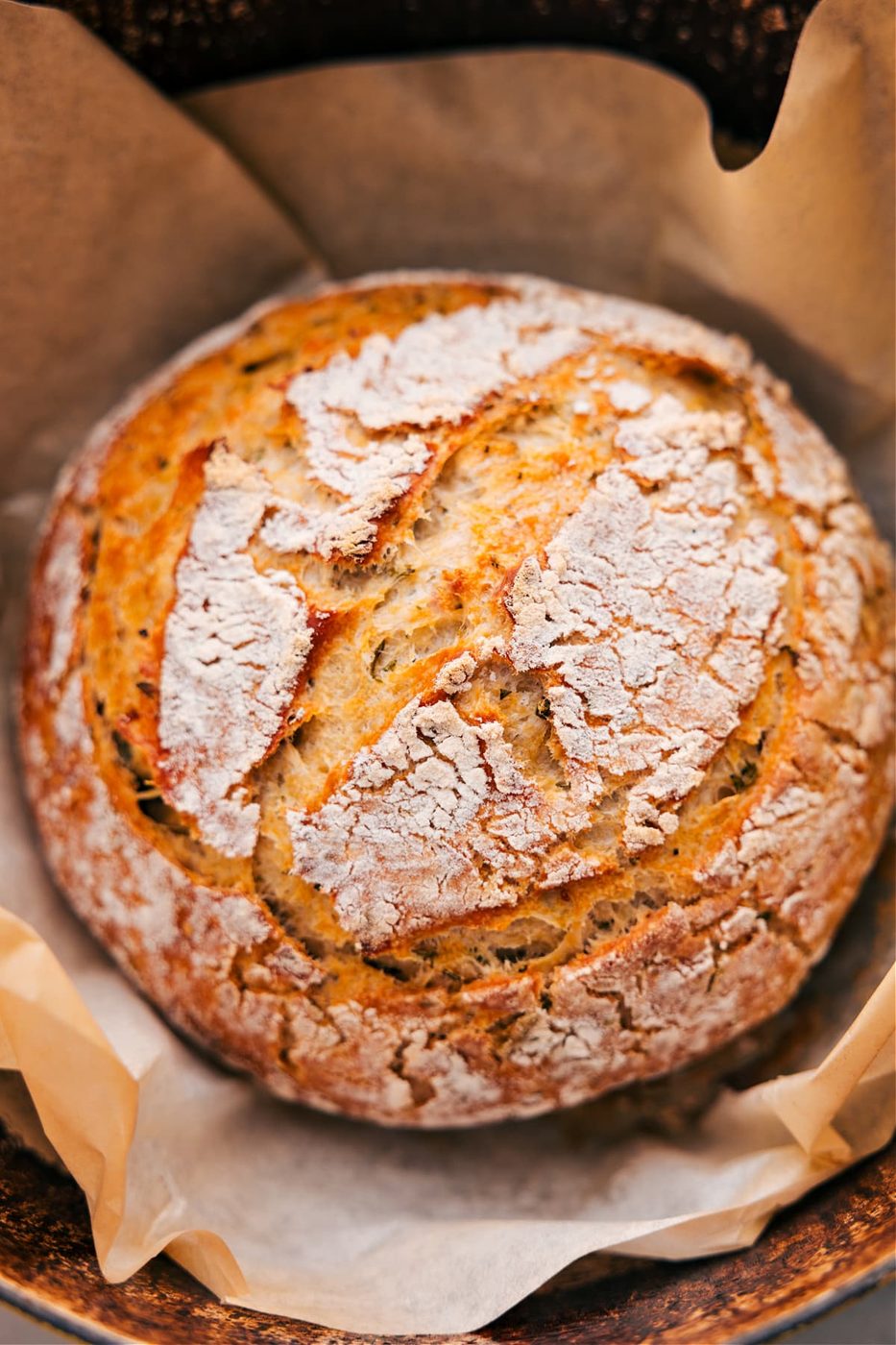
No-Knead Herb Bread is packed with fresh rosemary, thyme, and garlic for amazing flavor! This recipe is as straightforward as it gets—just mix the ingredients, let the dough rest overnight, and bake the next day.
straightforward Herb Bread Recipe
Warm, crusty bread with tender, flavorful herbs in every bite—dunk it in a bowl of your favorite soup for the ultimate comfort meal.
Reasons To Love This Recipe:
- No kneading or fancy tools – No mixer, bread maker, or hassle required.
- Flexible timing – Bake when it works for you.
- Simple ingredients – You probably already have everything you need!
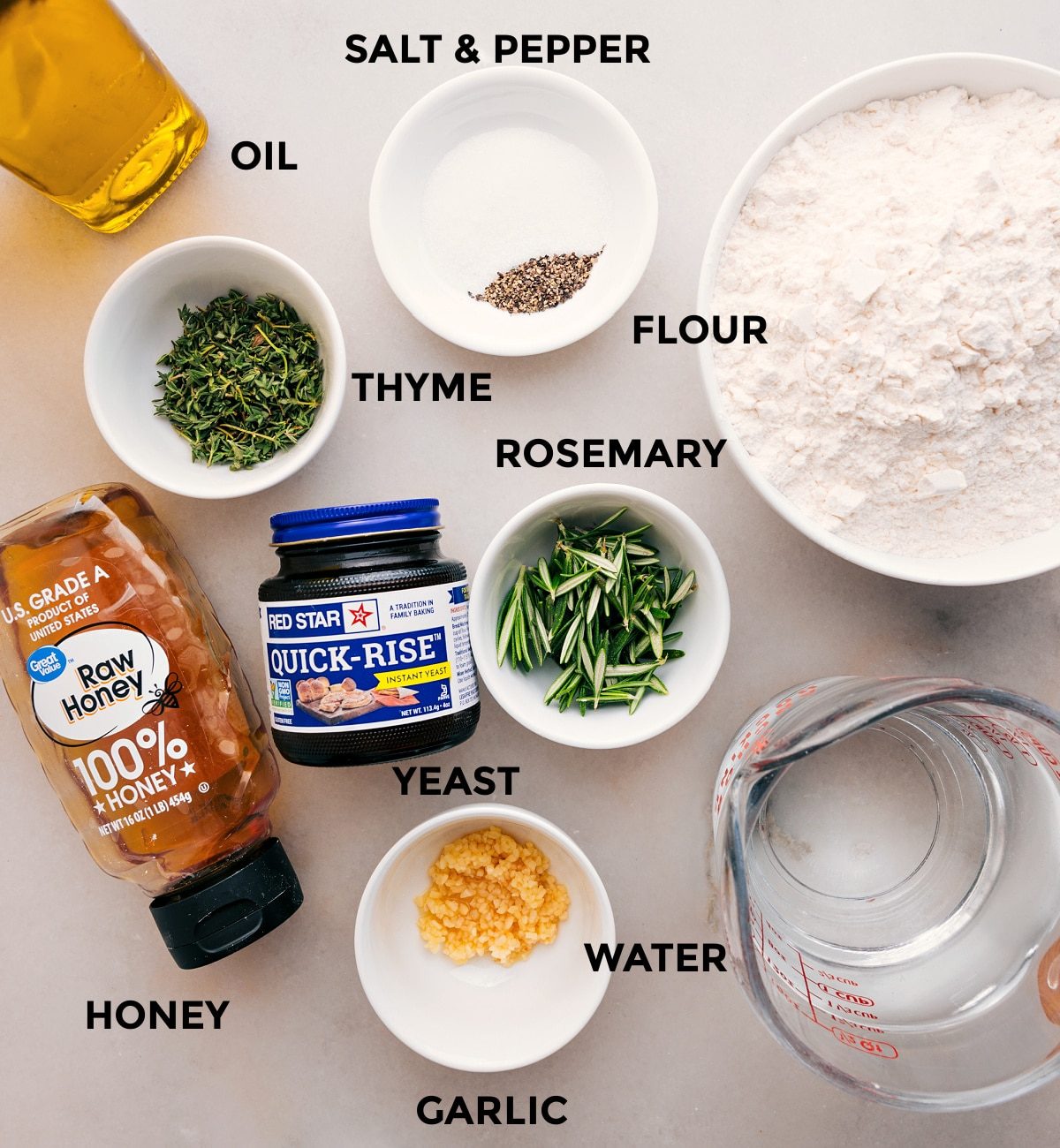
Ingredients
Here’s what you’ll need to make this no-knead Herb Bread:
- Yeast: You can use instant or quick-rise yeast, but active dry will also work.
- Honey: Adds a little sweetness and helps the yeast grow.
- Warm Water: Should feel warm, not hot, to wake up the yeast.
- Flour: All-purpose flour creates a soft inside and a crisp crust. For a chewier texture, try bread flour.
- Salt: Adds flavor—don’t skimp!
- Garlic: Fresh minced or jarred garlic adds lots of flavor. Use garlic powder in a pinch.
- Rosemary & Thyme: Fresh herbs taste best, but dried ones work too.
- Black Pepper: Adds a little kick and depth. Feel free to leave it out!
- Olive Oil: Makes the crust smoother and adds richness.
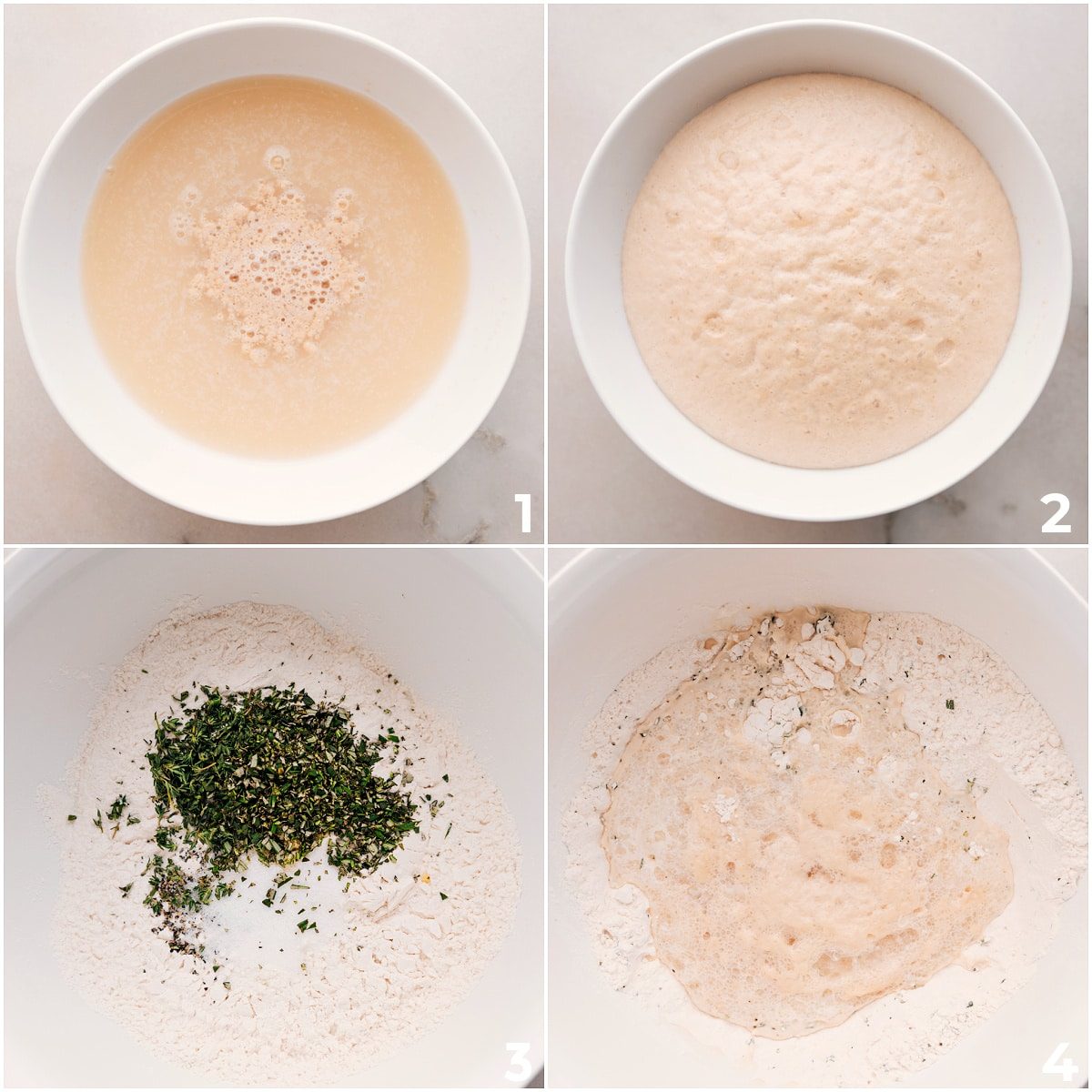
Variations
Ways to Make Your Bread More Interesting
- Fresh Herbs: Add extra herbs for even more flavor.
- Olive Oil & Sea Salt: Drizzle olive oil and sprinkle sea salt flakes on top for a crispy crust and a subtle crunch.
- Add-Ins: Mix in nuts, seeds, or dried fruits like pepitas, poppy seeds, or sesame seeds for more texture.
Best Herbs To Add To Bread
Rosemary and thyme are my favorites, but here are other options to consider:
- Rosemary: Savory with a piney flavor.
- Thyme: Lightly lemony and versatile.
- Oregano: Bold and slightly bitter.
- Basil: Sweet and fragrant, reliable with savory dishes.
- Sage: Earthy with a mild bitterness.
- Marjoram: Sweet and floral, similar to oregano.
- Dill: Subtle anise flavor, great with stronger ingredients.
- Chives: Mild onion flavor, a great match for grilled cheese!
- Parsley: Fresh with a slight bitterness.
- Cilantro: Bright and citrusy, great with bold flavors.
- Tarragon: Licorice-like and complements stronger flavors.
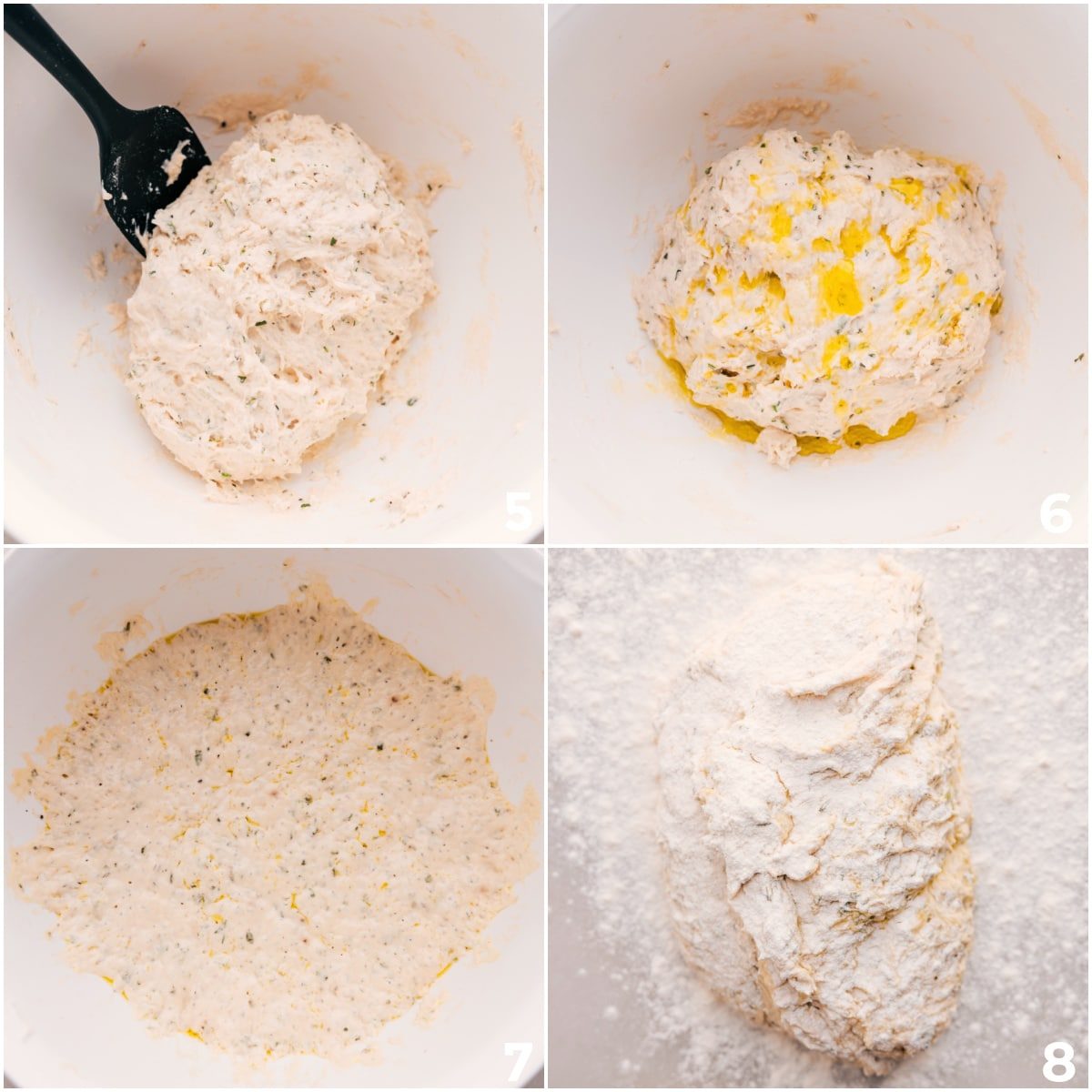
4 Tips For reliable Bread
- Pick the Right Pot: Use a heavy pot (at least 6 quarts) with a tight lid that can handle a hot burner.
- Let it Rise: For the best flavor and texture, let the dough rise at least 8 hours—up to 18 is even better.
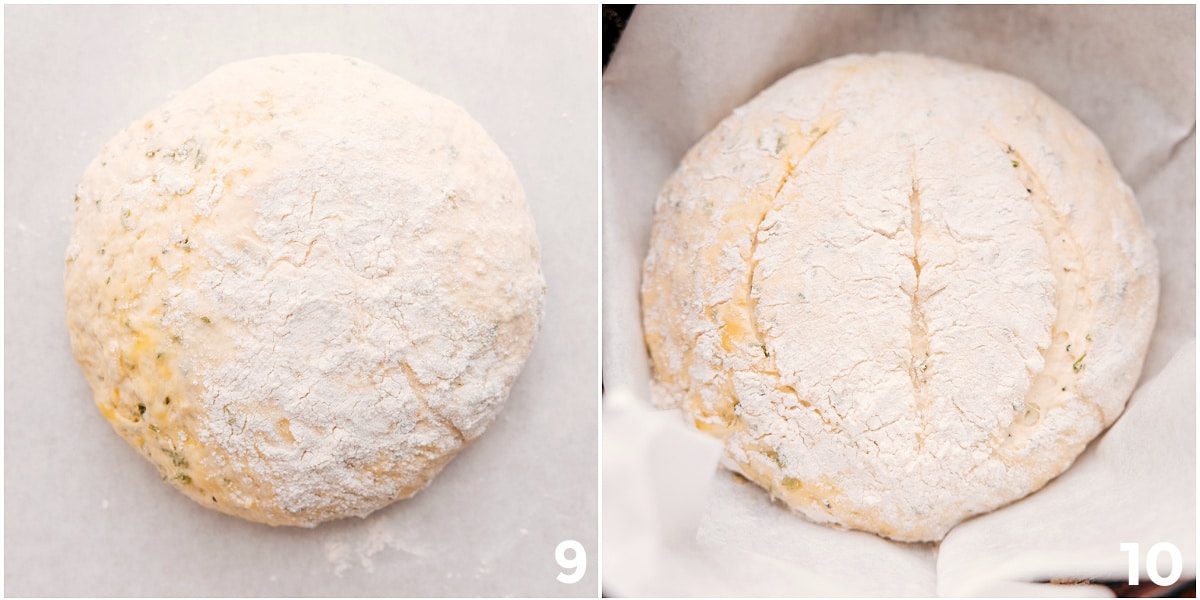
- Heat the Pot: A hot pot gives a crispy crust, and a hot lid helps steam the herb bread for a soft inside.
- Cool Before Cutting: Let the bread cool completely so it doesn’t turn mushy when sliced.
What to Eat with Herb Bread
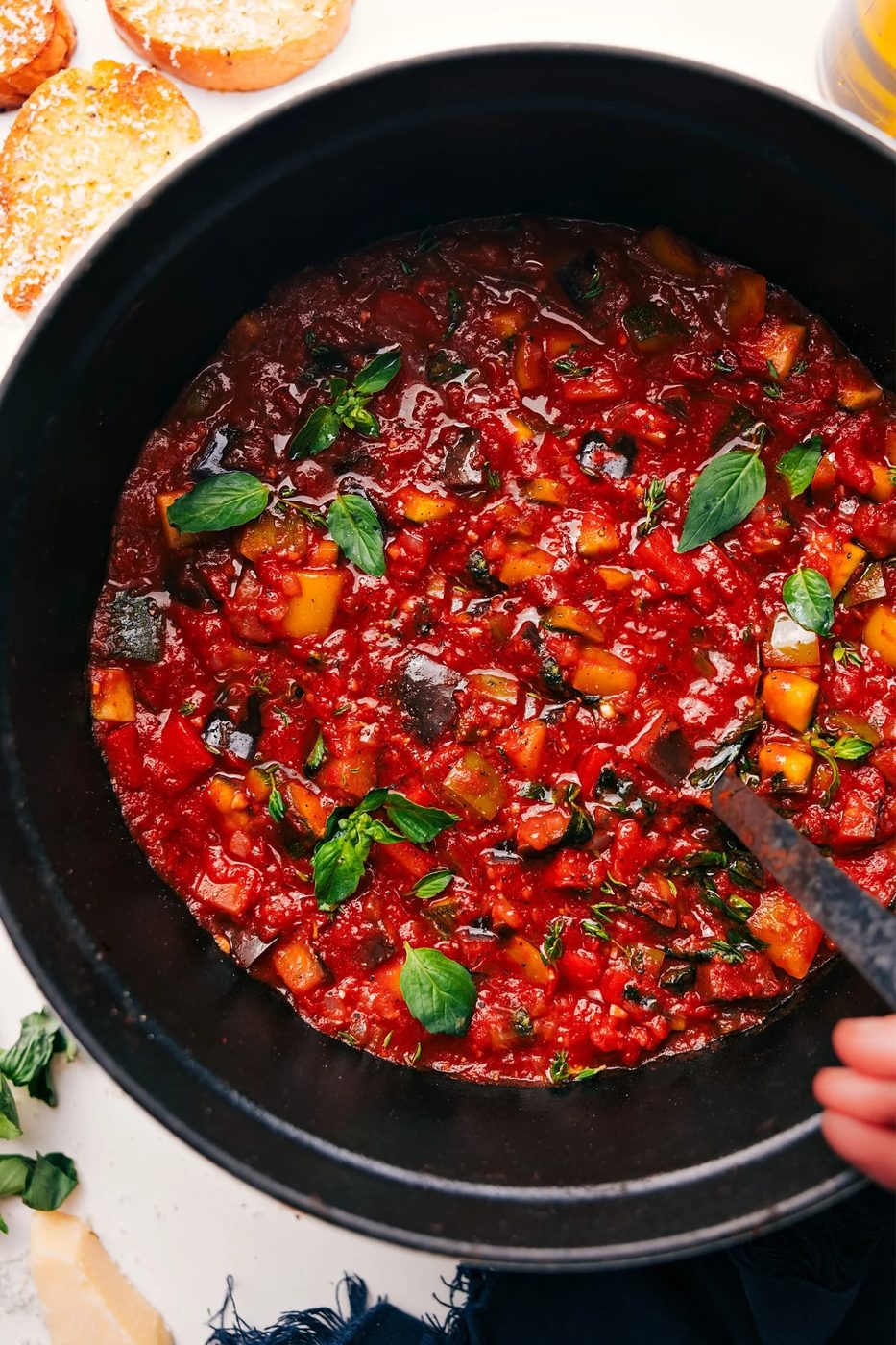
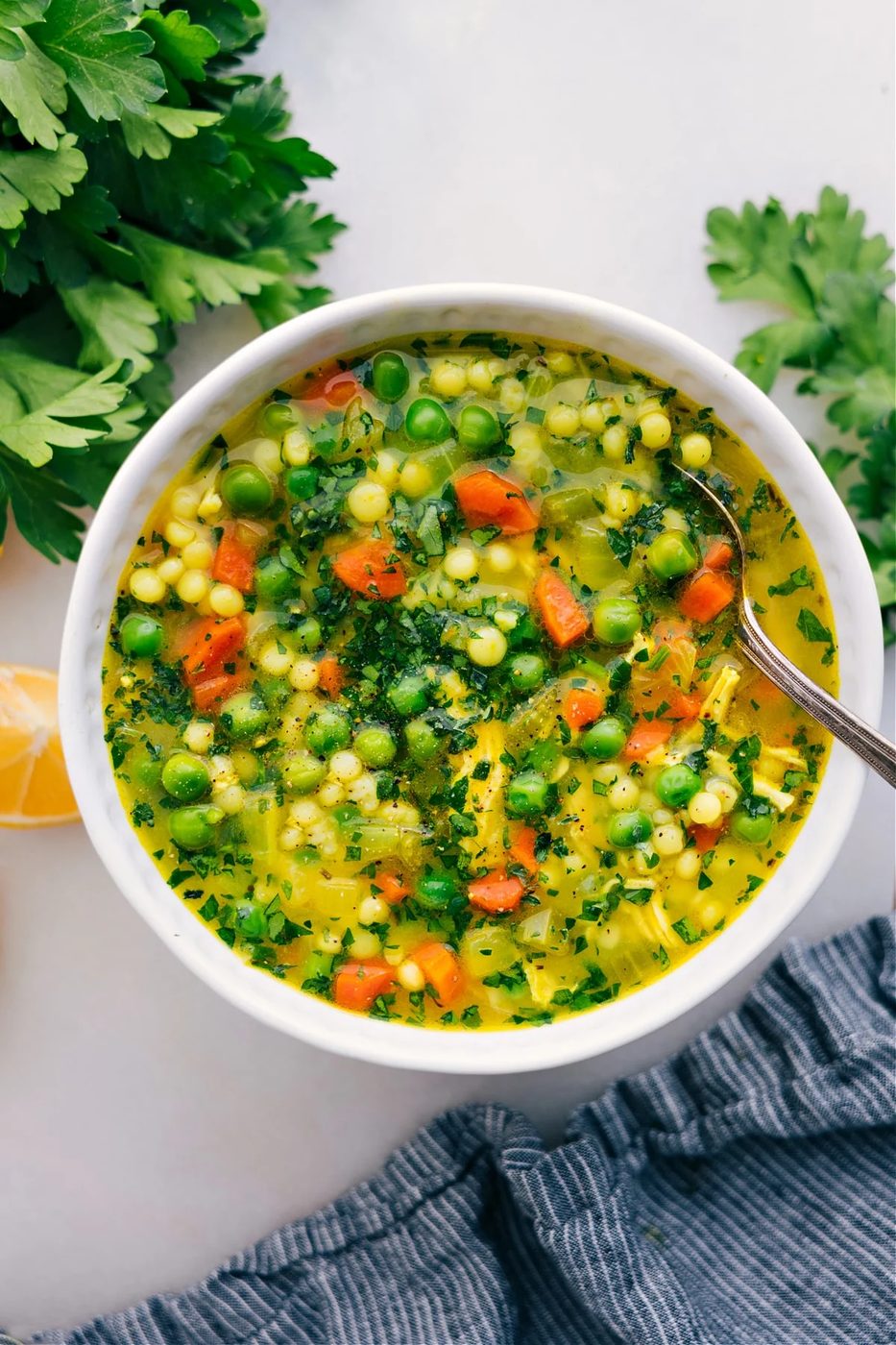
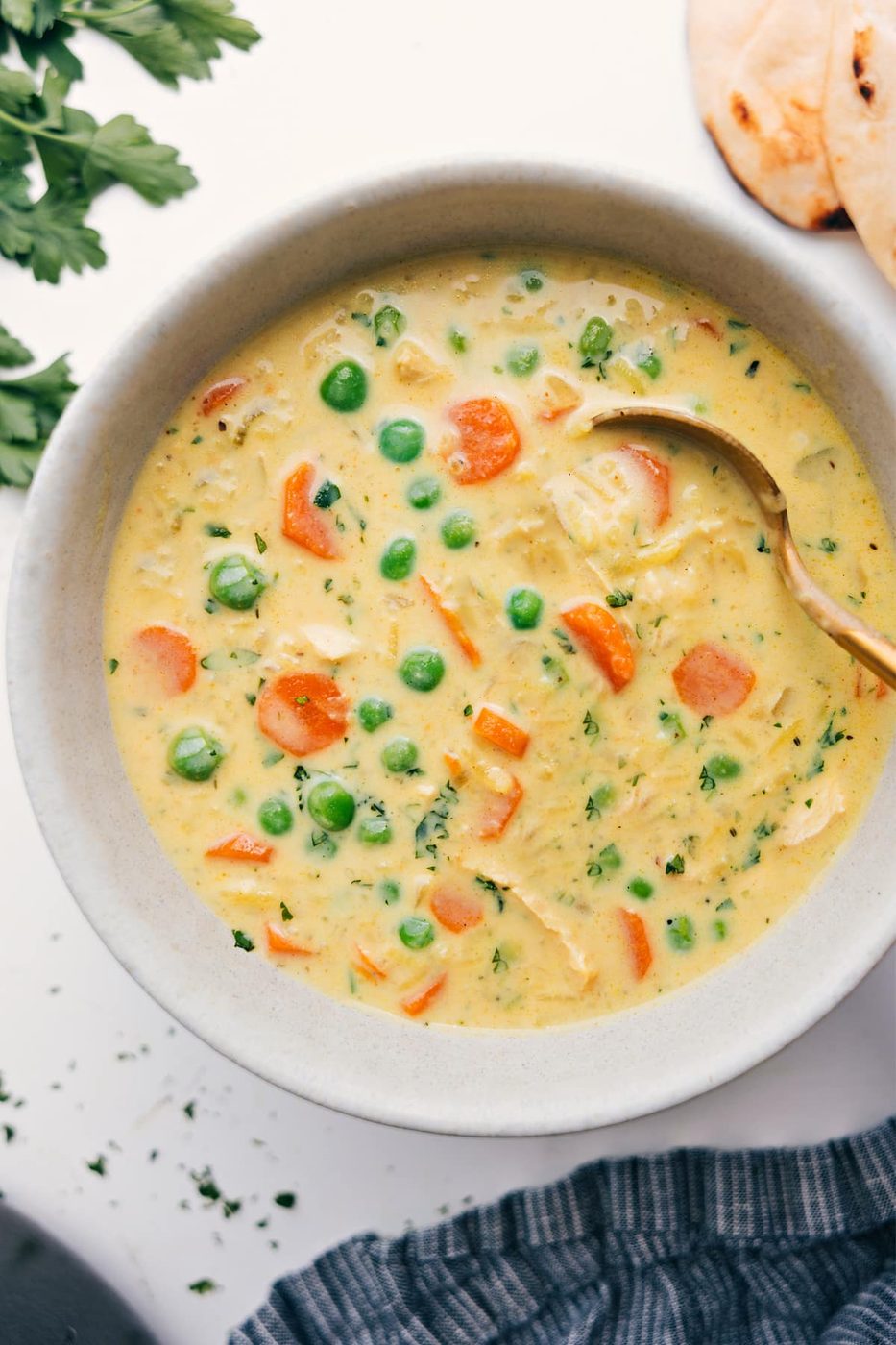
- Dunk it: reliable with Vegetable Beef Soup or slow cooker Chicken Stew.
- Serve as a side: Great with salads or main dishes.
- Spread it: Add butter or your favorite spread for a quick snack.
- Make a sandwich: Use it for sandwiches or paninis.
- Top it: Toast slices and add avocado, hummus, or other spreads.
- Crostini or Bruschetta: Top with your favorite ingredients for an straightforward appetizer.
Storage
Storing Herb Bread
- Day 1: Leave it out, cut side down, on a cutting board to keep the crust crisp.
- After Day 1: Store in an airtight bag or container; toast to bring back crispness.
- Freezing: Slice, wrap each piece, and freeze in an airtight bag for up to 3 months. Toast slices straight from the freezer.
Quick Tip
If you don’t have a cast iron pot to bake the bread in, check out this method by The Kitchn on this post.