
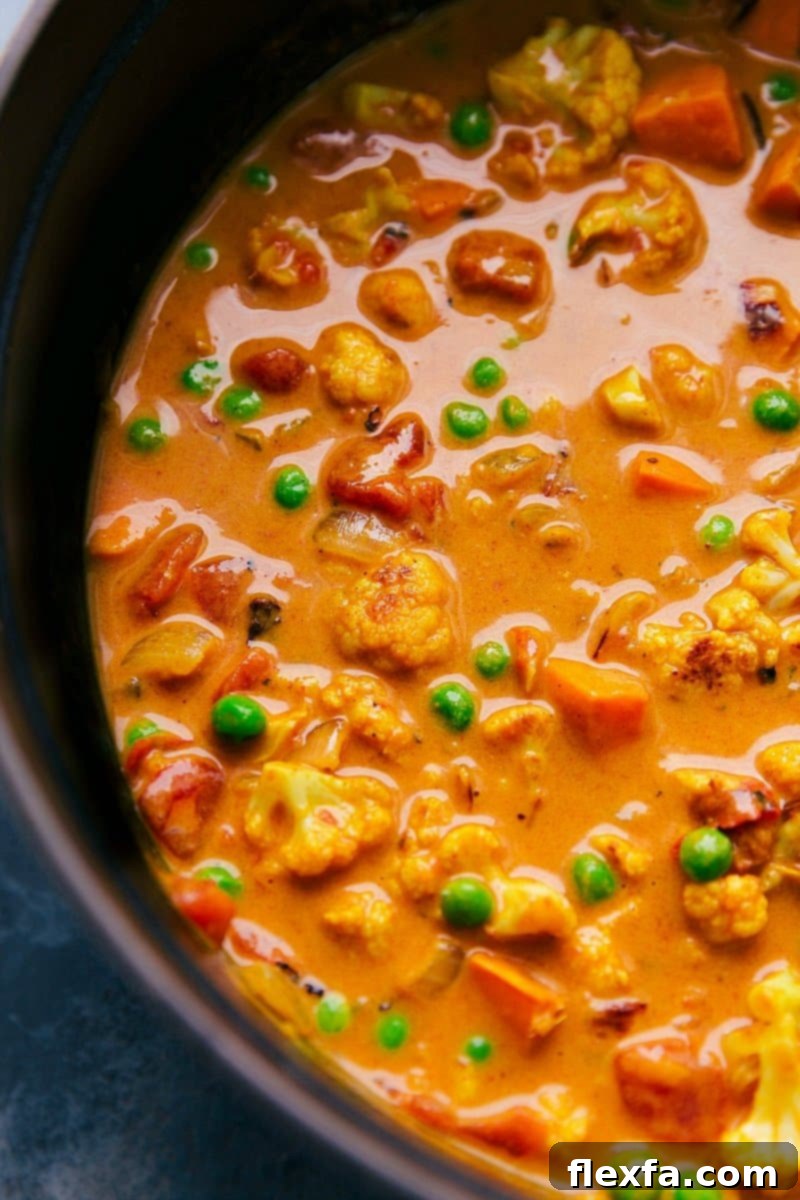
Vegetable Curry is an incredibly hearty, rich, and flavorful dish, brimming with wholesome ingredients like sweet potatoes, cauliflower, and an array of other vibrant vegetables. Each bite is a symphony of tastes, with tender veggies lovingly simmered in a luscious, creamy coconut curry sauce. This recipe is designed to be both satisfying and easy to prepare, making it a perfect addition to your weekly meal rotation.
If you’re a fan of comforting and aromatic curries, you might also enjoy some of our other popular recipes. Explore this Butternut Squash Curry for a seasonal twist, savor the classic flavors of Coconut Curry Chicken, or dive into the vibrant Yellow Chicken Curry.
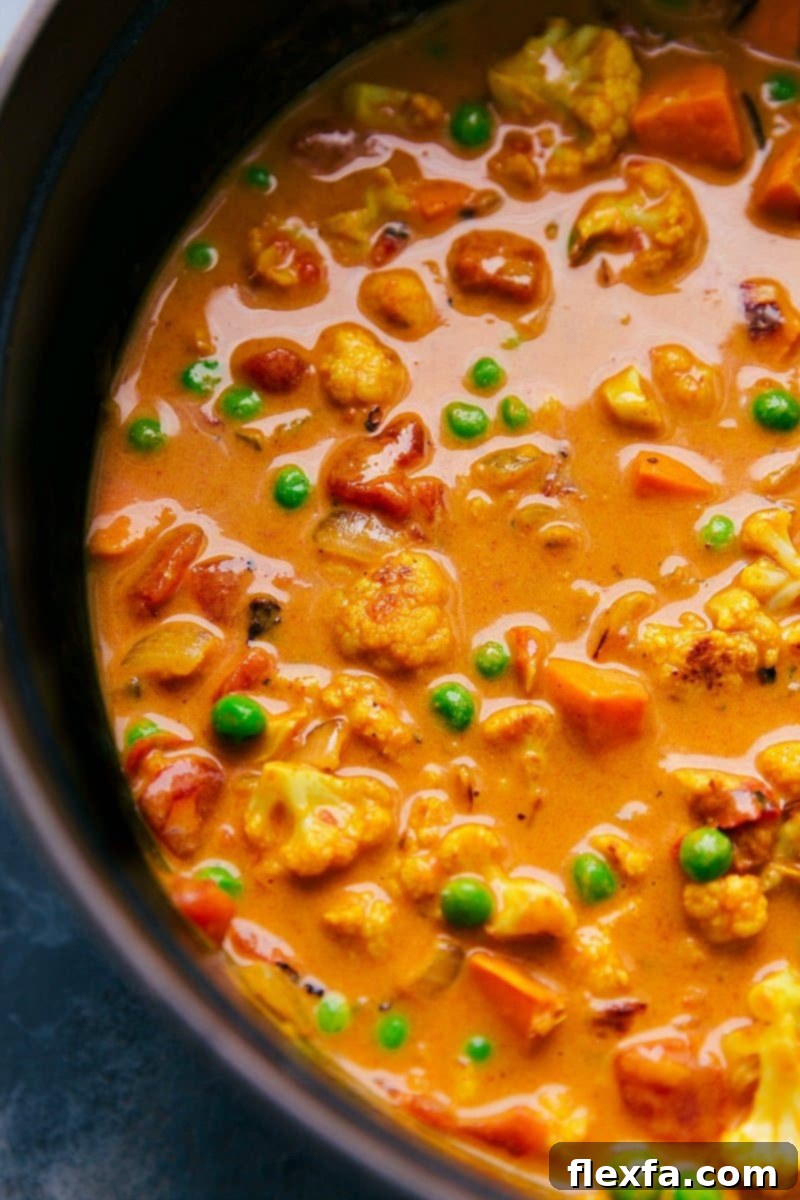
The Ultimate Easy Vegetable Curry Recipe
After countless adjustments and taste tests, I am thrilled to share my perfected recipe for the best easy Vegetable Curry. This dish strikes an ideal balance between convenience and exceptional flavor, proving that a truly magnificent curry doesn’t require hours in the kitchen or a pantry full of exotic ingredients. You’ll find that many of the staples are likely already in your cupboard, such as a selection of aromatic spices, versatile curry paste, creamy coconut milk, canned tomatoes, and a bag of frozen peas. The fresh components—like onions, ginger, garlic, and sweet potatoes—are known for their excellent shelf life, making this an accessible recipe even for impromptu cooking sessions.
I couldn’t wait to unveil this recipe, especially for those who appreciate the convenience of readily available ingredients. This particular curry is not just easy to make; it’s also a fantastic candidate for meal prepping. Its flavors meld and deepen over time, meaning it often tastes even better the day after it’s cooked. I frequently prepare a large batch on a Sunday, portioning it into containers for quick, healthy, and delicious lunches throughout the week. The only challenge is keeping it hidden from eager family members long enough to make it to Monday!
Featured Comment
Made this tonight, sooo yummy! I had been waiting patiently for you to post it since you mentioned it a few days ago. It was worth the wait! It will make a regular appearance on our menu! Love a good vegan recipe!
– Katie
Essential Ingredients for a Perfect Vegetable Curry
Creating an exceptional vegetable curry begins with selecting the right ingredients. Each component plays a vital role in building the layers of flavor and achieving that coveted creamy texture. Here’s a closer look at what you’ll need and why:
- Coconut Oil: This is our base fat. Coconut oil adds a subtle, complementary flavor to the curry. Measure it in its solid state; it will quickly melt in the hot pot. For those preferring less coconut flavor, a neutral oil like avocado or grapeseed oil can be substituted.
- Onion, Ginger, and Garlic: These three form the aromatic foundation of nearly any good curry. They bring depth, warmth, and a pungent sweetness. To save time, you can chop these finely by hand or, as suggested, pulse them briefly in a food processor for a quick, even mince.
- Spices: The heart of any curry lies in its spice blend. This recipe utilizes a harmonious mix that gets briefly toasted in the pan. This crucial step, known as “blooming,” awakens their essential oils, intensifying their aromas and flavors before liquids are added. Our blend includes:
- Ground Turmeric: For its earthy flavor and beautiful golden hue, also known for its anti-inflammatory properties.
- Ground Cumin: Adds a warm, earthy, and slightly pungent note.
- Garam Masala: A fragrant blend of ground spices, typically including cinnamon, cardamom, cloves, and black pepper, providing a warm, sweet, and aromatic finish.
- Yellow Curry Powder: A general blend often containing turmeric, coriander, cumin, fenugreek, and chili, contributing to the classic curry taste.
- Paprika: Offers a sweet, mild pepperiness and a rich red color.
- Ground Coriander: Imparts a mild, citrusy, and slightly sweet flavor that balances other spices.
- Red Curry Paste: This paste is a powerhouse of flavor, often containing red chili, lemongrass, galangal, and other aromatics. It adds a concentrated burst of traditional curry taste and a touch of heat. You can typically find it in the Asian food aisle of most grocery stores. Be sure to check labels if you require a vegan version, as some brands may contain shrimp paste (Thai Kitchen® is a good vegan option).
- Full-fat Coconut Milk: The secret to a truly creamy and luxurious curry sauce. The fat content is essential for richness. Remember to shake the can well before opening to re-incorporate any separated cream. Lite coconut milk can be used for a lighter version, but the curry will be noticeably less creamy.
- Fire-Roasted Crushed Tomatoes: Using fire-roasted tomatoes is a game-changer. The subtle smokiness and sweetness from the roasting process add a depth of flavor that regular crushed tomatoes simply can’t match, elevating the entire dish.
- Vegetable Stock: This liquid helps create the perfect consistency for our sauce and infuses more vegetable goodness. Opt for low-sodium stock to maintain control over the overall saltiness of your dish. If you’re not strictly vegetarian or vegan, chicken broth can be used as an alternative.
- Sweet Potatoes and Cauliflower: These are the stars of our vegetable cast. Sweet potatoes provide natural sweetness and a satisfying texture, while cauliflower absorbs the curry flavors beautifully and adds a tender bite. Ensure they are cut into uniform, bite-sized pieces for even cooking.
- Frozen Peas: A wonderful addition for a pop of color and natural sweetness. Stir them in fully frozen at the very end of cooking; their residual heat will warm them through, keeping them bright green and tender-crisp.
- Fresh Cilantro and Lime Juice (Optional): Fresh cilantro adds a bright, herbaceous finish, and a squeeze of fresh lime juice at the end brightens all the flavors, offering a zesty counterpoint to the richness of the curry.
How To Make This Delicious Vegetable Curry (Step-by-Step)
Follow these simple steps to create a rich and satisfying vegetable curry that will become a new favorite:
- Prepare All Ingredients (Mise en Place): Before you start cooking, it’s crucial to have all your vegetables prepped and ready. Dice the onion, mince the garlic, and mince the ginger. Peel and chop the sweet potatoes into roughly 1-inch cubes. Coarsely chop the cauliflower into florets of a similar size. Uniformity in size ensures even cooking for all your veggies. This preparation stage makes the actual cooking process much smoother and more enjoyable.
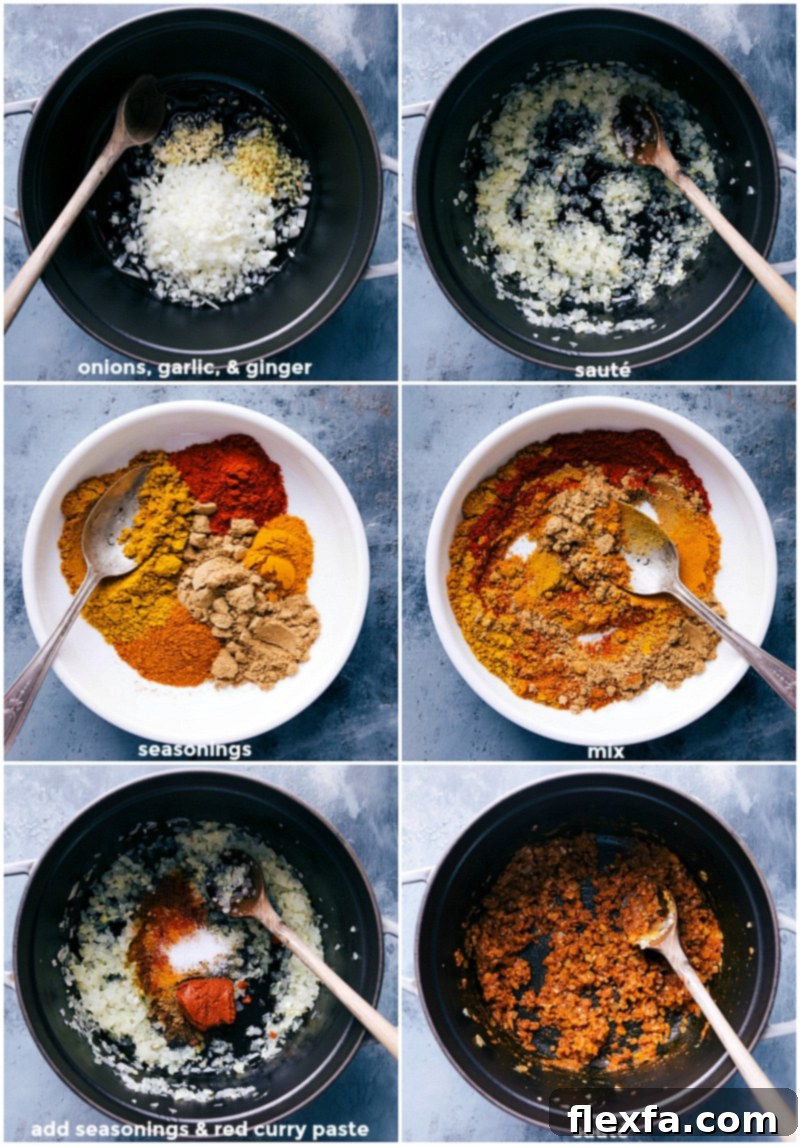
- Sauté Aromatics: Begin by heating the coconut oil in a large, heavy-bottomed pot or Dutch oven over medium-high heat. Once the oil has melted and shimmers, add the diced onion, minced ginger, and minced garlic. Sauté these aromatics until they become tender, translucent, and wonderfully fragrant, which typically takes about 7-9 minutes. Be mindful not to let them brown too quickly; reduce the heat to low if you notice them starting to burn, as this can lead to a bitter flavor.
- Bloom the Spices: Once your aromatics are fragrant, add all the dry spices – ground turmeric, cumin, garam masala, yellow curry powder, paprika, and ground coriander – along with the red curry paste to the pot. Season generously with salt and pepper to taste (I recommend starting with 1 1/4 teaspoons of salt and 1/4 teaspoon of black pepper, adjusting later if needed). Stir constantly for 1-3 minutes over medium-low heat. This “blooming” step is essential as it gently toasts the spices, releasing their full aromatic potential and deepening their flavor profile significantly.
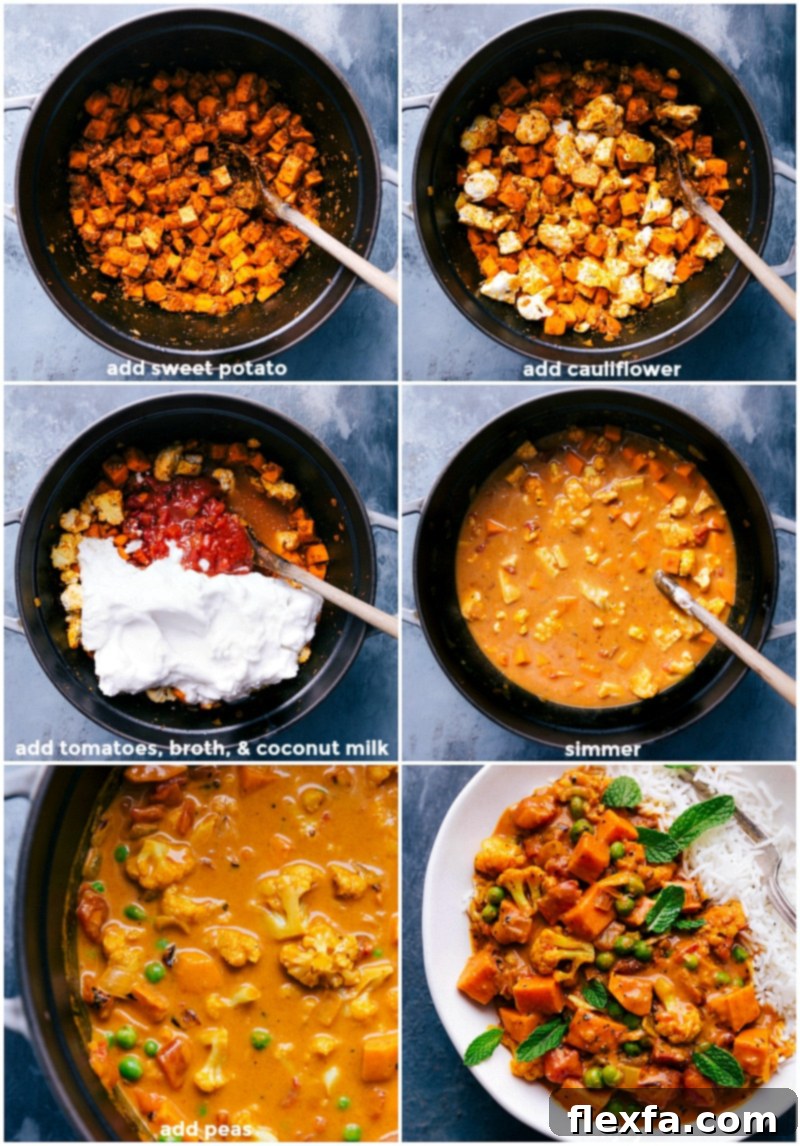
- Cook the Vegetables: Add the cubed sweet potatoes to the pot and stir well, ensuring they are thoroughly coated in the fragrant spice mixture. Cook them over low heat, stirring occasionally to prevent sticking. Next, add the coarsely chopped cauliflower and stir again to coat. Continue to cook for a few minutes, allowing the vegetables to absorb some of the spice flavors.
- Simmer to Perfection: Pour in the full-fat coconut milk, fire-roasted crushed tomatoes, and vegetable stock. Stir everything together gently to combine. Bring the mixture to a gentle boil, then immediately reduce the heat to low, cover the pot with a lid, and allow it to simmer. This slow simmer is crucial for tenderizing the vegetables and allowing the flavors to meld beautifully. Cook for 18-25 minutes, or until the sweet potatoes and cauliflower are fork-tender. Remember to stir occasionally (every 7 minutes or so) to prevent sticking and ensure even cooking. You can check the tenderness by easily piercing a sweet potato cube with a fork. While the curry simmers, it’s a great time to prepare your basmati rice (refer to Note 2 in the recipe card for my cooking method).
- Finish with Peas and Cilantro: Once the vegetables are tender, remove the lid. Stir in the frozen peas and finely chopped fresh cilantro. The residual heat from the curry will gently warm the peas through, keeping them vibrant green and slightly crisp.
- Serve and Enjoy: For an extra burst of freshness and to brighten the overall flavor, you can stir in a splash of fresh lime juice at this stage, or simply serve lime wedges alongside individual plates. Serve this hearty vegetable curry immediately over a bed of fluffy basmati rice, accompanied by warm naan bread for scooping up every delicious drop of sauce.
Customization and Variations
This Vegetable Curry recipe is wonderfully versatile, allowing you to easily adapt it to your preferences or what you have on hand. Don’t hesitate to get creative!
Experiment with Your Veggies:
- Different Vegetables: Feel free to swap or add other vegetables. Great options include bell peppers (red, yellow, or orange), zucchini, green beans, spinach (stir in at the very end until wilted), chickpeas for extra protein, or even broccoli florets. Adjust cooking times as needed for different vegetables; harder vegetables like carrots might need to be added with the sweet potatoes, while softer ones like zucchini can go in later.
- Add Protein: While delicious on its own, you can easily boost the protein content. Sautéed tofu, tempeh, or canned chickpeas (added with the liquids) are excellent vegan additions. For non-vegetarian options, cooked chicken or shrimp can be stirred in during the last 5-10 minutes of simmering.
Adjusting the Spice Level:
- Increase the Heat: As written, this recipe offers a mild, family-friendly spice level. If you crave more heat, gradually increase the amount of red curry paste to 3 tablespoons, or add a pinch of red pepper flakes or cayenne pepper to taste. Start small and add more until you reach your desired level of spiciness.
- Reduce the Heat: For an even milder curry, you can slightly reduce the red curry paste to 1.5 tablespoons.
Flavor Profile Tweaks:
- More Thai-inspired: To lean into a more pronounced Thai flavor profile, stir in a few tablespoons of fish sauce at the end of cooking.
- Richness: For an even richer flavor, you can add a tablespoon of peanut butter to the sauce after adding the liquids and before simmering. This adds a subtle nutty depth and extra creaminess.
Broth Options:
- Not strictly vegan or vegetarian? Chicken broth or stock can be used in place of vegetable stock without significantly altering the overall flavor profile.
Storage and Make-Ahead Tips
This vegetable curry is an excellent meal prep dish, as its flavors often improve with time. Knowing how to store and reheat it properly will ensure you enjoy delicious meals throughout the week.
Handling Leftovers:
- Refrigeration: Allow the curry to cool completely before transferring it to an airtight container. Refrigerate for up to 4 days. Its robust flavors actually deepen and harmonize even further overnight.
- Freezing: For longer storage, freeze cooled vegetable curry in freezer-safe containers or heavy-duty freezer bags for up to 3 months. When using bags, lay them flat in the freezer to save space.
- Reheating:
- From the fridge: Reheat individual portions on the stovetop over medium-low heat, stirring occasionally, or in the microwave until thoroughly heated through. You might need to add a splash of water or vegetable stock to loosen the sauce if it has thickened considerably.
- From the freezer: Thaw frozen curry in the refrigerator overnight before reheating. Alternatively, you can reheat it directly from frozen on the stovetop over low heat, stirring frequently, adding liquid as needed, until thawed and hot. Microwaving from frozen is also an option, using short bursts and stirring in between.
- Meal Prep Perfection: This curry is ideal for batch cooking. Prepare a large pot on Sunday, and you’ll have flavorful, healthy meals ready to go for busy weekdays, saving you time and effort.
More Delicious Vegetarian Recipes to Explore
If you loved this comforting curry, you’ll be thrilled to discover more satisfying vegetarian options from our collection:
Dinner
Vegetarian Shepherd’s Pie
Soups And Stews
Hearty Vegetable Soup Recipe
Dinner
Quinoa Vegetarian Enchiladas
Soups And Stews
Flavorful Vegetarian Chili Recipe

Vegetable Curry
By Chelsea Lords
Vegetable Curry is a delicious, hearty dish loaded with sweet potatoes, cauliflower, and other vibrant veggies, all simmered in a creamy, spice-packed coconut curry sauce. Filling and full of flavor!
Prep Time: 30 minutes
Cook Time: 30 minutes
Total Time: 1 hour
Servings: 6 servings
Print Recipe
Equipment
- Large cast-iron pot (or Dutch oven)
Ingredients
- 1/4 cup coconut oil
- 1 1/2 cups finely diced yellow onion (1 large onion)
- 1 1/2 tablespoons finely minced ginger (from a 1-inch piece)
- 1 tablespoon finely minced garlic (approximately 3 cloves)
- 3/4 teaspoon ground turmeric
- 1 teaspoon ground cumin
- 1 teaspoon garam masala
- 1 tablespoon yellow curry powder
- 1 1/2 teaspoons paprika
- 1 1/2 teaspoons ground coriander
- 2 tablespoons red curry paste (see Note 1)
- Salt and pepper (to taste)
- 4 1/2 cups chopped sweet potatoes (about 3 medium-to-large potatoes)
- 3 1/2 cups chopped cauliflower (1 small head or 1/2 large head)
- 2 (13.66-ounce) cans full-fat coconut milk (lite is okay, but curry will be less creamy)
- 1 (14.5-ounce) can fire-roasted crushed tomatoes
- 1 cup vegetable stock
- 3/4 cup frozen peas
- 1/3 cup finely chopped cilantro
- Fresh lime juice (optional)
- Cooked basmati rice (optional, for serving, see Note 2)
- Naan bread (optional, for serving)
Instructions
- Prepare Ingredients: Dice the yellow onion, mince the garlic, and mince the ginger. Peel and dice the sweet potatoes into uniform, bite-sized pieces. Coarsely chop the cauliflower florets. Set all prepared ingredients aside.
- Sauté Aromatics: Heat the coconut oil in a large, heavy-bottomed cast-iron pot or Dutch oven over medium-high heat. Once melted, add the diced onion, minced ginger, and minced garlic. Sauté, stirring occasionally, until the aromatics are tender, translucent, and highly fragrant, which should take approximately 7-9 minutes. If any ingredients begin to brown too quickly, reduce the heat to low.
- Bloom Spices: While the aromatics are sautéing, add all the ground spices to the pot: turmeric, cumin, garam masala, yellow curry powder, paprika, and ground coriander, along with the red curry paste. Season generously with salt (e.g., 1 1/4 teaspoons) and pepper (e.g., 1/4 teaspoon). Continue to cook and stir over medium-low heat for 1-3 minutes, allowing the spices to become incredibly fragrant as they bloom.
- Cook Vegetables: Add the cubed sweet potatoes to the pot and stir thoroughly to ensure they are well coated in the aromatic spice mixture. Cook over low heat, stirring occasionally to prevent sticking. Next, add the coarsely chopped cauliflower and stir again to combine with the spices.
- Simmer Sauce: Pour in the two cans of full-fat coconut milk, the can of fire-roasted crushed tomatoes, and the vegetable stock. Stir all ingredients gently to mix. Increase the heat to bring the mixture to a boil, then immediately reduce the heat to low. Cover the pot and let the curry simmer for 18-25 minutes, or until the sweet potatoes and cauliflower are tender when pierced with a fork. Stir occasionally, about every 7 minutes, to ensure even cooking and prevent sticking. While the curry is simmering, prepare your basmati rice for serving (see Note 2).
- Finish and Serve: Remove the lid from the pot. Stir in the frozen peas and the finely chopped fresh cilantro. The residual heat will warm the peas through quickly, keeping them vibrant. If desired, squeeze in some fresh lime juice for a bright finish, or serve lime wedges on the side. Serve the hot vegetable curry over freshly cooked basmati rice with warm naan bread and enjoy immediately.
Recipe Notes
Note 1 (Red Curry Paste): If you are preparing this recipe for vegans, please ensure that your red curry paste is certified vegan, as some brands may contain shrimp paste. Thai Kitchen® brand red curry paste is a commonly available vegan option.
Note 2 (How to Cook Basmati Rice): For perfect fluffy basmati rice to accompany your curry, follow these steps:
- Measure the desired amount of basmati rice.
- Rinse the rice thoroughly in a fine-mesh sieve under cold running water until the water runs clear. This removes excess starch and prevents stickiness.
- Place the rinsed rice in a bowl and cover it with fresh water. Allow it to soak for about 5-10 minutes.
- While the rice is soaking, fill a large pot with a generous amount of water and bring it to a rolling boil over high heat.
- Once the water is boiling rapidly, drain the soaked rice completely and add it to the boiling water.
- Cook the rice in the boiling water for exactly 5 minutes without reducing the heat.
- Carefully drain the cooked rice in a fine-mesh sieve. Return it to the empty pot, cover with a lid, and let it steam for 5-10 minutes off the heat.
- Finally, fluff the rice gently with a fork before serving.
Storage: Leftover vegetable curry can be stored in an airtight container in the refrigerator for up to 4 days. For longer storage, freeze in freezer-safe bags or containers for up to 3 months. Thaw overnight in the refrigerator or reheat gently from frozen, adding a splash of water or stock if needed to restore consistency.
Nutrition Information
Calories: 364 kcal |
Carbohydrates: 31.7g |
Protein: 5.9g |
Fat: 25.4g |
Sodium: 304.2mg |
Fiber: 5.8g |
Sugar: 8.6g
Nutrition information is automatically calculated and should only be used as an approximation.
Loved this recipe? Leave a comment below and share your thoughts! Your feedback helps us create more delicious content.